Informed Comment

Thoughts on the Middle East, History, and Religion

Juan Cole is President of the Global Americana Institute

Friday, November 20, 2009

2 Bombings Rock Peshawar:
Karzai Inaugurated

Two bombs rocked the northern Pakistani city of Peshawar on Thursday. The first, in the morning, targeted the city's courthouse. The suicide bomber, wearing a vest, was stopped by security before he could get into the building. He detonated his payload outside, killing 20 persons and wounding 50.

Thursday evening another bomber struck at a police vehicle, killing two policemen and wounding five civilians.

Aljazeera English explains 'why Peshawar'?


Analysts on GEO television Friday morning were saying that the Pakistani military is reluctant to take on the Mahsud tribe (the dominant one in South Waziristan) because they still view it as an asset. They also say that the Pakistani military is nervous about having diverted troops and resources to the North-West Frontier and away from the border with India. Islamabad fears that India will take advantage of this vulnerability. (Oh, yeah, like Manmohan Singh is going to roll tanks on Lahore. I mean, really.)

This was the first I had heard about a reluctance to take on the Mahsud, from which several important leaders of the Tehrik-i Taliban Pakistan (Movement of Pakistani Taliban) sprang.

Meanwhile, in Afghanistan, Hamid Karzai was sworn in for a second term as president, and he and Secretary of State Hillary Clinton appear to have made up, according to WaPo. Just like that.

A bombing near a city of southern Afghanistan targeted but missed a police convoy, but killed 10 others.

Tom Englehardt imagines the speech he wishes Barack Obama would give on Afghanistan.

End/ (Not Continued)
For "cont'd" postings, click here.

Submit to RedditSubmit to SlashdotStumble Upon Toolbar
Email to a Friend:

Cloughley: Defeating the Taliban in Pakistan's Tribal Areas

Brian Cloughley writes in a guest editorial for IC

When the Taliban insurrection in Pakistan began in earnest, in 2005, the Pakistan army did not have enough troops in North-West Frontier Province to combat the growing menace. It was not possible for the army and the paramilitary Frontier Corps to conduct operations without considerable reinforcement. In any event, the role of the lightly-armed Frontier Corps has always been more akin to policing than to engaging in conventional military operations. Dealing with inter-tribe skirmishes and cross-border smugglers is very different to combating organised bands of fanatics whose objective is total destruction of the state.

It was therefore decided to redeploy some units and formations from the eastern frontier to the west, but the main problem with the decision, no matter its appropriateness, was that troops facing India along the border and the Line of Control in Kashmir are skilled in conventional warfare tactics but not trained in counter insurgency (COIN). Retraining was essential if there was to be a properly conducted campaign against militants in the west of the country. The process requires much time and energy. (The British, for example, had to design a training programme lasting up to eight months before units were considered effective to fight the terrorist Irish Republican Army. The US belatedly dealt with a similar problem before deploying units to Iraq, having learned the hard way.)

But there is another important factor in Pakistan’s equation of redeploying troops: the attitude of India.

The Indian government and people reacted strongly to the terrorist attacks in Mumbai in September 2008, and blamed Pakistan for fostering those who carried them out. Many in India considered that Pakistan actually had some formal and official role in assisting the attackers, and most Indians – spurred by an active media – now firmly believe that Pakistan was involved. In this atmosphere it was tempting for politicians, especially those of ultra-nationalist persuasion, to beat war drums and threaten Pakistan with dire consequences if there were another terrorist outrage – which there is almost certain to be.

Although there was no reinforcement or movement of troops on the Indian side of the border after the Mumbai atrocities, Pakistan could not forget the major deployment, Operation Parakram, that took place in 2002 following a terrorist assault on the Indian Parliament in December 2001. There was no reason to be complacent concerning Indian intentions, given the similarity of the Mumbai and Delhi attacks and the ensuing rhetoric, and Pakistan’s armed forces were required to remain vigilant. There could be no question of lowering guard on the eastern border unless there were assurance from India that it would not engage in military action. This was not given.

Even after the initial outburst of anti-Pakistan bellicosity had died down, there came carefully composed but confrontational statements by major national figures who could not be ignored, and they came in a period of especial concern to Pakistan – the very time at which it was necessary to continue relocating troops from the eastern frontier area in order to combat the menace of terror and insurrection in the west.

On 4 June 2009 the Air Officer Commanding-in-Chief of India’s South-Western Air Command, Air Marshal KD Singh, declared that “In case of a misadventure by Pakistan in shape of major terrorist attack or the attack like the one we had on the Parliament, attack on our leader, a major city, public or hijacking an aircraft, can obviously lead to a reaction from India, which could be a short intense war.”

Then on 1 November 2009 India’s Home Minister, Mr Chidambaram, was reported as saying “I’ve been warning Pakistan not to play any more games. Let Mumbai be the last such game. If they carry out any more attacks on India, they will not only be defeated, but we will also retaliate with the force of a sledgehammer.”

The threat from Delhi, which many of us observers had considered to have been negligible, given the apparent pragmatism of the government of Dr Manmohan Singh, was spelled out in blunt and menacing terms. Given the prominence of those who warned so clearly of conflict, the prospect of an attack could not and cannot be treated lightly. For this reason many senior military officers in Pakistan argue that withdrawing units from the border could have serious consequences if India decided to engage in a “short, intense conventional war,” as a result of another terrorist attack. If there were strident enough allegations in India that the culprits had been trained in Pakistan, then there could be war. The army, the senior officers felt, would be failing in its duty if it dropped its guard along the frontier; so there had to be compromise, which, in military affairs as in most others, invariably results in a less-than-desirable solution.

The recent operations in the tribal areas, concentrating on South Waziristan, have necessarily been affected by the requirement to balance east and west troop numbers. It is much to the credit of the Pakistan army that it managed to restore peace in Swat and appears to be well on the way to effecting the same in South Waziristan. But the main challenge is to maintain control and prevent the insurgents from again taking over. Concurrently there is the requirement to speedily rebuild the 200 girls’ schools that were destroyed by the fanatics, to implement a civilian-dominated justice system, and engage in large-scale social and economic development. This will take time, and, above all, commitment by skilled professionals whose security must be guaranteed, along with that of the population.

It should not be forgotten that there was no insurrection in the Tribal Areas before the US invasion of Afghanistan. Although the tribes were never pussy cats, and often there had to be firm action taken when they went over the top in inter-tribal squabbles or other mayhem, there was no Taliban control. That ascendancy developed as a result of a flow of vicious fanatics from Afghanistan who were displaced by US and ‘Coalition’ operations. It is absurd for US experts to loudly condemn Pakistan for “failing to seal the border,” when there are tens of thousands of US troops along Afghanistan’s border with Pakistan. If they can’t seal it from their side, with all their hi-tech gadgets, how can anyone expect the Pakistan army to seal the Pakistan side?

The other thing that US experts might consider is keeping quiet. For the White House National Security Adviser to pronounce that Pakistan must now conduct military operations in North Waziristan is not just bizarre, it is insolent. The Pakistanis have had enough of people telling them what to do. Their military operations are being conducted with professionalism. It would be a good thing if a bit of professionalism and discretion were to be exercised by all the clever Washingtonians who drop into Islamabad to lecture those who are trying to cope with an emergency for which the US is largely to blame.

------------------------

Brian Cloughley's website is www. beecluff. com


End/ (Not Continued)
For "cont'd" postings, click here.

Submit to RedditSubmit to SlashdotStumble Upon Toolbar
Email to a Friend:

Thursday, November 19, 2009

Al-Hashimi Vetoes Voter Bill;
US military Suicides Spke

Al-Hayat reports in Arabic that Iraqi Vice President Tariq al-Hashimi, who is a Sunni Arab, has vetoed the election law recently passed by parliament. Iraq has a president (currently a Kurd, Jalal Talabani) and two vice presidents (the other is Adil Abdul Mahdi, a Shiite from the Islamic Supreme Council of Iraq). Al-Hashimi reportedly dislikes being call the "Sunni vice president," but that is certainly how he acted with his veto. In the Iraqi constitution, the president and the two vice presidents function as a "presidential council" who are supposed to decide whether parliamentary legislation should be approved or not. Iraqi practice has been to read the constitution to require that the presidential council pass legislation unanimously, creating a veto power for each of the three members.

Prime Minister Nuri al-Maliki (from the Shiite fundamentalist Da'wa or Islamic Mission Party) criticized al-Hashimi's move, calling it a "dire threat" to the political process. He asked the Iraqi High Electoral Commission to continue to prepare to have elections in January. The Commission, however, announced that it was halting all arrangements for the election "without delay." But the High Electoral Commission instead said that it was ceasing preparation for the elections, scheduled for mid-January.

The move threatens to postpone the elections and even to create a political vacuum and create a constitutional vacuum.

Al-Hashimi said he did not intend to veto the bill in toto, just the part of it that specifies that Iraqis in exile abroad will fill only 5% of seats. Since there are thought to be over a million Iraqi refugees in Syria and Jordan, and since most are Sunnis, this provision reduces the weight of the Sunni Arabs in the election. Al-Hashimi wants the proportion of seats set aside for expatriates and religious minorities set at 10% or 15% instead.

Al-Zaman writing in Arabic stressed that Gen. Ray Odierno said that no big decisions about the pace of American withdrawal have to be made until spring, 2010, so that a slight delay in the holding of the parliamentary election would not much affect US troops.

Aljazeera English has an interview with VPTariq al-Hashimi:


Reidar Visser has more on the electoral crisis.

Meanwhile, US military suicides are headed for a record, provoking dismay and puzzlement at the Pentagon.

Russia Today interviews Adam Kokus, an Iraq War veteran, on the spike in US military suicides:


End/ (Not Continued)
For "cont'd" postings, click here.

Submit to RedditSubmit to SlashdotStumble Upon Toolbar
Email to a Friend:

India decries joint US-China statement on Indo-Pak Relations

Since both the US and China have traditionally been allies of Pakistan, any joint US-China call for better relations between the two major countries in South Asia would likely irk New Delhi.


It did.

Given that the current Minister of External Affairs, S. M. Krishna, had a long political career representing Karnataka State, with its high-tech capital of Bangalore, he is associated the the confident and fast-growing new India and so might especially resent any hint of Chinese intervention in South Asia.


For "cont'd" postings, click here.

Submit to RedditSubmit to SlashdotStumble Upon Toolbar
Email to a Friend:

BBC: Africa population tops a billion

** Africa population tops a billion **
The number of people in Africa has passed the one billion mark, the UN Population Fund says in a report.
< http://news.bbc.co.uk/go/em/fr/-/2/hi/africa/8366591.stm >


For "cont'd" postings, click here.

Submit to RedditSubmit to SlashdotStumble Upon Toolbar
Email to a Friend:

Wednesday, November 18, 2009

Pakistani Military Takes Taliban Strongholds;
Maulana Fazlullah Surfaces in Afghanistan

David Kilcullen's bizarre prediction last spring that the Pakistani government could fall to the Taliban or al-Qaeda within six months was always downright looney, but recent events have underlined the extent of its daftness. The 650,000-strong Pakistani army has made mincemeat of the Pakistani Taliban wherever they have seriously taken them on.

On Tuesday, for instance, Pakistani troops took the militant stronghold of Laddah, South Waziristan,, reporting that they found a large cache of jihadi literature, mainly in Arabic. The town, formerly of 10,000, appears to have been a training camp for guerrillas, including "Arabs and Uzbeks." The Pakistani arm's assault on the place left it in ruins, and all 10,000 civilian inhabitants had already fled, albeit the remaining militants put up a hard fight.

The BBC has the basics on South Waziristan and a map on which Laddah is visible:


Last week, the military similarly took Sararogha, of which there likewise doesn't seem to be much left. Islamabad says its troops killed 180 Taliban in the course of the campaign. The town is alleged to have been a center for the training of suicide bombers. The Taliban Movement of Pakistan had already done a lot of damage to its buildings in 2008 when they took it. The Pakistani military warned inhabitants to leave before they went in, and locals are eager to return, though it is doubtful much is left of their homes.

The 30,000 crack Pakistani troops fighting in South Waziristan are now focusing on the important city of Makin. They began the campaign in October and have rapidly swept the Taliban before them.

Aljazeera English has video on the taking of Sararogha


In a blow to Pakistan's hopes of finishing off the leadership of the Pakistani Taliban, it was announced Tuesday that Maulana Fazlullah, a leader of the Swat Taliban was not killed when the Pakistani army retook the valley, but rather has fled to Afghanistan.

On the other hand, the widespread rejoicing of the people of Swat over the defeat of the Taliban in their area, and the appearance of anti-Taliban banners there, augurs ill for Maulana Fazlullah's political future.

A motorbike bomber killed one person and injured 9 others on Tuesday, in an attack on the Deputy Inspector General there, Nizam Durrani. Durrani was among those injured in the attack, and is thought to have been the main target. Quetta is thought by US analysts to be the base of the "Old Taliban" of Mullah Omar, and the US has been pressuring Pakistani security officials to crack down on the "Quetta Shura" or board of directors. I wonder if Durrani was involved in such a crackdown and if this was the reply.

This site has video of the aftermath of the Quetta bombing


In the Khyber tribal area, Taliban blew up a village girls' school on Tuesday. The Taliban's ideology differs from mainstream Islam in disapproving of women knowing how to read and write; the male Taliban are often poor, rural males with a smattering of seminary study, and apparently they need someone to feel superior to, so women are it. In contrast, conservative Saudi Arabia has just opened a co-educational scientific and technical university.

Meanwhile, continued American drone strikes on Pakistan are upsetting to the Pakistani public, as Aljazeera English argues:


I.A. Khanzada argues against the drone strikes in The News.

And see Pratap Chatterjee at Tomdispatch.com on Afghanistan as a corrupt patronage machine.

End/ (Not Continued)
For "cont'd" postings, click here.

Submit to RedditSubmit to SlashdotStumble Upon Toolbar
Email to a Friend:

Palin and the Muslim Fundamentalists (Reprint Edn.)

Since she's back, so am I. Below is a reprint edition of my essay from September 2008 comparing Sarah Palin to Muslim fundamentalists on select issues.

Also check out Going Rouge: An American Nightmare from OR books, in which another of my Salon pieces on Palin is reprinted:


Salon.com
Tuesday, Sep 9, 2008 03:12 PDT
What's the difference between Palin and Muslim fundamentalists? Lipstick
A theocrat is a theocrat, whether Muslim or Christian.
By Juan Cole

John McCain announced that he was running for president to confront the "transcendent challenge" of the 21st century, "radical Islamic extremism," contrasting it with "stability, tolerance and democracy." But the values of his handpicked running mate, Sarah Palin, more resemble those of Muslim fundamentalists than they do those of the Founding Fathers. On censorship, the teaching of creationism in schools, reproductive rights, attributing government policy to God's will and climate change, Palin agrees with Hamas and Saudi Arabia rather than supporting tolerance and democratic precepts. What is the difference between Palin and a Muslim fundamentalist? Lipstick.

McCain pledged to work for peace based on "the transformative ideals on which we were founded." Tolerance and democracy require freedom of speech and the press, but while mayor of Wasilla, Alaska, Palin inquired of the local librarian how to go about banning books that some of her constituents thought contained inappropriate language. She tried to fire the librarian for defying her. Book banning is common to fundamentalisms around the world, and the mind-set Palin displayed did not differ from that of the Hamas minister of education in the Palestinian government who banned a book of Palestinian folk tales for its sexually explicit language. In contrast, Thomas Jefferson wrote, "Our liberty cannot be guarded but by the freedom of the press, nor that be limited without danger of losing it."

Palin argued when running for governor that creationism should be taught in public schools, at taxpayers' expense, alongside real science. Antipathy to Darwin for providing an alternative to the creation stories of the Bible and the Quran has also become a feature of Muslim fundamentalism. Saudi Arabia prohibits the study, even in universities, of evolution, Freud and Marx. Malaysia has banned a translation of "The Origin of the Species." Likewise, fundamentalists in Turkey have pressured the government to teach creationism in the public schools. McCain has praised Turkey as an anchor of democracy in the region, but Turkey's secular traditions are under severe pressure from fundamentalists in that country. McCain does them no favors by choosing a running mate who wishes to destroy the First Amendment's establishment clause, which forbids the state to give official support to any particular theology. Turkish religious activists would thereby be enabled to cite an American precedent for their own quest to put religion back at the center of Ankara's public and foreign policies. . ,

Read the whole thing


End/ (Not Continued)
For "cont'd" postings, click here.

Submit to RedditSubmit to SlashdotStumble Upon Toolbar
Email to a Friend:

Tuesday, November 17, 2009

20-Year-Old Letterhead points to Israeli Forgery in Francop Affair

Iran's PressTV says it has caught Israel forging documents in an attempt to implicate Iran in arms smuggling.

The Israelis have been maintaining that a ship, the Francop, that their forces boarded near Cyprus originated in Iran and was bringing arms to Hizbullah and Hamas. Many US news outlets published the accompanying picture, which seemed to indicate that the arms were being supplied by the Ministry of the Sipah [i.e. of soldier].


The name of that ministry was changed 20 years ago, however, to the Ministry of Defense. One Iranian journalist opined, "So this begs the question of what the emblem of a nonexistent body was doing on the cargo?"

Syria had all along accused the Israeli operation of being a forgery

It is tempting to speculate as to how the Israelis got the letterhead of the Iranian Ministry of the Soldier. It should be remembered that in the 1980s, Israel was allied with Khomeini and received petroleum and other goods from Iran in return for helping against Iraq. It is likely during that era of good feeling that Israel received the letterhead, and whoever dredged it back up to plaster on the goods carried by the intercepted ship did not realize that in the meantime the Iranians had changed the name of the ministry concerned.

The Likud government is perfectly capable of such a diversionary tactic. Maybe it has a good explanation for all this. We'd like to hear it.

End/ (Not Continued)
For "cont'd" postings, click here.

Submit to RedditSubmit to SlashdotStumble Upon Toolbar
Email to a Friend:

Bombings, Corruption Plague Afghanistan;
French Commander Targeted

The Times of London reports that French commanders meeting with local Afghan leaders northeast of Kabul were targeted by insurgents with rockets, which killed 12 Afghan civilians and wounded about 38. No French personnel appear to have come to harm, though the French Gen. Marcel Druart was in some danger. The Taliban claimed responsibility.

Also on Monday, Taliban attacked a checkpoint in southern Qandahar province, killing 8 policemen.

The addition of 40,000 US troops in Afghanistan would not only be unwise but might well break the bank, according to the NYT.

Russia Today interviews journalist David Axe, just back from Afghanistan, on the spiraling estimates of the likely cost of the war. He says a counter-insurgency strategy to protect all Afghans would take hundreds of thousands of troops and cost billions. He advises instead an 'ink spot' strategy to concentrate on a few hot spots.


Failed Afghan presidential candidate Abdullah Abdullah told the Financial Times's German edition that if the international forces suddenly withdrew from his country, he feared that the Taliban would take over. For a prominent politician, he seems to have no faith whatsoever in the capacities of his own government.

Meanwhile, CBS recently did a report on corruption in the Afghan government and among warlords, which is called 'a bigger problem than the Taliban'-- a problem that extends to the brother of President Hamid Karzai.


Karzai maintains that he is setting up anti-corruption prosecution squads, with US and EU help.

But The Nation has just brought out a piece showing that the corruption is massive and that under these conditions, some US government money actually underwrites the Taliban.

The US special inspector-general for Afghanistan, Arnold Fields, talks with Eurasianet about the corruption and other issues in Afghanistan.

Alan Brody, a UN official who saw the rise of the Taliban with his own eyes in the 1990s, reflections on how we arrived at our current impasse.


End/ (Not Continued)
For "cont'd" postings, click here.

Submit to RedditSubmit to SlashdotStumble Upon Toolbar
Email to a Friend:

Monday, November 16, 2009

Neocons, Islamist Marxists attack Iranian-Americans as way of Getting at Obama

Daniel Luban shows that the assault on the National Iranian-American Council by the rightwing Israel lobbies and their allies in the People's Jihadi Organization [Mojahedin-e Khalq Organization (MEK or MKO)], a Marxist-Islamist political cult is actually an attempt to mortally wound the Obama administration. A strategist allegedly linked to the MEK, Hasan Daioleslam, wrote to uber-Neoconservative warmonger Kenneth Timmerman of the campaign against NIAC, “This is an integral part of any attack on Clinton and Obama."

The National Iranian-American Council, headed by Trita Parsi, has emerged as among the more effective community lobbies among any hyphenated Middle Eastern-American community. It represents sensible, middle class Iranian-Americans of the new generation. Because NIAC favors cautious engagement with Iran and opposes war on it or trying to break it up, the rightwing Israel lobbies and the Chalabi wannabes among Iranian-Americans want to destroy it. Neocon hatchet man Eli Lake made a run at the organization in a muddled op-ed for the Washington Times (which has some good journalists as well, but is Moonie-owned and typically skews right). MEK has its tentacles into Congress through effective fronts like IPC.

All Americans who support an end to the Eternal War scenario of the hawks, and who want an equitable peace with Iran, should join NIAC and/or send it money. If we let the Neocons and MEK destroy it, we will have no grounds to complain when President Palin conscripts our children and sends them to die in a fruitless war on Tehran.

And remember, the attack on NIAC is explicitly intended to wound Obama and pave the way for a President Palin.

End/ (Not Continued)
For "cont'd" postings, click here.

Submit to RedditSubmit to SlashdotStumble Upon Toolbar
Email to a Friend:

Palestinians Consider Going to the UNO for a State; Israeli Right threatens to Recognize its own Colonies in Retaliation

The Palestinian leadership is making medium-term preparations to go to the United Nations to ask for a declaration of a Palestinian state within 1967 borders (i.e. in the West Bank and Gaza).

The move comes because the Obama administration's attempts to kickstart the peace process have crashed and burned, as Elaf pointed out. The Obama team told far rightwing Likud Prime Minister Binyamin Netanyahu that Israel was to cease creating new colonies on the West Bank in preparation for the resumption of talks. Netanyahu defied Obama, insisting that new Israeli squatter settlements would be started in the Palestinian West Bank.

The Palestinian leadership had made an Israeli settlement freeze a prerequisite for new talks, and so refused to sit down with the Israelis as long as the latter were stealing ever more Palestinian land.

Last week, Palestinian President Mahmoud Abbas announced that he might well not run for president again, given complete Israeli intransigence and expansionism.

Since the Netanyahu government is about the least likely government to negotiate a Palestinian state within 1967 borders you could imagine, the Palestinians are giving up any hopes that talks will lead anywhere. Moreover, since Netanyahu has secret plans to build thousands of further Israeli houses on Palestinian land in the next few years, time is short. If it has not already happened, the likelihood is that a Palestinian state will become impossible very shortly simply because the West Bank looks like Swiss cheese because of all the Israeli colonies on it.

A Palestinian state is important because the Palestinian people are stateless. Being without citizenship in a state leaves people vulnerable and without rights, since there is no state that will defend their rights. If someone just moved into your house while you were out watching a movie, you could ask the police of your town to remove them, with reference to the property deed that you filed with your municipal authorities. But if Israelis take over Palestinian land, the Palestinians have no one to complain to. The Israeli courts favor the colonizers and don't recognize Palestinian rights. Palestinians, being stateless, do not have the right to have rights. The children of stateless people often lack access to education and other services.

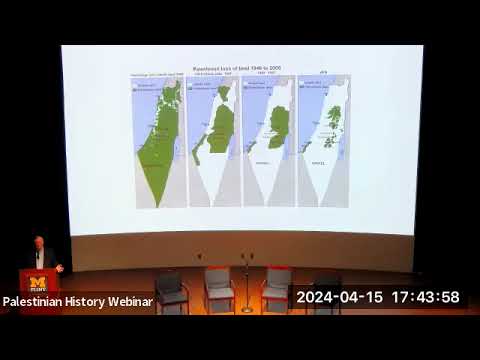
Even three years ago the situation was already dire, and it has gotten worse since then:


As such, the Palestinians are the most oppressed people in the world. There are other peoples who feel that they have the wrong citizenship and would like to secede, but at least they have a government and rights within that government's framework. They have someone to give them a passport, which Palestinians do not. There are other peoples that are in conflict and being killed in fair numbers. A not insignificant number of Palestinians has been killed by the Israelis, whether through often indiscriminate and disproportionate violence or through food and services blockades (a lot of Gazan children are stunted owing to the bad nutrition caused by the Israeli blockade of Gaza, which is an illegal collective punishment of noncombatants,including children.) But of course there are other groups that are killed in larger numbers. But I would argue that the psychological toll taken by the imposition of statelessness on a people is more debilitating than the knowledge that some of the group has been killed by oppressors.

European Jews themselves were made stateless by Nazi decree, as were millions of other Europeans (leftists were denaturalized by Franco in Spain, e.g.). In the post-WW II world, citizenship has become recognized as key to basic human dignity and civil rights. There are only about 12 million stateless now, and the Palestinians are the single largest group of them.

If there is not a two-state solution, with the Palestinians gaining citizenship in that way, then ultimately there will be a one-state solution, and Israel will over the long term be forced to take them on as Israeli citizens. Boycotts of an Apartheid situation will grow in Europe and elsewhere in the world, and Israel is vulnerable to such pressures. The US has so far backed even the worst Israeli policies to the hilt, but those days may be coming to an end, and anyway the US is now itself an indebted nation rather than a creditor. It is the creditors who are in the position to deny Israel access to world credit markets over time.

I know it is hard to imagine now the situation in 50 or 75 years, but I believe it will be increasingly unfavorable to Israel if the Palestinians are kept as chattel without basic rights deriving from citizenship. The rise of al-Qaeda and other radical movements is intimately linked to the oppression that the Palestinians suffer, and that wave of radicalization is not over. The Israeli and Neoconservative hawks who hoped that if Saddam were removed from Iraq, that Iraq would suddenly turn friendly to Israel have been proved fools. The ways in which Israel lost both the Lebanon war of 2006 and the Gaza War of Winter 2008-2009 in the court of world opinion are astonishing if the situation is compared to 1967, when the West supported Israel to the hilt in its war with Egypt. The trend lines are downward.

So if the Palestinians could get the UNO to declare a Palestinian state and pressure Israel over it, they would actually be doing the Israelis a huge favor.

The bully Netanyahu announced that if the Palestinians unilarerally declared a Palestinian state, then Israel would immediately formally annex the largest Israeli settlements on the West Bank. It is unclear why Netanyahu thinks a formal annexation would be meaningful. Israel has already de facto announced that territory and no one in Israel is even hypothetically offering to give it back. The question is not what has been annexed but what will be annexed. There is every reason to think that the Israeli far right will just steal all Palestinian land over time if this sham 'peace process' continues as it has since 1993.

Reuters has video on the Palestinian push at the UN for a state.

Aljazeera English reports on the Apartheid roads of the West Bank, on some of which Palestinians are forbidden to travel.


Aljazeera English interviews a Gazan ambulance driver about the events of the past three years.


The USG Open Source Center translates or paraphrases reports from the Palestinian press about Israeli attacks on Palestinians:

'IDF Wounds Gaza, W. Bank Farmers, Makes Arrests; Settlers Raid Hebron's Old City
West Bank & Gaza Strip -- OSC Summary
Sunday, November 15, 2009 . . .

IDF [Israeli Army] Wounds Gaza Farmer, Arrests 4 W. Bank Palestinians

Palestinian Information Center, website of HAMAS, in English reports at 1104 GMT on 15 November: "Israeli occupation forces (IOF) rounded up four Palestinian citizens in the districts of Bethlehem and Ramallah for interrogation at dawn Sunday (15 November), local sources reported. They added that IOF troops chased and wounded a Palestinian worker from Masliya village, east of Jenin city, also at an early hour on Sunday. They said that the soldiers fired at Khaled Abul Rub, 25, and wounded him in the feet while others were detained for working in 1948 occupied lands without permits. The Israeli occupation police said that they arrested 252 Palestinians from various West Bank districts over the past couple of days for working in the 1948 occupied lands without permits."

Bethlehem-based, independent Ma'an News Agency in English reports at 1349 GMT on 15 November: "A Palestinian farmer was injured by Israeli fire east of the town of Beit Hanoun in the northern Gaza Strip on 15 November, medics said. According to medical sources at Beit Hanoun Hospital, the farmer sustained several gunshot wounds in both feet while he was tending his land. Local sources in Beit Hanoun identified the farmer as 28-year-old Mahmoud Za'anin." Israel Issues Demolition Notices for 9 Hebron Homes

Ma'an in English reports at 1311 GMT on 15 November: "Israeli forces distributed demolition warrants to nine Palestinian families from the Al-Hathalin area south of Hebron, near the Karmiel Israeli settlement. According to local resident Imad Al-Hathalin, the families in question recently sent letters to caretaker Prime Minister Salam Fayyad asking for his intervention to stop the demolitions from proceeding. Al-Hathalin explained that the demolition notices included residential homes and a chicken den."

Israeli Settlers Raid Old City of Hebron, Cause Damage

Palestinian Information Center in English reports at 1005 GMT on 15 November: "Jewish settlers wreaked havoc in the streets and homes in the Old City of Al-Khalil (Hebron) on 14 November that caused material damage to Palestinian citizens, local sources reported. They noted that the Jewish settlers started their rampage with a provocative march in the city streets that turned violent when the settlers attacked Palestinian homes and shops and assaulted their owners. Israeli occupation forces (IOF) were deployed in the alleys of the Old City of Al-Khalil and the Ibrahimi Mosque to protect the Jewish settlers while celebrating one of their feasts. In Yatta village, Al-Khalil district, a 65-year-old woman was injured along with three kids when eight Jewish settlers threw stones on them. The Israeli occupation authority (IOA) only a few days earlier delivered notifications to 12 citizens in the village warning them that their homes would be demolished. The IOA delivered similar notifications to 9 families in Rujaib village, Nablus district, on Saturday. The families appealed to human rights groups and the media to back their case, as tens of women and children inhabit those homes and implementing the oppressive decision would leave them in the open without shelter." '


End/ (Not Continued)
For "cont'd" postings, click here.

Submit to RedditSubmit to SlashdotStumble Upon Toolbar
Email to a Friend: