
Craig Murray on Manufacturing Terror
Oil, Lily Pad Bases and Torture
The Bush administration has been about "the Greater Middle East" (including Central Asia). It has been about basing rights in those areas. It says it is fighting a "war on terror" that is unlike past wars and may go on for decades. It has been about rounding up and torturing large numbers of Iraqis, Afghans and others. This region has most of the world's proven oil and gas reserves.
Why is the Bush administration so attached to torturing people that it would pressure a supine Congress into raping the US constitution by explicitly permitting some torture techniques and abolishing habeas corpus for certain categories of prisoners?
(See David Corn's "This is What Waterboarding looks like.".)
Boys and girls, it is because torture is what provides evidence for large important networks of terrorists where there aren't really any, or aren't very many, or aren't enough to justify 800 military bases and a $500 billion military budget.
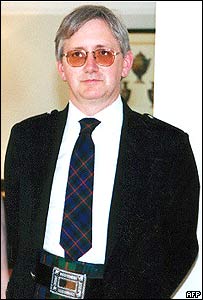
I was at the conference of the Central Eurasian Studies Society the last couple of days. Saturday evening, former UK ambassador to Uzbekistan Craig Murray addressed us. He served in Tashkent 2002 through 2004. Murray was providing copies of his new book, "Murder in Samarkand," which unfortunately is not yet available in the United States.
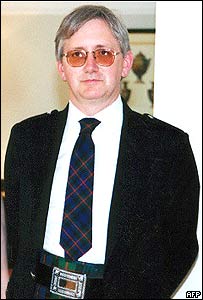
Murray raised the curtain on the Bush-Blair "War on Terror." He does not deny that there are small groups of persons intent on harming the West. But he does not think that most of what the Bush administration has done in Central Asia is about that threat.
He explained what is really behind the new "lily pad" doctrine of US bases, whereby the US is seeking to encompass the "Greater Middle East" with small bases, each with 1,000 to 3,000 personnel. In emergencies, these bases could quickly swell to 40,000. Like a lily pad, they can "open up" and accommodate a landing frog. Murray said that the US documents are quite open as to why they are seeking the network of lily pad bases around the Middle East. It is because that is where the oil and gas are. If you include the Caspian region, Tengiz, and the gas reserves in Turkmenistan and Uzbekistan along with what is in the Persian Gulf, the vast majority of proven oil and gas reserves are in this circle of crisis.
With the economic rise of China and India, such that both giants (over a billion in population each) are now using more and more gas and oil, there is going to be increasing pressure on fuel supplies and prices in the next decades. Europe also lacks much energy of its own and is a major importer. The US fields are rapidly declining. Washington wants access to that fuel, and wants to be able to protect its access militarily.
In essence, I understand Murray to argue that the Bush administration hyped the al-Qaeda threat in order to have a pretext for the lily pad strategy of oil security. Murray did not say so, but this strategy would then logically underlie the conquest and military occupation of Afghanistan and Iraq, as well.
Murray's exhibit number 1 is Uzbekistan, which has major gas reserves. The US sought and received basing rights there after September 11. The US supported the government of Islam Karimov, the old Soviet apparatchik who turned himself into a post-Soviet dictator. The US and the UK maintained in their official documents that Uzbekistan was making progress toward democracy. They praised Uzbek elections as a sign of such progress, even though Karimov did not allow the opposition to run in the elections.
Murray began receiving photographs and other evidence from victims' families that the Uzbek government was engaging in brutal torture techniques as part of its interrogation of dissidents. One corpse had been beaten around the neck and jaw, and boiled alive. There was a line across his chest, under which it was scalded. Boiled like a lobster.
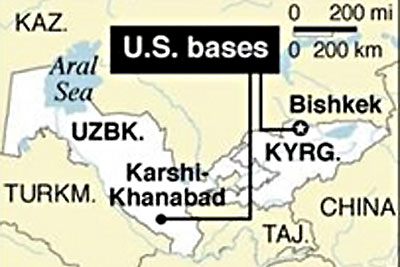
Yet the UK and the US were giving large amounts of foreign aid to Uzbekistan and winking at the political repression and torture. (Murray may not have known at that time that the US had a detention facility at its Karshi-Khanabad airbase in Uzbekistan, at which it was also torturing suspects.) The US was hoping that its corporations would be given contracts for the development and export of Uzbekistan natural gas. (In late 2004, the Uzbeks made their contract with the Russian Gazprom firm instead, and almost immediately Karimov began planning to ask the US to leave the base.)
Murray as UK ambassador began seeing CIA reports naming known al-Qaeda operatives who were prominent in Uzbekistan. But these turned out to be just run of the mill Uzbek politicians who were on the outs with Karimov. Where did the CIA get this information about high-level terrorists in Uzbekistan? From Karimov's secret police. And where did they get their phony "intelligence"? From torturing dissidents and making them admit to being al-Qaeda and implicating others as al-Qaeda. From torture. From the twilight of conciousness before the boiling killed them. From lobsters.
Now I have to back up and tell you about Uzbekistan. Uzbeks have a Muslim heritage. They have Muslim names. But Uzbekistan is a country full of atheists and secularists. It is more secular than France. Everyone drinks vodka like fish. Almost no one could actually tell you how to pray the five daily prayers. There are a few. They are considered odd by the other Uzbeks. I know a sociologist brought up in the Soviet Union who has studied its "Muslims," who were deracinated over 60 years, and he said, "What you have to understand is that they were normal Soviet citizens." He is right.
The government of Islam Karimov, which is basically corrupt dusted-off apparatchiks from the old Soviet system, is aware that the West is afraid of Islam. And as people brought up Communist, they don't like it either. So they scare the Americans and Europeans with tall tales about an Islamist menace in Uzbekistan, which attract support to the Uzbek government and also cause the Westerners to make excuses for a degree of political repression that approaches that characteristic of Saddam Hussein in the old days.
There is an academic industry in the United States, by the way, of alleging radical Muslim fundamentalism is a big problem in Uzbekistan. It is bunkum. The Islamic Movement of Uzbekistan, which was tied to the Taliban and al-Qaeda, had between 150 and 1,000 members at its height, and that was about it for Islamism in Uzbekistan.
In a poll done in 2002 by Pew, 91 percent of Uzbeks agreed with Bush's War on Terror and the way it was being waged! You couldn't have found those numbers anyplace else in the world, maybe even in the US!
Murray pointed out that if you had a referendum in Uzbekistan on whether Islamic canon law should be the law of the land, and explained that it would result in a ban on vodka, less that 1 percent of the population would vote for it. That is certainly true.
So there isn't, frankly, any al-Qaeda to speak of in Uzbekistan. But Karimov used torture and false allegations to manufacture an al-Qaeda, and Murray thought that the Bush administration and elements in the CIA were swallowing it hook, line and sinker.
I came away from this consummate insider's presentation with a sinking feeling that Uzbekistan is the tip of the iceberg. I kept thinking about the thousands of Iraqis that the US military rounded up and imprisoned for months without charge. Some proportion of them were tortured. And then the US military in Iraq and the Bush administration in Washington kept coming out and saying that the guerrilla war there from 2003 forward was being fought by al-Qaeda in Iraq.
That clearly was not true for the most part. The US military recently killed Abu Musab al-Zarqawi, the supposed leader of "al-Qaeda" in Iraq, but that has made no difference to the war. But why did they think it was true? Were they just lying? Or was that what their torture victims were telling them because it was what they thought they wanted to hear? Was the torture at Abu Ghraib about "finding" an "al-Qaeda" at the center of the Iraqi insurgency, when there was actually no such thing?
Likewise, do we know that the resistance to foreign troops in southern Afghanistan is being led by "Taliban" because torture at Bagram elicits this identification? What if it is just local Pushtun good old boys who don't like foreigners and wouldn't know Deobandi theology from a pomegranate?
Remember the charges Cheney and Rice made that Saddam was training al-Qaeda operatives in use of chemical weapons? Never happened. Where did the "intelligence" come from? They tortured an al-Qaeda captive named Ibn al-Shaykh al-Libi, who told them that lie. The lie was denied by more senior al-Qaeda figures such as Khalid Shaikh Muhammad. But Cheney and Rice chose to depend on the false intelligence generated by torture. Because that falsehood was useful to getting up the war they wanted in Iraq, and to securing the oil contracts and the military bases they wanted in Iraq.
The Bush administration needs the Terror/ al-Qaeda bogeyman to justify the military occupation of strategic countries that have or are near to major oil and gas reserves. It needs al-Qaeda to justify the lily pad bases in Kyrgyzstan etc.
But the problem is that we now know that serious al-Qaeda is probably only a few hundred men now, and at most a few thousand. Look at who exactly did the London subway bombing. A few guys in a gym in Leeds. That magnitude of threat just would not keep a "War on Terror" in business. The embassy bombings, the Cole, and September 11 itself were done by tiny poorly funded cells that functioned as terror boutiques to accomplish a specific spectacular operation. They don't prove a worldwide, large organization. They prove tiny effective cells. Most of what the Pentagon does and can do is irrelevant to that kind of threat. You'd be better off with some good FBI agents.
So how do you prove to yourself and others a big terror threat that requires a National Security State and turn toward a praetorian society? You torture people into alleging it.
Global terrorism is being exaggerated and hyped by torture just as the witchcraft scare in Puritan American manufactured witches. It is even to the point where 5 African-American and Haitian Christian cultists in Miami can be identified by the FBI as an "al-Qaeda threat" interested in "jihad" after an FBI informant offered to hook them up with al-Qaeda.
Bush needs torture for the same reason as Karimov does. He needs to generate false information that exaggerates the threat to his regime, so as to justify repression. He needs the ritual of confession and naming others, to have it down on paper so he can show it to Congress behind closed doors. But Bush/Cheney's ambitions are global, not just internal.
Murray made too many noises about human rights in Uzbekistan for the comfort of Blair's Foreign Office. He believes that UK ambassador in Washington David Manning got pressure from the Cheney Administration to shut Murray down. The Foreign Office tried to bribe him with an offer to be ambassador in Copenhagen. He declined the bribe, insisting on staying in Tashkent, where he believed he was doing important and effective work. Then the Foreign Office trumped up some false charges against him, which were dismissed. (I believe that these two tactics are widely used in both the UK and US government, and that most people fold in the face of them.) The Blair government ultimately just had to fire Murray.
I was honored to meet this courageous and clear-sighted man. I hope his "Death in Samarkand" will wake some congressmen and senators up, and will provoke some sharp questioning and rethinking about the "War on Terror." If this "War on Terror" leads to our praising Karimov for having elections in which the opposition cannot run, or to our swallowing false "intelligence" about vodka-swilling dissident Uzbek politicians being "terrorists" and "al-Qaeda", then it is leading to the Death of our Republic.


30 Comments:
there is going to be increasing pressure on fuel supplies and prices in the next decades
I've never understood how military force relates to this problem, or how oil can be used as a justification for the size of the military establishment we have. Oil is fungible and gets sold to the highest bidder. Oil producing nations simply must sell it. Unless you are using military force to seize oilfields and turn them over to your own oil companies, the military is irrelevant.
the terror hype...one could also mention the outrages nonesense about the 'liquid bombs'.
as everybody knows, it is very complicated to create explosives from liquid. only few liquids can be used for that and you need an expensive laboratory for the process. in other words: the idea that somebody might build a bomb that way while sitting in a plane is just utter nonesense.
there are serveral publications on the net by a british counter terrorist expert who never seem to make it into the mainstream media.
even though the whole idea is just rubbish, governments have placed restrictions on the amount of liquids you can take on a flight.
obviously simply to keep people being afraid of the terrorists.
this whole affair makes you want to scream!
Water-boarding and sleep deprivation may yield all sorts of lurid "confessions" to fit the interrogator's template. They fill files and files, adding to other "chatter" the NSA tabulates and then charts using obscure algorithms. None has any more predictive value than an ouija board, Nostradamus, or palm reading. However, we are supposed to believe they prevent countless Al Qaeda cells from repeating 9/11. And, if we don't find cells, that "proves" the need for more draconian efforts and scary premonitions.
The use portable nuclear bomb, by any anti-US group, would be a formidable terror threat. However, relatively little money, manpower, or public frenzy address this hazard.
Torture.
Bravo ! I have to congratulate the U.S. – and please correct me Prof. Cole if I am mistaken – it is the only country in modern history with the Zionist Entity that can discuss this subject openly on T.V. with even chat shows and phone-in and more importantly LEGALISE IT in the name of freedom and democracy. It is obvious at this stage that the axis US–Israel goes beyond mere interests or lobbies.
I am also at a loss when something as illegal as international extra-judicial killings are discussed on prime time T.V. with presidents and politicians boasting on who is trying to kill who first.
Not even the most obscure tin-pot dictator ever dared or dreamt to do it, though they and we are watching and learning.
There is an excellent BBC TV documentary, which sadly I can not find a reference to, which shows the extent of the "fear industry" the US/UK have created around the tiny al-Qaeda to serve their schemes.
The important thing is, however, that they are now in big trouble as a result.
The Russians and Chinesesee no threat from the US/UK presence in their backyard, but a quagmire that sucks in their resoureces and credibility similar to what happened in the last days of the Soviet empire.
The USA may face economic ruin from a run on the dollar, property buble burst, credit crunch to fund its budget deficit, or an unfoseen crisis. In cases like that, the military spending and overseas bases are the first to go. Just ask the British and the French what happened to them in the last century.
In the name of God,
So, on one hand, they slaughter hundreds of thousands of civilians to plant the seed of an eventual real threat. (Lebanon, Iraq, Afghanistan. ) Second, they torture enough people to create a phony threat in the meantime?
Don't the American people know that these thugs are engineering World War 3? When are we going to wake up?
-Ahmed
Your analysis here is nothing short of brilliant. It has allowed me to truly understand how the economic issues really fit into this situation -- an analysis that no one else is providing, I fear. I commented on your thesis at length on In This Moment.
Yes, I used to be puzzled by the military option with regard to gas and oil, and I had bought the argument that they are so easily exchanged for cash with virtually any other part (i.e. that they are fungible) that it is impossible to control them.
Apparently that argument doesn't hold water any more in our new world. There was an oil glut for most of the twentieth century, which underpinned the argument. The glut is over. There is very little excess production capacity beyond demand.
The competition for energy resources with Europe, China and India and the decline of US and some other non-Middle East fields is creating a new situation. If the resource is scarce, and can be used up by one party rather than another, then there will be competition for it. There is now the possibility of proprietary contracts, which may lock out some consumers.
That is, in an oil and gas market that is increasingly tight, the consuming nations are now playing musical chairs. Someone could get caught without a chair when everyone sits down.
One way you make sure you don't get caught without a chair is to pull a gun on the other players and order them over into the corner while you sit on the chairs.
I think drawing a parallel with the Cold War might be appropriate here. In some countries there were communist-led insurrections, in others there were insurrections in which communists participated, in still others there was neither an effective communist movement NOR an insurrection, but it suited U.S. policy to pretend there was -- often because U.S. business interests demanded it.
Substitute "Al Qaeda" or "Islamists" or "jihadis" for communists, and you can see the same dynamic at work in the Greater Middle East.
But this isn't to say that jihadis aren't playing a key role in some of the hot spots in the conflict zone. Those Pashtun good ol' boys may not be hardened Taliban, but it does appear the core of the old Taliban is providing the organization and the direction.
In Iraq, the risk is that the U.S. military presence -- and the obvious American desire to permanently colonize the country -- has created a native radical jihadi movement where none previously existed, allowing Al Qaeda to put down local roots.
In other words, what Murray says about Central Asia may be (and probably is) precisely true, but it may not be true elsewhere.
However, the oil and gas angle could certainly explain why the "war on terrorism" has evolved into such a grand imperial project. In that sense Juan Cole may be right -- all the hoopla about how the war in Iraq is inciting jihadism may be completely beside the point. If keeping control of the oil and gas is now the Great Game, then terrorism is just a cost of doing business, and may be secretly seen as such by the powers that be. Although if that is the case, it's ridiculous for anyone to think it can be kept away from the U.S. homeland for long.
This analysis is interesting, but I'd like to pick up on one point made by an earlier commentor. Why go public about torture? Why get the Congress to sign off on it? Why not just do it and then stonewall? Clearly governmental entities througout the world and throughout history have used torture for various means. But haven't most modern states, in the 20th century at least, officially denied and disavowed the practice while using it in semi-secret conditions? Even a proto-fascist government like that of El Salvador in the 1980s felt the need to distance itself from some of the most egregious actions of the security forces by using out-of-uniform "death squads." Of course, I don't know Salvadoran law of that period, but this is a question.
One possible answer that comes to mind is that this may be an indirect result of Jennifer Harbury's suit against the U.S. government about the death of her husband, a Guatemalan guerrilla commander. Could it be that the fact that a case of CIA torture and extrajudicial execution reached the Supreme Court convinced the administration that they were legally vulnerable?
To AlsoBobfromCT:
The key here is control not possession of oil resources. What you say is basically correct and for precisely that reason if the supply is choked off somewhere, the US which is the world's major oil addict will be the first to suffer when the price rises as a consequence.
Dr. Cole, your insight is perfect.
"One way you make sure you don't get caught without a chair is to pull a gun on the other players and order them over into the corner while you sit on the chairs."
Exactly right. This incidently is also why alternative energy development is so discouraged. Who would want to play a game of rigged musical chairs with a man holding a gun?
On the other hand, if alternative energy isn't developed until the men with the guns are in total control of it the game continues on.
You are also totally correct about the use of torture, which is not only inhumane but no way to really get accurate information on what is happening.
You can torture anyone into admitting anything, and the victims' statements provide a paper trail that the ruthless can use to justify or scapegoat anything they want.
It's not just a simple matter of torturing "because they can". It's a matter of torturing because they think they can profit from it.
Similarly, the chaos in Iraq is not a simple case of ineptitude. It serves a purpose for someone, or some ruthless group or groups of people. The carnage will continue until there is no more profit in it for them.
Who are "they"? Let me leave that as an exercise for the reader. Although I'm sure we all could quickly pinpoint a few individuals.
In the name of God,
What can we do now, as normal citizens, sitting around biting our nails?
I think we need to shut down this massive military operation, and devote any and all resources into alternative energy. By the time we would really need these fossil fuels we'll have developed a way to curtail their use.
With these type of extremists in our Government, an American Civil War is only inevitable.
The reason for going to great efforts to create a legal foundation for the seizure and torture of Uzbek opposition politicians - is to prepare a legal foundation for the seizure and torture of American opposition politicians.
Mr. Murray's scenario fits the facts. If you own the oil fields or the rights to develop them, you can sell or withhold the product at will. Secondly, in theory, threats to a vital production source can be quashed more easily if military forces can be rapidly deployed to that area. Ironically, the Bushites have created the very instability they had hoped to combat by attempting to establish a friendly, pro-US Iraq. Unfortunately, the administration proved clueless about how difficult such an effort would be. No doubt the Pentagon assumed the elimination of Saddam would be universally seen by grateful Iraqis as a salvific event and readily accept whoever the Americans had in mind to lead the country. No doubt this was what people like Ahmed Chalabi were telling the cabal in the Pentagon. No doubt that is what they wanted to hear.
Prof. Cole:
Empire, by any other name, it still Empire. From the conquest of the West to the wars with Mexico and Spain and the Little Wars in Central America (pre-WW2 and post-WW2) there has been a certain part of the American psyche that seeks greatness through force of arms (a hold over of Old Europe twin infatuations with the Roman Empire and the Great Men that lead it). Today's American Empire, like the Byzantines before them is an inherited Empire (this time from the British) and as such seeks to preserve it self at all cost. If it means publicly shooting the Republic in the head, so be it.
As for the threat, it is not a "Phantom Menace" although it is been exploited by Bush/Blair as such. What we are seen is, in fact, the genesis of a new world conflict. I am not summoning the tired specter of wars past (WWIII, IV, or V) but what I would call the First Global Insurgency (or to quote a favorite anime series from the 80's, a Global Civil War), where disparate sub-national/cultural, national and transnational movements work together against the North (not the West, this more about the Poor South vs. Wealthy North, than East vs. West). Sadly, fanatics on both sides are using the conflict to advance their narrow agendas instead of dealing with the root causes of this divide.
I would be careful not to paint the picture as a zero-sum-game, either, at least not among the big players. China needs a prosperous US just like the latter needs a prosperous China. I am somewhat baffled by the recent episode of US sabre-rattling towards China. I think in the long run, the interests of both are going to converge. The politics needs to catch up to the economics.
Keynote speech by Ray McGovern (a CIA analyst for 27 years) on FSTV 10.1.06 @ 7:00 pm (From a lecture last April). (Maybe it will be online - I didn't see it listed @ FSTV)
I saw this the other day - he was also talking about the US being a part of torture where people were boiled alive.
It is almost beyond belief and I have heard few people mention it.
There definitely seems to be an aspect of Bush administration policy where flaunting torture - practically bragging about it - is part of their strategy. I don't think that it was meant to be hidden from Americans and esp. from the people of the Middle East.
I think it is meant to be a weapon of intimidation.
I also think that most of the "terrorism" that Bush wants us to be afraid of is either bogus or CIA and ISI contrived.
Bush was acting practically gleeful at the ideas in the NIE report that said that because of US actions in Iraq and elsewhere in the Middle East - the people over there were becoming "angry" and was "breeding a deep resentment" as if that vindicated his "war on terror".
Interesting info about the "Lily-pad" bases. I had heard that something like 14? bases were planned for Iraq - and more for other areas. Big plans to keep the US in oil and gas - no plans to conserve.
Why go public about torture? Why get the Congress to sign off on it? Why not just do it and then stonewall?
The simple fact is that the administration is worried about the Republican's losing the house and the senate. If this happens then there might be oversight (but I personally think the Dems just don't have the stomach for it nor do they want to lose this power that the Republicans have created).
As for the economics of this matter, I'd have to sit back and scratch my head on this one. With China, we need them just as much as they need us. They don't have enough of a middle class to support their economic growth (yet) But when they do, that's when we American's need to worry. China owns way to much of our debt and I am ashamed that the American people don't consider this a bigger threat to the US than terrorism.
Terrorism has been a wonderful little windfall for defense contractors and other company's that have been profiting off war.
It is time for the American public to read and pay attention. If we don't then we will only have ourselves to blame for becoming a third world country with a first world military. And we all know what that means; yes war on a scale this world hasn't seen since WWII.
"...then it is leading to the Death of our Republic."
Yes, this is true as is the reason for torture - to generate sufficient number of tortured confessions to justify brutality.
Unfortunately for us, there are at least two additional reasons for torture. One is the obvious result of turning an entire nation into insurgents. Through torture, the US goon squads (and their Israeli advisors) have set into motion a chain of events designed to lead Iraq into chaos and finally destruction. All the better to steal their oil.
The other reason is to establish pseudo-legal precedents on the use of torture, the better to subjugate unnecessary populations, and folks, to the movers and shakers in this great land of ours, we are unnecessary populations if and when oil shortages, which lead to materials shortages, food shortages and electricity/information shortages, take hold.
As long as there is an economic system which serves to generate "wealth through debt" which eventually ends up in the hands of the very wealthy, there is a purpose for us. As soon as the system defaults, we no longer have a purpose; we have become a liability. To hasten that day is the legacy of George W. Bush.
As always, good stuff from Mr. Cole, however I still do not understand several aspects of the "oil" question. For example, only about 20% of US oil comes from the M.E. right now and at home we have all the fossil fuel we could ever need. (Although some of it may not be profitable to sell now, although that could change soon with rising prices).
Leaving alternative sources aside, we have 250 years worth of coal in this country which is cheap and perfect for electricity, and which could also be used to make hydrogen for automotive use. Next there are the discoveries of crude at ANWR and the Gulf of Mexico. Following that, we could make a push on shale oil of which we have a practically unlimited supply. Finally, we could also go nuclear in a big way, with the latest technology plants, which again can also be used to generate hydrogen for automotive use (which could be used with fuel cells or conventional internal combustion engines).
Some questions given the above:
1. Why is coal use being phased out?
2. Why have no nuclear plants been built for 30 years?
3. Why has ANWR not been developed?
4. Why is 20% of our oil worth ANY U.S. involvement in that difficult and troubled region, the Middle East?
It is irrelevant what percentage of US petroleum use comes from Middle East sources. The world oil market is one market. If there is a labor strike at a big oil field anywhere in the world, it affects everybody's prices.
The important thing is that US production is rapidly declining, as is that of most non-Middle Eastern producers. If you think ten, twenty years out, the Persian Gulf and greater Caspian regions are going to become more and more central to all consumers. That gives them power that Washington does not want them to have.
Coal is irrelevant as things now stand to fueling transportation.
The US public does not like nuclear power plants after Three Mile Island. They anyway are not that competitive if you count the environmental damage. And, their by-products could fall into the hands of terrorists.
Brig. Gen. Mark Kimmitt:
"The Zarqawi PSYOP program is the most successful information campiagn to date."
I don't have a quote for when they claimed to "villinize Zarqawi/leverage xenophobic response" in the Iraqi people, and they also admitted it was all primarily for the "home audience" - that would be us.
And yet I saw Martha Raddick (TV news person, I forget which channel, probably CBS) say that she got a call at 2 AM saying they had killed Zarqawi and she went on and on about how he was such a bad man, and did so many horrible things in Iraq.
Today, the news said they caught another al Qaeda top leader in Iraq. They have made this claim dozens of times.
Well if there was a massive price hike, we could use shale oil for transportation purposes, or E85. Both of these are not environmentally advantageous, but would not require any large infrastructure changes. Also, as far as I understand these things, the design used for U.S. nuclear plants does not produce any weapons grade by-products, however I believe that the French reactors do. The advantage of that design is that the waste can be re-used as fuel. In any case, with regards to the most important environmental factor, CO2 emmisions, nuclear has advantages.
However as you state, from a global perspective, the status quo would be an increase of the power of the Gulf states since they have the largest reserves. Enhancing this effect is the increasing interdependence of the world's largest economies upon one and other making this issue a concern even for those countries that use little or no M.E. oil. It is easy to see the potential for problems with this arrangement as the states there are not always stable. A small foreshadowing of this was the Iraqi invasion of Kuwait. So a small group of unstable countries is one of the foundation pieces of the entire world economy. Whoever thought of this, I don't know...
At any rate, it is a difficult problem and the answer the U.S. seems to have had for a while now is the (neoconservative) idea that only the U.S. can be depended upon to guarantee the stability of the region mainly by a large U.S. military presense in the area to deter any trouble. So that is one reason why Hussien had to go, he was too unpredictable and Iraq would be a good place for bases. However Wolfowitz's utopian theories about the transformative powers of democracy and how the Iraqis would take to it right quickly if we just got Hussien out of the way proved to be misguided.
So now with the failures of the current policy evident, two questions remain:
1. How to solve the mess in Iraq
2. How should the world deal with the issue of the rising power of the Gulf region and the potential for future Gulf War I-like problems placing the world economy at risk?
Now to round out the holistic assessment of our predicament we need to add robust Global Heating and its pitfalls. Current oil production is about 84.5 Million Barrels of Oil Equivalent (MBOE) per day, 1Billion BOE every 12 days, for about 30 BBOE/YR; it's quite likely that we will stay on a plateau at about the same levels of supply and demand. Business-as-usual will likely continue regardless of increasing pressure to control emissions until we reach the edge of the plateau and start the long decline in total BOE production, a point to be reached in 2009 after burning about 100BBOE [$8Trillion/$80bbl]. But the key metric is how much BOE and finished products are being exported as exporters' economies consume a larger share of total production. By this metric, it's very clear we are on a plateau, and that the top ten exporters show incresing domestic usage and incresed oil field production decline [See theoildrum.com for many discussions and comments about this item.]. Yeah, we got a lot of coal, and we produce a lot of tobacco too.
When Bush said "Bring 'em on," he had no clue that Gaia would become the primary challenger.
According to projections by the Department of Energy, rapid growth is expected from nonhydroelectric renewable sources of energy. Interestingly, they also expect an increase in power generation from nuclear energy. According to their AOE:
Total primary energy consumption, including energy for electricity generation, grows by 1.1 percent per year from 2004 to 2030 (Figure 32). Fossil fuels account for 88 percent of the growth, with coal use increasing by 53 percent, petroleum by 34 percent, and natural gas by 20 percent over that period. The increase in coal consumption occurs primarily in the electric power sector, with strong growth in electricity demand and favorable economics prompting increases in coal-fired baseload capacity. More than one-half of the increase in coal consumption is expected after 2020, when higher natural gas prices make coal the fuel choice for most new power plants. Growth in natural gas consumption for power generation is restrained by its high price relative to coal. Industry and buildings account for 71 percent of the increase in natural gas consumption from 2004 to 2030.
If military presence assures oil access, wouldn't Iraqi output be higher? Perhaps troops and planes are useless for this purpose. Venezuela sells the US most of its oil, independent of any rhetoric, posturing, or military presence. China's SINOC gets oil wherever it can with no military "lily pads" whatever. Ecuador recently seized Occidental assets without causing any sabre rattling from the US.
Oil was certainly flushing somewhere in Cheney's mind when planning for Iraq (before 9/11), but mainly because the status quo and the prospective dismantling of the sanctions would favor the French and keep the US away from the table.
Oil executives would have found it easier to deal with the existing state oil monopoly than any pseudo-privatized network of oil mafiosi in a system devoid of contract law or due process.
What of the eccentric G. Palast's argument that Cheney wanted to invade Iraq to prevent its added crude from lowering world prices? Somehow (?) the conspiracists thought Iraq would be a cakewalk but also knew that it would be so chaotic that production would never rise.
The oil militarism theories are either wobbly, unprovable, or fail to explain use or non-use of military bases or force.
Addendum for spin proof:
Tom Regan has discussed the Adam Curtis BBC documentary in csmonitor.com in his readable article "Politics of 'fear over vision' explored on British television" http://www.csmonitor.com/2004/1018/dailyUpdate.html
Adam Curtis answered viewers' questions about his documentary: http://news.bbc.co.uk/1/hi/programmes/4202741.stm
Hope that's what you have been looking for.
"Global terrorism is being exaggerated and hyped by torture just as the witchcraft scare in Puritan American manufactured witches."
An excellent analogy. It vividly illustrates both (1) that the information obtained through torture is utterly untrustworthy, and (2) that the war on terrorism is a glorified witch hunt. The insight for me is that the need for torture is actually evidence of the lack of true global threat. If there were such a threat we wouldn't mess around with these bogus methods! But there is a need to generate information here, where it is otherwise lacking. So these people are coerced into being "content providers."
the BBC documentary about "fear" that you are seeking is called, "The Power of Nightmares" : “this three-part documentary explores the use of fear for political gain. "Baby It's Cold Outside" examines historical aspects of international threats. "The Phantom Victory" looks at how two seemingly disparate groups -- radical Islamists and neo-conservatives -- apply similar tactics. And "The Shadows in the Cave" begs the question, "Is organized terrorism an illusion?"”
NYMEX crude falls below $61 on high U.S. inventories : “Front-month U.S. crude for November delivery was trading down 16 cents at $60.87 a barrel on the Globex electronic trading platform, after falling $1.88, or 3 percent, on Monday, pressured by brimming U.S. distillate inventories, which stood at a seven-year high ... The U.S. Energy Department said on Monday it will hold off buying replacement oil for the nation's emergency petroleum stockpile through the winter heating season (ie., through the 07-NOV election :) in order to keep more supplies on the market.”
Assuming that “the policy idea of Green Zone military bases not to "occupy" territory per se, but to "control strategic OIL" supplies and flows” is TRUE, in the sense that: (A) people in power think this is do-able militarily; and, (B) people in power believe this GeoPolitical strategy will be successful = beneficial industrially...
...has, in my opinion nonetheless been proven to be unsuccessful. The Green Zones are entirely consumed by the work of sustaining themselves; their force projection is capable of "controlling" little else than their own supply lines; and, they are not scalable. Further, given the quantity of Treasure debt expended to achieve and sustain this Green Zone Agenda, even in the cold, hard light of some leather-bound report on the Banker's BoardRoom table, devoid of all blood cost : this deal doesn't pencil.
So, i have no doubt that some people may be, in fact pursuing this agenda, Professor ~ but imho the results so far are telling us that there is insufficient R.O.I. to continue doing so. By now, I believe that James Baker, et al, do realize this, too.
Post a Comment
<< Home