
Taliban Hit NATO Warehouses, Destroy 150 Trucks

Posted on 12/08/2008 by Juan

Unidentified militants attacked a NATO forward storage center at the ring road (beltway) of the northwestern Pakistani city of Peshawar on Sunday morning. They destroyed some 150 trucks loaded with materiel and supplies, including humvees, intended for NATO troops in Afghanistan. Peshawar is the capital of one of four major Pakistani provinces, the North-West Frontier Province, which is heavily Pushtun.

Dawn writes:

‘This was the most severe assault so far on Nato supplies in the region. The two terminals were littered with burnt Humvees, cranes, military trucks and hardware. Security guards said that over 200 heavily armed militants subdued them and started torching the parked convoy of vehicles and containers at Al-Faisal and Port World Logistics terminals. Kifayatullah Jan, who looks after one of the terminals, said that about 100 Humvees and armed personnel carriers loaded on trucks had been damaged. In all 106 loaded lorries and containers parked at the terminal were set ablaze.’

Likely, this operation was carried out by the Tehrik-i Taliban Pakistan (TTP), led by Baitullah Mahsud. The Pakistani Taliban differ from their Afghan cousins in being mostly tribal rather than clerically trained in madrasahs (though they have some clerics among them). They have organized in the Federally Administered Tribal Areas that lie between the North-West Frontier Province and Afghanistan.

A vague and not very inaccurate analogy could be made between the 13 tribal agencies and Indian reservations in the US. Pakistan’s population is 165 million or so, while the population of FATA is about 3.5 million. Moreover, many clans in the tribal agencies actively oppose the TTP and have engaged in battles with them. So the Pakistani Taliban are a relatively small group, probably a few thousand strong. They are powerful in North and South Waziristan but also in the northern agency of Bajaur. And apparently they have gained strength in the Khyber Agency, as well.

Since FATA abuts Peshawar, the Pakistani Taliban have on several occasions encroached on that city. The Khyber Agency lies between Peshawar and the Khyber Pass, the easiest road into southern Afghanistan from Pakistan (I traveled that route once and remember when the road opened out on the pass–but I had to stay on the Pakistan side).
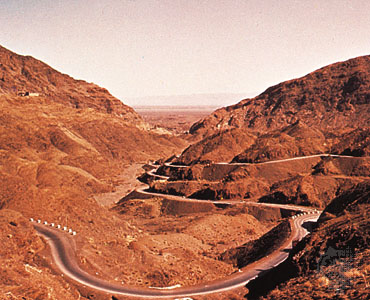
Most of the border area between the two countries is mountainous, so the Khyber Pass has long been prized by would-be conquerors on both sides of it. Alexander the Great came through it into India. Babur (from what is now southern Uzbekistan) brought his armies from Kabul down through the Khyber Pass to conquer India in the early 1500s, establishing the Mughal Empire.

NATO forces receive the bulk of their supplies overland via Pakistan, and so are profoundly dependent on the security of the Peshawar-Torkham route. The US has few options if it wanted to replace the Khyber Pass route. Iran lies due west of Afghanistan, and the US has bad relations with it. The US lost its base in Uzbekistan because it was viewed by President Islam Karimov as having provoked and supported a popular movement against him.

Airlifting the supplies in would be very expensive. So fixing the Khyber problem is key to supplying the NATO forces.

Meanwhile, on another front: Pakistan’s government is said to be quietly cracking down on a different source of turmoil, the Lashkar-e Tayiba [Army of the Good], which is thought to be behind the attack on Mumbai.

President-Elect Obama has praised the way the Pakistani president, handled the initial days of the crises.

0 Retweet 0 Share 2 StumbleUpon 0 Printer Friendly Send via email

Posted in Uncategorized | Comments Off | Print

Comments are closed.

Taliban Hit NATO Warehouses, Destroy 150 Trucks

Posted on 12/08/2008 by Juan

Unidentified militants attacked a NATO forward storage center at the ring road (beltway) of the northwestern Pakistani city of Peshawar on Sunday morning. They destroyed some 150 trucks loaded with materiel and supplies, including humvees, intended for NATO troops in Afghanistan. Peshawar is the capital of one of four major Pakistani provinces, the North-West Frontier Province, which is heavily Pushtun.

Dawn writes:

‘This was the most severe assault so far on Nato supplies in the region. The two terminals were littered with burnt Humvees, cranes, military trucks and hardware. Security guards said that over 200 heavily armed militants subdued them and started torching the parked convoy of vehicles and containers at Al-Faisal and Port World Logistics terminals. Kifayatullah Jan, who looks after one of the terminals, said that about 100 Humvees and armed personnel carriers loaded on trucks had been damaged. In all 106 loaded lorries and containers parked at the terminal were set ablaze.’

Likely, this operation was carried out by the Tehrik-i Taliban Pakistan (TTP), led by Baitullah Mahsud. The Pakistani Taliban differ from their Afghan cousins in being mostly tribal rather than clerically trained in madrasahs (though they have some clerics among them). They have organized in the Federally Administered Tribal Areas that lie between the North-West Frontier Province and Afghanistan.

A vague and not very inaccurate analogy could be made between the 13 tribal agencies and Indian reservations in the US. Pakistan’s population is 165 million or so, while the population of FATA is about 3.5 million. Moreover, many clans in the tribal agencies actively oppose the TTP and have engaged in battles with them. So the Pakistani Taliban are a relatively small group, probably a few thousand strong. They are powerful in North and South Waziristan but also in the northern agency of Bajaur. And apparently they have gained strength in the Khyber Agency, as well.

Since FATA abuts Peshawar, the Pakistani Taliban have on several occasions encroached on that city. The Khyber Agency lies between Peshawar and the Khyber Pass, the easiest road into southern Afghanistan from Pakistan (I traveled that route once and remember when the road opened out on the pass–but I had to stay on the Pakistan side).

Most of the border area between the two countries is mountainous, so the Khyber Pass has long been prized by would-be conquerors on both sides of it. Alexander the Great came through it into India. Babur (from what is now southern Uzbekistan) brought his armies from Kabul down through the Khyber Pass to conquer India in the early 1500s, establishing the Mughal Empire.

NATO forces receive the bulk of their supplies overland via Pakistan, and so are profoundly dependent on the security of the Peshawar-Torkham route. The US has few options if it wanted to replace the Khyber Pass route. Iran lies due west of Afghanistan, and the US has bad relations with it. The US lost its base in Uzbekistan because it was viewed by President Islam Karimov as having provoked and supported a popular movement against him.

Airlifting the supplies in would be very expensive. So fixing the Khyber problem is key to supplying the NATO forces.

Meanwhile, on another front: Pakistan’s government is said to be quietly cracking down on a different source of turmoil, the Lashkar-e Tayiba [Army of the Good], which is thought to be behind the attack on Mumbai.

President-Elect Obama has praised the way the Pakistani president, handled the initial days of the crises.
0 Retweet 0 Share 0 StumbleUpon 0 Printer Friendly Send via email

Posted in Uncategorized | Comments Off | Print

§ Leave a Reply

  • Juan Cole

    Juan Cole

    Welcome to Informed Comment, where I do my best to provide an independent and informed perspective on Middle Eastern and American politics.

    Informed Comment is made possible by your support. If you value the information and essays, I make available and write here, please take a moment to contribute what you can.

  • IC Destinations


  • Keep up with Informed Comment at:

  • Donate to Global Americana Institute

    Donate to the Global Americana Institute to support the translation into Arabic of books about America.
  • Friends and Interlocutors:

  • Recent Posts

  • Recent Comments

    • Iraq Comes to Syria (5)
      • JTMcPhee: The physics of politics: Legitimacy = (decency + stability)/(corruption*violenc e).
      • joe from Lowell: No, he meant “psychological warfare.” The audience for that story (if Prof. Cole is...
    • Omar Khayyam (23) (11)
      • Q: The fish is asking if there is life after death (will water return.) Khayyam is very clever, although he believes...
      • Barnett Rubin: It means: Oh take the cash and let the credit go, Nor heed the warning of a distant drum.
    • Omar Khayyam (24) (6)
      • Vanessa Gezari: I love this, Juan!
      • Q: Doings (the breaths that is taken) are real. Feelings( unbelief, religion, doubt, certainty) are appearances, only...
  • Archives

  • Categories
