Pakistan, Islam and Democracy

Posted on 05/20/2013 by Juan Cole

Pakistan, a country 97 percent Muslim, has just made its first successful transition from one elected, civilian government to another since its founding in 1947. The country has had long bouts of military rule, and a history of coups against elected prime ministers, as well as, in the 1990s, a series of presidential decrees dismissing governments before their term was up (a prerogative the president no longer has). In 1999, Gen. Pervez Musharraf made a coup against then Prime Minister Nawaz Sharif, sending him into exile in Saudi Arabia. Today, Sharif is on the cusp of forming a new government, and Musharraf has just had to post bail in a criminal case against him.

The election in Pakistan had some difficulties, and one international observer termed it only 90% upright, 10% corrupt. In particular, the large port city of Karachi has seen a lot of contention about the outcome, and a prominent politician there was assassinated. Still, the over-all outcome of the election appears to be on the up and up. People really were tired of the largely corrupt Pakistan People’s Party, which had difficulty delivering basic services like electricity and water. The major opposition party organized to win at the polls, the Muslim League, has emerged as the single largest party, and has attracted enough independents to cross the aisle that it can form a government without going into coalition. The Pakistan Justice Movement (PTI) of Imran Khan made an amazing showing as a set of fresh faces, and became the third largest party. It will form the provincial government in Khyber Pukhtunkhwa (the old North-West Frontier Province), the Pushtun-majority area that has been bedeviled by Taliban extremism, and where voters prefer secular alternatives.

The emergence of Imran Khan’s PTI as a third force in Pakistani politics, standing, it says for human and women’s rights, is an important indicator of change. Likewise, the Pakistani judiciary and rule of law has begun playing a more forceful role in the country’s politics since 2008. The army seems happy enough to be back in the barracks and is focused on its contest with India in Kashmir and Afghanistan.

A persistent meme in punditry, which sometimes has found echoes in academic literature, saw Islam as inimical to parliamentary democracy. It was always a stupid argument. Arguably, Islam per se has seldom been very important in Pakistani politics, which like all politics are primarily about competition for state resources among large socio-economic groups. The small fundamentalist Jama’at-i Islami has never done very well in elections, and did not do well in this one. Aside from 1970 and 2002, it has seldom broken above 3% of seats in the federal parliament, and only once been a dominant force at the provincial level (it was part of a ruling coalition in the North-West Frontier Province in 2002=2008). Pakistan had difficulties with democracy in part because of the way the 1947 Partition from India worked out. West Pakistan had virtually no industry, was largely rural, and cities like Lahore were hurt by the departure of Hindu and Sikh mercantile classes. It inherited a lion’s share of the old British Indian Army (the British had categorized Muslim Punjabis as a ‘martial class,’ good at fighting). So you had a country of officers, hacienda landlords, and peasants, and it wasn’t a recipe for democracy (as the similar social profile in much of Latin America in the 1950s and 1960s also was not).

Ironically, some of the punditry about Islam being incapable of democracy was generated by the Israel lobbies, which wanted to position Israel as a democratic ally of the US and similar to it, and to castigate the Muslims as prone to dictatorship and aligned with whatever the enemy du jour of the US was– Communism, Third Worldism, al-Qaeda– it didn’t seem to matter. It is ironic because there are real issues in Israeli, Zionist democracy, which treats non-Jews as second class citizens and privileges groups like the Ultra-Orthodox, not to mention ruling undemocratically over millions of stateless, Occupied Palestinians.

But Pakistanis have many roles and identities beyond their religion, and those roles can change rapidly. The Pakistan urban middle classes have grown by leaps and bounds since 2000, and they are enthusiastic about parliamentary politics. The proportion of people living in cities is now 36% , and if you include the rurban population (many villages around Lahore, e.g., are now integrated economically with the city), people living in the orbit of urban life are likely a majority.

The two big storied parties in Pakistan have been the Pakistan People’s Party, which just lost big, and the Muslim League. The PPP began as a populist party, analogous to the US Democratic Party before 1965, putting together a coalition of urban workers and southern (Sindhi) rural landlords and peasants, and it had a rhetoric of secularism and left of center ideology. It won the 2008 elections but has governed very badly, and was punished at the polls.

The Muslim League began as a vehicle of Muslim representation and then separatism in the old British India before 1947. After 1947 it picked up various constituencies, including Punjabi landlords and many of their peasants (thus succeeding the old Unionist Party of the colonial era), as well as shopkeepers and the budding class of business entrepreneurs. Hence, the party’s current leader and the new prime minister, Nawaz Sharif, is a steel magnate. The party favors private enterprise and more open markets. Roughly speaking, the Muslim League has some resemblances to the US Republican Party. Despite the “Muslim” in its name, the party is not notably fundamentalist in orientation, though its deputies have been willing to pass legislation strengthening the hold of Islamic law (just as a lot of American Republicans are not themselves pious but are willing to pass laws restricting abortion to get the evangelical vote). George W. Bush, during the 2007-2008 transition from military rule, tried to campaign against the Muslim League, confusing it apparently with the Jama’at-i Islami or even al-Qaeda!

All religions have had difficulties coming to terms with Enlightenment ideas, but religion has seldom been determinative in the formation of modern nation-states. Is Austria less democratic because majority Roman Catholic? Yet in the mid-19th century the pope condemned most democratic practices as a modernist heresy, and at some points forbade the faithful to vote in elections. An argument was also sometimes made that Confucian societies had difficulty with democracy, hence Japanese, Korean and Taiwanese militarism and the Chinese one-party state.

Such culturalist arguments always flounder in the end because culture itself is fluid and changing. Once Japan, then South Korea, then Taiwan, underwent democratic transitions, the old Confucianist argument fell by the wayside. Likewise, the argument about Islam being incompatible democracy seems increasingly threadbare.

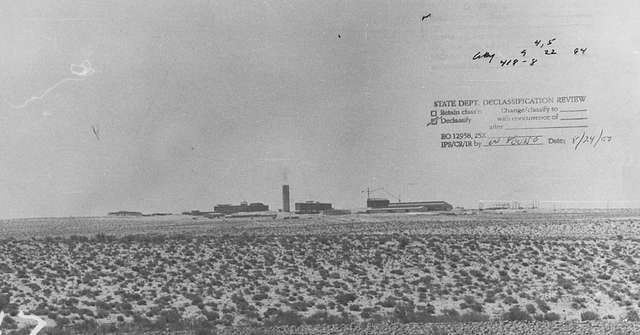
What happens in Pakistan matters to the rest of the world. Pakistan is the world’s sixth most populous country, with some 176 million people (after China, India, the United States Indonesia and Brazil). It is the world’s 46th largest economy, trailing Egypt and the Philippines, even though its population is much greater. It is a nuclear state, like the US, Russia, France, Britain, China, Israel and India. Keeping its parliamentary democracy going will require that Pakistan develop economically.

Cole’s Laws of Economic development are that 1. Poor countries must grow 6% faster than their populations for many years in a row to raise per capita income; 2. Poor countries must wring corruption out of their governmental system; 3. Poor countries must invest in infrastructure, including electricity (you can’t run factories during blackouts) and security; 4. Poor countries must make things others want to buy at an attractive price and quality; 5. The rich in poor countries must be made to pay their taxes and 6. Poor countries must attract foreign investment because local business elites are small and weak.

Islam seems to me largely irrelevant to these sorts of policy. Saudi Arabia manages to attract a lot of foreign investment despite being a fundamentalist Wahhabi state far to the right of Pakistan (which has a lot of Sufis, urbane Shiites and secularists).

Pakistan under the Pakistan People’s Party was doing the opposite of these six things. Pakistani population growth rates are high, and its economy has only been growing 3% a year, which means virtually zero per person increase. The infrastructure has been neglected, and the shortfall in electricity production is an astounding 40%. The PPP, though not only it, is extremely corrupt. Only 25 percent of the economy is taxed.

The good thing about Nawaz Sharif being prime minister is that he is a businessman and understands some of these issues. He lowered barriers to trade in the 1990s. But with regard to development, Pakistan has been going in altogether the wrong directions. It needs to find ways of growing the economy faster than it is growing its population. Turning it around so that it avoids social and economic deterioration will be no easy task.

I doubt any of it has much to do with Islam one way or another.

0 Retweet 9 Share 18 Google +1 1 StumbleUpon 0 Printer Friendly Send via email

Posted in Uncategorized | 15 Comments

Renewable Energy in Marrakech: Solar Water Pumps & More (Video)

Posted on 05/20/2013 by Juan Cole

Morocco has enormous solar and wind energy potential and plans to get 40% of its electricity from green energy sources by 2020, only 7 years from now.

This documentary explores the potential of clean energy in a country with loads of wind and sunshine, estimating that it could produce 2000 times as much energy as it now uses. Morocco has no hydrocarbon resources of its own to speak of.

0 Retweet 2 Share 8 Google +1 0 StumbleUpon 0 Printer Friendly Send via email

Posted in Uncategorized | 1 Comment

Tunisia and Libya take on Ansar al-Sharia Militants

Posted on 05/19/2013 by Juan Cole

Clashes broke out on Sunday in a western suburb of Tunis and in the city of Kairouan at the Mosque of the Martyrs between Tunisian police and militants of the proscribed Ansar al-Sharia cell. Although the movement makes exaggerated claims for its adherents, I shouldn’t imagine they amount to more than a couple thousand core members, though the broader Salafi movement sometimes sympathizes with Ansar. It is especially strong in Ettadhamen and Intilaqa, western slums on the outskirts of the capital of Tunis.

The Arab revolutions of 2011 unleashed many energies, as with all revolutions, both positive and negative. In France, 1789 gave us both the declaration of the Rights of Man and the bloody Vendee peasant revolt in favor of the king, which left perhaps 40,000 dead.

In Tunisia and Libya, most social forces have favored a turn to parliamentary government and free and fair elections. The outcomes differed, though. In Tunisia, the religious Right party, al-Nahda, got 37% of the vote and was able to form a government in coalition with small secular parties. In Libya, the vote was conducted 90% on a non-party basis. Among the 30% of seats awarded by party, relatively few went to the Muslim Brotherhood, with nationalists taking the majority. Many of the independents have religious commitments, but don’t appear to be partisans of a hard line fundamentalist ideology.

But in addition to the vast majority of organizations and parties that support parliamentary rule, the revolutions freed small extremist parties, collectively known as Ansar al-Sharia, to act out and engage in terrorism in a way that the former authoritarian regimes would not have permitted.

The Tunisian branch of Ansar al-Sharia announced it was holding an annual conference in the old central Islamic city of Kairouan in Tunisia on Sunday. Since members have been accused of involvement in attacks on the US embassies in Tunisia and Libya, the Tunisian government banned the meeting. The organization is led by the fugitive Abu Ayad (Saif Allah Ben Hussein), a former American ally who fought the Soviets in Afghanistan, and who has been in hiding since he was implicated in the Benghazi consulate attack. The radicals, defiant, insisted they would hold their conference.

The al-Nahda government has been reluctant to move against Muslim religious groups, even radical ones, for fear of alienating elements of their own base. But after the assassination in February of leftist leader Chokry Belaid, probably by an Ansar sympathizer, the new prime minister Ali Lareyedh, appears to feel it necessary to take a stand somewhere. Belaid’s killing resulted in a massive protest in Tunis in the hundreds of thousands, and shook the al-Nahda government, which will face polls sometime in the next 8 months. Former al-Nahda PM Hamadi Jebali had wanted to form a government of national unity after the assassination, but was forced out when his party refused to give up power. Lareyedh, the former Interior Minister on whose watch Belaid was killed, therefore faces the challenge of justifying continued al-Nahda rule, including provision of better security. (I heard Lareyedh speak at a conference in Tunis on March 31).

Tunisia benefits from the fact that its army was not dissolved in the course of its brief revolution, and ordinary police forces likewise survived the revolution. It did have to disband or reorganize its STASI-like secret police, but on the whole the country’s security capacity is not insignificant compared to that of Libya to its east, where the old Gaddafi cadres largely collapsed and the army is weak and demoralized.

A rash of bombings and attacks in Benghazi has been shaken by a series of attacks on police stations and small gelatino bombings that caused no deaths and little damage, but have rattled nerves in the city. On Friday, crowds gathered outside the city’s major five-star hotel, protesting the continued insecurity. After the September 11, 2012, attack on the US consulate in the city, large angry crowds forced militant fundamentalist militiamen out of the city. But the cells, collectively called ‘Ansar al-Sharia’ or Helpers of Religious Law, have safe houses 10 km. out from Benghazi and are able to come in and attack clinics and other soft targets.

USG Open Source Center quotes “Benghazi Al-Tadamun Online in Arabic on 15 May carries a 60-word report saying that commando forces, Libyan Army forces, police officers, and elements of the Supreme Security Commission were deployed to secure Benghazi city.”

The government security forces are still not very good, and contain large numbers of militiamen of questionable discipline and questionable loyalty to the elected government.

Maybe the US Congressmen on the Hill could devote some energy to actually helping the situation in contemporary Benghazi by offering the Libyan government more help with training up a new professional army and police force.

Aljazeera reports on the situation in Benghazi:

The USG Open Source center translates snippets from the Libyan Arabic press from these past few days of violence:

“Benghazi Al-Tadamun Online in Arabic on 15 May carries a 100-word report citing Ali al-Shaykhi, official spokesperson for the Libyan Army General Staff, as saying that “the security situation in Benghazi city became stable following the attack on the national security center in the Al-Hada’iq neighborhood on 14 May.”

Benghazi Al-Tadamun Online in Arabic on 15 May carries a 35-word report on a graduation ceremony held yesterday in Al-Zawiyah city for 600 individuals affiliated with the national security.

Benghazi Quryna al-Jadidah Online in Arabic — Website of privately owned weekly independent newspaper… http://www.qurynanew.com/ –on 15 May carries a 125-word report saying that the police station in the Al-Hada’iq neighborhood of Benghazi city was attacked by “an subversive group, resulting in structural damage to the building.” The report adds that “the commando forces thwarted the attack and exchanged fire with the assailants, killing one of them.”

Tripoli Al-Watan Online in Arabic on 16 May carries a 950-word commentary saying: “How can the Libyan intelligence chief be unaware of what is happening in Libya?” The commentary adds that “this incident has shown that the Libyan Government and the GNC do not deserve to govern Libya, given the fact that the country under their power is moving backward.” The commentary goes on to say: “The Libyan Government and members of the GNC should acknowledge their dereliction of duty.” The commentary concludes by saying that “the money of Libyan people must be spent on the establishment of a strong civilized army and police governed by a law that applies to everyone,” and the GNC should shoulder its responsibility in finishing drafting the new constitution.”

Tripoli Al-Watan Online in Arabic on 16 May carries a 1,600-word commentary by Muhammad Iqmiya. The commentary says that “the Arab Spring in Libya was under the auspices of Gulf countries, particularly Qatar, which deliberately shifted the political mobility in Libya to become tribally-oriented.” The commentary adds that “Qatar adopted the principle of tribal quotas since the formation of the first Libyan political entity; namely, the National Transitional Council, NTC, in addition to the political parties’ adoption of the tribal dimension in creating their popularity, as is in the Muslim Brotherhood’s case.” The commentary goes on to say that “armed militias, whether tribal or religious, undermine the authority and sovereignty of the nascent state in Libya.” The commentary adds: “When the emir of Qatar announced, in a news conference at the end of the war (that toppled Al-Qadhafi), that ‘revolutionaries are not going to hand over their weapons,’ he was not concerned about the revolutionaries or Libya.” The commentary concludes by saying that “a comprehensive national reconciliation and the issuance of a law for transitional justice is the solution to save Libya.”

0 Retweet 8 Share 16 Google +1 0 StumbleUpon 0 Printer Friendly Send via email

Posted in Uncategorized | 11 Comments

Massive Meteoroid Impact on Moon shines like Small Star (NASA Video)

Posted on 05/19/2013 by Juan Cole

That boulder-sized meteoroid that hit the moon on the 17th, causing a star-bright conflagration? NASA reports that it likely was part of a whole pack of meteoroids, a smaller set of which hit the earth’s atmosphere around the same time.

Meteoroids are space rocks up to 10 yards / meter wide. From 10 meters wide and up, they are called asteroids. The one that crashed into Mare Bellum was .4 meters wide, and so just a meteoroid. The Chelyabinsk asteroid was 15 meters wide, big enough to cause an explosion ten times more powerful than the one caused by the small atomic bomb at Hiroshima in WW II.

NASA reports:

Asteroid impacts on earth are relatively rare, but the damage a big one could do is one reason would should revive our space mission.

Luckily for those of us who support NASA, the Chinese are planning a moon base, and that will be taken much more seriously inside the tribal beltway than mere rational risk calculations.

0 Retweet 2 Share 11 Google +1 1 StumbleUpon 0 Printer Friendly Send via email

Posted in Uncategorized | 3 Comments

Climate Change Denial is Costing us Trillions, Threatening Farming, Fishing, Animals (Video)

Posted on 05/18/2013 by Juan Cole

Michael Mann: Climate change is already costing us $1 trillion a year.

Aljazeera asks Professor Mann why there is still confusion among Americans about the perils of climate change, at a time when the scientific consensus is virtually complete.

Some recent links on the impact:

Much of Australia’s farmland could turn to desert or be subject to flooding

Some 20-30% of plant and animal species will disappear if we go on spewing C02 into the atmosphere.

Poorest, tropical fisheries are being hit hardest by climate change

Fish species are threatened, are already changing their habitats, and many could go extinct.

and, America’s first climate change refugees… in Alaska.

This kind of direct action, where activists used a lobster fishing boat to block a coal freighter’s delivery, is likely to accelerate. Stopping climate change will be the Civil Rights movement of the 21st century.

0 Retweet 4 Share 38 Google +1 1 StumbleUpon 0 Printer Friendly Send via email

Posted in Uncategorized | 4 Comments

The Lotto Symbolizes the False Promises of Barracuda Capitalism, and it Won’t make you Happy to Win

Posted on 05/18/2013 by Juan Cole

Late capitalism in the United States is a process whereby more and more of the national income is going every month to a smaller number of people at the top, while the average wage of the average worker has been virtually static in real terms since 1970. All the extra money the US has made in the past 40 years, in other words, has gone and is going straight to the 1%. (Actually, the top 1/10 of one percent has experienced even more gains). From 1979 to 2007, the top 1 percent experienced income growth of 275 percent. In contrast, 90 percent of us saw a raise of $59 in our annual incomes from 1969 to 2011. This new, extreme income inequality is becoming entrenched and the US now has less opportunity for upward mobility for its young people than many countries in Europe.

Why people put up with this gouging is a great mystery. But hope is the great social stabilizer. Corporate media in the US constantly send the message to people that they are around the corner from getting rich. Failing that, just buying a new pair of jeans can raise your status among your peers. Most people don’t compare themselves to those in higher income groups. They make their friends, typically, among those who earn roughly what they do. So apparently if you’re up $61 from 1966 you’re happy enough to be two dollars ahead of the average of $59.

One of the social control mechanisms deployed in a plutocracy to keep people quiet while their pockets are being picked is the lottery. It is a scam. Not only are you more likely to be hit by lightning than to win one, but the institution itself is regressive. If you started at 20 and put $5 a week into the stock market, you’d likely get 12% return on your money, so when you were 70 it would be a very substantial amount of money ( try it here). Put the same 5 dollars a week into a lottery, and you likely get nothing at all. So the lottery punishes the poor, both absolutely and in terms of opportunity costs, and its main social function is to create false hope that the billionaires will let you join them.

What makes people happy is still somewhat mysterious. But a circle of supportive relatives and friends seems to be important to most people. Then, rewarding work helps, especially work where you get to choose your own projects and be in control. Having projects in life that are creative in nature and which you yourself shape is the ultimate high. (Orchestra conductors and college professors are among the happier people for this reason). Getting better off financially is not in itself bad, but has limited returns. In the US, once you reach $75,000 a year (admittedly only a minority do), going on up from there doesn’t seem to add substantially to your happiness. My guess is that at that income level, about twice the national average, you are avoiding the depression that comes with straitened circumstances, meeting bills, etc., and are then freed to pursue the things that make you happy– hobbies, art, etc. More money won’t make you more creative after that point and won’t relieve by then minor economic anxieties, so it becomes irrelevant to happiness for most people. (Of course $75,000 a year doesn’t go very far in some parts of the country, and is a fortune in others, but we’re talking averages)>

The first thing that happens when you win the lottery is that you typically lose all your friends. Some of them resent your good fortune. Some have unrealistic expectations in sharing it. Some are embarrassed to hang around with people who dress so much better than they. Some have nothing in common with someone who doesn’t have to struggle. Then, there is the temptation to quit your job and become essentially idle, which produces depression. For an entrepreneur or film maker, maybe the extra money could be put to good use, but for most people the $75,000 limit on happiness is operative, and having $200,000 a year wouldn’t make them three times as happy; probably it wouldn’t make them happier at all. Not to mention the traps of not managing the money well, or developing expensive addictions that waste it all, or being targeted by criminals. All the social science research suggests that winning the lottery just doesn’t make most people happier, and in many cases makes them miserable.

So the whole lotto phenomenon is a huge social scam. Good public policy would strive to give everyone in the US that $75,000 basic level of well-being, if what we wanted was more happy people. Instead, we are hollowing out the middle class, limiting upward social mobility, keeping the poor poor, adopting tax and other policies that make the rich richer, and then throwing the sop to the hoi polloi of an occasional lotto exemplar allegedly made happy by the opportunities of the system, but who will actually likely end up depressed and friendless.

2 Retweet 7 Share 47 Google +1 1 StumbleUpon 1 Printer Friendly Send via email

Posted in Uncategorized | 30 Comments

“I will Survive” the Muslim Brotherhood: Leftist Egyptian Youth Music Video

Posted on 05/17/2013 by Juan Cole

Not an endorsement, but this cover by secular leftists of Gloria Gaynor’s 1978 “I will Survive,” with satirical Arabic lyrics (translated in subtitles) about the rule of the Muslim Brotherhood and Salafis in Egypt since the fall of dictator Hosni Mubarak gives a window into the grievances and disappointments of the youth who made the January 25, 2011 revolution.

Thousands of protesters gathered in Tahrir Square today, Friday, demanding that Muslim Brotherhood leader and Egyptian president Muhammad Morsi call early presidential elections. The ‘Rebel’ campaign is supported by a group of leftist and liberal parties.

The video

3 Retweet 5 Share 104 Google +1 1 StumbleUpon 1 Printer Friendly Send via email

Posted in Uncategorized | 3 Comments