
Tulsa, OK (Special to Informed Comment) – You watch from your 7th floor window as red tracers blush a night sky. A drone intercepts, your windows rattle, and bomb debris nosedives through funnels of black smoke. Red-orange flames lick at the edges of buildings.
You look around your home, debating “if” or “when.” Your government has finally issued evacuation orders, but the surrounding countries have closed their air space to commercial travel. You are going to have to find a bus or a taxi willing to drive you across the country to the next border. How do you fit years of hard work and achievement into a backpack, a suitcase, a car? What would you grab if you had minutes to leave your life?
The U.S.-Israel war on Iran has spiraled into a regional conflict, causing the State Department to urge Americans in Bahrain, Egypt, Iraq, Iran, Israel, Jordan, Kuwait, Lebanon, Oman, Qatar, Saudi Arabia, Syria, United Arab Emirates, and Yemen to leave those countries now. U.S. news headlines broadcast the surging oil prices and declining global food production caused by this latest war. No one reports on the loss of cross-cultural understanding necessary to build a more empathetic, peaceful world.
From 2011 to 2021, I taught first at an international school and later at a university in Kurdistan, Iraq. When I’d visit friends and family back in the States or make new friends while traveling abroad, I always fielded questions ranging from how I dated to if I was scared to what I wore. Listeners were surprised that I taught in co-ed classrooms; some were really surprised I taught feminine dystopian literature such as The Handmaid’s Tale. They’d laugh when I’d recount how a student interrupted a class lecture on The Great Gatsby to ask what the text meant by “..he took Daisy one still October night, took her because he had no real right to touch her hand” as a set up to ask if I was a virgin. The habits and wayward desires of Kurdish and Iraqi adolescents weren’t that different from American adolescents, just with less sex, alcohol, and drugs.
Listening to my students’ lived experiences of being beaten by Coalition Forces during home raids or finding body parts in their school yards after attacks during the worst years of the 2003 invasion gave ballast to the war narratives propagated by U.S. main stream media, films, and TV shows. Volunteering with refugees who had fled ISIS in Syria or hearing how my Yazidi students had survived ISIS’ genocidal attack on Sinjar spotlighted people whose lives are forever altered by wars they never choose. I’d share these stories with people at home, and the retelling humanized the “people over there,” sowing seeds of curiosity, which often blossomed into understanding and empathy.
This kind of cultural dialogue flows both ways. Positive interactions with Americans change stereotypes. My students in Turkey were surprised that I am American because I didn’t wear sneakers or a baseball cap, and I wasn’t overweight. In Kyiv, my female Ukrainian students became more forgiving of feminism. My Palestinian students in the West Bank were surprised that I kept my water bottle out of sight during the hot summer days of Ramadan because I respected they were fasting. Despite seeing family members murdered during house raids by Coalition forces, my Iraqi students didn’t think all Americans were violent. I was always amazed that my students didn’t hate Americans because they were able to separate a people from the actions of their government.
Beyond busting stereotypes, educational programs enabling positive contact with Americans abroad function as soft diplomacy initiatives. The State Department’s English Access Micro Scholarship Program serves marginalized youths in over 85 countries. (I taught in this program in the West Bank and Kurdistan.) Through a curriculum steeped in U.S. culture and democratic values, students aged 13-20 learn English, digital literacy, critical thinking, and leadership skills while gaining a “deeper understanding of and stronger connections to Americans and the United States.” Those “stronger connections to Americans and the United States,” forged through one-on-one interactions between teacher and student, aim to prevent young people from believing anti-American sentiments and joining groups which oppose American interests (i.e. joining extremists/terrorists). The State Department’s English Language Fellow Program, which “fosters mutual understanding, promotes English language learning, and enhances English teaching capacity abroad,” functions similarly at academic institutions in 80 countries.
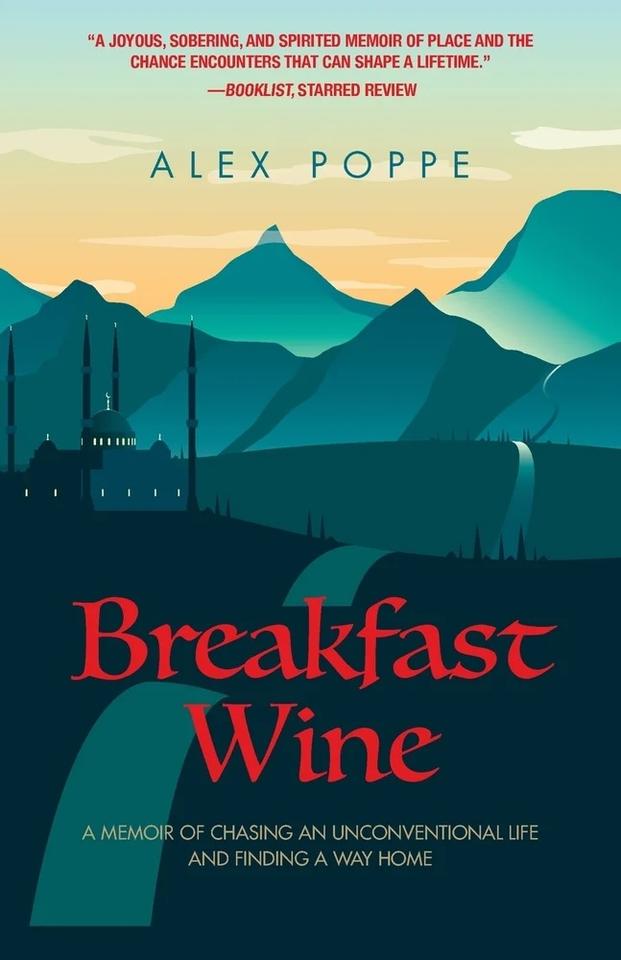
Alex Poppe, Breakfast Wine. Apprentice House Press, 2025. Click here to order.
There are countless American educators working in the Middle East. With the State Department-issued directives of “DEPART NOW,” these folks must decide whether to stay or to go. Many will depart, cutting off the opportunity for cultural exchange and shared understanding at a time when we need it most. The US military has been credibly accused of striking a primary school in Minab and killing approximately 168 children and 14 teachers. Tehran looks like some giant had a temper tantrum across every block and broken all the buildings. Smoke from burning oil spreads across the region, bringing long-term respiratory and neurological risks. Over one million Lebanese people have been displaced. There is no USAID to deliver an emergency response and earn good will. Without American educators developing stronger connections between Middle Eastern students and themselves, this current generation of people under American siege might start to hate the U.S. and its citizens. Without American teachers retelling the lived experiences of foreign students to our friends and family back at home, cultural ignorance continues. Both lead to a less empathetic, more violent world.

 © 2026 All Rights Reserved