
Ann Arbor (Informed Comment) – The US Energy Information Agency reports that California’s fossil gas use is steadily declining. In the first half of 2025, fossil gas use was down a whopping 18% compared with the same period in 2020, to 45.5 billion kilowatt hours (BKWh). Even just in 2025, California reduced fossil gas usage by 9.5 billion kilowatt hours, a 17% drop compared to H1 2024.
Moreover, PV Magazine reported this summer that solar has slightly overtaken gas as the single larges source of electricity for the Golden State. Each accounts for about a third of the state’s electricity generation. Specifically, John Fitzgerald Weaver wrote at PV Mag, solar now accounts “for 33.9% of the state’s electricity and gas contributing 33.3%.”
If you count wind and hydro along with solar, two-thirds of California’s electricity retail sales are now generated by renewables. If you counted California as a polity in its own right it would be the world’s fifth largest economy. And it is the first among those top 5 or 6 to reach that milestone, outpacing even the budding electrostate of China. In 2015, only 40% of electricity retail sales in California came from renewables, and hydro, at 12 to 14%, was a big chunk of that.
The game changer, though, is a new factor: massive battery storage.
Solar power is intermittent, since it declines in the late afternoon as the sun dims and sets, and then goes offline at night. The problem is that electricity usage spikes in the late afternoon and early evening as workers get home. This is called the “duck curve.” The slack was taken up by fossil gas peaker plants.
Andrew Iraola at the EIA writes, “During peak evening hours between 5:00 p.m. and 9:00 p.m., generation from batteries charged by excess solar generation during midday rose from an average of less than 1 GW in May and June 2022 to 4.9 GW in 2025, displacing natural gas generation during that period. In 2025, the hourly data show a decrease in natural gas generation during the midday hours, when solar generation is at its peak.”
So here we have two distinct processes reducing the use of fossil gas. The first is that, as EIA says, “During the midday hours (between noon and 5:00 p.m.) in May and June, which have similar cooling requirements, solar generation increased from 10.2 gigawatts (GW) in 2020 to 18.8 GW in 2025.”
Although California’s electricity use is still growing, solar is providing so much new generation that fossil gas is not keeping pace.
The second process has to do with battery capacity. California now has 17 gigawatts of battery storage, second only to China globally.
So during that period of declining solar generation from 5 pm to 9 pm as commuters get home, cook on electric burners, watch television, and turn up the air conditioning, California can now release nearly 5 gigawatts of electricity generation from batteries that stored it up during the peak sunlight hours.
Hence, much less need for peaker gas generation.
Hence, a fall in H1 2025 of 9.5 billion kilowatt hours from fossil gas compared to H1 ’24.
Gas will still be needed in drought years when hydroelectric generation falls, but only until such time as increased solar generation and megabatteries can take up that slack instead. After a while, you just won’t need fossil gas at all. And by “a while” I mean maybe in as few as ten years.
In Q2 of 2024, renewables plus battery provided California electricity for at least 10 hours a day on 98 of 116 days. At some point it will be all renewables all the time.
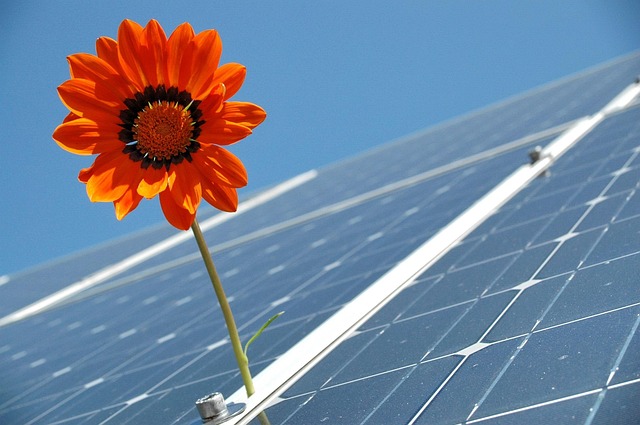
Image by Klaus-Uwe Gerhardt from Pixabay
California is not by any means done growing its battery storage capacity. Tesla is putting in a $500 million solar farm plus battery energy storage system (BESS) near Bakersfield. It will have 2 gigawatt hours (GWh) of battery energy storage coupled with the solar plant, producing electricity for the equivalent of nearly half a million homes. It uses 559 Megapacks, Tesla’s flagship megabattery.
Another discrete $600 million battery installation is being planned by Tesla for San Diego.
Increasingly, solar plus wind plus hydro plus battery can run the whole grid without brownouts or the need for fossil fuels. It is just a matter of having enough of them, which California increasingly will. The state plans to be carbon neutral by 2045. California is also making strides in electric vehicle adoption similar to those of China. In Q3 this year, zero emissions vehicles (ZEVs) accounted for 29% of new car sales!
The reduction in fossil gas use has taken place despite continually rising demand on the California electricity grid. The writing is on the wall for fossil gas in California: it just doesn’t have a medium-term future. Burning fossil gas emits billions of tons of carbon dioxide annually, whereas renewables are close to carbon neutral. The former is wrecking the planet, the latter is saving it. California is showing the way to a pure, sustainable electrostate.

 © 2026 All Rights Reserved