
Existing plans to triple renewable energy, double efficiency, and slash methane — coupled with real regulations like the EU’s — offer a way forward.
( Foreign Policy in Focus ) – It appeared to be a grim déjà vu when the final gavel dropped in Belem, Brazil and the COP30 text once again avoided naming fossil fuels.
But this apparent diplomatic failure obscured something more consequential: after hours of fraught, last-minute negotiations, countries reaffirmed the “United Arab Emirates consensus” from COP28 — the only UN agreement to date to reference a fossil-fuel phaseout. And the pathway it implies is already taking shape. In April, Colombia and the Netherlands will convene governments in Santa Marta, Colombia for the first global summit dedicated explicitly to the transition away from fossil fuels.
Tripling Renewable Energy, Doubling Efficiency, and Cutting Methane
At COP28 in Dubai, governments committed to tripling renewable energy and doubling energy efficiency by 2030. Combined with deep cuts to fossil methane, these pledges form a powerful trio. According to the Climate Action Tracker, fully implementing them would reduce projected warming by about 0.9°C this century, from 2.6˚C to 1.7˚C — enough to determine whether Paris Agreement targets remains within reach. If delivered, they would do more to collapse fossil-fuel demand than any language missing from the COP30 outcome text.
The energy system is already shifting. In the last two years, China has driven an unprecedented solar surge — adding more capacity in 2024 alone than the rest of the world combined, now hosting roughly half of global installed solar power, and exporting ultra-cheap panels that are flooding markets globally. As solar prices plunge, renewables are undercutting coal and gas markets globally. Doubling energy efficiency, if it can be achieved, cuts demand at a scale equivalent to adding vast new clean-power capacity, but without the economic and environmental burden of new plants.
Deep cuts to fossil methane — the primary component of gas, and a climate pollutant roughly 80 times more powerful than CO₂ over 20 years — require producers to eliminate leakage, venting, and routine flaring. These measures raise compliance costs, increase saleable gas, and make new fossil expansion harder to justify. Taken together, these commitments amount to a key part of the de facto fossil-fuel phaseout pathway.
But voluntary pledges alone won’t get us there. The Global Methane Status Report 2025 finds that despite over 150 countries endorsing the Global Methane Pledge, methane emissions continue to rise.
And even when we look beyond voluntary pledges to the domestic laws, regulations, and policy measures that represent a plan of action — as reflected in countries’ Nationally Determined Contributions (NDCs) and National Methane Action Plans — the gap remains enormous. Fully implementing all NDCs would cut global methane emissions by only about 8 percent below 2020 levels by 2030. That is far short of the 30 percent Global Methane Pledge goal and well below the 45 percent cut UNEP associates with keeping 1.5°C within reach.
The EU Leads the Way on Methane Regulation
The missing ingredient is enforcement — and the most important development on that front is not the Global Methane Pledge but the EU Methane Regulation.
Adopted in 2024, the EU rules apply not only to methane emitted within Europe but also to imported fossil fuels. Because the EU is the world’s largest importer of oil and gas — and its suppliers account for roughly 30 percent of global oil and gas methane emissions — these rules may do more to cut global methane than any voluntary pledge ever could. For the first time, countries exporting gas and oil to Europe must meet strict leak-detection, monitoring, and venting and flaring requirements. Non-compliant fuels can effectively be shut out of the EU market.
This is regulatory gravity: when the world’s largest buyer sets a standard, producers must adapt or lose access.
Some already have. Companies like ConocoPhillips have set near-zero methane-intensity targets by 2030 and earned top-tier marks for emissions reporting — clear signals that they intend to compete under strict import regimes. Meanwhile, fossil-fuel trade groups are lobbying aggressively to weaken the EU rules, arguing they threaten U.S. LNG exports. Investors disagree: in October, asset managers representing over €4.5 trillion urged the EU not to dilute nor delay its methane law, highlighting methane as a material financial risk.
The deeper truth is that the EU methane rules are already going beyond the Global Methane Pledge and achieving reductions in fossil-methane emissions across borders, backed by market access and legal penalties rather than voluntary promises.
Science points in the same direction. The International Energy Agency concludes that methane from fossil-fuel operations could be cut by around 75 percent by 2030 using technologies available today. Combined with renewable and efficiency pledges, these reductions undermine the economic case for expanding fossil-fuel production. New LNG terminals, oil fields, and long-lived gas infrastructure would rapidly become uneconomic — stranded assets in the making.
Pledges Are Not a Plan
Methane is responsible for roughly a third to a half of today’s warming, and because it is short-lived, rapid reductions can deliver measurable cooling within a decade. Without binding limits on fossil methane, the world cannot meet its climate goals, no matter how fast renewable energy grows.
This is the real lesson of COP30: pledges are not a plan. Tripling renewables, doubling efficiency, and slashing methane can transform global energy systems — but only if they are backed by binding rules, border measures, and enforcement. The EU methane regulations represent the first serious attempt at such enforcement.
The next opportunity to broaden that effort will not come at COP31, but in April 2026, when Colombia and the Netherlands co-host the First International Conference on the Just Transition Away from Fossil Fuels in Santa Marta.
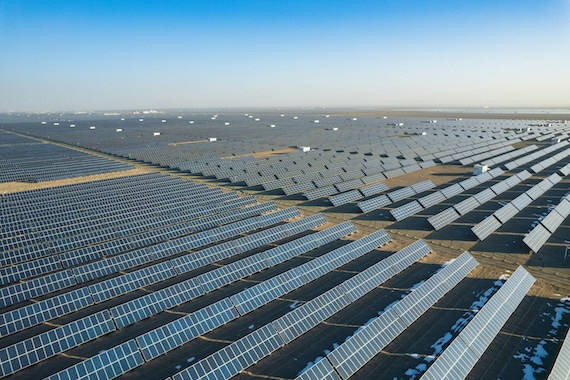
Photo of solar power plant in Dunhuang, Gansu Province, China, by ダモ リ on Unsplash
It will be the first global summit to center the production side of the climate crisis. And it exists because grassroots movements made it unavoidable: years of pressure from youth organizers, Indigenous land defenders, and frontline communities pushed governments and companies toward positions once dismissed as radical — including today’s mainstream demand for a fair, full fossil fuel phaseout. Santa Marta is happening not as a symbolic gesture, but because people insisted on real action.
If COP30 could not bring itself to state that fossil fuels must be phased out, Santa Marta can. And it can ground that commitment in the tools governments have already endorsed: accelerated renewables, deep efficiency gains, and enforceable methane standards — led, in practice, by the EU.
For the United States, the moment is defining. Federal methane rules are being dismantled. But U.S. states need not wait. Colorado, New Mexico, and California already have some of the strongest methane rules in the world. By aligning with Europe’s approach — and sending governors or senior officials to Santa Marta — they can help build a transatlantic coalition for binding methane limits and an orderly fossil-fuel phase-down.
The path from COP30 requires fewer pledges and more enforceable governance. Countries already know what must be done. The task now is to turn an implicit roadmap into a binding framework capable of delivering the cuts that matter most — starting with methane in the oil and gas sector.

 © 2026 All Rights Reserved