
At its root, the assault on Iran is inseparable from the question of Palestine.
( Canadian Dimension) – Much of the discussion surrounding the current war on Iran focuses on its potential outcome for the United States. One of the most frequently asked questions is whether Washington will suffer yet another loss of face in the Middle East. But this is the wrong question. Even if the war produces chaos and ultimately harms the United States and Europe—as earlier interventions in Iraq, Libya and Syria did—the more important issue is what benefit Israel, the war’s proponent and initiator, stands to gain. After all, Prime Minister Benjamin Netanyahu has said he had been planning this war for 40 years.
The reason for this is Iran’s principled stance on justice for the Palestinians. That commitment transcends religious divisions: Iran is predominantly Shia, while Palestinians are predominantly Sunni. Iranians and their allies in Lebanon and Yemen are prepared to die as martyrs, and many have already been killed by joint Israeli and American strikes. Yet the yearning for justice has proven to be both profound and resilient.
Iran remains the principal stronghold of resistance to Israel. It not only decries Israel’s apartheid regime and genocide in Gaza but also supports armed resistance groups such as Hezbollah and Hamas. By contrast, almost all governments in the region are only opposed to Israel’s occupation and oppression of Palestine in principle, while cooperating with Israel in practice.
Never miss an issue of Informed Comment: Click here to subscribe to our email newsletter! Social media will pretend to let you subscribe but then use algorithms to suppress the postings and show you their ads instead. And please, if you see an essay you like, paste it into an email and share with friends.
Turkey is an important transit point for oil and gas supplied to Israel. Egypt has helped Israel isolate Gaza and starve its inhabitants. During the last Israeli attack on Iran in 2025, Jordanian and Saudi air defences protected Israel from incoming Iranian missiles. The United Arab Emirates, Bahrain, Morocco, and Sudan formalized relations with Israeli through the 2020 Abraham Accords. Elbit, an Israeli company, accounts for 12 percent of Morocco’s total arms imports, and other Arab regimes openly or tacitly purchase Israeli weapons and surveillance equipment. This pattern is exhibited by many other countries, particularly in the West.
Without mentioning its own nuclear arsenal, Israel has been sounding the alarm about the imminent threat of an Iranian nuclear weapon. Brandishing diagrams, Netanyahu has argued for decades that Iran is just weeks away from manufacturing the bomb. These repeated claims have only served to confirm the conclusions of US and other intelligence professionals that Tehran was not seeking such weapons. Nevertheless, these baseless accusations have been invoked by Donald Trump and others, such as Canadian Prime Minister Mark Carney, who have expressed support for war with Iran. This symptom of the West’s political demodernization—the retreat from rational debate towards evidence-free emotional assertion—is also evident in the current militarization campaign based on alleged threats from China and Russia.
Israel’s concern for the human rights of Iranians is equally hollow. In reality, Israel seeks to fragment, debilitate, and disarm Iran, thereby eliminating the Islamic Republic as the last major state to oppose Israel in the region. Israel wants Iran to accept Israeli/Western tutelage in the form of Reza Pahlavi, the eldest son of the last Shah of Iran, or another collaborator. But the main objective is to remove the last defence of Palestinian rights and to render the Iranian state dysfunctional.
The root cause of the military assault on Iran is therefore the question of Palestine. All of Israel’s wars have been fought to perpetuate the Zionist nature of the state—that is, to resist the idea of equality for all inhabitants of the land between the Jordan River and the Mediterranean Sea. In other words, Zionism is the main cause of violence in the region.
The ideology of Zionism is enshrined in one of Israel’s Basic Laws, which function as its constitution. It is officially a Zionist state and describes itself as “the nation-state of the Jewish people.” This includes Jews living outside Israel, regardless of their attitude to the Zionist state—whether they are enthusiastic supporters, opponents, or indifferent. This effectively takes Jews around the world hostage, making them vulnerable to opprobrium and even violence from those appalled by Israeli actions.
A growing number of Israelis believe that Palestinians, including those who avoided expulsion in 1948 and are now Israeli citizens, have no place in the country. Several ministers in the current government are actively pursuing ethnic cleansing through hardship, forced exile, or genocide. The tragedy of Gaza is the most convincing embodiment of Zionist ideology.
US Secretary of State Marco Rubio has admitted that his country’s strike was triggered by Israel’s planned attack on Iran. Washington believed that the Israeli attack would prompt retaliation against American assets in the region, so it launched its own “pre-emptive operation.” This explanation is significant. It suggests that Israel was given the green light to begin bombing Iran at the time of its choosing. This may seem surprising, given that much of Israel’s advanced weaponry is US-made and deploying it on such a large scale would require coordination with Washington. Rubio’s admission has revived the long-standing argument among critics on the political right and left that US actions in the Middle East have been largely driven by Israeli, rather than American, strategic priorities.
It therefore matters little whether American wars in the region benefit the US economically, militarily, or politically. Nor does the price Americans have paid in blood and money. The real question is whether Israel has profited from them.
It could be argued that Israel has been the sole beneficiary of America’s misadventures in the Middle East. The 2003 invasion of Iraq eliminated Saddam Hussein and his Ba’ath Party, thereby removing Iraq as a major regional military power. The Syrian civil war, which was fuelled and prolonged by the involvement of the CIA and its European counterparts, has severely weakened another long-standing adversary of Israel. Meanwhile, NATO’s intervention in Libya led to the collapse of a government that had long supported Palestinian resistance. In each case, states that had opposed Israel’s dispossession of the Palestinians, and which had the power to act independently, emerged far weaker than before.
These US-led actions implement ideas set out in a 1996 policy paper titled *A Clean Break: A New Strategy for Securing the Realm*. This paper was prepared for the incoming Israeli government of Benjamin Netanyahu by a study group led by the American neoconservative strategist Richard Perle, who later became chairman of the Defense Policy Board. Other members of the group included Douglas Feith, who would later become the US undersecretary of defense and is often considered the architect of the 2003 Iraq War, as well as David Wurmser, who would go on to serve as Middle East adviser to Dick Cheney and John Bolton. The report proposed a new, far more ambitious regional strategy for Israel. This document, produced by Washington insiders often called ‘Israel-firsters,’ was publicly released, meaning that its ideas are a matter of record rather than conjecture.
Israel has been both focused and flexible in rallying support from great powers. At the beginning of the state’s existence, it relied on Soviet political backing and weapons. Stalin sought to weaken Britain in West Asia and hoped, albeit in vain, that Israel’s socialist rhetoric would make it an ally of the USSR in the region. Israel later embraced Britain and France when they were clinging desperately to their colonial empires. However, it found its most enduring support in Washington.
This support has been mobilized and organized by a powerful lobby consisting of Christian and Jewish Zionists. This is well-known and documented in various sources, including John Mearsheimer and Stephen Walt’s 2007 book *The Israel Lobby and U.S. Foreign Policy.* During the current war, it has been reported that Christian Zionists have been indoctrinating deployed US troops by presenting the attack on Iran as a holy war and a means of bringing about the second coming. Commanders have invoked extremist Christian rhetoric about the biblical ‘end times’ to justify their involvement in the war with Iran. One commander said that “President Trump has been anointed by Jesus to light the signal fire in Iran to cause Armageddon and mark His return to Earth.” While Secretary of War Pete Hegseth has not explicitly endorsed this kind of propaganda, his—and many other members of the Trump administration—views broadly align with it.
However, cracks are appearing in the formerly solid support for Israel in the US. The genocide in Gaza has alienated many American Jews and Christians. For the first time in the history of US–Israel relations, more Americans expressed support for the Palestinians than for the Israelis in 2026.
Sensing that this disaffection might eventually loosen Israel’s grip on American foreign policy, Netanyahu acted fast, visiting Trump seven times in less than a year. Succumbing to this pressure, Trump also had no time to waste. The World Cup is to be hosted in North America in the summer, and more importantly, the midterm elections are in November. Therefore, regardless of the advice of his intelligence and military advisors, he ordered US forces to join Israel in attacking Iran on February 28.
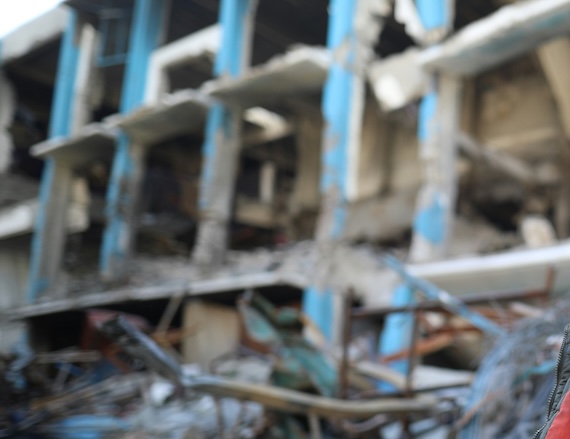
Photo of one of the UNRWA shelters, and the image shows the consequences of the destruction caused by the war on Gaza, Gaza Strip,Published on October 1, 2024 by khalid kwaik on Unsplash
Israel has long openly disdained international law, brazenly using its military and technological superiority against its neighbours. The US, on the other hand, used to at least pay lip service to international law. Now, however, Trump openly states that he does not need it, instead relying on his “own morality.” His deputy chief of staff, Stephen Miller, explained, “We live in a world in which you can talk all you want about international niceties and everything else.” He added that the world is “governed by strength, by force, by power. These are the iron laws of the world.”
Many experts, including retired American and British senior officers, doubt that the US will prevail in Iran and anticipate another debacle. They may or may not be right. However, what matters to Netanyahu is not the success of the American military, but the idea that Iran is likely to be weakened, whatever the outcome. If this does not materialize and Israel’s apartheid regime faces an existential threat, it has nuclear weapons to use as a last resort. All the talk about ‘Iran’s nuclear threat’ should not obscure the fact that two nuclear powers have jointly attacked a non-nuclear country.
If Israel’s gamble fails, its cynical and self-centred political culture suggests it would use nuclear weapons rather than abandon Zionism and negotiate a political transformation of the current regime into a more inclusive system. Decades of weaponizing the Holocaust have convinced most Israeli Jews that only ‘the Jewish state’ can guarantee their survival. Israel would rather obliterate Iran, a country of 93 million people, than accept equality with the Palestinians it now controls in Gaza and the West Bank.
While it is important to assess America’s chances of retaining world hegemony in the wake of this war, it is imperative to pay attention to the possible outcomes for Israel, the war’s initiator. The Zionist state—“super-Sparta,” as Netanyahu characterised Israel a few months ago—is capable of unleashing an unprecedented catastrophe that would make the genocide in Gaza seem insignificant by comparison. As the ongoing genocide in Gaza has shown, nobody dares to stop Israel.
Yakov Rabkin is the author, most recently, of Israel in Palestine and Zionism Decoded in 101 Quotes
Reprinted with the author’s permission from Canadian Dimension

 © 2026 All Rights Reserved