
( Middle East Monitor ) – The architecture of extermination: Why the Gaza genocide is premeditated and repeatableSuppose we accept the fiction that none of us expected Israel to launch a full-scale genocide in Gaza—a premeditated campaign to erase the Strip and exterminate a significant portion of its inhabitants. Let us pretend that nearly eighty years of relentless massacres were not a prelude to this moment, and that Israel had never before sought the physical destruction of the Palestinian people as outlined by the 1948 Genocide Convention.
If we go so far as to accept the sterile, ahistoric claim that the Nakba of 1948 was “merely” ethnic cleansing rather than genocide—ignoring the mass graves and the forced erasure of a civilisation—we are still left with a terrifying reality. Having witnessed the unmasked extermination that began on 7 October 2023, who can dare to argue that its perpetrators lack the intent to repeat it?
The question itself is an act of charity, as it assumes the genocide has actually stopped. In reality, the carnage has merely shifted tactics. Since the implementation of the fragile ceasefire on 10 October, Israel has killed over 400 Palestinians and wounded hundreds more. Others have perished in the frozen mud of their tents. They include infants like eight-month-old Fahar Abu Jazar, who, like others, froze to death. These are not mere tragedies; they are the inevitable results of a calculated Israeli policy of destruction targeting the most vulnerable.
During this two-year campaign of extermination, more than 20,000 Palestinian children were murdered, accounting for a staggering 30 per cent of the total victims. This blood-soaked tally ignores the thousands of souls entrapped beneath the concrete wasteland of Gaza, and those currently being consumed by the silent killers of famine and engineered epidemics.
The horrifying statistics aside, we bear witness to the final agonies of a people. We have watched their extermination in real-time, broadcast to every handheld screen on earth. No one can claim ignorance; no one can claim innocence. Even now, we watch as 1.3 million Palestinians endure a precarious existence in tents ravaged by winter floods. We share the screams of mothers, the hollowed-out faces of broken fathers, and the haunted stares of children, and yet, the world’s political and moral institutions remain paralyzed.
If Israel resumes the full, unrestrained intensity of this genocide, will we stop it? I fear the answer is no, because the world refuses to dismantle the circumstances that permitted this slaughter in the first place. Israeli officials never bothered to hide their intent. The systematic dehumanisation of Palestinians was a primary export of Israeli media, even as Western corporate outlets worked tirelessly to sanitise this criminal discourse.
The record of intent is undeniable. National Security Minister Itamar Ben-Gvir openly championed the “encouragement of migration” and demanded that “not an ounce of humanitarian aid” reach Gaza. Finance Minister Bezalel Smotrich argued that the starvation of two million people could be “just and moral” in the pursuit of military aims. From the halls of the Knesset to the pop charts, the refrain was the same: “erase Gaza,” “leave no one there.” When military leaders refer to an entire population as “human animals,” they are not using metaphors; they are issuing a license for extermination.
This was preceded by the hermetic siege — a decades-long experiment in human misery that began in 2006. Despite every Palestinian plea for the world to break this death grip, the blockade was allowed to persist. This was followed by successive wars targeting a besieged, impoverished population under the banner of ‘security,’ always shielded by the Western mantra of Israel’s ‘right to defend itself.’
In the dominant Western narrative, the Palestinian is the eternal aggressor. They are the occupied, the besieged, the dispossessed, and the stateless; yet they are expected to die quietly in the world’s ‘largest open-air prison‘. Whether they utilised armed resistance, threw rocks at tanks, or marched unarmed toward snipers, they were branded ‘terrorists’ and ‘militants’ whose very existence was framed as a threat to their occupier.
Years before the first bomb of this genocide fell, the United Nations declared Gaza “uninhabitable.” Its water was a toxin, its land a graveyard, and its people were dying of curable diseases. Yet, aside from the typical ritual of humanitarian reports, the international community did nothing to offer a political horizon, a just peace.
This criminal neglect provided the vacuum for the events of 7 October, allowing Israel to weaponize its victimhood to execute a genocide of sadistic proportions. Former Defence Minister Yoav Gallant explicitly stripped Palestinians of their humanity, launching a collective slaughter directed by Prime Minister Benjamin Netanyahu.
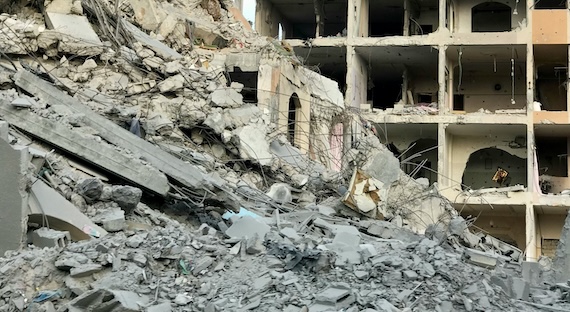
Photo of Gaza July 2024 by Emad El Byed on Unsplash
The stage is being set for the next phase of extermination. The siege is now absolute, the violence more concentrated, and the dehumanisation of Palestinians more widespread than ever. As the international media drifts toward other distractions, Israel’s image is being rehabilitated as if the genocide never happened.
Tragically, the conditions that fueled the first wave of genocide are being meticulously reconstructed. Indeed, another Israeli genocide is not a distant threat; it is an encroaching reality that will be finalised unless it is stopped.
The 1948 Convention on the Prevention and Punishment of the Crime of Genocide was a legal vow to “liberate mankind from such an odious scourge.” If those words possess a shred of integrity, the world must act now to abort the next phase of extermination. This requires absolute accountability and a political process that finally severs the grip of Israeli colonialism and violence. The clock is ticking, and our collective voice—or our silence—will make the difference.
The views expressed in this article belong to the author and do not necessarily reflect the editorial policy of Middle East Monitor or Informed Comment.
 Unless otherwise stated in the article above, this work by Middle East Monitor is licensed under a Creative Commons Attribution-NonCommercial-ShareAlike 4.0 International License.
 © 2026 All Rights Reserved