
Florence, Italy (Special to Informed Comment; Feature) – The 12-day war of the summer of 2025 ended as abruptly as it began. Israeli aircraft struck targets across Iran, focusing on military infrastructure and sites long associated by Western intelligence agencies with Tehran’s missile and nuclear programs. Iran responded with waves of missiles and drones aimed at Israeli territory and regional targets, briefly pushing the Middle East to the edge of a wider conflagration. Diplomatic channels, activated in parallel with military escalation, eventually produced a cease-fire brokered quietly by outside powers anxious to prevent a regional collapse. The guns fell silent, but few observers believed the conflict had been resolved. Almost from the moment the cease-fire took hold, analysts described it not as peace but as a tactical pause, an intermission before the next act of a war whose underlying drivers remained untouched.
In the months that followed, both sides treated the cease-fire less as an endpoint than as an opportunity. Israel moved quickly to replenish and expand its air-defense systems, accelerating procurement of interceptor missiles and upgrading early-warning and radar capabilities. Iranian officials, for their part, emphasized resilience and recovery, while quietly escalating the production of ballistic missiles and expanding related infrastructure. Western and regional intelligence assessments suggested that Tehran viewed deterrence as its primary shield, betting that a larger and more diversified missile arsenal would complicate any future Israeli or American strike. By early winter, the military balance looked less like a cooling-off period and more like two coiled springs, compressed and waiting.
That sense of impending escalation sharpened this week when Prime Minister Benjamin Netanyahu traveled to Florida for an extended meeting with President Donald Trump. According to people briefed on the discussions and media reports citing allied diplomatic sources, the conversation ranged broadly across the Middle East but focused heavily on Iran. Trump, who has positioned himself as a decisive actor on national security, was said to have signaled support for a renewed campaign aimed at Iran’s nuclear facilities and ballistic missile arsenals. While no formal announcement followed the meeting, the language used by aides and allies suggested what one regional diplomat described as a “green light in principle,” contingent on timing and circumstances. For Tehran, the message was unmistakable: the military option is not only back on the table, it may be closer than many expected.
Israel’s calculations are informed not only by military readiness but by political assumptions about Iran’s internal dynamics. Before the summer 2025 strikes, Israeli intelligence assessments reportedly concluded that sustained external pressure might fracture Iranian society and weaken the Islamic Republic from within. The expectation was that economic hardship, social discontent and political fatigue would combine with military shocks to produce mass unrest, perhaps even a challenge to the regime’s survival. Instead, the attacks had the opposite effect. The strikes triggered a classic rally-around-the-flag response, uniting broad segments of Iranian society across ideological and class lines against what was widely perceived as foreign aggression. Public dissent did not disappear, but it was temporarily subsumed by a surge of nationalist solidarity.
Today, that unity shows visible cracks. Iran’s economy has deteriorated sharply since the war, battered by sanctions, capital flight and structural mismanagement. Inflation has surged to levels that economists inside and outside the country describe as destabilizing, eroding purchasing power and hollowing out the middle class. The national currency has lost a significant portion of its value, pushing basic goods out of reach for many households and squeezing businesses already operating on thin margins. In recent weeks, protests have spread in major cities, led largely by merchants, small business owners and salaried workers who once formed a relatively stable economic base.
At the center of the unrest is a widening gap between wages and prices. The government has proposed increasing salaries by roughly 20 percent for the coming year, even as independent estimates place inflation above 50 percent. For many Iranians, this is not a policy debate but a mathematical impossibility: incomes are rising far more slowly than the cost of living, guaranteeing a further decline in real wages. Labor unions, professional associations and informal business networks have voiced growing frustration, warning that incremental adjustments will not avert a deeper crisis.
The fiscal picture is equally bleak. Iran’s new financial year begins on March 20, yet the government has struggled to finalize a workable budget. Officials privately acknowledge a significant deficit. The overall budget is estimated at around $100 billion, but oil exports,long the backbone of state revenue, are expected to cover only about 40 percent of that total under current conditions. The remainder would need to be raised through aggressive and largely unprecedented taxation schemes, targeting sectors that are already under pressure. Economists warn that such measures risk accelerating capital flight and deepening public anger, further eroding the regime’s legitimacy.
From Jerusalem, these developments are being watched closely. Israeli strategists have long debated whether external military pressure combined with internal economic stress could produce a different outcome than the one seen last summer. This time, some argue, the social contract in Iran appears more fragile. Protests driven by inflation and fiscal chaos lack the nationalist cohesion that followed direct military attacks. For hardliners in Israel, this moment presents an opportunity: a weakened adversary, distracted by domestic turmoil, may be less capable of sustaining a prolonged confrontation.
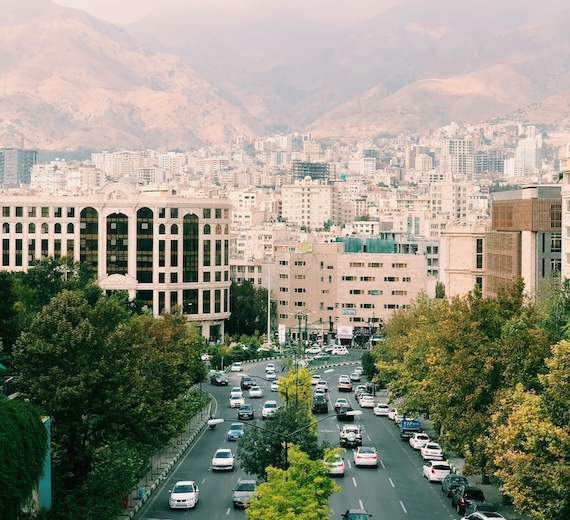
Photo of Kaveh Blvd., Tehran, Iran by Roozbeh Eslami on Unsplash
The risks of such reasoning are substantial. History offers ample evidence that external attacks can once again consolidate internal support, even in societies riven by economic hardship. A renewed Israeli campaign aimed not only at degrading missile and nuclear capabilities but at forcing regime change would almost certainly provoke a fierce response, drawing in regional proxies and potentially the United States. Energy markets, already sensitive to geopolitical shocks, would react sharply, and civilian populations on all sides would bear the costs.
Whether war begins in the next hours or unfolds after months of maneuvering, the trajectory is increasingly clear. Diplomatic off-ramps appear narrow, domestic pressures inside Iran are intensifying, and regional actors are preparing for scenarios they publicly deny seeking. Another conflict is not inevitable, but it is no longer abstract. It is being planned, debated and budgeted for, even as ordinary people from Tel Aviv to Tehran brace for the consequences. The pause that followed the 12-day war is ending, and the shadow of another, potentially bloodier confrontation is lengthening across the region.

 © 2026 All Rights Reserved