
By Dalia Alazzeh, University of the West of Scotland and Shahzad Uddin, University of Essex
(The Conversation) – Gaza is going through one of the most severe economic collapses the world has seen in modern times. According to a UN report published in late November, the average income per person there is now just US$161 (£122) a year. Before 2007, when Israel imposed a blockade of Gaza after Hamas won elections and took control of the enclave, it was close to US$2,000.
This income drop has happened slowly over many years. But since the war between Israel and Hamas began in October 2023, Gaza’s economy has fallen apart at speed. The UN report suggests that in the space of just two years, Gaza’s economy has shrunk by 87% to US$362 million.
A major reason for this collapse is the massive destruction caused by the Israeli military’s bombing campaign, which has left almost no functioning economic life behind. In the first four months of the war alone, Israeli strikes caused an estimated US$18.5 billion worth of damage across Gaza.
More recent estimates suggest that 83% of all buildings in Gaza City have now been damaged or destroyed. With buildings gone, roads ruined, land burned and machinery destroyed, Gaza has lost the basic infrastructure it needs for people there to work, study, run businesses and move around safely.
This destruction has deeply affected everyday life. An October 2024 assessment by the UN suggested that Gaza’s Human Development Index score – a measure that summarises an area’s progress in health, education and income – was projected to soon fall to a level not seen in the enclave since the 1950s.
Hospitals are overwhelmed or destroyed, schools cannot function, electricity and water systems barely work and most families have been forced to leave their homes. Nearly the entire population of Gaza has been displaced by the war and cut off from their usual jobs, neighbourhoods and support networks.
This is all happening while the Palestinian Authority (PA), the body responsible for paying teachers, nurses and other public workers in Gaza and the West Bank, battles a severe financial crisis.
Israel controls the collection and transfer of the main tax revenues that the PA depends on, and kept or deducted around US$1.8 billion of this revenue between 2019 and 2025. These funds normally make up most of the PA’s budget, so losing them makes it harder to pay salaries, keep schools and hospitals open and help Gaza deal with its current crisis.
Gaza’s vulnerable economy
The Gazan economy was in a vulnerable state long before the start of the war. After the Oslo accords in 1993, which were intended to establish a framework for peace between Israel and Palestine, Gaza’s economy saw some growth. This was helped by international aid and the ability of some Palestinians to work in Israel.
Between 1994 and 1999, Gaza’s economy grew by an average of 6.1% annually. However, there was considerable volatility throughout this period, largely because Israel retained control of Gaza’s trade rules and borders. A spurt of growth in 1994, for example, was followed by contractions in two consecutive years as border closures disrupted the flow of Palestinian labour and goods to Israel.
Israel tightened movement restrictions in the early 2000s with the beginning of the second Palestinian uprising, and the Gazan economy entered a period of prolonged struggle. Growth dropped by 2% on average annually between 2000 and 2006.
The economic situation worsened again in 2007, when Israel responded to Hamas’s ascent to power by placing Gaza under a strict land, sea and air blockade. This blockade limited almost everything from entering Gaza, including farming supplies and construction materials like cement and steel.
It prevented many exports from leaving the enclave too, and reduced the fishing area accessible to Gazans to just six nautical miles – much smaller than had been agreed in the Oslo accords. Fuel and energy restrictions also caused long daily power cuts.
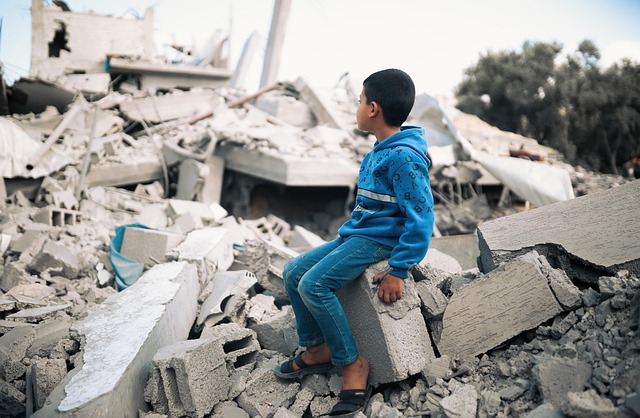
Image of Gaza by hosny salah from Pixabay
Over the next 15 years, Gaza’s economy experienced persistent decline. Unemployment remained extremely high throughout this period and poverty became widespread. Between 2007 and 2022, annual growth dropped to 0.4% on average while real GDP per capita contracted by 37%.
Since 2023, the war has pushed the Gazan economy from long-term struggle into complete collapse. Farms have been destroyed, industrial areas flattened and basic public services barely function. With most people displaced and almost no local production left, Gaza now depends almost entirely on humanitarian aid for its economic survival.
What Gaza needs
Rebuilding Gaza will require huge resources. Experts estimate that it may cost between US$70 billion and US$90 billion to clear the rubble and rebuild Gaza’s homes, schools, hospitals, roads and water systems – and that it could take decades.
But money alone will not be enough. Gaza cannot recover fully while the blockade, border restrictions, limits on imports and exports, and withheld Palestinian tax revenues remain in place.
Studies by the UN Development Programme show that if Israel releases the tax revenues it is withholding from the PA, allows more movement of Palestinian workers and goods and if donors provide steady support, Gaza could slowly start to recover. Even a small rise in productivity would be a major improvement after years of decline.
Gaza’s crisis is not the result of the recent war alone. It is the outcome of decades of blockade, tight Israeli control over economic life and repeated military destruction. The current situation shows how much Gaza’s economy depends on decisions made outside the territory.
Unless access, autonomy and financial stability are restored, Gaza’s recovery will remain slow, uncertain and vulnerable to future shocks.
Dalia Alazzeh, Lecturer in Accounting and Finance, University of the West of Scotland and Shahzad Uddin, Director, Centre for Accountability and Global Development, University of Essex
This article is republished from The Conversation under a Creative Commons license. Read the original article.

 © 2026 All Rights Reserved