
Ann Arbor (Informed Comment) – Richard Black and other analysts at the Ember energy consultancy find that all new electricity demand in the first three quarters of 2025 was met by solar and wind, mainly solar. That statistic requires us to conclude that there was no growth in fossil fuels globally during that period. Ember anticipates that Q4 will show the same result.
Fossil fuel growth hasn’t been flat in any year since the COVID pandemic hit in 2020, when the world’s economy shrank 3% to 3.4%. Our current year, 2025, however, has seen growth. Admittedly it is weak growth, projected at 2.3% by the World Bank, largely because of Trump tariffs and the president’s unpredictable and vacillating economic decisions, which have introduced severe uncertainty.
Still, if electricity demand kept pace with economic growth and if fossil fuels were still the primary means of generating electricity, then we should have seen a 2.3% growth rate in coal and fossil gas. We’re not seeing that. They are flat.
They are flat because solar and wind, but mainly solar, have taken up all the air in this room.
Ember finds that solar power-generating capacity grew Q1-Q3 ’25 by an unprecedented 31% over the same three quarters in 2024. In absolute terms, it grew by a whopping 498 Terawatt hours. Solar has never before in history grown that fast and that much. Solar panels around the world made more electricity in the first three quarters of this year than they did in all of 2024.

Or by check:
Juan Cole
P. O. Box 4218,
Ann Arbor, MI 48104-2548
USA
(Remember, make the checks out to “Juan Cole” or they can’t be cashed)
Wind power generating capacity also grew this year by 7.6% over the same three quarters in 2024, or 137 Terawatt hours. That is, wind grew three times more than the economy as a whole did.
In the first three quarters of 2025, electricity demand grew worldwide by 603 terawatt hours, some 2.7%.
Since total wind and solar growth equaled 603 Terawatt hours Q1-Q3 of this year, solar and wind met all of it with a little left over to spare.
There was no demand for new fossil fuel power generation. None. Nada. Zilch. Rien. Nichts.
Hence, peak fossil fuels.
The decline in the use of fossil fuels was most pronounced in China and India, Asia’s great powers. Europe resorted to fossil fuels where hydroelectric generation fell or winds weren’t strong. Only in the US was there still a healthy appetite for dirty energy.
Of course, 2025 is special because former President Joe Biden’s pro-renewables energy policies were still in effect in the US, and those have been knee-capped by the Republican budget bill and by President Trump’s refusal to spend money appropriated and dedicated to these purposes. Solar and wind in the United States may only grow at half the rate earlier projected in 2026-2030 because of these pro-carbon, earth-destroying policies.
Still, the US only generates 15% of the world’s electricity and if China, India and Europe, not to mention the Global South, stick to their guns on their commitment to renewables, peak fossil fuels are still in our near future even if ExxonMobil — I mean the Republican Party — there, I’ve been redundant — even if they put that milestone off a tiny bit.
The other thing to say is that the cost of solar electricity generation is falling rapidly. It is harder for coal and gas to compete with it in 2025 than it had been in 2019. It will be still harder in the coming years.
Around the world, Solar Tech Online points out, 4/5s of renewable energy installations make electricity more cheaply than coal and gas. Globally, solar photovoltaic power costs 4.4 cents per kilowatt-hour. That is the cost to keep 10 hundred-watt light bulbs burning for an hour. Onshore wind can keep the ten hundred-watt light bulbs in your house burning for an hour for only 3.3 cents.
And in some climes, these renewables are even less expensive. In the Middle East, solar panels can make electricity for 2.4 cents per kilowatt hour. That is dirt cheap.
Never miss an issue of Informed Comment: Click here to subscribe to our email newsletter! Social media will pretend to let you subscribe but then use algorithms to suppress the postings and show you their ads instead. And please, if you see an essay you like, paste it into an email and share with friends.
Fossil fuels? They cost on average 10 cents per kilowatt hour. Why would you pay that? If someone offered you a nice piece of clothing for $100, but you found you could get the same item for $44 or even $33 elsewhere, would you be pigheaded and demand to pay the $100? That is how the Republican Party is acting, which helps explain why the economy crashes every time Americans go crazy and elect them.
So in the world of energy there were two reasons for preferring fossil fuels. One was intermittency. The wind doesn’t blow all the time, and the sun doesn’t shine at night. That problem has been solved, as in California, by battery storage, which has plummeted in price. Solar plus battery and wind plus battery are regularly providing California with all or most of its electricity for most days each year.
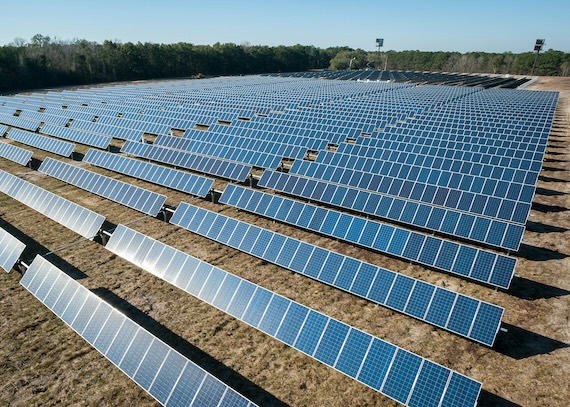
Photo by American Public Power Association on Unsplash
Renewables are the future, because they will go on declining in price and rising in efficiency. Solar Tech Online gives these scientific estimates:
Solar PV: Additional 60% cost reduction by 2060
Onshore Wind: 42% further reduction expected by 2060
Battery Storage: 50-70% cost decline anticipated by 2030
My title plays on the notion of “peak oil,” which the International Energy Agency predicts will be reached in 2030. In some countries, like China, 2025 may be the year of peak oil. That is, China will never again use as much petroleum as it does this year, and the amount used will decline steadily in the coming years. In the early twenty-first century there were worries about running out of petroleum. Those were always silly, since the world’s petroleum reserves are vast– though irrational US economic sanctions do put some of those fields off the world market. A quarter way into the present century, a new reason for peak oil has emerged, in the form of electric vehicles. Most petroleum is used for transportation. A tiny bit is used for power generation, and demand for it in that capacity is plummeting because of the rise of wind and solar farms. Peak oil is coming not because of its paucity but because it is unnecessarily expensive and is a planet-wrecking source of deadly greenhouse gases.
The year 2025 may only be a harbinger of peak fossil fuels and demand for them may be made artificially to rise by the Trump administration again next year. But dirty energy is facing a price tsunami from competitors that will only strengthen over time, and it is facing a moral reckoning as the disastrous effects of burning fossil fuels become more and more apparent to the public. Already, the cost of climate disasters in 2025 is projected at $145 billion by the World Economic Forum. These catastrophes are becoming more intense, more destructive and more costly, and there are more of them every year because of burning fossil fuels and putting carbon dioxide into the atmosphere.
America’s dirty-energy aristocracy should read about what happened to the aristocrats in France once the ordinary folk, the ones whose pants didn’t even have cuffs, made a revolution because they were tired of policies that made them poor and miserable.

 © 2026 All Rights Reserved