
( Middle East Monitor ) – In 1916, the Middle East was partitioned by its rulers with ink between Britain and France. A hundred years later, with borders drawn by the Sykes-Picot Agreement, territories continue to contend with claims to legitimacy, sovereignty, and foreign intervention. The Middle East holds a reset, but not in a conference room this time, instead in an open-plan office, very far away.
The new lines are invisible. They have been coded in Silicon Valley, an invisible network of servers, algorithms, cloud agreements, and surveillance systems distributed across the Middle East. The old colonial map remains in place but is not effaced; instead, it is digitised.
Sykes-Picot established control through geography. Nowadays, control is established through data. Where the data is, where it is interpreted, and where decisions are made regarding its use all determine control. Military presence in a country is no longer the sole determinant of power and domination; access to a platform is what countries seek.
The colonial control apparatus functioned through censuses, identity cards, and intelligence systems. Here, the benign colonial agenda classifies, records, divides, and conquers. Of course, this agenda never ends; instead, it morphs into new forms. As Edward Said shows, empires do have new shapes but not new aims. In the new millennium, cyberspace assumes new forms.
State bodies in the Middle East are using US technology to control their borders, monitor citizens, repress dissent, and manage information. Cloud computing, facial recognition technology, predictive policing technology, and AI-intrusive surveillance solutions have become integral to state power in this way. Such solutions are not simply technology systems. State bodies make decisions concerning visibility, validity, and control through them.
Shoshana Zuboff described this order thus: “a global architecture of behavior modification, with the excavation of human experience as the raw material.” In the Middle East, this excavation is simply the drive for modeling advertising; it is the basis for security states.
Such a connection is evident in the growing relationship with US technology companies. The Israeli military tradition is deeply interwoven in a country with a surveillance apparatus, with technology produced in Gaza and the West Bank being later exported to other countries and called “combat-tested.”
The Gulf states are now considered among the most lucrative markets for the US cloud industry, which has been deployed, in conjunction with AI, for law enforcement, border control, and population management.
Antony Loewenstein, in *The Palestine Laboratory*, speaks clearly of the reality of Palestine: “Palestine is a ‘laboratory for technologies of control,’ which are ‘exported globally with the approval of Western governments.’” The controlled state infrastructure, designed to counterinsurgencies abroad, is thus repatriated.
In a series of clashes in Gaza, the Palestinian internet in and of itself emerged as a space of conflict. The social media sites with guidelines governing content put up online—from the West Bank to the West—regularly restrict, suppress, or remove Palestinian content in ways that have been named under “community standards Such restrictions were imposed on sites that facilitated the spread of statements inciting violence and misleading information on other sites. Such a conflict escalated from war-ravaged Palestinian streets to mediation centers in California
Such an environment is not new to Washington, DC. Rather than setting up boundaries and placing rulers, America licenses systems today. Companies in the technology industry, which function as intermediaries between the United States’ strategic intentions and regional regimes, construct but do not assume responsibility.
In his Farewell Address of 1961, President Dwight Eisenhower described a military-industrial complex which would “extend to every office of the Federal government.“ It would seem he could not foresee a digital offshoot, a military-tech-surveillance complex with a reach defying geographical boundaries, shielded by the secrecy of intellectual property.
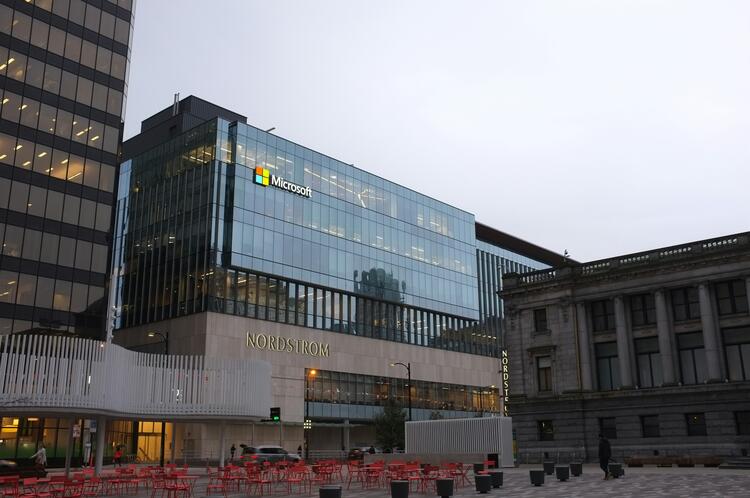
Photo by Matthew Manuel on Unsplash
Consequently, a new fault line has emerged. The fault line is no longer drawn along the neatly painted lines of sectarian or ethnic divisions. A new fault line is drawn according to who is hyper-visible and who is permanently surveilled, who is algorithmically ‘amplified’ and who is ‘erased’. The activists state that they have limited reach, but no explanation is provided. Journalists believe their narrative is being suspended when, in fact, it will have the most significant impact. The whole narrative drops out: not because it is untrue but because it is unwelcome.
Hannah Arendt established a distinction between power and violence, which she saw as an antidote to a lack of legitimacy. A distinction that is erased by cyber governance. There is no need for violence through algorithmic control. And it gets accomplished silently, unheard, with plausible deniability. No tanks need to be called in. No proclamation is issued; the database is updated.
The trouble is not with these technologies. The problem is that these systems operate without democratic control, which defines politics in this way in our time. Sykes-Picot fails because it substitutes order with coercion with borders that do not honor accountability. The order of our digital time is poised to make this failure on a nucleated scale, which is subtler, quicker, and more complex.
The Middle East does not need another century of being ruled by externally imposed frameworks of control. However, without identifying these ‘digital fault lines,’ the Middle East is likely to find its fate once again dictated not by cartographers but by programmers.
Then, of course, there is history, which did not end with the empire. History renewed itself. The most important maps are coded now.
The views expressed in this article belong to the author and do not necessarily reflect the editorial policy of Middle East Monitor or Informed Comment.
 Unless otherwise stated in the article above, this work by Middle East Monitor is licensed under a Creative Commons Attribution-NonCommercial-ShareAlike 4.0 International License.
 © 2026 All Rights Reserved