
( The Middle East Monitor ) – The Middle East once seemed inseparable from oil — a resource that anchored state budgets, political bargains and global strategic partnerships. Now, that era of oil-led stability is fading into history, and something new — yet uncertain — is emerging in its wake. The region appears to be caught between two worlds: no longer anchored by oil’s political gravity, and not yet equipped with a stable, inclusive framework for a post-oil future. This is not merely an economic transition; it is a political and governance conundrum unfolding in an increasingly multipolar global order.
The myth of transition without governance
Across capitals from Cairo to Riyadh, Abu Dhabi to Baghdad, governments are issuing bold statements about energy transition. Solar megaprojects, hydrogen ambitions and investment in renewables have become hallmarks of strategic planning. Yet these plans often overlook a stark reality: transition requires strong institutions and transparent governance, not just capital and technology.
Put simply, technology can be bought — but governance cannot.
In many countries in the region, state legitimacy and institutional capacity have not kept up with the pace of energy ambitions. This disconnect threatens to render transition aspirational rather than substantive.
Infrastructure fragility and the politics of power
Modern energy systems are defined as much by infrastructure as by the resources they convey. Transmission networks, cross-border grids, gas pipelines and supply chain management now carry political weight far beyond their technical functions.
Take Iraq as an example. Chronic electricity shortages there are not merely engineering challenges; they are political liabilities. According to the World Bank, power outages cost the Iraqi economy several percentage points of GDP each year, while also feeding public frustration and social unrest .
Where power systems fail or are unreliable, citizens do not simply experience minor inconvenience — they judge the credibility of the state.
Multipolar competition and fragmented dynamics
At the same time, the global shift towards multipolarity has reshaped energy geopolitics. The United States no longer retains uncontested sway in regional security and energy affairs. China has emerged as a major investor in infrastructure and energy projects, prioritising long-term supply contracts and alternative routes. Russia has demonstrated the leverage of energy as a geopolitical tool, particularly in Europe. The European Union, for its part, seeks diversification but is cautious about deep political entanglements.
This evolving power balance encourages short-term, bilateral energy deals over integrated, region-wide frameworks. The International Energy Agency (IEA) has warned that without governance reform and regional coordination, energy transition efforts in the Middle East could deepen existing inequalities and instability rather than resolve them .
Renewable projects as political signals
Solar parks in the Gulf, wind farms along the North African coastline, and ambitious hydrogen strategies all signal modernisation. But technology without governance is hollow. Investment in renewables must be matched by:
- Clear regulatory frameworks
- Institutional transparency
- Inclusive stakeholder engagement
If these elements are missing, renewable infrastructure risks becoming enclaves of privilege, serving elite interests instead of broader societal needs.
Thus, while the Middle East appears to be charging ahead with new energy modalities, the foundations necessary for long-term stability are still under construction.
Energy insecurity and social fragility
Energy shortages do not remain technical issues confined to power ministers and regulators. They have immediate political consequences.
Power cuts have sparked protests in multiple Middle Eastern states. Fuel scarcity erodes confidence in government effectiveness. Attempts to reform energy subsidies often ignite social backlash.
The United Nations Development Programme has underscored the role of energy access and governance in social cohesion and post-conflict recovery.
This reality serves as a reminder that energy insecurity translates directly into political insecurity.
The choice between sovereignty and dependency
The central paradox facing the Middle East today is this: energy remains the backbone of economic and political life, yet the structures that once anchored that energy/security nexus — namely oil and centralized state control — are fading.
The region’s future does not depend solely on how much gas or solar capacity it installs. Rather, the critical factor will be how governments manage, distribute and govern energy systems in ways that build trust and inclusion.
In a multipolar world, the Middle East’s leverage will not come solely from resources or infrastructure, but from:
- The legitimacy of governing institutions
- The inclusivity of energy policy frameworks
- The capacity to link energy transition with social development
This requires moving beyond transactional deals and superficial signals of progress, towards a governance paradigm that integrates energy into a broader social contract.
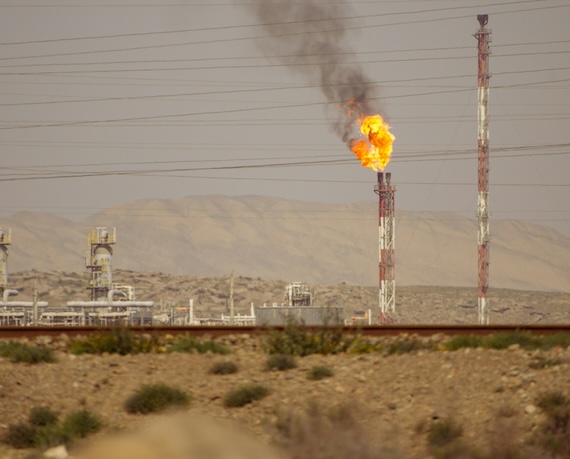
Photo of Azerbaijan by Anatoly Maltsev on Unsplash
Conclusion: Designing stability, not waiting for it
The Middle East today finds itself post-oil but pre-stability — a transitional phase that is as political as it is economic. Stability will not emerge automatically from markets or technology. It must be designed through governance reform, regional dialogue and institutional resilience.
Energy can either become a scaffolding for a new and inclusive regional order, or it can deepen fragmentation and reinforce old hierarchies and dependencies.
In this critical juncture, the region’s choice is clear: embrace energy as a source of legitimate governance — not merely as a tool of economic growth or geopolitical bargaining.
The views expressed in this article belong to the author and do not necessarily reflect the editorial policy of Middle East Monitor or Informed Comment.
 Unless otherwise stated in the article above, this work by Middle East Monitor is licensed under a Creative Commons Attribution-NonCommercial-ShareAlike 4.0 International License.
 © 2026 All Rights Reserved