
By Job Doornhof | –
( Clean Energy Wire ) – The take-up of electric cars gathered speed last year in Germany. Registrations of purely electric cars rose 43 percent versus 2024, when sales took a dip following an abrupt end to purchasing subsidies, according to the motor vehicle authority KBA. Compared to 2023, last year’s sales of around 545,000 electric cars were up a mere four percent.
“While the figures point at first sight to an electric boom, in fact strong growth in 2025 merely compensates for the collapse in sales in 2024,” transport analyst Constantin Gall for the EY consultancy told newswire dpa. The government plans to introduce a new subsidy for electric cars this year.
Overall, new car registrations rose 1.4 percent to 2.9 million, according to KBA. The share of battery-electric vehicles rose to 19.1 percent of all new registrations last year. Average CO2 emissions of new cars fell by almost 12 percent, to an average of 105.8 grammes per kilometre.
Car industry associations and researchers told newswire Reuters in an article carried by energy and climate newsletter Tagesspiegel Background they expect this share to increase to 25 percent in 2026.
Sales of electric vehicles in Germany lag well behind earlier government plans to bring the number of EVs on the road to 15 million by 2030. The high average price of new electric vehicles is a major obstacle to their mass adoption because it often limits purchases to drivers with a higher income.
Benjamin Wehrmann had written, based on an analysis by the German Energy Agency (dena):
. . . “Nearly one in five newly registered cars was a purely electric one – and this was without any purchase support,” commented dena head Kristina Haverkamp. A federal purchase premium scheme that was intended to spur sales of EVs was ended by the previous government in late 2023 due to budget constraints, which had initially led to a collapse of sales. The new government, meanwhile, has decided new support schemes that will only take effect in 2026.
German carmakers dominated EV sales in the country, with four out of the five best-selling car brands coming from the Volkswagen group. “While Chinese brands are gaining in relevance, they currently rather occupy a position in the lower midfield in Germany when it comes to registration figures,” dena said.
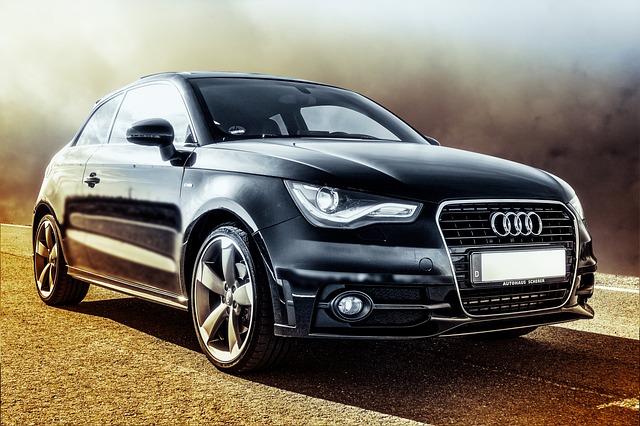
Image of Audi Q4 by Michal Jarmoluk from Pixabay
With about 715,000 new vehicles on the road, petrol-fuelled cars continued to represent the bulk of new registrations in 2025, even if the figure dropped 22 percent compared to the previous year. At the same time, another 368,000 diesel-powered cars were registered, 19 percent less than in 2024. However, dena concluded that “the balance shift from combustion engine cars towards more sustainable propulsion system has been initiated” and would be sustained by new support schemes.
Germany is under pressure to reduce greenhouse gas emissions in the transport sector, an aim for which a further boost in EV registrations is seen as indispensable. However, the government of chancellor Friedrich Merz has firmly rejected an EU decision effectively banning new registrations of combustion engine cars by 2035 – along with other member states like Italy, Czechia and Poland. In a letter recently sent to the European Commission, Merz argued that combustion engines and synthetic fuels must continue to play a role in the sector’s transformation.

 © 2026 All Rights Reserved