
Reprinted from Truthdig with permission. © 2026 Truthdig, LLC. All rights reserved.
( Truthdig ) – A solitary figure in Tehran sits on the road, crouched in a gesture of supplication in front of rows of armed security forces on motorbikes. The image, which emerged at the start of the latest round of protests in Iran, has gone viral. With its similarities to the photo of the iconic lone man standing in front of tanks in Tiananmen Square in 1989, it may come to represent a similar watershed moment in Iran’s history. Over the past few weeks, the protests have exploded to a scale and intensity not previously seen in the Islamic Republic of Iran.
“You should see what it’s like on the streets at night. I’ve been joining the protests every night in Punak Square in Tehran. The atmosphere is electric, the solidarity I feel with other Iranians is amazing,” Afshin, his name changed for his safety, tells Truthdig just before the government shut down the internet on Jan. 8.
This wave of unrest began on Dec. 28 — not with an organized political rally — but with a localized economic protest in Tehran’s electronics market. The market is a hub for small traders, importers and repair shop owners, and it had been under intense pressure for months due to currency volatility, import restrictions, rising tariffs and foreign currency shortages. Prices have increased sharply, and profit margins have been slashed.
“The atmosphere is electric, the solidarity I feel with other Iranians is amazing.”
That morning, shopkeepers and workers gathered to protest what they described as unsustainable operating conditions. Many businesses were facing closure because the ongoing depreciation of the rial was making it nearly impossible to import components such as smartphones, computer parts and household electronics. Some vendors reported that prices were increasing several times a day, making it hard for them to set prices for their customers or to honor previous orders.
But others elsewhere were also facing economic difficulties, and the protest quickly spread, then multiplied. “In my life here, I feel like the walking dead normally. I work three jobs and I still can’t pay the bills, I can’t get medicine for my sick father because of the [U.S.] sanctions, the air pollution in Tehran has been so bad schools have been closed for most of winter, we have water rationing every day, rationing of gas in this freezing winter, and when I go to buy eggs, they’ve doubled in price compared to yesterday,” Afshin, a student in Tehran, says.
As the protests grew, chants that initially focused on inflation, taxes and government mismanagement also turned political. Demonstrators began criticizing senior officials and state institutions, accusing them of corruption, incompetence and indifference to ordinary peoples’ livelihoods. Videos circulating on social media showed crowds from the electronics market spilling into surrounding streets, where they were quickly joined by passersby and workers from nearby commercial districts.
Security forces responded by attempting to disperse the gathering, but their presence appeared to inflame tensions rather than contain them. Within hours, similar protests were reported in other commercial areas of Tehran, and by the following day, demonstrations had spread to multiple cities, including industrial and provincial centers as well as small towns across the country.
The electronics market protest was a catalyst, transforming long-simmering economic frustration into a nationwide movement that is now demanding the end of the regime. Historically, bazaars and markets have played a pivotal role in Iranian political upheaval, most notably during the 1979 revolution. When merchants protest, it represents not just public anger, but also a loss of confidence among the more traditionally pragmatic and risk-averse sectors of society that usually support the Islamic regime.
The government’s inability to quickly stabilize prices or offer credible economic relief in response to the protests only fanned the flames of people’s anger.
Discontent had also been simmering ever since authorities violently quashed the widespread Woman, Life, Freedom protests of 2022 and 2023, which saw an unprecedented demand for freedom, equal rights and an end to gender apartheid. Since then, women have quietly and definitively shed their mandatory hijabs. Such acts of defiance are another strong indication of how people more broadly are willing to defy the government and the law, and how the regime’s legitimacy is waning.
The electronics market protest was a catalyst.
The 12-day bombing of Iran by Israel and the U.S. in June last year served to stoke anti-government sentiment even further, as many blamed the government for putting the country in such a vulnerable position.
As the current protests spread across all 31 provinces, chants increasingly targeted the political system itself, particularly the Supreme Leader Ayatollah Ali Khamenei and the Islamic Revolutionary Guard Corps (IRGC), seen by protestors as symbols of repression and corruption.
Iran’s population of 90 million people is also overwhelmingly young and longs for the same freedoms they see on social media. Most of the youth no longer support the Islamic Republic’s extreme religious ideology, nor the widespread corruption and mismanagement that they see as underlying the burning of Iran’s ancient forests, the lack of water in the capital and school closures due to high levels of air pollution.
And so, what began in the electronics market as a dispute over livelihoods has rapidly evolved into a challenge to the political and economic foundations of the Islamic Republic.
U.S. threatens intervention
President Donald Trump has stated that Washington is closely monitoring protests and considering military intervention. “The military is looking at it, and we’re looking at some very strong options. We’ll make a determination,” he said Jan. 11. He also said Iran’s leadership had wanted to “negotiate” after his initial threats of military action, and a meeting was being set up, but then threatened that he may have to “act before a meeting.”
This has had mixed results. The Iranian government has, in turn, accused the U.S. and Israel of fueling the protests, and said that any attack would make the “occupied territories” (Israel) and U.S. bases a “legitimate target.” Initially, the U.S. threats appeared to cause the Islamic Republic’s brutal security forces to hold back; Trump’s military intervention into Venezuela to kidnap President Nicolás Maduro and take over the country’s oil output was very fresh. However, as the protests have grown, so has the repression.
Khamenei, the supreme leader, addressed protesters on Jan. 9 and conceded that there was a basis for discontent, but he also asserted that “foreign powers” had hijacked the protests for their own interests and called the protesters “vandals.” With regime reports that agents for the Israeli intelligence agency, Mossad, were fomenting the unrest, and a tweet from Mike Pompeo applauding the protests and stating, “The Iranian regime is in trouble. Bringing in mercenaries is its last best hope. … Happy New Year to every Iranian in the streets. Also to every Mossad agent walking beside them”, some concluded that there may be some truth to Khamenei’s assertion. Some Iranians recall the CIA-engineered coup of 1953, in which a democratically elected leader was deposed following protests triggered by British sanctions.
Trump’s attack on Venezuela, just four days after Iran sold the country Mohajer-6 combat drones, could also be seen as a threat to Iran, which sits on the second-largest natural gas reserves in the world, as well as globally significant amounts of oil and rare minerals.
“Standing up with everyone else and demanding our rights, our freedom, it has given us back our dignity.”
To instill fear in the protesters, the head of the IRGC also made a statement on Jan. 9 that any protesters caught would be automatically charged with crimes against God, which carries the death penalty. Despite that risk, thousands of brave Iranians continue to protest.
Reza Pahlavi, the son of Iran’s last shah (overthrown in the 1979 revolution), has been living in exile in the U.S. and has called on Trump to intervene. Pahlavi has been positioning himself as an opposition leader in exile for several years. He has attempted to emerge as a symbolic opposition figure during this unrest, calling on protesters to persist and to participate in demonstrations on Jan. 9 and 10. He then urged them to prepare to seize city centers and framed the moment as a push for systemic change.
However, Pahlavi’s influence inside Iran remains hotly debated. Some protesters have chanted his name and view him as a symbol of resistance or future leadership. Others see him more as a symbolic figurehead rather than a practical leader, given the broad nature of the movement and its emphasis on democratic change rather than monarchy restoration. Many others condemn his close ties with Israel and point to his comments during Israel’s 12-day war with Iran in June 2025, which seemed to support the killing of innocent Iranians.
“And we’re still afraid Israel will bomb us again. That’s why everyone I see on the streets is here, risking everything. Because this is no life. I used to call myself a zombie, but now, I feel human again. Standing up with everyone else and demanding our rights, our freedom, it has given us back our dignity. I can never go back to being a zombie again. Something will change this time. It has to,” Afshin says.
Reports of mass arrests and deaths
When the government shut down the internet on Jan. 8, it also cut phone lines, and there have been blackouts at night while protests are taking place. The last time the regime used the internet blackout tactic, in November 2019, it slaughtered a reported 1,500 people.
Over the past few days, as Iranians have continued to protest and some have managed to get videos out of the country, it has been impossible for outside observers to properly verify the material that has managed to come out. While Elon Musk’s Starlink has purportedly been free for the people of Iran, the government has also reportedly shut that down, and those who have or had access are hesitant to use it because they fear the regime’s cyber-army could then potentially locate them. At the same time, there is also mistrust of the billionaire’s motives and uncertainty whether his actions are aimed at helping the people of Iran or at facilitating interference.
There are unverified reports of armed protesters and demonstrators attacking security forces in waves in what looks like trained combat lines and setting fire to government buildings and even mosques — all unprecedented in decades of protests in Iran, which have typically been peaceful and spontaneous.
Diaspora WhatsApp groups are also buzzing with titbits of news passed from person to person, with shared and forwarded voice notes from inside Iran and videos that have been smuggled out, but it is impossible to overstate how anecdotal all of these reports are.
“There are whole towns in mourning, but the parents of the dead can’t speak up.”
It appears that hospitals are now overwhelmed, and unverified reports suggest that two hospitals in Tehran alone are reporting 110 dead. Doctors have been issuing urgent calls for blood donations and for help from surgeons, especially eye surgeons. Unverified videos show rows of body bags lined up on the floor as families identify their dead, while other reports claim that many of those killed had been shot directly in the eye or heart. They assert that Arab mercenaries are working for the Islamic regime (like in the Woman, Life, Freedom protests) and riding motorbikes into the crowds dressed as delivery drivers, then shooting at people. There appear to be snipers shooting from rooftops.
“There are whole towns in mourning, but the parents of the dead can’t speak up, because then they may not get their children’s bodies back,” said a message that was smuggled out and forwarded on WhatsApp.
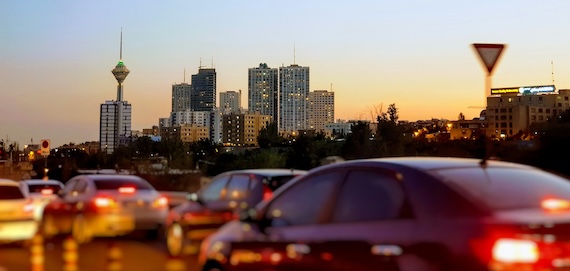
File Photo of Iran by Arman Taherian on Unsplash
Opposition groups inside the country have been calling for a constitutional referendum to let the Iranian people decide what kind of country and government they want. Various workers’ unions and feminist groups have released statements of solidarity with the protesters and point out that Iranians are looking for freedom, justice, equality, a life of dignity, economic security and political sovereignty, and not a return to the monarchy.
At the time of this writing, the U.S.-based rights group HRANA says around 500 people have died and 10,600 have been arrested over the past two weeks. Anecdotal reports put the number of dead much higher, at around 4,000, while Nobel Peace Prize winner Narges Mohammadi’s foundation says the number is upward of 2,000. The internet blackout continues, not only cutting Iranians off from the outside world, but also making it harder for them to organize and almost impossible to get an accurate picture of what is going on in their country.
Kamin Mohammadi is an author, a journalist, broadcaster, public speaker, teacher and cultural curator. Born in Iran, she moved to the UK during the 1979 Iranian Revolution. She is a prolific journalist and writer who has written for the British, Italian and international press including The Times, the Financial Times, The Guardian, Harpers Bazaar, Marie Claire, Vogue, GQ, GQ Style, Men’s Health, The Sunday Times (UK), The Sunday Times of India, The Mail on Sunday, Virginia Quarterly Review and the Soho House magazine as well as co-authoring The Lonely Planet Guide to Iran and numerous other travel guide books.
Her journalism has been nominated for an Amnesty Human Rights in Journalism award in the UK, and for a National Magazine Award in the best essay category by the American Society of Magazine Editors in the U.S.
Kamin has authored two books: BELLA FIGURA: HOW TO LIVE, LOVE AND EAT THE ITALIAN WAY (published in 16 countries and in development as a television series); and THE CYPRESS TREE: A LOVE LETTER TO IRAN (Bloomsbury in UK, Piemme in Italy).

 © 2026 All Rights Reserved