
Professor Iqbal Akhtar at Florida International University interviewed me recently for the East-West Institute and FIU’s Interfaiths Podcast. Video and transcript below.
In this episode of the FIU Interfaiths Podcast, Professor Iqbal Akhtar welcomes distinguished historian and commentator Professor Juan Cole (University of Michigan). They discuss Professor Cole’s extensive career, ranging from his early upbringing in a military family to becoming a leading public intellectual during the Iraq War.
The conversation traces his journey from studying religious history in Lebanon during the outbreak of the Civil War to his groundbreaking digital work with his blog, Informed Comment. Professor Cole also discusses his shift from analyzing radicalism to highlighting the concepts of peace and reconciliation within the Quran.
Interfaiths Podcast: History of the Middle East, Blogging the Iraq War, and the Quran with Juan Cole
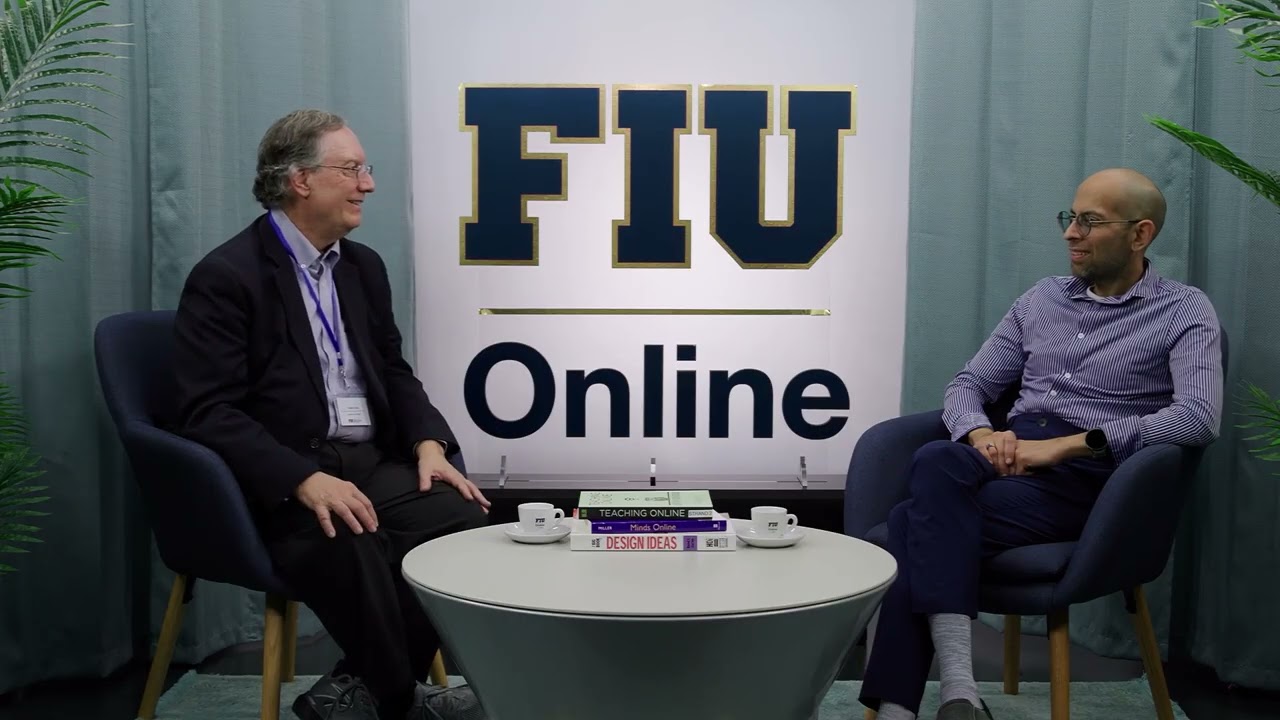
Interfaiths Podcast: History of the Middle East, Blogging the Iraq War, and the Quran with Juan Cole
Interfaith Podcast (FIU Online Course)
Transcript – Edited for Publication, Corrected using ChatGPT (caveat emptor).
Iqbal Akhtar:
Welcome again to our interfaith podcast for our FIU online course. My name is Professor Ikwalakar, in the Department of Religious Studies and Politics and International Relations. We’re very honored today to have Professor Juan Cole from the University of Michigan with us. He is one of the leading scholars of the Islamic world and the Middle East. He’s here for a conference, and we were very lucky to grab him for a few minutes.
To get started, could you talk a little bit about your background—where you grew up and what took you on this intellectual path? I know you eventually went on a Fulbright to India, but I’m curious about your early experiences that might have shaped this journey.
Juan Cole:
Sure. My father was in the U.S. military, and I grew up traveling. I went to twelve schools in twelve years. We had two long tours in Europe, in France. When I was a teenager, we had a posting of about a year and a half in Eritrea, which was then part of Ethiopia.
Eritrea is a multicultural place. It’s about one-third Muslim and two-thirds Christian. There were mosques, you heard the call to prayer, and we had Eritrean Muslim friends. That was my first serious contact with the Muslim world, there in the Horn of Africa.
When I got back to the United States, it was the late 1960s—still very much the 1960s. My generation was interested in spirituality and alternative states of consciousness. I read a lot about Sufism, for instance. When I went to college at Northwestern, I majored in the history of religions. I was interested in all the world religions, but especially in Asian ones—Islam, Hinduism, and Buddhism were particular interests of mine.
I began taking Arabic as an undergraduate. I was only nineteen when I started, which is early for most Americans. Often people don’t get to Arabic until graduate school. I think that early exposure helped me.
Northwestern had a wonderful program called the Traveling Scholars, endowed by an alumnus. It was competitive: you designed a research project. I put together a project on Christian–Muslim dialogue in Lebanon after the Second Vatican Council. The Catholic Church had encouraged dialogue with other religions, and the council’s documents on Islam were actually quite positive from a Catholic point of view. They spoke about the light of Christ being present in Islam and praised Muslims for honoring Jesus and Mary—something unimaginable a century earlier.
Lebanon was a perfect place for this dialogue. There were meetings and publications, and some prominent Lebanese intellectuals were involved. I went to interview the principals and participants. I had started Modern Standard Arabic, but only as a book language. While in Beirut, I took a class in colloquial Lebanese Arabic and learned to speak the language. When I first arrived, I would say things in Modern Standard Arabic and people would laugh—it was like speaking Shakespearean English to someone.
I didn’t realize it at the time, but I was already set on a path. Scholarship often runs along language lines. If you study Buddhism, you learn Sanskrit, Chinese, Japanese, and so on. Since I had decided to learn Arabic, that became what I had going for me.
Iqbal Akhtar :
That’s fascinating. A bit of a tangent, but in the 1960s people were experimenting with different forms of spirituality. Sufism seemed viable at one point as an alternative path. Buddhism, Hinduism, and Sufism were all competing, but Buddhism seems to have become the most prominent. Do you think Sufism didn’t resonate with Americans because of its inherent qualities, or because of geopolitics—like Iran and related issues?
Juan Cole:
It’s true there’s more awareness of and interest in Buddhism among Americans interested in Eastern religions. I don’t think Sufism ever really went away, though. There’s a small minority of people interested in it even today. There are directories of Sufi organizations in major cities. But it’s relatively small compared to Buddhism.
I couldn’t tell you exactly why. One of the problems in the history of religions is that we know things change, but people don’t usually write in their diaries why they made those changes. Answering why something didn’t happen is especially difficult. It would take a large research project with interviews.
Professor Iqbal Akhtar :
You spent time in Lebanon studying Christian–Muslim relations. What were some takeaways from that experience? What challenges did Vatican II present for relations between Christians and Muslims in Lebanon?
Juan Cole:
In Lebanon, religion was very siloed. I was amazed to find that I knew more about Islam than many Christian Lebanese did. They didn’t talk to their Muslim neighbors about religion, and Lebanese Muslims often didn’t know much about Christianity. That’s why the dialogue movement was useful.
One takeaway was how siloed people can be, and how ignorant they can be of realities living just across the hall from them. I’ve found this generally in my research in Africa and elsewhere: you have multi-ethnic, multi-religious societies, but people don’t really engage theologically. That’s a modern phenomenon, and the interfaith movement helped change it—talking about religion without proselytizing, simply to understand and reduce prejudice.
Another takeaway was that I was hobbled by not knowing enough history. I needed to know more about the history of the Maronite Church and of Islam. I spent a lot of time reading history. I was a religion major focused on theology, but I found I liked reading history. That was one transition toward becoming a historian.
Iqbal Akhtar:
Can you talk about that transition?
Juan Cole:
The nail in the coffin was the Lebanese Civil War. After graduating from Northwestern in 1975, I went back to Lebanon to try to do an MA in religion at the American University of Beirut. It was the only institution in the Middle East offering a non-seminary religion degree—the history of religions as an academic discipline. It wasn’t really allowed in Egypt at the time.
But when I arrived, the war had broken out. There was fighting for control of tall buildings downtown—hotels, which gradually looked like Swiss cheese. From the campus, you could see rocket trails. We were called together and told the university wouldn’t open that year.
I went to Jordan for a while, then applied to the American University in Cairo. Beirut wasn’t going to settle down. I did my MA in Cairo, determined to become near-native fluent in Arabic, which you can’t easily do in the United States. I also reacted against the American academic tradition of brief fieldwork followed by lifelong expertise. I wanted depth.
Cairo didn’t have a religion program, but it did have history, so I moved into history. I worked on nineteenth-century Muslim reformers from a historical rather than theological perspective. When I later went to UCLA, I already had historical training and began to think of history as my discipline.
I also reacted against some of the disciplinary assumptions of the history of religions as I had learned it. We were under the shadow of the University of Chicago, where phenomenology of religion was ascendant, and that approach was somewhat ahistorical. You know, it was all about myth cycles and things like that. First of all, it wasn’t very relevant to Islamic studies. It developed mostly out of Hinduism, Christianity, and Buddhism. I don’t know what “myth cycles” there are in Islam. That’s a bit silly.
Phenomenology also seemed detached from concrete reality. I became interested in how history is researched—the use of archives, personal papers, and getting deep into the details of a person’s mind and thought at a level that phenomenology doesn’t really allow. Personally and philosophically, I was drawn to being a historian.
Iqbal Akhtar:
That’s very interesting. Then you went on to a Fulbright?
Juan Cole:
When I went to UCLA for my PhD work, I had actually gone back to Lebanon in the meantime and worked for a newspaper there. We thought the Lebanese civil war might be over in 1978, but it wasn’t. I was working for this newspaper, and sometimes we couldn’t put the paper to bed because Syrian artillery had knocked out the electricity or similar things happened. I could see there wasn’t a future for me as a newspaper man in Beirut, so I went to UCLA to do a PhD.
While I was in Beirut, it was during the Iranian Revolution. That revolution was a local story in Beirut because it has a large Shiʿi population, and the Shiʿa mobilized. Our newspaper covered these events, and I worked mainly as a translator, taking Arabic wire services and putting them into English. I followed the Iranian Revolution very closely and its local reverberations in Lebanon.
I initially went to UCLA because it had the best Iranian studies program in the country. I planned to do my dissertation on Iran, which was plausible even after the revolution in the summer of 1979. Many American academics went to Iran for research then. But the hostage crisis happened, guerrilla groups took American diplomats hostage, and there was no embassy, no visas, no diplomatic relations. I couldn’t do research in Iran.
I had already done a lot of background research toward a dissertation topic I was interested in: the rise of the Shiʿi clergy as a ruling class. Where did that come from? There isn’t another modern country where clerics seized power as a group in the same way the military does. That seemed strange, and I wondered whether there was something about Shiʿi traditions that helped explain how it could happen. I was reluctant to let go of the subject, so I thought I might do it as a manuscript library project.
I went to manuscript library catalogues, and when I got into the India catalogues, I discovered something I hadn’t known, that there had been Shiʿi-ruled kingdoms in India between the fall of the Mughals and the rise of the British. The catalogues showed that these Shiʿi kingdoms had generated a great deal of writing and patronized clerics to produce texts. The manuscripts were sitting there. When I looked at the secondary literature, I found nothing about it. It was an unknown subject, which is exactly what you want as a PhD student.
So I applied for a Fulbright and Social Science Research Council grants. They accepted my application and sent me to South Asia. It was unexpected but also very appealing. As a teenager in the late 1960s, I had been interested in India and Gandhi. There was a mystique of India for me. I hadn’t imagined combining my interest in the Middle East and Islam with India, but this was the perfect opportunity.
I went to Lucknow in Uttar Pradesh and made contact with the local Shiʿa. Some were university professors who understood what I was doing. They opened their hearts to me, and more importantly, their libraries, including manuscripts. I came from a generation of scholars of Islam and the Middle East who were impatient with relying mainly on French and British archives to study the modern period. It wasn’t widely known in the 1960s how rich the surviving manuscript tradition was. Only a small portion had ever been printed. You could find handwritten books from 1750, 1790, 1830, often unique copies that required going to where they were held.
I wasn’t alone in this; scholars like Peter Gran were beginning to use these materials and publicize their existence. I wrote my dissertation primarily from these primary sources written by Indians, often in Arabic and Persian. Most Indians don’t read Arabic anymore. They can recite the Qur’an but wouldn’t read a book in Arabic. So I was doing work even local scholars might not have done. I wrote a history of Shiʿi religion and religious practices in North India in the eighteenth and nineteenth centuries.
Historians had treated this period largely as a chess piece in the British conquest of India, focusing on diplomacy and economics. But an inner cultural history of Shiʿi practices, including their dialogue with Hindu practices, hadn’t been done. That became my dissertation and my first book. It got me the job at Michigan and laid the foundation for my career.
Iqbal Akhtar:
Your work is really groundbreaking, at least in English, in showing that these Shiʿi kingdoms were not only important but central to the creation of high Muslim culture in South Asia. That’s fascinating.
I’m interested in how you moved from teaching and historical work to more public-facing scholarship. What took you in that direction?
Juan Cole:
Because I had done my MA in Cairo and lived there in the 1970s, and then did PhD work in India and Pakistan, I had lived on the terrain where components of al-Qaeda later emerged. In Egypt, you read the newspapers and saw that members of Islamic Jihad had been arrested. It was impossible not to be aware of it. Being specialized in Islamic movements, I followed these developments.
When I was in Peshawar in 1982, Afghan refugees had arrived. I didn’t know it then, but I was in the same city as Bin Laden, Zawahiri, and later leaders of al-Qaeda, who were running what was called the Office of Services for the Afghan mujahidin fighting the Soviet invasion.
I came back to the United States and got the job at Michigan. I taught courses on the modern Middle East, South Asia, and the Mughal Empire. When 9/11 happened, America was seized with curiosity, fear, and anxiety about who these people were and why they had done what they did. I knew exactly who they were. I didn’t have to look it up. I had lived with it.
At that time, intellectual exchange of a specialized sort often happened through email round-robins. You had a CC list of people interested in a topic, and discussions unfolded rapidly. I was on a list called Gulf 2000, founded by Gary Sick, formerly of the National Security Council. Academics and policymakers asked questions there, and I could answer them quickly. The internet was useful because it was fast; if you waited a week, the question would be forgotten.
My answers about al-Qaeda were well regarded by colleagues. Although the list was supposed to be internal, people forwarded messages, and I began receiving emails from abroad. People asked for back issues. At the time, email programs didn’t have good search functions, so retrieving old messages was a hassle.
In the winter of 2001, blogging began to become well known. Andrew Sullivan was an early prominent blogger, and there wasn’t much serious content yet, mostly cats. I thought I would start a blog to archive my email messages, since I considered them public. Then I could just give people a URL. That was in the spring of 2002, when I began putting material on a weblog.
In the early days of the World Wide Web, pages were like index cards. You couldn’t scroll; the only movement was via hyperlinks. Each page had to be manually uploaded using file transfer protocol. You could go sideways through links, but not up and down. In 1999, young software engineers invented Blogger.com. It had a window where you could put text in, press “publish,” and it would FTP [file transfer protocol] it for you. You didn’t have to do it manually. It would push down whatever text was there before and put the new text on top. That became much more convenient, and that was the software most bloggers used initially to put up their web pages.
After a while, especially in the summer, when professors don’t teach, I would have time to do research and I would be tooling around the web. I knew Arabic, so I could find out things other people couldn’t. If I found an interesting article about al-Qaeda and its history, I would translate it and put it on the website. So I started making original entries. At first the website might get fifty people a day, or seventy-five. It was a small thing.
Then Bush decided to invade Iraq. The Shiʿa I had studied in India went on pilgrimage to Iraq, and there had been a lot of back-and-forth between Iran, Iraq, and North India because the Indian Shiʿi kingdom of Awadh that I studied was rich. There was patronage and pilgrimage and so forth. Two chapters of my dissertation were set in Iraq. I knew who the Iraqi Shiʿa were. I knew who their grandparents were.
When Bush decided to go to Iraq, I was able to talk knowledgeably about Iraqi history and society. Once Saddam fell, Iraqis put up hundreds of websites. Some were city-oriented, so you could read local news about what was happening in a particular neighborhood. There was no censorship. I could find out almost anything. A high-ranking U.S. general once wrote me in that period and said, “How do you know these things?” Apparently I was doing a better job than his intelligence people.
I blogged Iraq. Once Bush decided to go to war there and send U.S. troops, he sent a hundred thousand, a hundred and twenty thousand troops. Each of those troops had family and friends. That’s a big constituency of people who really wanted to know what was going on, because they cared about the fate of their loved ones. In addition, it was a national project. Bush promised Americans he was going to turn Iraq into a beacon on the hill, and people became emotionally invested in Iraq. It’s funny now. There were elections in Iraq last October and I don’t think the American public even knew it happened. But in the early 2000s, people were focused on Iraq like a laser.
Blog technology at the time had a side panel called a blogroll, where you recommended other sites to your readers. People with weblogs related to foreign affairs would put my weblog in their blogroll as a hyperlink. When readers finished something on that site, they would click and come to me.
Then some mega-bloggers with large followings linked to me. I woke up one morning and had sixty thousand hits. In April 2004, at the height of the struggles between the Marines and the Mahdi Army, I had a million hits that month. I’d never had a million of anything.
Then public television called, The [PBS] NewsHour, and cable news, CNN, and once Fox. I testified before the Senate Foreign Relations Committee, then headed by Joe Biden and Dick Lugar, because they couldn’t get the Bush administration to tell them what in the world was going on in Iraq. I gained a certain odd sort of celebrity. I was recognized in restaurants in D.C. I remember being in Minnesota giving a talk, paying a taxi by credit card, and the driver looked at it and said, “Oh, are you the Juan Cole?”
It wasn’t a frivolous Hollywood kind of celebrity. I didn’t have the pink limousine. But I was well known. C. P. Snow said that a celebrity is someone who’s very well known for being very well known. In a minor way — I don’t want to make too much of it — I entered those ranks. It was because the country wanted the knowledge I had. They wanted the analysis I had, and I consulted with the government.
I had been against the Vietnam War and marched against it. But with al-Qaeda and Iraq, I thought the Iraq war was a bad idea, but I also wanted a soft landing for everybody. I really wanted to do whatever I could to help destroy al-Qaeda. So the government called me to consult. I went and told them what I knew. I thought, I’m a public intellectual. The people of Michigan, for whatever reason, pay me to tell the public these things. The government is part of that public. So I was willing to talk to other experts in D.C. and share that knowledge.
I kept expecting this to be a one-year adventure and to be over, but it lasted as long as people were interested in Iraq. Then ISIL arose, and there was that. There were twenty years when a big chunk of my career was telling people about Islam and the Middle East.
Then I found there was so much Islamophobia in my comments. As hard as I tried to inform people, I couldn’t always get through. It occurred to me that trying to explain radical groups like al-Qaeda and ISIL to people is not the best way to inform them about Islam more generally, because Americans didn’t realize it, but those are tiny little sects. Almost nobody pays attention to them in their home countries except to the extent that they’re violent.
I had been trained at the American University in Cairo and UCLA in early Islamic studies, so I decided to write a book about the idea of peace in the Qur’an. As far as I could tell, there had not been such a book. I found concepts of reconciliation, peace, moderation, and dialogue throughout the Qur’an. Muslims know this, but the Western public, including the Western academic public, mostly didn’t.
That became my project from the middle of the last decade. I wrote a book about Muhammad and peace. I edited a book about peace movements in Islam, looking at a range of them. There are many peace movements in Muslim societies, but people don’t think about them that way. They didn’t know about them. After the genocide in Bosnia and the Dayton Accords, Muslim women formed organizations to work for reconciliation with their Serbian neighbors. There is a literature on this, but it’s not in people’s consciousness.
Iqbal Akhtar:
We’re nearing our time to end, but I’m interested—given your varied career and the work you’ve done—what are the main takeaways you would want students to have, especially those interested in interfaith dialogue or the Middle East more generally? What are the key learnings people should know about the world, especially as we see things unfolding today?
Juan Cole:
With regard to the first part of your question — studying Islam, its history, its thought -— the Victorians in the nineteenth century developed a notion they called the enlargement of the self. It was common for people to go on vacation to Italy, for instance. We now do this routinely, but in the mid-nineteenth century it was a big deal, mostly for rich people. They were often hardline Protestants going into a Catholic environment. The churches were gaudy from their point of view. But they would be exposed to wonderful Renaissance art.
George Eliot, the novelist, who was a woman but wrote under a man’s name, talked about her trip to Italy and the way it was an enlargement of herself, of ordinary life, she called it. This was a whole concept at the time. It was also a time when the Victorian world was sticking its fingers all over the world, but intellectuals and cultural figures found beauty in other cultures in a way that administrators sometimes did not.
So that enlargement of the self, the ways in which you can widen your horizons and deepen your understanding, that’s worth gold. Learning another language, another way of expressing yourself, understanding concepts: the world looks different when you know another language.
There’s an Arabic proverb: kullu lisān insān, every language is a person. When you learn a new language, it’s like you have a new personality incorporated into yourself.
Although there may be more public interest in the history of Zen Buddhism, those Sufis in Islam are really interesting people. They have fascinating stories to tell, not only sermons and homilies, but tales, folk tales with spiritual import. They have large books full of these stories. They’re more spiritual kinds of stories, not like the Thousand and One Nights, which are also interesting. The study of that literature is rewarding in its own right, and it gives you spiritual insights useful in facing life.
With regard to geopolitics, I don’t think I have to make a strong pitch. We don’t understand the Middle East, but we rampage around it like an elephant in a china shop. I have been both pleasantly surprised and deeply disappointed by my interactions with officials in Washington. Some were on the ball. A very large number were completely ignorant of the places they were trying to run. That’s inadvisable.
If the U.S. public is going to keep having things to do with the Middle East, the public needs to get up to speed, do the reading, and investigate.
Iqbal Akhtar:
Thank you so much, Professor Cole. It’s an honor and a pleasure.
Juan Cole:
Thank you.


 © 2026 All Rights Reserved