
Ann Arbor (Informed Comment) – Although President Trump calls solar and wind power a “scam,” falsely alleges that they drive up electricity costs (the opposite is true), and has placed obstacles before new wind and solar farms, his position is a loser both in the reality of energy markets and even in his own base.
The SCOTUS decision striking down arbitrary Trump tariffs will make solar panel imports cheaper. Chaewon Chung at the Sacramento Bee quotes Executive Director of UC Berkeley’s Energy Institute at Haas, Andrew Campbell, as saying that “reciprocal tariffs” had been a “’significant contributor’ to higher costs for large-scale clean energy projects in California.” Now those new solar projects will be somewhat less expensive “and provide a modest, ‘cumulative’ benefit on customers’ bills over the next decade.” She quotes him as saying, “If the tariffs remain gone, then that would cause a little bit of a reduction in the cost of new solar projects, and I would expect that that cost savings would generally come to consumers in California.” It won’t just affect California, of course.
Amazingly enough, even GOP voters will be pleased by this development. An opinion poll of Republican voters conducted by Fabrizio, Lee & Associates pollsters for First Solar was released earlier this month demonstrating strong support for solar energy.
Asked if they support solar power if the panels are made in the United States, and astonishing 70% said yes, with only 19% opposed.
And get this: even if the panels are imported, a majority, 51%, favor utility-scale solar.
Republican voters are renowned for their commitment to “buy American,” so the 19 point fall in the popularity of solar if its panels are imported is not surprising. The surprise is that a majority of respondents still wanted solar power installations even if the panels had to be bought from abroad.
Ironically, the Biden administration had legislated support for the building of a US solar panel industry, but the Republicans in Congress at Trump’s instruction have knee-capped the industry in the US, ensuring that the future of solar panels is Chinese, not American. This dimension of the 2025 budget bill was a political mistake as well as a geostrategic one. The poll found that “51% [of Republicans] are more likely to vote for a candidate who supported an American company building a solar panel manufacturing plant in the US.” But it is Democratic representatives, not Republican ones, on the whole, who take this stance.
Although Republican voters still favor an “all of the above” approach to energy, they seem to genuinely believe in the phrase and so do not want to see solar unfairly disadvantaged. Trump’s budget, however, places unfair disabilities on solar and wind, as does his regulatory approach.
But in the broader GOP public, “79% agree that the government should allow all forms of electricity generation, including utility-scale solar, to compete on their own merits and without political interference, versus 11% who disagreed.”
In some ways these attitudes are moot. The Energy Information Agency sees electricity demand in the US growing in coming years, both because of economic growth and because of new data centers constructed for the large language models (“artificial intelligence”).
The EIA expects this new demand to be met mainly by increased solar power production, writing, “We expect a 17% increase in solar generation in 2026 and an additional 23% increase in 2027, and wind generation increases by 6% and 7%, respectively, over those years.”
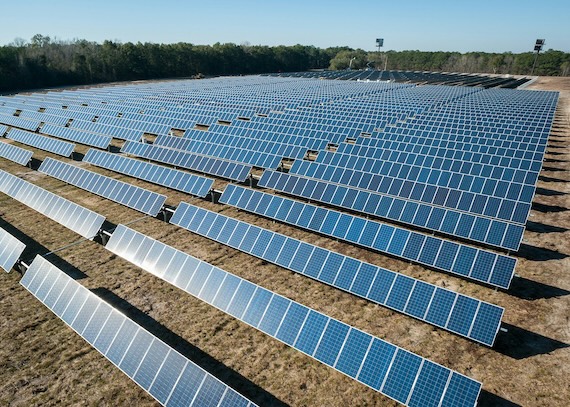
Because the current budget bill sunsets tax rebates for new solar and wind after 2027, analysts expect a big push for such new projects this year and next, after which those industries may cool.
It should be remembered, though, that the costs of new solar installations continue to plummet, so that the industry will be competitive even without tax breaks.
The budget bill retained support for battery technology, which indirectly helps solar, since it needs battery storage to smooth out its supply of power to the grid. And, finally, there will be a new president and a new Congress in 2029 who may restore tax breaks for green energy, since solar is wildly popular in America across the political spectrum. In fact, who knows, the budget bill of 2027 could be more friendly to green energy, and Trump may have to sign it to get other things he wants from Congress, which may be in Democratic hands by then.

 © 2026 All Rights Reserved