
( Middle East Monitor ) – In the lexicon of modern geopolitics, language is rarely used to describe reality; more often, it is used to camouflage it. The emergence of proposals such as a “Gaza Board of Peace” represents a sophisticated linguistic pivot—a transition from the raw violence of military occupation to the sterile, bureaucratic violence of recolonization. By framing the administration of Gaza as a “peace-building” initiative, proponents are attempting to revive the Mandate System of the early 20th century, effectively stripping a population of its agency under the guise of humanitarian necessity.
To understand the gravity of this moment, we must analyse it not as a temporary security measure, but as a deliberate manifestation of neo-colonialism and a direct assault on the project of decoloniality.
The “civilising mission” and the logic of the mandate
The theoretical foundation of any “Board of Peace” is rooted in what political theorist Frantz Fanon identified as the colonial “civilising mission.” This logic dictates that the colonised subject is inherently “unripe” for self-determination. In this framework, Gaza is viewed not as a political entity with a right to sovereignty, but as a “problem space” that requires external management.
This mirrors the League of Nations Mandate system, particularly the Class A Mandates established after World War I. These mandates were predicated on the idea that certain territories were inhabited by people “not yet able to stand by themselves under the strenuous conditions of the modern world.” By proposing a board of external overseers—likely comprised of Western powers or their regional proxies—the international community is attempting to re-establish a trusteeship model. This is a profound regression; it replaces the legal right to self-determination with a conditional “supervised” existence, where “peace” is defined solely as the absence of resistance to the dominant order.
Neo-colonialism and the “management” of Gaza
Where 19th century imperialism sought the direct extraction of resources, neo-colonialism functions through the control of infrastructure, borders, and political legitimacy. A “Gaza Board of Peace” would serve as the ultimate neo-colonial apparatus.
By internationalizing the administration of Gaza, the occupying power and its allies can outsource the moral and logistical costs of control. This creates a “buffer of legitimacy.” If the board is composed of multiple nations, the specific accountability of the colonizer is diluted into a nebulous “international responsibility.” This is what Achille Mbembe describes as necropolitics—the exercise of sovereignty through the power to dictate who may live and who must die, now managed through a sanitised committee of “experts” and “peacekeepers.”
The board becomes a mechanism to:
- Depoliticise the struggle: It transforms a fundamental fight for national liberation into a series of “technical challenges” (e.g., waste management, caloric intake, border logistics).
- Fragment identity: By treating Gaza as a separate administrative unit from the rest of the Palestinian territories, it furthers the colonial strategy of “divide and rule,” preventing the realization of a unified Palestinian state.
The racial underpinnings of the “peace” framework
One cannot discuss recolonisation without addressing the inherent racism that facilitates it. The “Board of Peace” proposal relies on a racialized hierarchy of sovereignty. It assumes that Palestinian lives are “governable” only through external coercion.
This is an extension of Edward Said’s Orientalism, where the “East” is portrayed as perpetually chaotic and irrational, requiring the “rational West” to impose order. The refusal to allow Palestinians to lead their own reconstruction or govern their own borders is a statement of racial distrust. It suggests that the indigenous population cannot be trusted with the tools of modernity—airports, seaports, or a standing police force—because their “nature” is inherently threatening. This racialisation justifies the “permanent temporary” nature of the occupation, where the goalposts for “readiness for independence” are constantly moved.
The struggle for decoloniality
In response to this neo-imperialist creep, the concept of decoloniality offers a radical alternative. Decoloniality is not merely “decolonisation” (the removal of troops); it is the dismantling of the “coloniality of power”—the underlying structures of thought and governance that keep imperial hierarchies in place.
A decolonial approach to Gaza would reject any board, council, or mandate that is not born from the organic will of the Palestinian people. It argues that:
- Sovereignty is inalienable: It cannot be “earned” by proving good behaviour to a board of former colonial masters.
- Reparations over management: Instead of a “Board of Peace” managing poverty, a decolonial framework demands reparations for the decades of systemic destruction of Gaza’s economy and infrastructure.
- Epistemic liberation: It requires the world to stop viewing Gaza through the lens of “security threats” and start viewing it through the lens of “human rights and national liberation.”
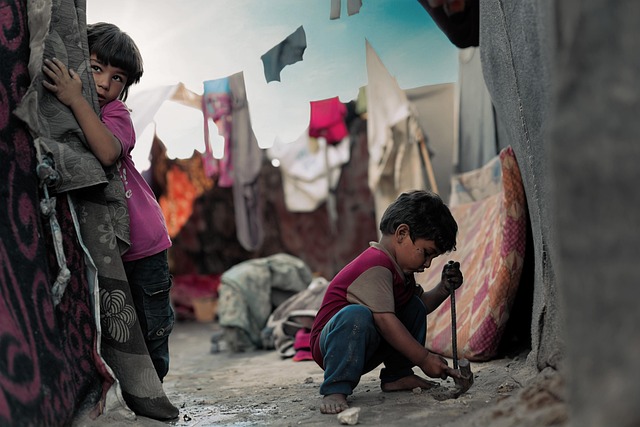
Image of Gaza by hosny salah from Pixabay
The danger of “humanitarian” recolonisation
The most insidious aspect of the “Gaza Board of Peace” is its humanitarian branding. By focusing on the delivery of aid and the rebuilding of hospitals, the board seeks to gain the “consent” of the governed through the provision of basic survival.
However, as political theorist Giorgio Agamben warns, when humans are reduced to “bare life”—mere biological existence without political rights—they are at their most vulnerable. A board that feeds a population while denying them a vote, a passport, or a say in their future is not a humanitarian body; it is a penal administration. It turns the Gaza Strip into a managed enclosure, a high-tech “company town” where the company is a consortium of global powers.
Rejecting the imperial reset
The proposal for a “Gaza Board of Peace” is a litmus test for the 21st century. Will we allow the return of the “Mandate” era, where powerful nations carve up the rights of the “weaker” ones in plush boardrooms? Or will we uphold the hard-won principles of the post-WWII era, which affirm that all peoples have the right to self-determination?
To accept the recolonisation of Gaza is to accept a world where the strong do what they can and the weak suffer what they must, all while a “Board of Peace” takes minutes of the proceedings. The struggle for Gaza is the frontline of the global struggle for decoloniality. It is a demand that we stop “managing” the oppressed and start dismantling the systems of oppression. Anything less than full sovereignty is not peace—it is merely the silence of the colonised.
The views expressed in this article belong to the author and do not necessarily reflect the editorial policy of Middle East Monitor or Informed Comment.
 Unless otherwise stated in the article above, this work by Middle East Monitor is licensed under a Creative Commons Attribution-NonCommercial-ShareAlike 4.0 International License.
 © 2026 All Rights Reserved