
New York (Special to Informed Comment; feature) – During his speech at the Board of Peace on February 19, President Trump warned Iran that the window of opportunity for a possible deal with the United States is closing. With the largest military buildup in the region since the invasion of Iraq, at the cost of close to $370 million, the buildup increasingly looks like a decisive plan of action rather than merely a pressure tactic. The deal offered by the United States is simple and straight forward, submit to all American demands or be obliterated. Negotiation, American style.
No one has explained the naked imperialism that the United States pursues in our times better than the Secretary of the State Marco Rubio in his speech last week at the Munich Security Conference. “This is the path that President Trump and the United States has embarked upon. It is the path we ask you here in Europe to join us on. It is a path we have walked together before and hope to walk together again. For five centuries, before the end of the Second World War, the West had been expanding – its missionaries, its pilgrims, its soldiers, its explorers pouring out from its shores to cross oceans, settle new continents, build vast empires extending out across the globe.”
Nostalgia for a glorious colonial past coupled with a shameless resentment toward the post WWII decolonization that grants the right of self-determination to former colonies inform their negotiating principles with Iran and any other nation that refuses capitulation to American demands. Rubio further laments the constraints that international law has placed upon western nations who wish to exercise their superior power in order to maintain their global dominance.
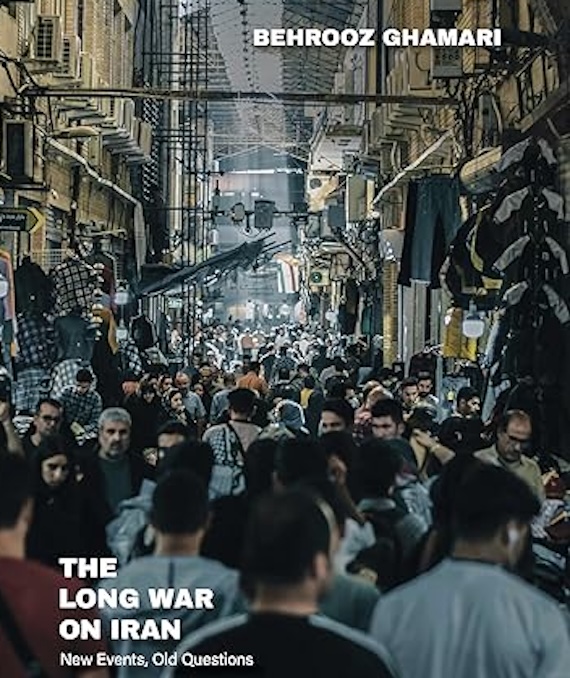
As I show in my recent book, The Long War on Iran: New Events, Old Questions, the U.S. has been following a policy of regime-change in Iran since the establishment of the Islamic Republic in 1979. This policy has been pursued by successive administrations in different forms, at times with more rigor and at times through gentler postures.
The core of this policy has been the implementation of draconian sanctions to cripple the Iranian economy. The objective of these sanctions has been to create sustained deprivation of the entire population, thereby giving rise to unrest against the government. Speaking at the Munich Security Conference on Friday, former Speaker of the House, Congresswoman Nancy Pelosi said Washington should rely on “economic forces” to pursue what she described as “regime change” in Iran without resorting to direct military intervention. “Just weaken their economy… because they [the regime] do have support in the rural areas […] We have to make them feel the pain as well,” Pelosi said. The immorality of Pelosi’s statement here is on par with Madeleine Albright’s wicked moment of confession in a 1996 interview that the deaths of half a million Iraqi children due to US-led sanctions were a “hard choice” but that “the price—we think the price is worth it.”
Congresswoman Nancy Pelosi is fully aware that sanctions are wars by other means. Sometimes, the casualties of sanctions, as Madam Albright acknowledged, are more dreadful than wars. Ms. Pelosi is talking about people who fall into such poverty that they have to survive on one meal a day, meals without nutrition, people who are desperate to find medicine for their loved ones with cancer, families whose lives are shattered with displacement and broken promises. Yes, poor people need to pay the price of failing to overthrow a tyrannical regime. I remember the same logic when Saddam Hussein bombed Iranian cities. He argued that if you don’t want to be bombed, overthrow your regime. Same logic, same brutality.
This past January, we witnessed another consequence of such a policy in Iran. When hundreds of thousands of Iranians went to the streets to protest the dire economic conditions, the peaceful rallies quickly turned into demands for regime change. Whether that turn was induced by foreign, i.e. Israeli, agents, as asserted by former Secretary of State Mike Pompeo, does not diminish the pain of the catastrophe that followed. The security forces killed thousands of the protestors mercilessly and displayed the bodies of those murdered in public for identification by their relatives. The nation has seen no other act of brutality like this in its modern history. For the past almost half-a-century, the repressive apparatus of the Islamic Republic has committed reprehensible atrocities. But the January massacre stands alone in unleashing the full force of its brutality without discrimination.
Today, all evidence points to the U.S. determination to release the full might of its military prowess on unseating the Islamic Republic. In the absence of a massive ground invasion, this goal is only achievable by total annihilation of the entire infrastructure of the country, in addition to decapitating the state and security apparatus. Undoubtedly, Israel will join this military campaign in making sure that roads, manufacturing sites, bridges, dams, electrical grids, water treatment plants – do not survive the onslaught. They might not be able to overthrow the regime, but they will surely try to leave nothing left to be governed. That is the ultimate fear.
Meanwhile, the world watches quietly while the catastrophe looms. Inside the United States, the lawmakers, the media, and the populace wonder what the purpose of all this is. Is Iran an imminent danger to the United States? If we believe the administration that last June they “obliterated” Iran’s nuclear facilities, what are they going to obliterate this time? Is the Trump administration “wagging-the-dog” to change the conversation from its own economic failures, ICE raids, and the calamity of Epstein files?
Unfortunately, if such an imposed war materializes, the Iranian people will not be alone in paying the ultimate price. This war threatens to quickly become regional and possibly global. It is inconceivable that the leaders of the Islamic Republic would surrender before depleting their stockpile of deadly missiles and drones. The Islamic Republic is no threat to the United States and its regional allies; it just refuses to be a client state. If a regime change is the only alternative for realizing social justice and putting an end to repressive structures of power, that must be done with the mighty hands of the Iranian people, who can only be weakened by a widespread destruction of the country’s infrastructure.. They have been exercising that prerogative for many decades, to open a space for civil liberties, for labor rights, for women’s rights, for the right to assembly, for social justice and against economic corruption and cronyism. They are doing their share, let them succeed on their own terms.

 © 2026 All Rights Reserved