
Ann Arbor (Informed Comment) – Beatrice Petrovich at the Ember Energy Consultancy reports that for the first time last year, wind and solar generated more electricity in the European Union than did fossil fuels. It is another clear piece of proof that humanity can get to carbon neutral by 2050 if it wants to. The alternative is very bad for children and other living things. Combined, wind and solar generated 30% of EU power in 2025. That percentage was only 20% half a decade before.
Wind, solar and hydro accounted for 47.1% of electricity generation, nearly half, in the Eurozone.
The big story is solar.
Regarding nameplate capacity, Europe installed 65 gigawatts of new solar last year. That rate is similar to the United States.
Both the EU and the US are overshadowed in this regard by China, which put in 315 gigawatts of new solar capacity in 2025. If the European economy is to compete with that of China, it will have to up its game even further.
Still, Europe’s progress is impressive. Solar grew by over 20%, as it has every year for the last four, and now accounts for 13% of EU electricity. That is more than either hydroelectric or coal. It is growing in each of the 27 member states. I was astonished to see that it fuels 28% of the electricity in Hungary! And it is more than 20% in Spain, Greece, the Netherlands and Cyprus. It now amounts to 369 terawatt hours (TWh). A watt hour is how much electricity it takes to burn a one-watt light bulb for an hour. A terawatt is a trillion watts.
Some EU countries are carbon neutral champions. Denmark gets 71% of its electricity from renewables. Solar accounts for 22% of Spain’s electricity. Italy went wild with battery capacity, increasing it by 40%.
Across Europe, battery capacity is surging, allowing countries to store power from wind and solar for use later, when the wind isn’t blowing or the sun isn’t shining. Solar declines in late afternoon into evening, when workers get home and use more electricity. That shortfall is often filled by fossil gas peaker plants, which are carbon-intensive. California has shown that utility-scale batteries can replace the gas peaker plants much more inexpensively and with much less damage to the environment. Europe is going in the same direction.
Showing synergy and adaptability, Europe was able to replace anemic wind power in the first few months of 2025 with solar, which surged because of a raft of bright sunny days. The summer was so hot and sunny that it generated a big increase in electricity demand for air conditioning, but solar was able to meet that demand. Wind came back strong in the fall.
Fossil fuels still accounted for 29% of electricity in the EU, and although Europe is trying to phase out Russian fossil gas by 2027, it has begun importing more American Liquefied Natural Gas as part of blackmail deals with the odious Trump, which is a worrisome development. A lot of US gas is from hydraulic fracturing, which releases not only fossil gas but also methane, both potent in heating up the earth. Still, European fossil gas use only increased slightly in 2025, and it is still lower than the pre-COVID peak.
On the other hand, coal emits twice the carbon dioxide that gas does per kilowatt hour generated, and humanity really has to kill coal quickly. Europe is doing that faster than China is. Coal is now responsible for only 9.2% of electricity generation. It has gone into a tailspin in the European Union, and as it declines it is being replaced by renewables rather than fossil gas.
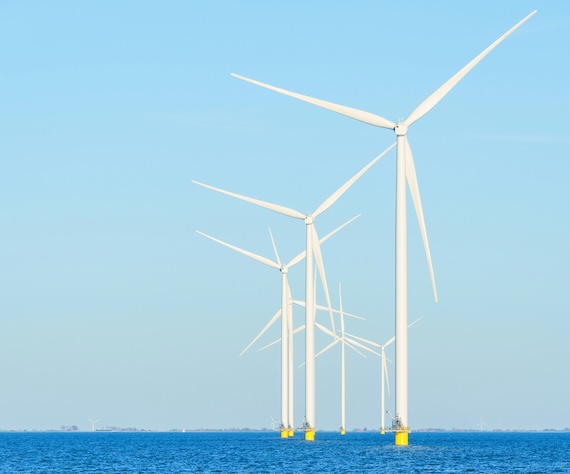
Photo of Netherlands – April 2022: north sea coast by Viktor Hesse on Unsplash
Of course, the 27 countries of the EU are diverse. So Ireland finally freed itself of the curse of coal entirely last year, joining Belgium, Austria, Sweden, Portugal, France, Hungary, Italy (except Sardinia), Lithuania, Latvia, Luxembourg, Malta, and Cyprus. Greece was down to 5% coal last year and will close its remaining plants in 2026.
While in Poland coal still fuels 51% of power plants, that is already a lot less than it used to be. In 2019 it was 73%, and that was only 7 years ago.
The economics is in large part driving these changes. The price of electricity supplied by solar and wind has fallen dramatically over the past decade, as has the cost of battery power. Fossil gas and coal are expensive most places in comparison. If batteries can smooth out solar and wind production through storage, Europe could avoid its expensive gas bill in the coming decade. The European Union carbon tax and other incentives are also having an impact, but in my view renewables are just good business and that is why they are burgeoning.

 © 2026 All Rights Reserved