
-
( Middle East Monitor ) – The latest Israeli airstrikes on Gaza have once again exposed the frailty of what the world had hoped would be a lasting truce. Barely days after the so-called Gaza Plan was endorsed in Cairo as a new framework for postwar reconstruction and governance, the region is back to the grimly familiar cycle of escalation. Israeli warplanes struck targets across the strip, claiming retaliation for Hamas attacks that killed two soldiers, while Hamas accused Israel of using minor security incidents as a pretext to bomb civilian neighborhoods. Whatever the justification, the result is undeniable, dozens of Palestinian civilians are dead, aid convoys have halted again, and the prospect of peace has faded into yet another mirage.
The Gaza Plan, announced with much fanfare at a regional summit in Egypt, was meant to be the first coordinated attempt to stabilize Gaza after years of devastation. It was framed as a multi-phase roadmap, restoring humanitarian access, rebuilding essential infrastructure, and eventually paving the way for limited self-rule under international supervision. Arab states pledged financial and logistical backing, the European Union promised technical assistance, and even Israel cautiously signaled willingness to cooperate, so long as its security concerns were addressed. For a brief moment, the plan seemed to capture a rare alignment of interests between regional actors long at odds over Gaza’s fate.
Yet the optimism was always fragile, and this week’s renewed fighting demonstrates why. The plan assumed a degree of restraint and mutual trust that simply does not exist between Israel and Hamas. Each side continues to view the other not as a negotiating counterpart but as a mortal enemy. For Israel, Hamas remains a terrorist organization whose elimination is a matter of national survival. For Hamas, Israel’s control of Gaza’s borders, airspace, and economy is proof that the occupation never truly ended. The Gaza Plan, designed as a technocratic blueprint, could not bridge this fundamental divide.
The United States, long the traditional mediator in the Israeli-Palestinian conflict, has been conspicuously absent in recent weeks. Washington endorsed the Cairo initiative but chose not to take the lead, perhaps weary of another diplomatic failure or distracted by domestic politics. President Biden’s administration has urged “both sides to exercise restraint,” a phrase so worn that it now rings hollow. Without firm American engagement, Israel feels little external pressure to moderate its military responses, while Hamas sees no credible arbiter capable of securing concessions from Israel. The result is a vacuum in which violence fills the diplomatic silence.
Egypt, Jordan, and Qatar have attempted to fill that vacuum, but their leverage is limited. Cairo’s priority is border stability, not long-term political reconciliation. Doha can fund reconstruction, but it cannot impose compliance. Amman’s influence is largely moral rather than material. The absence of a strong mediator has allowed both Israel and Hamas to maneuver freely within their narratives, Israel’s of defense against terror, Hamas’s of resistance against occupation. Each can justify escalation as self-defense, and each knows that international outrage will eventually fade.
The deeper problem lies in the Gaza Plan’s design itself. On paper, it envisioned an orderly sequence, ceasefire, aid, reconstruction, and eventually governance reform. In practice, every step depends on the next, creating a fragile chain easily broken by mistrust. The ceasefire must hold for aid to flow, yet aid cannot flow unless border crossings remain open, and Israel will not keep them open if it believes Hamas is rearming. The reconstruction effort requires stable security conditions, but reconstruction itself becomes a target of suspicion when materials like cement and steel are seen as dual-use for tunnels and weapons. What seems like a rational roadmap from a diplomatic table in Cairo collapses under the weight of realities in Gaza City or Khan Younis.
Moreover, the plan underestimated the domestic pressures on both sides. Israel’s government, dominated by right wing and nationalist factions, cannot appear weak after suffering one of the worst military embarrassments in its history. Any compromise with Hamas is framed by its opponents as appeasement of terror. Hamas, for its part, governs a population traumatized by siege and bombardment, where armed resistance is still seen as the only form of dignity left. To negotiate openly with Israel risks eroding its legitimacy among Palestinians and rival factions. Thus, both sides are trapped in a political logic that rewards confrontation more than compromise.
The tragedy is that ordinary Palestinians and Israelis pay the price for this impasse. Gaza’s civilian infrastructure is collapsing once again, with hospitals running on dwindling fuel and shelters overcrowded beyond capacity. The temporary halt in humanitarian aid has reignited fears of famine and disease. On the Israeli side, communities near the border remain under constant threat of rocket fire, their lives suspended between alert sirens and brief moments of calm. The Gaza Plan promised relief, but for those living through the renewed bombardment, it feels like a cruel illusion.
Looking ahead, it is difficult to see how the Gaza Plan can survive without profound changes in both the political environment and the balance of trust. The most optimistic scenario is one in which both sides, exhausted by years of mutual destruction, decide to treat the Cairo framework as a pragmatic necessity rather than a peace ideal. That would require Israel to allow meaningful reconstruction without using security fears as a perpetual veto, and Hamas to accept an extended truce without turning it into an opportunity to rearm. It would also demand international actors, especially the United States, to re-engage not merely as donors or observers but as guarantors of compliance.

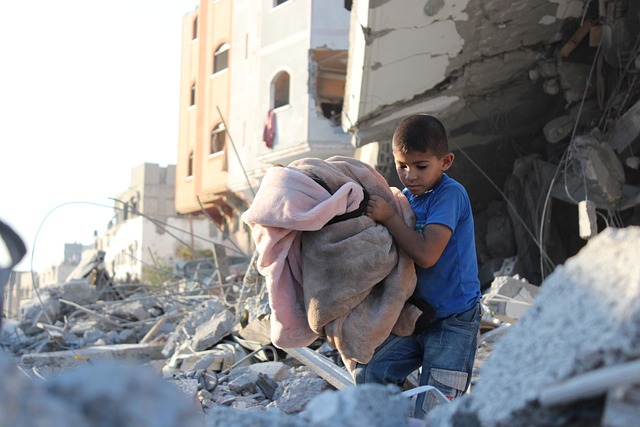
File photo by hosny salah from PixabayYet the more realistic projection is grim. The repeated breaches of the ceasefire have already eroded confidence in the plan’s viability. Each new strike, each retaliatory rocket, pushes both parties further from the table. In political terms, Israel may soon argue that Hamas has proven incapable of upholding any truce, justifying a prolonged military presence in Gaza’s perimeter. Hamas, meanwhile, will likely double down on its rhetoric of resistance, portraying the Gaza Plan as a foreign scheme to weaken its control. The plan’s backers in Cairo and Brussels will find themselves defending a framework that neither principal actor truly believes in.
This is the paradox of peacebuilding in Gaza, the more elaborate the plans become, the less they correspond to realities on the ground. International diplomacy tends to treat Gaza as a humanitarian crisis to be managed, not a political conflict to be resolved. But as long as the core issue, the unresolved relationship between Israel and Hamas, remains unaddressed, no amount of reconstruction funding or ceasefire monitoring will produce lasting calm. The Gaza Plan may rebuild roads and schools, but it cannot rebuild trust where none exists.
For now, the cycle of ceasefire and retaliation seems destined to continue, each round eroding what little hope remains. The latest strikes have turned yet another peace document into ashes, reminding the world that stability in Gaza cannot be drafted in conference halls while bombs fall on its streets. Without accountability, empathy, and sustained diplomacy, the future of Gaza and Israel will remain trapped in repetition, a peace imagined on paper, and a war lived in reality.
The views expressed in this article belong to the author and do not necessarily reflect the editorial policy of Middle East Monitor or Informed Comment.
Ronny P Sasmita is Senior Analyst at Indonesia Strategic and Economics Action Institution. Unless otherwise stated in the article above, this work by Middle East Monitor is licensed under a Creative Commons Attribution-NonCommercial-ShareAlike 4.0 International License.


 © 2026 All Rights Reserved