
By Shirin Khayambashi, Toronto Metropolitan University
(The Conversation) – For Iranians, the past year has meant contending with everyday necessities slipping further and further out of reach. The cost of living has surged beyond what many households can manage, and what felt like economic strain became an economic freefall.
On Dec. 28, 2025, the Iranian rial plummeted to a historic low of 1.4 million rials per American dollar. The unprecedented inflation ignited nationwide protests demanding economic stability.
The movement began with a peaceful sit-in at Tehran’s Grand Bazaar but was immediately met with violent response by the Iranian Revolutionary Guard Corps (IRGC).
The grassroots initiative — made up of merchants, shopkeepers, university students and anti-regime members of the general public — expanded rapidly to other major cities, drawing protesters from across Iran to the streets. The call for economic stability quickly evolved into a political demand for emancipation and freedom.
Iranians have been expressing their dissatisfaction with the current regime for decades. And although the recent protests were initiated in response to the dire economic crisis, the country’s future will depend more on whether authoritarian repression and political fragmentation — both inside its borders and across the diaspora — can be overcome.
Violence, fear and the tools of repression
Political upheaval in Iran often follows a predictable cycle: the public participates in peaceful protests in response to corruption, which are then silenced by IRGC forces through the threat or use of violence, including arrests, indefinite prison sentences and mass executions.
In the recent political unrest, the IRGC used force to control, intimidate and silence protesters. Hospitals have reportedly been instructed to reject injured protesters or face consequences, and a new law has been introduced to classify any civil disobedience as a capital crime punishable by death.
Iranian President Masoud Pezeshkian responded to the new citizen-driven movement with a similarly callous dismissal, referring to protesters as victims of western influence. This claim has been used to justify the nationwide digital blackout.
Iranians who relied on various social media platforms to raise awareness about government violence now encounter censorship. This digital silence also affects reporters inside Iran, limiting transparency and preventing unfiltered news from being distributed out of the country.
Monarchist narratives divide the movement
The grassroots movement, however, has been hijacked by a small faction of monarchists demanding the return of Reza Pahlavi, the exiled son of the former shah, as the Shah of Iran. This suggestion has been met with criticism as many question both the dismissal of the real concerns of the movement inside Iran and the credibility of Pahlavi as the leader of a country in crisis.
Various groups in Iran have shown leadership and organization as they demand recognition and cultural autonomy from the government. Elevating an outside figure diminishes Iranians’ own role in driving change.
While the national protest movement requires direction, Pahlavi is seen as creating division rather than cohesion. Many argue that a return to monarchy would leave Iran in a weakened political state vulnerable to outside influences.
These concerns are tied to the 1953 coup d’état, orchestrated by the CIA, against Iran’s first democratically elected prime minister, Mohammad Mossadegh. The shah, relying on support from the United States, removed Mossadegh from power, which strengthened the Shah’s unilateral authority.
Many political activists are wary of the dangers of a monarchy and the potential of imperialist influence over Iranian politics.
This is heightened by the fact that Pahlavi has openly requested support from U.S. President Donald Trump and Israel’s Benjamin Netanyahu to reinstate him as the Shah of Iran. He held a news conference in Washington D.C. on Jan. 16 to call for political, economic and military pressure on Tehran.
Disapora politics and the cost of exclusion
Shared grief and solidarity have pushed the Iranian diaspora to raise awareness and speak out for their homeland.
During the digital blackout, they used various social media platforms to amplify information about the ongoing protests. Simultaneously, Iranians abroad physically joined the global movement by participating in rallies and marches across the world.
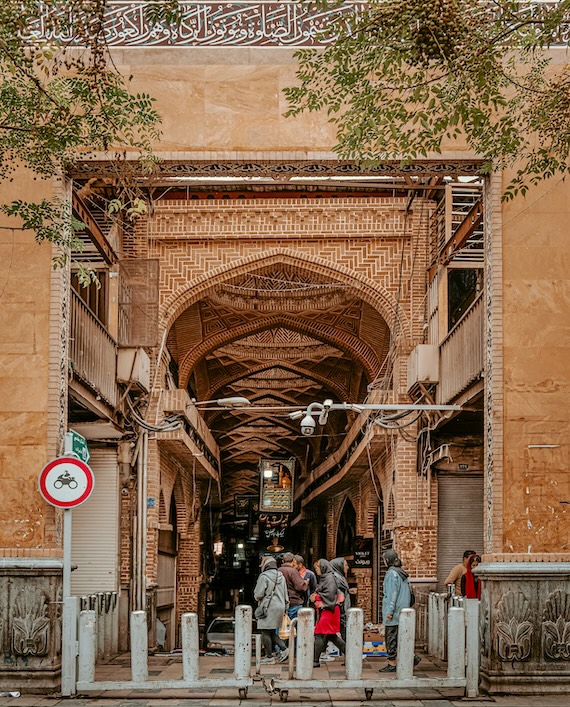
Photo by omid armin on Unsplash
However, the movement within the diaspora has seen some challenges.
The domination of the monarchist movement as the primary opposition to the Islamic Republic has created a divide among the communities abroad. The overall friction presented as a form of in-group Islamophobia and patriarchal attitudes that stem from classism.
Divisive rhetoric has also resurfaced as criticism of Pahlavi, Trump or Israel is met with hostility and name-calling.
During the Woman, Life, Freedom uprising, the Iranian diaspora was much more cohesive and welcoming to different perspectives.
But in the current movement an us-versus-them tension has developed, as many perceive it as an expression of support for the monarchy. This divisive atmosphere has left many members of Iranian diasporas in a state of despair.
History suggests that moments of liberation in Iran do not fail for lack of courage, but for lack of political cohesion. The question now is whether the grassroots movement can sustain its momentum and legitimacy, and whether its demands won’t be overshadowed by external political frictions and agendas.
Shirin Khayambashi, Assistant Professor, Sociology, Toronto Metropolitan University
This article is republished from The Conversation under a Creative Commons license. Read the original article.

 © 2026 All Rights Reserved