
Oxford (Special to Informed Comment; Feature) – Today, 11 February, marks the 47th anniversary of the victory of the Islamic Revolution in Iran, and coincidentally, it also marks the 15th anniversary of the ousting of Hosni Mubarak after 30 years of oppressive rule. There were some other uprisings during what came to be known as the Arab Spring, which resulted in the ousting of ruling dictators. Undeterred, Iranian leaders, after the terrible carnage in January this year, are making big plans to celebrate the anniversary of the 1979 Islamic Revolution.
Many people optimistically assume that massive popular revolutions against dictators will automatically result in the establishment of democratic governments. Unfortunately, the aftermath of the Iranian revolution and the massive uprisings by Arab masses during the so-called Arab Spring have led to the establishment of even worse regimes.
Far from resulting in the establishment of democracy, human rights and the rule of law, the 1979 Iranian revolution replaced the Shah’s dictatorship with an autocratic and reactionary religious dictatorship that last month resorted to extreme violence, killing thousands. Its religious pretensions have won the support and loyalty of more religious sections of the society, which has made its ouster much more difficult.
Several Arab regimes which have come to power in Tunisia, Egypt, Libya, Syria, Yemen and elsewhere as a result of Arab uprisings have proved to be more efficient dictatorships, often backed by the West. Practically, throughout the Arab world, we have several intimidated, oppressive and subservient regimes that have betrayed their people and have become open vassals of more openly aggressive US governments. After these experiences of failure, it is time to study the reasons for their failure so as not to repeat their mistakes.
The spark of the revolution in Tunisia was an altercation on 17 December 2010 between a young fruit seller named Mohamed Bouazizi and a policewoman called Faida Hamdy. Soon, demonstrations erupted in several cities and in less than a month, on 14 January 2011, they had succeeded in toppling President Zine El Abidine Ben Ali, one of the most autocratic rulers in North Africa, after 23 years in office.
Massive demonstrations in Tahrir (Liberation) Square in Cairo, starting on 25 January 2015, marked the start of the revolution in Egypt, and in less than three weeks, Hosni Mubarak, who had ruled Egypt for 30 years with Western backing, was toppled. It is interesting to note that exactly 65 years earlier, on 25 January 1952, the Egyptian police in Ismailia fought against the British forces by refusing British demands to evacuate the Suez Canal Zone. That event marked the beginning of the Young Officers’ Uprising. That day was traditionally celebrated in Egypt as the “Police Day”, but after the massacres in Tahrir Square, it came to be known as the “Day of Rage”.
In the first post-Mubarak democratic election held in Egypt on 23 and 24 May 2012, with a voter turnout of 46%, the results were split between five major candidates. In the second round, held on 16 and 17 June with 52% turnout, Mohamed Morsi, the candidate of the Muslim Brotherhood, won with 13,320,131 votes or 51.73% of the votes cast.
Despite many international observers declaring Egypt’s first democratic election in its long history to have been fair and free, the military under General Abdel Fattah el-Sisi staged a coup on 3 July 2013, deposed and imprisoned President Morsi who died in jail, suspended the constitution and started a violent nationwide campaign against the members of the Muslim Brotherhood, killing and wounding thousands of demonstrators who opposed the coup.
According to the Egyptian Health Ministry, 638 demonstrators were killed on 14 August, including 595 civilians and 43 police officers, but Human Rights Watch announced that its investigations revealed the killing of many more people: “At least 1,400 protesters have been killed in protests and political violence as a result, and most likely scores more.” While the West had cut off all aid to Morsi’s government, after a short pause, it resumed aid to the leader of the military coup, General Abdel Fattah el-Sisi.
The Algerian War of Independence against the French, also known as the Algerian Revolution, started on 1 November 1954 (All Saints Day). The war caused the deaths of up to 1.5 million Algerians, 25,600 French soldiers, and 6,000 Europeans. French soldiers committed many war crimes, including massacres of civilians, rape and torture. The French destroyed 8,000 villages, and over 2 million Algerians were displaced. However, after all those sacrifices, the Algerians achieved their independence on 19 March 1962, more than seven years after the start of the revolution.
The “Libyan Revolution” against Muammar al-Gaddafi’s four-decade rule started on February 15, 2011, with initially peaceful anti-government rallies held in Benghazi on February 15, 2011, by protesters angered by the arrest of a human rights lawyer, Fethi Tarbel. The protests intensified and became more violent.
Western powers showed solidarity with the protestors and condemned the regime’s violence against them. On February 28, the United States froze at least $30 billion in Libyan assets. Eventually, Western states planned military intervention, allegedly to prevent the massacre of protestors by Gaddafi’s forces. The African Union (AU) rejected any military intervention in Libya, asserting that the crisis should be resolved through negotiations.
Meanwhile, Gaddafi’s forces seemed to be gaining the upper hand and advanced on the remaining rebel positions in Benghazi and Tobruk in the east and Misurata in the west. But Western countries pushed a resolution at the UN Security Council to authorize military action, including the imposition of a no-fly zone to protect Libyan civilians. Beginning March 19, a coalition of U.S., UK and French forces with warplanes and cruise missiles attacked targets in Libya, and on March 27, NATO forces officially took command of military operations. On October 20, Gaddafi was seized and killed by rebel fighters, supported by Western forces.
All those revolutions started with a great deal of hope and optimism for real change. The most famous lines of a Tunisian poem, “when the people decide to live, destiny will obey, and chains will be broken”, became the anthem of young protestors in Tunisia and Egypt. That sentiment was echoed in the chant of the Egyptian protestors in Tahrir Square: “The Egyptian nation has decided to topple the regime.” The term that was used most often by the demonstrators was karama, or dignity. They wished to regain their dignity as free and independent individuals and not as oppressed masses.
It is clear that a number of domestic mistakes, and opportunism by Western governments, have been responsible for the tragic failure of those revolutions. There were many false assumptions common to all those revolutions, but I will only refer to a couple of them.
The first mistake was a naïve belief that the revolution would be definitely benevolent and would change society for the better. This excessive optimism meant that the revolutionaries were not prepared to examine the real alternatives and work towards achieving them. At the height of the Iranian revolution, I met a good friend who had become very active in anti-Shah protests and would have been severely punished if the revolution had failed. He was a popular university professor who had been a member of the Communist Tudeh Party, but as he became a successful professor with two houses, he seemed to have changed his loyalties. Yet, during the revolution, he had suddenly reverted to his roots and had become an extreme leftist.
When I saw him, he turned to me and in a sarcastic and contemptuous tone said: “We do not see you in our meetings and demonstrations very often.” I replied: “My dear friend, you are a very intelligent person with a background in liberal and leftist causes. Do you know where you are taking the people now? Have you read anything by Ayatollah Khomeini and do you support his views? What do you want to put in the place of the current regime if you succeed in toppling it?”
To my surprise, he became angry and said: “Even asking that question is treason to the revolution. At the moment, the only duty of all progressive forces is to topple the Shah’s regime. The mullahs do not know anything about politics, but they are useful in mobilising the masses. Once we topple the Shah, we will send Khomeini and the rest of the mullahs to their mosques and seminaries and we will rule.” Unfortunately, Khomeini had other ideas. After the revolution, he decimated the leftist forces in a way that could never have been dreamed of by the Shah. Despite all his services in mobilising the students, my friend too had to flee the country in fear for his life.
Sadly, this is still very much the case with the current uprising in Iran and in many Arab countries. Any question about the aim of the revolution and any possible alternative to the current regime is regarded as unforgiveable treason.
The second major mistake of all those revolutions was a naïve belief in the good intentions of Western leaders and their alleged support for democracy and human rights. Practically, all the leaders of Middle Eastern revolutions believe that they would receive Western backing for opposing dictatorial regimes.
After many decades of exploitation of Iranian oil by the Anglo-Iranian Oil Company and the British government, giving Iran a very small share of the oil revenue, the nationalist Iranian prime minister Dr Mohammad Mosaddeq decided to nationalise Iranian oil, with massive support in the Majlis or Iranian Parliament. That decision caused an uproar in the United Kingdom, whose secret service, the MI6, drew up plans to topple him.
During the oil nationalization period and early years of his government, Mosaddeq looked to the United States as an ally in his struggle to throw away the yoke of imperialism. It also served the American purpose of wishing to get a foothold in Middle East oil that was mainly controlled by British concessions. Right to the end, Mosaddeq believed that the United States government would side with him in his disagreement with the Anglo-Iranian Oil Company. The Shah dismissed Mosaddeq and appointed a veteran politician Ahmad Qavam, better known as Qavam ol-Saltaneh, as prime minister. Virtually, the entire nation rose up with massive demonstrations, and only three days later, the Shah was forced to reinstate Mosaddeq.
However, the CIA and the MI6 organised a coup in August 1953, and brought back the Shah who had fled into exile and restored him to power. They organised mass demonstrations, led by a gang leader Sha’ban Ja’fari, known as Sha’ban Bimokh (Brainless). Mosaddeq was imprisoned and many of his supporters were also jailed or killed.
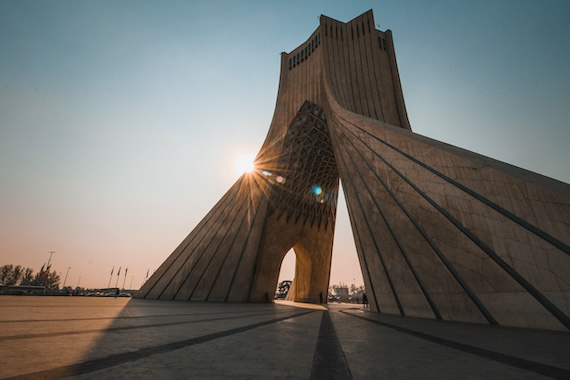
Photo of Azadi Tower, Tehran, by Alireza Heydarifard on Unsplash
I translated the first two volumes of the Memoirs of my late friend, Ardeshir Zahedi, the late Shah’s son-in-law and the son of General Zahedi who led the coup. Zahedi also spent many years as ambassador to the United States and the UK. In the first volume of his memoir, which is devoted entirely to the coup, he maintains that the coup led by the CIA operative Kermit Roosevelt failed, and what happened later was a domestic military coup. Even if one accepts this version, there is no doubt that the idea of the coup was planned and executed by the CIA and MI6, but was very poorly implemented.
I vividly remember those events as a schoolboy. During those critical days of August 1953, a large number of villagers where we spent our summer vacation gathered around our radio to listen to the latest news bulletins. When, on 19th August, the national radio announced the fall of Mosaddeq’s government and General Zahedi asked the Shah to return to the country, many villagers ran widely through the village shouting, “The Shah is back”!
Mosaddeq was not universally popular and there was still a good deal of support for the Shah, especially in the rural areas and among the military and the clergy. However, the vast majority of the educated middle class backed Mosaddeq and his reforms and his downfall was seen as a great betrayal. After returning to school the following month, I noticed that many of our teachers were wearing black armbands as a sign of mourning, as there was still some level of freedom in the society.
The main conclusion is that uprisings and revolutions in developing countries are extremely complex and have a number of powerful opponents at home and abroad. They need to be planned with a great deal of care and the revolutionaries must open their eyes to realities.
Let us remember the words of a popular Tunisian poet, Abul-Qasim al-Shabi, in his poem “To the Tyrants of the World”:
“Wait, don’t let the spring, the clearness of the sky and the shine of the morning light fool you
Because the darkness, the thunder’s rumble and the blowing of the wind
are coming toward you from the horizon
Beware, because there is a fire underneath the ash.”

 © 2026 All Rights Reserved