Al-Anizi: The US is Training an Insubordinate Iraqi Army
Sistani Blows off Bush
Guerrillas shot dead 8 oil workers at the Baiji refinery north of Baghdad. The guerrillas have for some time had a strategy of cutting the capital off from fuel and electricity as far as they can, and their sabotage in Baiji is for this purpose. At the same time, they siphon off the fuel and smuggle it out to fund the insurgency.
Grand Ayatollah Ali Sistani has blown off the president of the United States. Bush sent Sistani a letter asking him to intervene to help end the gridlock in the formation of a new Iraqi government. Asked about his response, an aide said that Sistani had not opened the letter and had put it aside in his office.
Sistani does not approve of the American presence in Iraq, and certainly disapproves of the Bush administration's attempt to unseat Ibrahim Jaafari as the candidate of the United Iraqi Alliance. Middle Easterners have had Western Powers dictate their politics to them for a couple of centuries and are pretty tired of it.
It is rumored that after the December 15 elections, Bush told Jalal Talabani, the Kurdish President of Iraq, that he would prevent the Shiite coalition from taking power this time, which encouraged Talabani to try to unseat Jaafari. Bush's plan, however, would only work if the neo-Baathists, the Sunni fundamentalists, the Kurds and the secular Shiites can consistently work together, and if a substantial number of Shiites defects from the United Iraqi Alliance to help elect a president by 2/3s majority. Pigs will fly first.
Meanwhile, Bush's tinkering with Iraqi politics has contributed mightily to the gridlock in forming a government. Jaafari's bargaining position has been perhaps fatally undermined. And Washington is blaming the Iraqis! At least Bush is a consistent foul-up.
Reuters points out that Sistani is not only highly influential in Iraq but also in Pakistan.
KarbalaNews.net reports that Dr, Qusay al-Suhail, a member of parliament from the Sadr Bloc, denied Thursday that the Sadrists or the United Iraqi Alliance (Shiite fundamentalist coalition) has any intention of changing their candidate for prime minister. (The current candidate, elected by a party vote, is Ibrahim Jaafari, but the Bush administration and the Kurds and Sunnis have been trying to unseat him.) Al-Suhail said, "The position of the Alliance is clear and frank, and talk of changing its candidate is incorrect. It is possible that the Alliance may discuss the issue of Jaafari's candidacy today, but not for the purpose of chaning it. Rather, it will be to review the new demands put forward by the Iraqi Accord Front [Sunni fundamentalist] and the Kurdistan Alliance about changing Jaafari."
He added, "The Alliance agreed that there will be a committee that will go to the Iraqi National List [headed by Iyad Allawi), the Iraqi Accord Front, and the Kurdistan Alliance to discover the causes of their objections and to clarify their position-- [though] it is clear that a large proportion of them have backed off from their objections with regard to some issues, and that the matter is confused, and the causes are unknown and various. . . there is a clear insistence on the part of the United Iraqi Alliance on retaining its candidate, and America has now denied that it desires to see Jaafari step down; Zalmay Khalilzad has denied that desire." 
courtesy KarbalaNews.net
Rumors circulated earlier on Thursday that the Sadr Bloc was reconsidering its commitment to Jaafari. Jaafari won the internal party vote because he was backed by the two branches of the Dawa Party and by the 32 Sadrists. Jaafari's candidacy has been rejected by three of the other major parties representing Kurds, Sunni Arabs and secular Shiites.
Another source within the United Iraqi Alliance told KarbalaNews.net that Jaafari might not be able to win a vote of confidence in the whole parliament,a nd that he might be replaced by Ahmad Chalabi. The source maintained that a clique of parliamentarians had attempted to convince Muqtada al-Sadr to accept this substitution."
[Cole: Chalabi did not win a seat in parliament, so I don't understand how he could be prime minister!]
The Fadhila or Virtue Party, a branch of the Sadrists that follows Shaikh Muhammad Ya`qubi and dislikes Muqtada al-Sadr and Ibrahim Jaafari, is suggesting that Jaafari's candidacy be submitted to the whole parliament. A source told KarbalaNews.net that 75% of the members of the UIA (Shiite religious parties) agree with this proposal.
Jaafari's candidacy is one issue that is holding up the formation of a new government. Another such issue is which parties will get which ministries. The United Iraqi Alliance is trying to keep control of the security ministries, on the grounds that they should be controlled by the prime minister and his party. They are trying to convince the Sunni religious coalition that this is only fair.
Minister of the Interior Bayan Jabr argues that the guerrilla insurgency is led by 16,000 Iraqi ex-Baathists.
Al-Hayat reports on remarks of Abdul Karim al-Anizi [Ar.], leader in parliament of the Dawa Party - Iraqi Organization, which has about 15 seats. He is also minister of national security. He denied that Iran is contributing to instability in Iraq. He also accused the United States of training "an Iraqi military force loyal to it, which does not submit to the authority of the Iraqi government." He said that the recent US and British escalation of military action against the Sadr Bloc is "unjustified." He also criticized the remarks of Arab League Secretary General Amr Moussa about the Arab role in Iraq.
Al-Anizi told al-Hayat that "a new army has appeared on the Iraqi scene, recruited by the Coalition forces, which does not receive its orders from the Iraqi government." He affirmed the existence of intelligence documents proving that members of the Iraqi Forces who are primarily loyal to the US have commited crimes, disguising themselves in civilian dress.
He referred to ongoing investigations, which he said might result in prosecutions. He said that US and other Coalition forces has damaged the sovereignty of Iraq and have undertaken a role in Iraq that exceeds their legal charge. He referred to UN resolution 1546, which prescribed coordination and cooperation between the foreign forces and the Iraqi government, and which did not grant the occupying powers absolute freedom of movement. The UN resolution required the Americans to get the permission of the Iraqi prime minister for any military operation in the country.
Al-Anizi warned about "the unexpected consequences of attacks on and arrests of elements of the Sadr Movement by American and British forces, and unjustified attacks on them, assaults on centers belonging to parties who play an important role in the political process, which damages the political process and exceeds the prescribed role of these forces in combatting terrorism."
He revealed the existence of 15,000 detainees in Coalition prisons, many of them innocents who have no connection to terrorism. At the same time, he said, the number of detainees in the prisons of the ministries of interior and defense does note exceed 900 persons.
Al-Anizi complained that some personalities in parliament had deep links with the Sunni Arab guerrilla movement ("the terrorists").
He characterized the reports that spoke of a new political bloc encompassing the Supreme Council for Islamic Revolution in Iraq, the Kurdistan Alliance, and the Iraqi Islamic Party) as a mere "public relations trial balloon")
Friday, March 31, 2006
Thursday, March 30, 2006
Attacks on Businesses Multiply
Political Gridlock Continues
A US soldier was killed in Habbaniyah and another was shot dead south of Baghdad.
Guerrillas tried to kill the head of the Sunni Endowments Board and also an important banker, along with several other bombings and shootings.
Steven Hurst of AP argues that the tactics used in Iraq violence have abruptly changed , and gangs (whether guerrilla or criminal) are now targeting businesses (kidnapping employees, demanding ransom, and robbing payrolls). He writes,
' Also since the start of March, gunmen - mostly masked, many wearing police uniforms - have stormed at least six Baghdad businesses. On Wednesday, eight people were killed at the al-Ibtikar trading company when they were lined up against a wall and shot, and six others were wounded. At least 90 workers have been kidnapped and tens of thousands of dollars stolen in the five other assaults. '
The Daily Star has more on the attack at al-Ibtikar Co. and also reports on the Ministry of Displacement and Migration's announcement that 30,000 Iraqis have been displaced by the guerrilla war since Feb. 22. (I find this number implausibly high, and caution against the ease with which such things are exaggerated).
Ed Wong of the NYT gets the story, interviewing Prime Minister Ibrahim Jaafari, who objects to the intervention in the Iraqi political process of George W. Bush and defends his inclusion of Muqtada al-Sadr and his supporters in the political process.
Bush spokesman Scott McClellan has denied that Bush pressed Abdul Aziz al-Hakim, leader of the Shiite religious coalition, the United Iraqi Alliance, to drop Jaafari. Or he denied that Bush did it through a letter. You decide.
Mariam Karouny of Reuters interviews Minister of Interior Bayan Jabr, who claims he is cleaning up militia-affiliated elements in his special police commandos. Jabr, a member of the Supreme Council for Islamic Revolution in Iraq, stands accused of allowing members of the Shiite paramilitary, the Badr Corps, to infiltrate the Ministry's national police. It is further alleged that these units have sometimes formed death squads to target Sunni Arabs. Jabr points out that a recent US raid on an Interior Ministry facility turns out to have been an embarrassing mistake. The officials arrested by US troops had to be released with an apology, and all that was found was Sudanese who had been picked up on visa violation charges. Someone alert Lou Dobbs.
Charles Levinson gives us the details and the people behind the numbers. We know from opinion polls that half of Iraqis think it is all right to attack US troops (more like 80 % among Sunni Arabs) and 72% of the US troops in Iraq believe the US military should get out of Iraq within a year. Levinson in Mosul quotes a US soldier: ' "I don't want to stay here too much longer. The Iraqi Army is getting to where they can get a hold of things now," says Clevenger. "The longer we're here and the more times they attack us, the more they're going to figure out how to better their attacks." ' And he quotes an Iraqi father whose house US troops have temporarily taken over: ' "What can I do?" he wonders. "We adapt and we survive and we give tea to our guests. But I would like an option beside the murderer Saddam Hussein or the lawlessness and humiliation of foreign occupation." '
Al-Hayat reports that there are 1,000 new recruits for the Iraqi army in Fallujah,a step toward a planned 4,000, with 400 officers. The pan-Arab London daily notes that all the recruits are from the local population and will serve locally, and charges that we are seeing the further Balkanization of the new Iraqi army. One does have to wonder if this Fallujah battalion will fight other Fallujans on behalf of a Shiite prime minister and a Kurdish president.
Al-Zaman says that the negotiations over a national unity government made little progress on Wednesday because of arguments over who will get the ministries of Interior and Defense.
Amr Moussa, Secretary General of the Arab League, called Wednesday for the withdrawal of US troops from Iraq, saying that they are part of the problem there. Moussa's call would be more credible if the Arab League was doing anything practical to help the Iraqis.
Riverbend reports at her Weblog that she saw this scroll across her television screen: “The Ministry of Defense requests that civilians do not comply with the orders of the army or police on nightly patrols unless they are accompanied by coalition forces working in that area.”
The message suggests a very serious power struggle behind the scenes between Minister of Defense Saadoun Dulaimi and Minister of the Interior Bayan Jabr, and between Iraqi and American security forces.
The radical Kurdish group Pejak in Iran killed 3 members of the Iranian Revolutionary Guards on Wednesday. Iran has a substantial (mostly Sunni) Kurdish population that has long chafed under the rule of the Iranian ayatollahs, and may be taking some inspiration from the emergence of a semi-autonomous Kurdistan in northern Iraq.
Gen. Rahim Safavi of Iran hinted that the Iranians could close the Straits of Hormuz at the Persian Gulf if the US did anything to Tehran's nuclear energy research facilities. The mouth of the Persian Gulf is so narrow that a single sunken supertanker would effectively block it, provoking an oil crisis.
If you can't do it, Just make it up
Has any conflict since the Spanish American War been so much a fantasy of the yellow press and government hawks as the Iraq War?
The Independent has gotten hold of some of the black psy-ops "newspaper articles" peddled by the Lincoln Group to Iraqi newspapers (it paid $2000 an article to plant them, disguising them as real news). This operation is the ultimate in warfare. Instead of actually winning the war, the Pentagon substitutes itself for the journalists and paints the new Iraqi army as the eighth wonder of the world and declares we are winning.
The illusions are so circular and self-referential that when corporate media went looking for someone to comment on the Lincoln psy-ops operation, they quoted Michael Rubin of the American Enterprise Institute as saying it was all just fine. Turns out that Rubin is a paid consultant of . . . The Lincoln Group (and quite dishonestly didn't let the NYT know it.) So the American Enterprise Institute, which helped manufacture the fantasy of a victorious Iraq War in the first place, now has its staff help manufacture the illusion of success on the ground and then lie about it to the MSM.
Meanwhile, Michael Schwartz at Tomdispatch.com explains why the media gets the Iraq War wrong. HIs message: It's the economy, stupid.
People who want to be in Congress should know the difference between Istanbul and Baghdad. Howard Kaloogian's website tried to prove that everything was just fine in Iraq by posting a picture of Bakirkoy in downtown Istanbul and characterizing it as a Baghdad street scene!
I just remembered this issue. Kaloogian spearheaded the move to cancel a CBS mini-series about Ronald Reagan, and to keep Michael Moore's Fahrenheit 9/11 out of the theaters! He not only is creating imaginary Iraqs, he has tried to prevent us from seeing in the media other accounts of reality than his own!
Kudos to the gang at Daily Kos for outing this fraud. Markinsafran kindly posted my comment there,
' Dear Mark:
It is all a false issue, not a matter of forged photographs.
In unconventional or guerrilla wars, ordinary life goes on in most of the country most of the time. You can't tell by looking that there is a war. But then one day you send your child to get ice cream and she gets
blown up by a carbomber.
The violence is not constant or omnipresent. It is here and there, every once in a while. But it is hugely disruptive of the economy and sets people's nerves on edge.
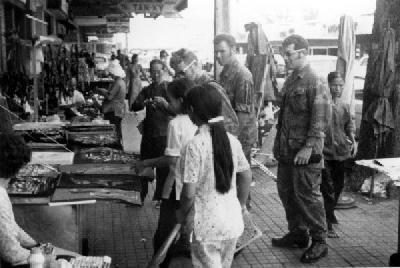
So a photograph of a street scene tells us absolutely nothing. Millions of such photographs from Saigon in 1968 could be put on the Web. It wouldn't look like there was a war.
It is a stupid piece of propaganda for the ignorant and easily led, unworthy of a democratic representative in the Republic of Jefferson and Madison and Franklin.
Cheers Juan

Saigon 1970
Wednesday, March 29, 2006
Cole Receives Aronson Award from Hunter College
Blogging as journalism just got a huge lift.
Editors and Publishers carries the announcement that the James Aronson Award for Social Justice Journalism awarded by Hunter College will include for the first time this year a category for bloggers. I'm humbled to say that they are awarding it to me for Informed Comment.
For more on the Aronson Award see this link.
It is really wonderful of Hunter College to expand the purview of the award to bloggers as well, and I think that in this matter as in others, they are functioning as a bellwether.
Kamal Sayid Qadir Jailed for Criticism of Barzani
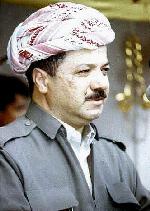
The proto-fascist mini-state of the Kurdistan Democratic Party in Arbil [Irbil], northern Iraq, has sentenced an Austrian-Kurdish journalist to 18 months in prison for criticizing Massoud Barzani.
Barzani
Barzani last allied with Saddam Hussein against fellow Kurds as late as 1996, only a decade ago. And you can't criticize him?
If Syria or Iran had done this (not that they don't), there would have been a huge squeal of outrage from the American right. I challenge Instapundit, Andrew Sullivan, and Christopher Hitchens to intervene effectively to get Kamal Sayid Qadir out of Barzani's jail. Here is something all of us, left and right, can agree on, and I hope the Left blogs the hell out of it, too. Will someone please start a blog to count the days Qadir is not free?
Qadir
American blood was shed saving the Kurds from Saddam, and this is not right. It is not right.
Dozens Kidnapped, Killed, Wounded
A car bomb wounded 11 in an attack on police in the norther part of the city of Hilla.
Guerrillas killed two US soldiers in separate incidents and wounded 3, at an installation near to Baghdad.
Three guerrilla cells kidnapped 24 Iraqis in Baghdad on Tuesday, from 2 electronics shops and a money changing stall.
Guerrilla violence killed 9 and wounded 29 in separate incidents around the country.
The US military imposed a curfew on the oil city of Beiji north of Baghdad on Tuesday.
Timothy Phelps of Newsday has more on the conflict between the US military and the Shiite politicians over Sunday's raid on the Mustafa Husayniyah in the Ur district of Baghdad. Shiites maintain that innocent worshippers were shot down. The US military says it was raiding a militia center and captured weapons, and that someone rearranged the bodies to make them look like innocents.
Halliburton's KRB division "universally failed to provide adequate cost information as required." according to a US government report, while it racked up billions in no-bid contracts.
Wanting to increase the number of Sunni Arabs in the Iraqi armed forces and being able to do so are not the same thing.
The US tried to get a message to Grand Ayatollah Ali Sistani on Tuesday, asking him to intervene to resolve the gridlock in the formation of a new Iraqi government.
Eric Haney, a founding member of the Delta Force anti-terrorist unit, has denounced the Iraq War as an "utter debacle," and has blamed widespread US use of torture to the sadism of Dick Cheney, who he says seems to enjoy it. When people like Haney talk like this, it is probably over with.
Tuesday, March 28, 2006
As Many as 90 Killed
Badr Demands Khalilzad's Expulsion
A suicide bomber struck an army recruiting station near Tal Afar in northern Iraq, killing 40 and wounding 20. President Bush recently lauded the situation in Tal Afar and environs as a US success story.
About 29 corpses corpses showed up in the streets of Baghdad, most of them strangled and tortured.
A rocket attack on a building resulted in several casualties. The building housed political offices for the Fadhila (Virtue) and Dawa Parties. Both are Shiite religious parties.
A young physician in Kirkuk confessed on Kurdistan television Monday to having been an serial killer on behalf of the guerrillas, giving lethal injections to more than 40 Iraqi soldiers and police or denying them oxygen. At the same time, he was secretly treating wounded members of the guerrilla movement.
Guerrillas abducted 16 employees of an Iraqi trading company on Monday, according to the Iraqi Interior Ministry.
The governor of Baghdad province, Hussein al-Tahan, announced Monday “Today we decided to stop all political and service cooperation with the US forces until a legal committee is formed to investigate this incident.” [i.e. the US/Iraqi attack on the Mustafa Husayniyah in the Ur district on Sunday, which left some 20 persons dead).
Officials of the United Iraqi Alliance of Shiite fundamentalists, the largest single bloc in parliament, demanded Monday that security matters be turned over to Iraqis and taken out of US hands. Reuters says, ' “The Alliance calls for a rapid restoration of (control of) security matters to the Iraqi government,” Jawad Al Maliki, a senior Alliance spokesman and ally of Prime Minister Ibrahim Al Jaafari, told a news conference. '
I have to say that if the US military doesn't even know, as its spokesmen admitted, to which branch of Islam the persons its joint operation killed on Sunday belonged, it really is acting as a bull in a china shop.
The Intrepid Ann Garrels and Joost Hilterman report that some Shiites are speaking now of a second great betrayal by the Americans of the Shiites, as they fear that the US it tilting now toward the Sunni Arabs. In spring of 1991, the US stood by while Saddam's forces massacred rebelling Shiites after the Gulf War.
Some Shiites, according to al-Hayat, are saying that the US is deliberately attempting to provoke a civil war in Iraq. Among their concerns was the US military's announcement that the attack on the Mustafa Husayniyah in Ur was the work of an Iraqi military unit. Which unit? Where? To whom does it report? Is it little more than a death squad? Is it commanded by the Americans? Why didn't the Prime Minister know about this attack, which spilled over on Dawa Party offices? PM Jaafari is a member of the Dawa Party.
The Badr Organization, a political party that represents the paramilitary Badr Corps, the Shiite militia of the Supreme Council for Islamic Revolution in Iraq, demanded Monday that Zalmay Khalilzad, the US ambassador to Iraq, be expelled from that country.
This moment is therefore a particularly inauspicious one for Khalilzad to press for the sidelining of Ibrahim Jaafari as candidate for prime minister of the United Iraqi Alliance. Jaafari narrowly won an internal party vote, but was backed by Muqtada al-Sadr and opposes loose federalism and unrestrained capitalism. For all these reasons he is unacceptable to the Kurds and to the US.
Izzat Ibrahim Duri, one of Saddam's key officials, is said to have issued a tape on Monday. It was played on Aljazeera but has not been authenticated. The tape calls on the Arab League to recognize the Iraqi insurgency as the true government of Iraq, and condemns the blowing up of the Askariyah shrine in Samarra, an anti-Shiite strike. Al-Duri led the charge to repress and massacre the Shiites in sping of 1991 when they rose against Saddam, so he is unlikely to get any points for his defense of the Askariyah.
Iraqi officials are concerned about a big spike in drug smuggling and use in Iraq.
Afghan Convert Released
The Afghan authorities have released Abdul Rahman, a convert from Islam to Christianity who was facing a death sentence for apostacy. Apparently the grounds for the release were procedural-- questions linger about the man's mental health, and there are gaps in the prosecution's evidence.
That this travesty is being ended is a great good thing. But it is unfortunate that it is being ended on these narrow grounds. The next convert will face the same charges.
The episode underlines the falsehood of the Bush administration's empty boast that it is spreading democracy in the Middle East and that "50 million" persons have been liberated. In fact, Bush has been spreading Muslim fundamentalism. In Afghanistan, he just replaced the Taliban with the Jami`at al-Islam, an offshoot of the Muslim Brotherhood, which was the major element in what the American called the "Northern Alliance." Karzaid did not even bother to change the Taliban chief justice when he came in; no doubt the chief justice was strict enough for the Northern Alliance, which contained this strong fundamentalist tendency. Everywhere Bush has intervened - Afghanistan, Iraq, Palestine, Egypt, etc., it has helped the fundamentalists.
The doctrine that apostacy deserves the death penalty comes out of medieval Islamic canon law rather than from the Quran itself. If Islam is to survive into the next century, its adherents need to rethink all those medieval legal doctrines to which modern fundamentalists are so attached. It is monstrous, and is the height of hypocrisy for Saudis and others to fund the conversion of Americans to Islam while threatening Saudi converts to Christianity with death.
Some modern Pakistani jurists have written reformist books that dispute the legitimacy of executing people for apostasy in Islamic law. But their books are in English and although they might have been members of the Pakistan supreme court, they are laypersons rather than clerics.
As for the Quran itself, it says "la ikraha fi'd-din"-- there is no compulsion in religion.
[2:256] There is no compulsion in religion: the right way has been distinguished from the wrong way. Anyone who denounces the idol Taghut and believes in God has grasped the strongest handle; one that never breaks. God is the Hearing, the Knowing.
The Quran is forthright that the wages of unbelief and idolatry in this life are damnation in the next. But it does not permit coercion of the conscience in this life.
There is also Chapter 109, with its implication that the Prophet left the choice of religion, even unbelieving religion, to the individual:
109
In the name of God, the Merciful, the Compassionate.
Say, "O unbelievers.
I do not worship what you worship.
Nor do you worship what I worship.
Nor will I ever worship what you worship.
Nor will you ever worship what I worship.
To you, your religion; and to me, my religion."
Since the Quran recognizes the God of the Bible, these verses refer to the Meccan polytheists. And even they are being offered their own free will. To you yours, to me mine. Nothing about killing anyone about these matters of conscience.
Unfortunately, Abdul Rahman was not going to be judged by the Quran, but by the cruelty of the medieval jurists.
Monday, March 27, 2006
Cole on Television
I'll be interviewed in the ABC Evening News Monday evening.
Also I'll be a guest on the Lehrer Show, PBS.
69 Killed in Separate Outbreaks of Violence
All hell broke loose in Iraq on Sunday, but I'm darned if I can figure out most of what happened or why. It seems possible that the US committed two major military blunders that will worsen its relationship with Iraqi political forces.
So they found 30 decapitated bodies near Buhriz, an old Baath stronghold in Diyala northeast of Baghdad. Those killed were a mix of Shiites and Sunnis.
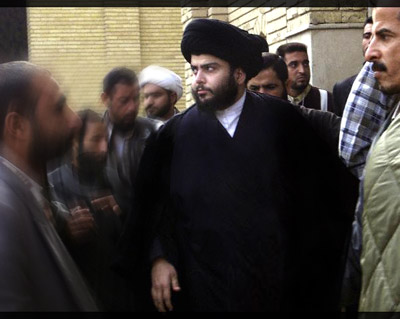
Then a mortar shell landed near the house in Najaf of Muqtada al-Sadr, the nationalist Shiite cleric whose followers are already upset with Sunnis over the blowing up of the Askariyah Shrine in Samarra. There were casualties, but Muqtada wasn't harmed. Everyone just dodged a bullet along with Muqtada, since if the mortar had killed him, Iraq would have been thrown into even greater chaos.
As it is, Muqtada implied that the US was responsible. He called on his followers, according to al-Hayat, to "exercise self-restraint and to remain calm, so as to foil the plots of the Occupation authorities to provoke armed conflict, and rather to practice political resistance in order to expel the foreigners from Iraq."
Then the US and Iraqi forces say they raided a terror cell in Adhamiyah. Adhamiyah is a Sunni district of Baghdad and is still Baath territory.
But somehow the joint US-Iraqi force ended up north, at the Shiite Shaab district. They say that they took fire from Mahdi Army militiamen. But there aren't any such Mahdi Army men in Adhamiyah. I have a sinking feeling that instead of raiding a Sunni Arab building in Adhamiyah, they got disoriented and attacked a Shiite religious center in nearby Shaab instead. Iraqi television angrily showed twenty unarmed corpses on the floor of the religious center, denouncing the US for killing innocent worshippers. The US military is now saying it did not enter any mosques and that anyone killed was killed by Iraqi special ops.
The Mustafa Husayniyah, however, is not a mosque and may not have been distinguishable as a religious edifice to non-Shiites. Shiites mourn their martyred Imams, the descendants of the Prophet, in centers called Husayniyahs after the Imam Husayn, the grandson of the Prophet Muhammad. As for the killing being done by Iraqi troops, if it was a joint mission, then the US forces are going to take some of the blame.
At least one of the dead was a member of the Dawa Party, the party headed by Prime Minister Ibrahim Jaafari. Official Iraqi television coverage was also uncharacteristically anti-American.
Since the US has been trying to unseat Jaafari, in concert with the Kurds and Sunni Arabs, he responded to the attack testily.
The incident has yet again postponed negotiations on the formation of a new government, since the Iraqi Shiites are universally extremely angry over it. Member of parliament and aide ot Prime Minister Jaafari, Jawad al-Maliki, demanded a full investigation of "this crime," according to al-Hayat.
If the US/Iraq force actually did accidentally hit a Shiite Husayniyah instead of a Sunni Arab terrorist cell, it was a horrible mistake.
Then US forces raided a secret prison of the Ministry of the Interior.
They captured 17 Sudanese inmates. After an investigation, the US finally acknowledged that the assault had made a mistake. The 17 Sudanese really were guerrillas or in any case legitimately held.
In other words, the jail raid was based on poor information and false premises. It is possible that our troops also messed up indirectly.
Al-Hayat reports that Hazim al-Araji, a Sadrist leader of nearby Kadhimiyah, said [Ar.]: "American forces attacked the Mustafa Husayniyah, which belongs to the Sadr Movement, and killed approximately 20 persons inside it . . . An American force surrounded the Mustafa Husayniyah in the Ur district and opened fire on more than 20 persons, killing them."
Jalal Talabani, president of Iraq, and other high politicians have succeeded in putting on hold direct US-Iran talks on Iraq. The Iraqi politicians complained about two foreign countries discussing Iraq with no Iraqi government representative present. But the problem is that there is no Iraqi government, since the haggling elected politicians haven't formed one. So, upshot: US-Iran talks are postponed until after there is a new Iraqi government.
Abdul Aziz al-Hakim, the Iraqi Shiite cleric who heads the largest bloc in the elected parliament, denied Sunday that Iran is directly intervening in Iraq. He said that no proof has ever been presented of these allegations. It doesn't help Condi Rice to make her case when a close US ally like al-Hakim directly contradicts her.
Some 20% of Iraqis are living below the poverty line and their access to food has declined in the past 3 years, according to the Iraqi government.
Sunday, March 26, 2006
40 Casualties in Mahdi Army clash with Sunni Arab guerrillas
AP reports that major clashes were fought Saturday at Mahmudiyah south of Baghdad between Mahdi Army militiamen (puritanical Shiites) and local Sunni Arab guerrillas killed or wounded about 50 persons late on Saturday. AP writes, ' Some 40 persons reportedly were killed or injured — no breakdown was immediately available — in the clash between forces of the Shia Mehdi Army militia and Sunni militants near Mahmoudiya, 30 km south of the capital, police reported. '
Six other Iraqis were killed in separate incidents, and the deaths of two US marines were announced. Police found 10 more corpses in Iraq on Saturday. These are typically young men targetted for reprisal killings because of their religious sect.
The poorly named Islamic Army of Iraq, a neo-Baathist guerrilla group, announced Saturday that it is watching journalists in that country and will act against those it [arbitrarily] deems spies.
Knight Ridder reports that even Iraqi politicians are admitting that their inability so far to form a government after the December 15 elections is making the situation in the country worse and giving an opening to the guerrillas.
Al-Sharq al-Awsat reports [Ar.] that Member of Parliament and Sadrist leader Shaikh Nasir al-Saaedi [al-Sa`idi] said Saturday that two knotty issues confront the attempt to form a government in Iraq. The first is the position of the blocs in parliament on the constitution, and respect for the electoral achievement of the political blocs that make up parliament. He said that the attempt to curb the prerogatives of those parties that actually won the election constitutes a voiding of the election outcomes and an insult to the Iraqi people who risked all to come out and vote. (Fears are being raised that the proposed "national security council" will form an unconstitutional brake on the powers of the elected government.)
He said that he and the other Sadrists are committed to Dawa Party leader Ibrahim Jaafar as the United Iraqi Alliance candidate for prime minister. He said that setting aside Jaafari risked breaking up the UIA and betraying the trust of the Iraqi people.
The Kurdistan Alliance has led a charge, supported by the Sunni Arab parties and by the Kurds to unseat Jaafari.
Iranian president Mahmoud Ahmadinejad said Saturday that US-Iran talks on Iraq will be conditional and limited. He told IRNA, "We essentially do not trust the Americans but we will conditionally negotiate with them about Iraq while taking into account the interests of Iraqis and the world of Islam."
I hear behind the scenes from people on the ground in Iraq. Little mainstream reporting gives a sense of the grittiness, grimness, death and destruction that they discern behind the traffic jams and the frantic shopping/ hoarding of everyday life. Kudos to Jeffrey Gettleman for telling it like it is. One remembers what a controversy it caused when Farnaz Fassihi of the Wall Street Journal let it be known in October of 2004 via an email how bad things were in Baghdad, how shocking her first-hand account seemed to many Americans who were not being given the full story by their government or their press (sometimes the latter is stenographer for the former). Gettleman's thoughtful and hard-hitting piece is sort of like Fassihi 2, except that the NYT published it and the Wall Street Journal never published Fassihi's backgrounder.
Jeffrey Gettleman also explains the practical difference between Sunnis and Shiites in Iraq.
Saturday, March 25, 2006
Year Four of Iraq Civil War: 51 Killed
AP reports that guerrilla violence in Iraq killed 51 on Friday. In addition to bombings and drive-by shootings, police discovered 25 bodies, killed execution-style, in Kadhimiyah and Binok districts. (Kadhimiyah is largely Shiite). AP adds, "The rising death toll among Iraqis on Friday included five worshippers killed in a bombing outside a Sunni Muslim mosque after Friday prayers. At least 15 were wounded in the blast in Khalis, northeast of Baghdad."
The bomb blast outside a Sunni mosque is especially disturbing, since it fits a pattern of recent escalation in Sunni-Shiite sectarian violence. This week, over a dozen Shiite pilgrims were killed in Sunni areas of the capital, on their way to and from the holy city of Karbala.
A Danish soldier was killed in the south, and two US troops were killed by guerrillas in Anbar province.
AFP/ Al-Zaman report that the Iraq political blocs in parliament failed in their Friday discussions to agree on the powers and constitutionality of a "national security council." The mechanism of such a national security council has been used in Pakistan and Turkey to circumscribe the power of elected politicians in parliament. But in both of those countries there is a strong military, unlike Iraq. Why elected members of parliament would agree to such an institution is obscure, and, indeed, they may not in the end.
Police Strike in Fallujah
Tal Afar Success Questioned
Alzaman/Reuters report that the police in Fallujah went on strike. They are protesting excesses committed by the largely Shiite Iraqi army troops installed in Sunni Fallujah by the Americans.
A military spokesman in Baghdad maintained that any excesses were isolated incidents.
It seems that even after the US emptied and destroyed the city, the problems are not resolved. Now even the police hand picked by the US are on strike because of sectarianism. Meanwhile, some violence is back, too.
Meanwhile, an intreped Reuters reporter actually visited Tal Afar, the northern Turkmen city that the US emptied and assaulted last August. Bush has been pointing to it as a success story. But Reuters finds that locals feel insecure, even the Shiites among them, and wouldn't exactly call the whole thing a success.
Money quote: " 'I say that Bush is 100 percent a liar because the city of Tal Afar has become a ghost town rather than the example Bush spoke about,' said Ali Ibrahim, a Shi'ite Turkmen laborer. "
Friday, March 24, 2006
Guerrilla Violence Kills 58
Khalilzad Accuses Iranians
A suicide bomber detonated his payload outside the major crime unit of the Ministry of the Interior on Thursday, killing 15 policemen and 10 civilians and wounding 35 others.
Then guerrillas blew up a market outside a Shiite mosque, killing 6 and wounding 20, with women and children among the victims.
Six bodies were found in Baghdad, and 8 were found in Fallujah, victims of night-time raids, kidnappings and killings.
There were other bombings of and firefights with Iraqi police in Baghdad that killed several people.
Interior Minister Bayan Jabr announced on Thursday that only a few hundred foreign jihadis (he called them "al-Qaeda") are left in Iraq, down from as many as 2000 in late 2005. The foreign element in the Iraqi guerrilla movement has long been over-estimated. Most of the violence is committed by Iraqi insurgents.
Thousands of Iraqi families have been internally displaced by sectarian violence or the threat of it.
Iraqi Prime Minister Ibrahim Jaafari called on Thursday for the US and Iran to expedite the holding of joint talks on Iraq. He clearly believes that these bilateral negotiations on the limited subject of Iraq might lead to better US-Iranian relations on other issues, including the nuclear one. He said, ' "I hope the US and Iran will start their meetings and talks as soon as possible and the knot in relations between the two countries would be untied through the negotiations." '
US Ambassador in Baghdad Zalmay Khalilzad accused Iran on Thursday of training and supplying both the Mahdi Army militia of Muqtada al-Sadr and elements of the Sunni Arab guerrilla movement. Neither allegation is plausible in context. Muqtada's men are mostly nativist Iraqi ghetto youth who often do not like Persians. The major force in Iraq trained by the Iranians is the Badr Corps of the Supreme Council for Islamic Revolution in Iraq, a relative American ally. It is bizarre that Khalilzad should tie Iran to the Mahdi militia but not bring up Badr. Then to turn around and say that Iran is helping the Sunni Arab guerrillas who are blowing up Shiite Iraqis is just self-contradictory and wholly implausible.
Worse, I can't see why Khalilzad thinks the Iranians will talk with him while he is badmouthing them.
Al-Hayat reports that [Ar.] Adnan Dulaimi of the (Sunni fundamentalist) Iraqi Accord Front has pushed the dissolution of Shiite militias as a key issue in his negotiations with the (Shiite fundamentalist) United Iraqi Alliance on the formation of a national unity government. He says that American information suggests that entire units of the Interior Ministry are composed of militias. He said that the Americans have a responsibility to shut down the militias.
In response, Sadrist leader Amir al-Husayni said that the existence of the Mahdi Army militia is tied to the issue of the terrorist groups."
Abdul Karim Muhammadawi, an old-time fighter against Saddam, warned that the existence of such organized militias is paving the way to civil war.
Thursday, March 23, 2006
Civil War? What Civil War? Cole in Salon
Readers have repeatedly asked me for a criterion by which we might fairly objectively decide if Iraq is in a Civil War (contrary to Bush's and Rumsfeld's denials). I have attempted such an argument at Salon.com. Excerpt:
' That there should be a political controversy over whether there is a civil war in Iraq is a tribute to the Bush administration's Orwellian attention to political rhetoric. By the most widely accepted social science measure, Iraq is incontestably in a civil war.
J. David Singer and his collaborators at the University of Michigan (where I also teach) have studied dozens of such conflicts and have offered a thorough and widely adopted definition of civil war. It is:
"Sustained military combat, primarily internal, resulting in at least 1,000 battle-deaths per year, pitting central government forces against an insurgent force capable of effective resistance, determined by the latter's ability to inflict upon the government forces at least 5 percent of the fatalities that the insurgents sustain." (Errol A. Henderson and J. David Singer, "Civil War in the Post-Colonial World, 1946-92," Journal of Peace Research, Vol. 37, No. 3, May 2000.) '
Read the rest.
At Least 35 Killed
Lebanon Shiite Leaders Criticize American Meeting
Roadside bombs targetting police in Baghdad and Iskandariyah killed five and wounded a dozen on Wednesday.
Guerrillas in Baghdad killed 15 Shiite pilgrims in separate attacks, and wounded scores others, as they returnted from the 40th day commemoration of the anniversary of the martyrdom of Imam Husain, the grandson of the Prophet, at Karbala.
Thousands of enraged and grief-stricken Shiites marched with the bodies of 17 slain pilgrims to the shrine at Kadhimiyah in the capital. Sectarian tensions have resulted in the deaths of hundreds of Iraqis since Febrary 22.
11 bodies showed up dead and with marks of torture in the streets of Baghdad on Wednesday morning.
Emboldened by their success in aiding a prison break on Tuesday, on Wednesday guerrillas attempted a similar operation at Mada'in. This attack was foiled when US soldiers arrived and intervened. Later on, the US took over 70 suspects into custody. The guerrillas had killed 4 policemen and wounded 5.
The United Nations is expressing concern that since the Askariyah Shrine bombing of Feb. 22, the security situation has been in a downward spiral and wants the Iraqi government to do something about it.
' The United Nations today called on Iraq’s Government to urgently assert control over the security forces and all armed groups in the war-torn country, saying February’s attack on a shrine in Samarra had led to a worsening situation, resulting in hundreds of cases of killings, torture, illegal detention and displacement. '
KarbalaNews.net reports that the Shiite United Iraqi Alliance may put forward a plan to end the stalemate over forming a new government. The UAI now intends to put forward a total of 3 candidates for prime minister, and to have the decision among them made by votes of the full parliament.
Adnan Dulaimi, a leader of the fundamentalist Sunni parties, the Iraqi Accord Front on Wednesday condemned the proposal by Shiite cleric Abdul Aziz al-Hakim, leader of the UIA, to establish two new regional confederacies in the south, on the model of Kurdistan.
Since Ibrahim Jaafari is also opposed to this loose federalism and regional confederacies, it is very odd that Dulaimi's group is trying to sideline him in favor of a PM from al-Hakim's party, the Supreme Council for Islamic Revolution in Iraq. It would be more logical for Dulaimi and his party to ally with Jaafari. Go figure.
Al-Zaman reports [Ar.] that there are divisions in the Shiite world about the decision of the Iranians to meet with Zalmay Khalilzad, the US ambassador in Baghdad, to discuss security for Iraq. The Lebanese Hizbullah and the influential cleric Muhammad Husain Fadlullah have condemned it. Lebanon, Qom and Najaf seem to have very different views of these talks. Ibrahim Jaafari also seems skittish about them.
Meanwhile, after having sought the talks with Iran about Iraq for months, the Bush adminsitration reacted churlishly to Supreme Jurisprudent Ali Khamenei's agreement to them, with Scott McClellan raising doubts about his timing. Scott should ask Zal Khalilzad if his remarks were helpful to actual real diplomacy, about which this White House knows absolutely nothing. (Hint: You don't have to negotiate with your friends; you have to negotiate with your enemies. And, the alternative to negotiation can often be a military quagmire.)
Al-Hayat reports that over 3,000 families have been victims of ethnic cleansing in Iraq, most of them Shiites.
Wednesday, March 22, 2006
Daring Jailbreak Suggests Guerrillas' Power
Sistani, Senators press Jaafari on new Government
Up to 200 Iraqi guerrillas in the Sunni Arab city of Miqdadiyah north of Baghdad mounted a sophisticated military operation to 32 free prisoners in the local jail, some of them guerrillas. They succeeded. In the fierce firefight, guerrillas killed 18 policemen while losing 10 of their own. The kill ratio and the success of the operation suggest that the guerrilla insurgency is gaining in capability and boldness as never before. The guerrillas have seldom dared to field more than a platoon (say 28 men) for fear of attracting fire from American helicopter gunships. Here, they fielded an entire company or perhaps two companies. The provincial authorities in Diyala seem convinced that the Miqdadiyah police chief was a double agent working for the guerrillas.
It doesn't do any good for US forces to fight and capture guerrillas if they can be freed so easily.
US troops faced mortar fire and roadside bombs in Anbar province on Tuesday. There were casualties.
Bush let slip that he thinks US troops will be in Iraq through 2008.
Bush also tried to deny that he had persistently attempted to link Saddam Hussein to al-Qaeda and 9/11 before the war. The brave Keith Olbermann is among the few journalists who called Bush on this lie. Bush and Cheney made the connection by constantly hinting around and using phrases close to one another.
Iraq reconstruction has stalled, and quality of life indicators are below pre-war levels.
Grand Ayatollah Ali Sistani met Tuesday with representatives of the Supreme Council for Islamic Revolution in Iraq:
' Talking to reporters in the holy city of Najaf, Abdul Mahdi said Grand Ayatollah Sistani recommended all political groups to work based on the Constitution.
The Iraqi vice-president added Ayatollah Sistani also stressed speedy establishment of the new government and reinforcement of unity and solidarity to promote Iraq's political trend in cooperation with political partners. '
US Senators agree with Sistani, and warned Ibrahim Jaafari that the patience of the American people is not infinite.
Tomdispatch.com has Chalmers Johnson on our military empire.
Tuesday, March 21, 2006
39 Killed
Sunni Arabs demand War Reparations from US
At least 39 Iraqis were killed in guerrilla violence on Monday, the third anniversary of the US invasion. Guerrillas killed 10 policemen in separate bomb attacks, as well as hitting a cafe, killing 3 and wounding 23. There was also an attack on officials of the oil refinery at Beiji. A minibus carrying Shiite pilgrims was bombed, killing 4. But the massive gathering of devotees at Karbala went off safely.
Some 18 bodies were found, victims of night-time sectarian reprisals. One of the victims was a 13-year-old girl. It looks and smells like a civil war, folks.
Wire services report fighting between US forces and guerrillas in Ramadi.
Al-Zaman says that the Association of Muslim Scholars (hard line Sunni clerics) issued a communique on the third anniversary of the war, saying, "The American plan has failed" and warning Iraqi forces that they "should not fool themselves that they are battling terrorists who have arrived from abroad."
The text says, "Everyone must realize that the American plan has failed in Iraq. We demand not just the withdrawal of Occupation troops in accordance with a timetable agrred upon with the United Nations but also that reparations be paid for the losses attendant on this attack."
Al-Zaman/ AFP reports that Kurds celebrating Now-Ruz on the new year's day of the vernal equinox, and the Shiites in Karbala, both seemed uninterested in commemorating the anniversary.
The negotiations about the new government have been postponed for one week because of the Kurdish Now-Ruz (New Year's Day) and the Shiite Arba'in, the fortieth day commemoration of the death of Imam Husayn, the grandson of the prophet.
Al-Zaman reports that Shiite clerical leader Abdul Aziz al-Hakim is agitating again for provincial confederacies in the Shiite south. He instisted it wouldn't break up the country. He also advocates unleashing the Badr Corps (the Iran-trained paramilitary of the Supreme Council for Islamic Revolution in Iraq) against the Sunni Islami radicals.
Those who see the Kurdish regions of Iraq as havens of relative peace and prosperity seldom reckon with its less savory characteristics. The regional government often functions as a police state.
Pretty much everyone agrees by now that Secretary of Defense Donald Rumsfeld must go, that he has been incompetent and egoistic and callous. But no one ever brings up the question of whether the situation in Iraq can get any better as long as Rumsfeld is in office. He makes Pentagon policy. He makes bad, even catastrophic policy. Ergo, Rumsfeld in office equals looming disaster.
The Sunni Arab guerrillas, according to ABC, are media savvy and fighting a "mosaic war."
Chris Allbritton explores whether the Iraqi police are infiltrated with death squads and making things worse, not better.
Monday, March 20, 2006
Top Ten Catastrophes of the Third Year of American Iraq
The American war against Iraq began on March 20, 2003, so today is the third anniversary. The Himalyan mistakes of the American administration of the country in its first two years have by now been much analyzed -- the punitive steps against even low-level Baath Party members, the firing of tens of thousands of Sunni Arabs, the dissolution of the army, the permitting of looting on a vast scale, the failure to understand tribal honor, the failure to get a handle on the early guerrilla war, the failure to understand Shiite Islam, the torture at Abu Ghraib, the failure to get services on line, the destruction of Fallujah, the ill-timed and ill-advised attempt to "kill or capture" Muqtada al-Sadr, the adoption of an election system that allowed the almost complete exclusion of the Sunni Arabs, etc., etc.
Here, let us examine the top disasters of the third year in American Iraq.
1. The Shiite religious parties, having won a majority in parliament, took over the Ministry of the Interior and drew, for its special police commandos, on members of the Badr Corps. Badr is the paramilitary of the Supreme Council for Islamic Revolution in Iraq, and it was trained by Iran's Revolutionary Guards. These special commandos set up secret prisons and tortured Sunni Arabs they suspected of being in the guerrilla resistance to the new order.
2. The constitution drafted by the elected parliament enshrines Islam as the religion of state and stipulates that the civil parliament may pass no legislation that contravenes the established laws of Islam. It hints that clerics and ayatollahs will be appointed to court benches. The constitution has brought Iraq to the brink of being an Islamic Republic, with potentially harmful effects on the rights of women, gays, Christians and others. Since the Shiite religious parties had won the January 30, 2005 elections, this outcome was predictable.
3. The constitution allows provinces to establish provincial confederacies. This provision reflections the model adopted by the Kurds in the north, which is now attractive to Shiite parties in the south. These confederacies can claim 100 percent of the revenues from all future petroleum, natural gas and other natural resource finds. The loose, weak federal government, like the early American state under the Articles of Confederation will be robbed of sovereignty (and income) by ambitious provincial elites. It is possible that these provincial confederacies may break up the country.
4. The US military used Kurdish and Shiite troops to attack the northern Turkmen city of Talafar in August. Kurdish troops, drawn from the Peshmerga militia, were allowed to paint lasers on targets in the city, which were then destroyed by the US air force. Entire neighborhoods were destroyed, and much of the population was displaced for some time. Shiite troops and local Shiite Turkmen informants were used to identify and interrogate alleged Sunni insurgents. Turkey was furious at the attack on ethnically related Turkmen and threatened to halt its cooperation with the US. Although the attack was allegedly undertaken to capture foreign forces allegedly based in the city, only 50 were announced apprehended. The entire operation ended up looking like a joint Kurdish-Shiite attack on Sunni Turkmen, backed by the US military. Turkmen and Kurds do not generally get along, and Turkmen accuse Kurds of wanting to ethnically clense them from Kirkuk. The entire operation was politically the worst possible public relations for the US in northern Iraq, and seems unlikely to have put a signficant dent in the guerrillas' capabilities.
5. All three Sunni Arab-majority provinces rejected the new constitution by a sound margin, two of them by a two-thirds majority. The Kurdish and Shiite provinces overwhelmingly approved the charter. Iraq thus has a permanent constitution that is absolutely unacceptable to the country's most powerful minority.
6. British government leakers revealed that George W. Bush told British PM Tony Blair in April, 2002, that he was seriously considering bombing the HQ of the Aljazeera satellite news channel. Bush's reputation, already low in the Arab world, took another hit.
7. Iraqi petroleum exports fell to an average of only 1.8 million barrels a day during the past year, down from 2.8 million barrels per day before the war. In recent months the exports have been as low as 1.1 million barrels a day.
8. Guerrillas have managed to surround and cut off Baghdad, the capital and a population center with 1/4 of the country's inhabitants, from much fuel and electricity.
9. Widespread hopes, fanned by the Bush administration, that Sunni Arab participation in the parliamentary elections would lead to a reduction in guerrilla violence proved completely untrue. The various Sunni Arab lists garnered 58 seats of 275. The Sunni Arabs have now adopted a two-track strategy, working in parliament to play the Kurds and the Shiites off against one another while its paramilitary wing continued to blow things up with unrelenting ferocity.
10. Guerrillas in Samarra on February 22 blew up the Askari Shrine, holy to Shiites because of its association with the hidden Twelfth Imam, whose Second Coming many await. The Sunni Arab guerrilla movement has been trying to provoke popular attacks and sectarian reprisals, but this is the first time it met with a measure of success. Enraged Shiites attacked 100 mosques, damaging between two and four dozen, killing some Sunni clerics, and murdering hundreds of Sunnis. Iraqi clerics, both Shiite and Sunni, helped bring Iraq back from the brink of hot civil war. The US troops in the country proved generally unuseful in this crisis.
Allawi: This is Civil War
35 Killed in Sectarian Violence
Iyad Allawi, the former interim prime minister of Iraq, said Sunday that Iraq is in a civil war.
' "It is unfortunate that we are in civil war. We are losing each day as an average 50 to 60 people throughout the country, if not more.
"If this is not civil war, then God knows what civil war is." . . .
Iraq is moving towards the "point of no return", he said, when the country would fragment.
"It will not only fall apart but sectarianism will spread throughout the region, and even Europe and the US will not be spared the violence that results...," he said.
Makes it kind of hard for Rumsfeld and Bush to spin Iraq as a veritable Palm Springs Resort, when even old CIA assets like Allawi are speaking bluntly about the actual situation.
35 Iraqis were killed in the low-intensity civil war on Sunday. 14 bodies were discovered in Baghdad, some of them at the water treatment plant. Ugh.
Sunni fundamentalist leader Harith al-Dhari, according to al-Zaman, also said that the thought Iraq is on the precipice of a civil war.
Of course, all this begs the question of what a civil war is. There have been lots of conflict that we call a civil war in history that were not as bad as what is going on in Iraq now. Indeed, some conflicts that bulked large in our consciousnesses here in the US, such as the troubles in Northern Ireland, were in comparison minor affairs. Altogether some 3,000 people were killed over the three decades of that conflict. That would be two months in Iraq.
For Bush administration officials like Rumsfeld to say that the new Iraqi military is responsible now for much of the country is highly misleading. There isn't much going on in a solidly Shiite province such as Diwaniyah, so so what if it is patrolled by the new Iraqi army (consisting mostly of Shiite and Kurdish troops)? The seven "hot" provinces where much of the violence takes place are not controlled by the new army, and won't be for years if ever. The Kurds won't even let the federal troops step foot on their soil. And as Congressman Murtha pointed out on Sunday's Meet the Press, Operation swarmer is obviously mainly an American operation.
Secretary of Defense Donald Rumsfeld was roundly criticized Sunday for saying that to withdraw from Iraq would be as though the US had turned Germany back over to the Nazis after WW II. If Rumsfeld considers Saddam to be the analogue of the Nazis here, then his statement is odd. It is completely incredible that Saddam could ever come back to power. Nor can the Baath. Nor can the few hundred foreign fighters take over Iraq in the name of Zarqawi. For the Americans to get out of Iraq would be like any other hand-over by a colonial power of governance to local people. It would be like the French handing Algeria to the National Liberation Front, or like the British handing India to the Congress Party (it could be very much like that, since in the course of the hand-over, India and Pakistan split). For the US to try to keep its ground troops in Iraq will just create a long-term guerrilla insurgency of the sort the Portuguese fought in Angola and Mozambique. Those are non winnable in an age of the political and social mobilization of the people.
The political factions in Iraq have agreed on the formation of a "national security council" drawn from the leading parties in parliament. It will oversee security policy, but will have a Shiite majority and can be over-ruled by the prime minister or president if it is felt that the NSC has encroached on constitutionally granted executive powers. The Shiite United Iraqi Alliance signed off on the plan, which is extra-constitutional and intended to reassure Sunni Arabs and Kurds that the prime minister, who will likely generally be a Shiite, will not walk all over them. The UIA candidate for post of prime minister, Ibrahim Jaafari, did not attend the meeting at the house of president Jalal Talabani that signed off on the plan, This absence is a very bad sign if it indicates that the Dawa Party opposes this NSC.
Al-Zaman says that Iyad Allawi warned that despite this political development, we should have no illusions about the dangers that continue to face Iraq. He said he had been against the di