Informed Comment

Thoughts on the Middle East, History, and Religion

Juan Cole is President of the Global Americana Institute

Thursday, July 31, 2008

Pakistani Consulate bombed;
NATO Commander in Afghanistan Calls for More Troops;
Strikes same Notes as Obama

Bomb blast outside Pakistani consulate at Herat wounds one.

Aljazeera International interviews Gen. David McKiernan, who sounds to me just like Barack Obama on Afghanistan-- saying that he doesn't have enough troops in Afghanistan, that the Taliban and al-Qaeda are resurgent, and that the big problem is Taliban sanctuaries in the Federally Administered Tribal Areas of Pakistan.

"General David McKiernan, commander of the Nato led International Security Assistance Force (ISAF) in Afghanistan, says his biggest problem is Taliban infiltration from across the border in Pakistan... "


Compare his comments to Obama's Berlin speech concerning Afghanistan.


Two perspectives on Afghanistan:

Michael Scheuer, the former CIA head of the 'tracking Bin Laden unit', which Bush has now disbanded.

And from the left, , Sonali Kolhatkar of the US-based Afghan Women's Mission.

Cole in Salon: Why Bush Folded on Iran

My essay why Bush sent a high-level diplomat to meet Iranian negotiators with no preconditions is out in Salon.com.

Excerpt:

'Pundits and diplomats nearly got whiplash from the double take they did when George W. Bush sent the No. 3 man in the State Department to sit at a table on July 19 across from an Iranian negotiator, without any preconditions. When Bush had addressed the Israeli Knesset in May, he made headlines by denouncing any negotiation with "terrorists and radicals" as "the false comfort of appeasement." What drove W. to undermine John McCain by suddenly adopting Barack Obama's foreign policy prescription on Iran?'


Read the whole thing.

McCain and the Rage Celebrities;
Does he Need to go to Rehab?

McCain had pledged to run a clean campaign, but like Mike Tyson when he's in the mood to munch ear, the Republicans just can't control themselves. First they tried to blame Barack Obama for the current price of energy, which is actually so high because Republicans have been in Big Oil's back pocket and in denial about the need for alternative energy programs on a Manhattan Project scale.

Now they are comparing Barack Obama to Paris Hilton and Britney Spears, apparently intending to suggest that he is a celebrity with no substance.

I was thinking about the celebrities that might be compared to John McCain, who is notorious for his rage issues. He flies off the handle at people at the slightest provocation and gives them a tongue lashing they can never forget. I personally wouldn't want him anywhere near the Bomb.

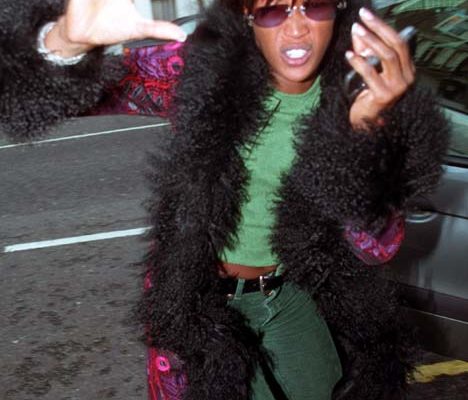
So wouldn't he be most like Naomi Campbell and Amy Winehouse?


But this could be a fun game. I challenge all my colleagues in the blogosphere to come up with other McCain celebrity match-ups and good rationales (which the GOP attack ads lack).

Bhasin:"Situation on the Ground" or Political Convenience?
Thoughts on a US Withdrawal from Iraq

Madhavi Bhasin writes in an IC Guest Editorial:

The most consistent answer to the differently phrased generic query, “When will the U.S. troops withdraw from Iraq?” is “Will be determined by the situation on the ground and U.S. military’s assessment of it.”

Is it really so? Is the U.S. presence in Iraq contingent upon the objective assessment of the security situation in the country? Will the U.S. forces leave only when the security situation improves? Will the U.S. forces ever leave the Iraqi territory? Every analyst of international politics is anticipating the timing and modicum of the U.S. withdrawal strategy. But given the record of U.S. involvement in such conflicts, the answer seems barely intriguing; the U.S. will withdraw when it suits them, when it is politically convenient for them, when they desire to change their land of adventures.

The subtle movement of U.S. policy indicates that considerable number of forces will withdraw from Iraq soon, sometime next year. If Senator John McCain is elected the next U.S. President, the troops will withdraw to demonstrate the success of the Republican Party’s ‘surge’ strategy. If Barack Obama happens to the next President, he will withdraw forces to demonstrate the credibility of his election promises. A movement towards that end has already been initiated and will be completely unrelated to the ‘situation on the ground’.

It was assumed (even by me) that Iraqi Prime Minister Maliki’s call for a withdrawal timetable was the assertion of Iraqi sovereignty. But it is difficult to expect that kind of public display of independence by a P.M. whose political existence has been craved out by the U.S. It is more appropriate to consider that the U.S. wanted to withdraw irrespective of the security situation in Iraq and hence the entire public drama was staged. Now the U.S. is equipped with a stronger argument of respecting the demands of the Iraqi P.M. who has demanded a timetable for withdrawal of foreign troops. And this will gradually be floated for popular consumption. The reconciliation between the Shia and Sunni political factions in Iraq could possibly have been facilitated by the U.S. behind the scenes to project the image of Iraq moving towards political stability. An image that suits the U.S. withdrawal strategy; a strategy which is gradually unfolding.

The differences over the Status of Force Agreement are another issue being published for justifying the troop withdrawal in the prospective U.S. strategy. The Iraqi Government and U.S. forces are expected to enter into a temporary agreement after the current agreement expires in December 2008. The U.S. is shunning any agreed long term commitments and can very diplomatically refer to the SOF disagreements as a reason for ad hoc involvement. Suddenly there has been a ‘surge’ in reports of the ability of Iraqi forces to conduct challenging operations and manage strategic strongholds. The Associated Press reported in early July that “Iraqi security forces arrested three locally prominent supporters of radical Shiite cleric Muqtada al-Sadr as part of a crackdown on Shiite militias in the southern city of Amarah”. In the same news report, the U.S. military spokesman Lt. Col. Neil Harper is reported to have said that “The government of Iraq and Iraqi security forces are determined to pursue all criminals and provide a secure and stable environment for the people of Iraq,". The US troop “surge” in Iraq is reported to have ended after the last of five additional combat brigades left the country in the last week of May 2008.

Admiral Michael Mullen, Chairman of the Joint Chiefs of Staff, said that on his recent trip to Iraq the conditions had improved more than he had expected. This is what a news report states:

“In recent months…two significant improvements: Violence is down and the Iraqi forces are rapidly growing in size and ability.” The handing over of Qadisiyah, the centre of fierce Shiite resistance, to Iraqi forces in mid July was expected to support the assessment of the U.S. military in the region. Most recently the operations in Diyala, though conducted jointly with the U.S. forces are being referred to as the most convincing evidence of the qualitative improvement of the Iraqi forces. There are also reports that the threat from the Al-Qaeda in Iraq was receding.

Thus there is every reason for the U.S. to soon reconsider its degree and kind of involvement in Iraq. Since the liberals across the world were demanding the withdrawal of U.S. troops from Iraq, the move is expected to be greeted with cheers. But the concern is, has the security situation improved for the U.S. to withdraw? Is the U.S. leaving because the task is accomplished or because their preferences have changed? The U.S. withdrawal due to general disinterest coupled with political opportunism is a not a historical aberration, but follows a general pattern. Remember what happened after the defeat of Communist forces in Afghanistan during the 1980s?


Now consider the following:

Search on ‘violence in Iraq’ at McClatchy's site . The site carries a section on “The daily round-up of violence in Iraq” and would be the simplest way to comprehend how much has changed in terms of Iraq’s security situation. Just two days ago (July 28, 2008) three female suicide bombers killed at least 32 people and wounded 102 when they blew themselves up among Shiites walking through the streets of Baghdad on a religious pilgrimage. The incidents of violence in Iraq are still phenomenal but for the U.S. the ‘situation on the ground is changing.’

The U.S. can project whatever ‘on the ground situation’ that suits its pre-determined policies. Occupation or withdrawal is a matter of political convenience and barely related to real strategic concerns. The invasion proved that and so will the withdrawal of forces from Iraq.

-
Madhavi Bhasin is a Doctoral Researcher at the Jadavpur University, India. Her research areas include conflict resolution, South Asia and Middle East. Currently based in California and working on Indo-U.S. Missile Defense Cooperation and India's Public Diplomacy Strategy.

Labels:

Wednesday, July 30, 2008

Diyala Campaign Begins

The al-Maliki government has just launched another of its military offensives against guerrillas, this time in Baquba, the capital of Diyala Province. I am skeptical about these campaigns. They are announced well in advance, allowing the guerrillas to go underground or relocate. Then in Mosul and now in Baquba the campaigns don't appear to involve any actual battles. The Diyala situation is complicated by the province's Sunni majority, which is unlikely to welcome largely Shiite government troops sent by a Shiite government. Some of the trouble in Diyala came from the dominance in the province of the Islamic Supreme Council of Iraq, a Shiite fundamentalist party, and its paramilitary, the Badr Corps, which was until 2003 part of the Iranian Revolutionary Guards Corps. Shiites are a minority in Diyala, but the Sunnis boycotted the January 2005 provincial elections.

Al-Zaman reports in Arabic that Prime Minister Nuri al-Maliki is taking great interest in the operation, because he believes it will have a direct impact on security in the capital, Baghdad. Al-Zaman said that only a small contingent of US troops supported the Iraqi army, and that they in turn were given cover by US helicopter gunships.

Al-Zaman reports in Arabic that close observers despaired that parliament would make any breakthroughs on the provincial election law on Wednesday, before it goes into a month-long recess on Thursday. Some Arab MPs have called for troops from the Middle Euphrates and the south (i.e. Shiite troops) to be sent to Kirkuk, to forestall, they say, a "foreign" incursion there (presumably by Turkey, which fears violence against the Turkmen minority, of which Ankara feels protective because of cultural and linguistic ties.

Al-Hayat reports in Arabic that Mahdi Army militiamen clad in black marched in Najaf to commemorate the death of Imam Musa al-Kadhim. They were carrying pictures of Muqtada al-Sadr and chanting against the al-Maliki government. Some called for immediate US withdrawal. Close observers of the Iraqi scene expressed fears that the Mahdi Army may be back.

Worried that parliament might pass another bill similar to the one President Jalal Talibani vetoed, which gave equal representation on the provincial council of Kirkuk to Arabs, Turkmen and Kurds, thousands of protesters rallied in Irbil on Tuesday.

Don't miss Helena Cobban's recent reflections on the situation in Iraq. She concludes that the security situation remains perilous but that power may be shifting toward Baghdad and away from Washington.

Labels:

Because You aren't Angry Enough: Found on Reddit

Russia just defeated the US in the race for Central Asian gas. The US bet on a gas pipeline through Taliban territory in Afghanistan and Pakistan to India while trying to sideline Russia and Iran! Putin is rivalling the emir of Kuwait as a fossil fuel master of the universe. The only question is when some big power will get hungry enough for natural gas to defy AIPAC's congressional boycott on developing Iran's oil and gas fields. It is likely that future historians will date the end of America's superpower status from that date.

Neoconservative Iraq War architect Richard Perle is seeking to get into the oil business in Iraq. See also the Iraq Oil Report on this matter.

Then there is this: 55,000 persons called the Veterans Administration suicide hotline in its first year of operation, 22,000 identifying themselves as vets.

Read those two again, together.

"...none of the countries demanding that Iran scraps the weapons it doesn't yet possess are demanding that Israel destroys the weapons it does possess." (guardian.co.uk)

ABC admits that without White House accounting tricks, the budget deficit will be $600 billion this year. The official figure does not count the cost of the Iraq War! One Reddit headline suggested that the Bush administration has not only moved our country toward fascism but bequeathed it a Weimar economy.

The Democrats, including Barbara Boxer, are insisting that the Environmental Protection Agency's 'chilling' memo on carbon emissions and public health be released to the public.

Why don't you ever hear about it when Israeli soldiers shoot Palestinian children and youth?

Aljazeera International has video on Israel's land-grab of Palestinian villagers' land and the demonstrations, in answer to which the killing came.


Torture is widespread in both Hamas and PLO prisons in the Palestine Authority.

Tuesday, July 29, 2008

Pakistani Taliban threaten Suicide Bombings;

Mark LeVine is disturbed by the tendency of Barack Obama and other US politicians to lump the Taliban together with al-Qaeda. The latter, he says is an international terrorist organization. The Taliban in contrast is a "territorially rooted" "ethno-nationalist" movement.

Aljazeera International on Mawlana Fazlullah, the number 2 man in the Tehrik-i Taliban or Pakistani Taliban.


The Tehrik set off a bomb Monday at Kohat in an apparent attempt to free prisoners from a convoy.

The Taliban also kidnapped 30 police officers and army troops in the rugged Swat Valley.


A planned Pakistani army operation against the Tehrik has been called off while the Parliament in Islamabad debates policy toward the restive northwest.

Pakistani PM Yousef Raza Gilani is exploring using tribal chieftains against the militants.

Baitullah Mahsud of the Tehrik-i Taliban has threatened the secular nationalist government of the Awami National Party, which represents Pathans or Pushtuns who reject religious radicalism. The ANP won the provincial elections in the North-West Frontier Province that abuts the Federally Administered Tribal Areas.

In Afghanistan, fighting between Afghan army troops supported by NATO close air support killed 40 Pushtun guerrillas in Ghazni province.

Barnett Rubin on globalization and corrupt states.

Women Bombers Open Gates of Hell in Iraq;
61 Dead, Hundreds Wounded;
Kurdish Mobs Attack Turkmen Offices in Kirkuk


Al-Hayat reports in Arabic that four female suicide bombers killed or wounded 350 persons on Monday. Late reports give 61 as the number of those killed. Al-Hayat says the bombings reminded Iraqis of the bad old days when this level of destruction was a common, almost daily occurrence.

The bombing of an enormous crowd of thousands of Kurds in Kirkuk protesting the recent provincial election bill, which would have evenly divided political representation among Kurds, Turkmen and Arabs, was blamed by a prominent Kurdish figure on the Turkmen. Rumors flew that the crowd had been fired on from a Turkmen building, though police denied them. Then angry Kurds attacked Turkmen political party HQs throughout the city.

Al-Zaman reports in Arabic that the speaker of the Iraqi parliament, Mahmud al-Mashhadani, fainted in the middle of the parliamentary debate on the events in Kirkuk. He had fainted the day before, as well, but had insisted on leaving the hospital to come back to work. Sunni fundamentalist MP Khalaf al-Ulyan of the Iraqi Accord Front alleged that someone had poisoned al-Mashhadani after parliament passed the provincial elections bill (he was implying that Kurdish MPs were trying to murder their Sunni Arab colleagues on the floor of parliament. So much for "reconciliation.")

The bombing in Kirkuk killed at least 23 and wounded 150.

Just logically speaking, it appears that these four bombings were planned out by elements of the Sunni Arab guerrilla movement, which has tighter command and control than is usually realized. Given this modus operandi on this day, it would be odd if the bombing in Kirkuk were done independently by Turkmen.

I discussed the Kirkuk crisis with Ambassador Peter Galbraith on the Lehrer News Hour on Monday evening.

With Turkish Prime Minister Rejep Tayyip Erdogan all but blaming the Kurdish Workers Party (PKK) for bombings on Sunday in Istanbul, Turkish-Kurdish tensions are at a boiling point.

McClatchy presents a connected account of the bombings in Karrada, Baghdad and in Kirkuk. Vali Nasr is quoted, "People wrote the requiem for sectarian conflict and AQI too rapidly," said Dr. Vali Nasr, of the Council on Foreign Relations. . ."In the absence of a final settlement, the country is always vulnerable to regression, and we still may end up back where we were."

Antiwar.com gives all casualties of political violence in Iraq on Monday, totalling some 87 dead and 288 wounded.

Labels:

Monday, July 28, 2008

Bombings of Shiites during Pilgrimage to Kadhimiya;
11 Thought Dead;
Turkey Bombs Iraq Again

Guerrillas in Iraq set off three bombs one after another on Monday morning, targeting Shiite pilgrims on their way to the Shrine of Imam Musa al-Kadhim in Kadhimiya, north Baghdad, to commemorate his death. They killed at least 11 persons and wounded some 33. The bombings on this Shiite holy day are an unwelcome reminder that Sunni-Shiite sectarian tensions remain high in Baghdad and that Sunni Arab guerrillas are still attempting to provoke sectarian feuding as a way of destabilizing the situation. All this, despiteIraqi police attempts to forestall such attacks.
On Sunday, Sunni Arab guerrillas shot down seven Shiite pilgrims as they passed through a Sunni area on their way to Kadhimiya, according to AP (though the report has been questioned). Imam Musa al-Kadhim is the 7th in the line of close relatives of the Prophet Muhammad who, Shiites, believe, were his rightful vicars.

Meanwhile, Turkey bombed 12 positions inside northern Iraq of the Kurdish Workers Party (PKK), which the US has designated as a terrorist organization, and which has killed dozens of Turkish troops in the past year.

The Kurdish issue has delayed the passage of the law on provincial elections in the Iraqi parliament, which must successfully legislate soon on the issue if the elections are to be held this fall.

Al-Hayat reports in Arabic that attempts to come to a compromise on the provincial elections in parliament on Sunday failed. Kurdistan President Masoud Barzani warned that the dispute had brought Iraq to "dangerous" straits.

The Islamic Supreme Council of Iraq and its paramilitary, the Badr Organization, had split on the provisions regarding power sharing in Kirkuk in the bill that was vetoed. ISCI official Ammar al-Hakim said that compromise language in the original draft, on which the Kurds had signed off, had been altered at the last minute.

Al-Hakim also told al-Hayat, "Iraq needs to regulate its relations with the United States, as a state that has a special position regarding the presence of its forces in Iraq." Apparently he means that it is a pressing matter to pass a Status of Forces Agreement.

In a remarkable convergence, two journalists come to similar conclusions today about the situation in Iraq. One, Ned Parker of the LA Times, is on the ground in Baghdad. The other, Bob Dreyfuss, writes from Washington, D.C.

Parker writes in the LAT,

"Despite the gains, the political horizon is clouded: Shiite Muslim parties are locked in dangerous rivalries across central and southern Iraq. Kurds and Arabs in the north compete for land with no resolution in sight. U.S.-backed Sunni Arab fighters who turned on the group Al Qaeda in Iraq could return to the insurgency if the government does not deliver jobs and a chance to join the political process. Bombings, assassinations and kidnappings still occur almost daily. And those out enjoying Baghdad's night life feel safe only because they are staying inside their own districts in a city transformed into a patchwork of enclaves after years of sectarian violence."


Parker, with the support of colleagues Saif Hameed, Saif Rasheed, Caesar Ahmed and Said Rifai and "a correspondent in Basra" (i.e. Basra is still too dangerous to do journalism in public), provides a tour of the situation in Sadr City, Mosul, Adhamiya and Basra. In each case he finds it improved but precarious.

Legendary difficulties beset journalists attempting to tell a nuanced story ("things are a bit better but not all that better and besides, they could deteriorate easily"), which is much harder than just parroting that "the surge worked." Parker and his colleagues are to be congratulated for making this attempt to get beyond the political talking points.

Dreyfuss points to unresolved and potentially explosive tensions-- Shiite/ Sunni in Baghdad, Sunni on Sunni in al-Anbar Province, and Shiite on Shiite in the south.

Those three bank employees killed by US troops last May, whom the Pentagon initially accused of being criminals? Nope, just bank employees, and ones with high level clearances to be driving where they were, at that.

Chalmers Johnson at Tomdispatch.com on the military industrial complex today.

MacClatchy reports political violence on Sunday:
' Baghdad

Gunmen injured Abdul Hadi al Jaza'iri, an official in the Baghdad Operation Command, while he was driving his car in al Rasheed Street in south Baghdad at 2 p.m. Three civilians were injured when a Katyusha rocket slammed into al Jamia'a neighborhood in west Baghdad. Six stores were damaged by the explosion.

Wire services reported that seven Shiite pilgrims were killed in Mada'in town south of Baghdad while they were coming towards the holy shrine in Kadhemiyah neighborhood on Sunday morning. Officials in the Ministry of Interior and the local council of Mada'in told McClatchy Newspapers that the incident did not occur.

Kirkuk

Two Iraqi soldiers, one of which was a captain, were killed in a roadside bomb which targeted an Iraq army patrol in Kirkuk north of Baghdad on Sunday morning.

Basra

A civilian was injured in a roadside bomb in al Hussein neighborhood in west Basra, south of Baghdad on Sunday morning.

Diyala

Seven Iraqi soldiers were wounded in a roadside bomb that targeted a convoy of the Iraqi army in Baladroz, east of Baquba around 11 a.m. Two Government guards protecting oil ministry facilities were killed in a bombing that targeted them as they road their bicycles to work. The explosion occurred in the town of Buhruz, south of Baquba city on Sunday morning.

A policeman and two children were injured when insurgents attacked Abo Khamees police station south of Baquba city around 12:30 p.m. The insurgents also blew up two houses during the attack, police said.

Anbar Two IEDs exploded inside the house of Zaki Obid, a member of the local council of Fallujah in Anbar province. The first IED exploded in the garden of Obid's house in al Thobbat neighborhood in downtown Fallujah city caused no casualties.

The second IED was attached to Obid's car. Two of Obid's guards were killed and two others wounded. Zaki Obid and his son were injured seriously and they were moved to one of Baghdad's hospitals.

Nineveh

Two Iraqi soldiers including an officer were killed and three other soldiers were injured when a joint force of the Iraqi army and the US army clashed with insurgents in the Makhmour district southeast of Mosul city. The joint force raided al Jdaida village in the district after getting information about insurgents in the area. . .'

Labels:

Sunday, July 27, 2008

100 Pushtun Guerrillas Killed at Spera from Air;
ISI under Civilian Control?

One hundred Pushtun guerrillas launched a major offensive in an attempt to take Spera District center. They drew down on themselves the full fury of US and NATO air forces that gave support to Afghan National Police, which killed up to 70 of them.

Jang reports in Urdu that Khost governor Arsala Jamal said that the guerrillas had begun by attacking police checkpoints. In the aftermath, local police asked for help from the Afghan army.

Kabul Pajhwok Afghan News says that Afghan National Police and ISAF (NATO) units surrounded the guerrillas, calling in air strikes and helicopter gunships. When guerrillas ran into a building to take cover, helicopters destroyed it with missiles. The fighting went on into the early hours of Sunday. A "small number" of ANP officers were killed.

There is a discrepancy here with Jang, which said that it was the Afghan army, not ANP, that riposted, and said that Afghan aircraft were flown in the counter-attack.

This incident was a sign of bad guerrilla tactics on the part of the Pushtun guerrillas. You can't launch conventional attacks and try to take and hold territory when your enemy is extremely powerful and controls the air. On the other hand, it is not a good sign that the Afghan police in the area could not fight off 100 guys by themselves.

The attack on Spera comes just a week after guerrillas took Arjistan, 150 mi. south of the capital of Kabul, from which US & NATO & Afghan forces dislodged them on Wednesday.

There was also a suicide bombing at Khost.

This news underlines Barack Obama's comments on Sunday, in AP's words: "In his first public appearance since returning to the United States, Barack Obama says Afghanistan's weak government and rampant drug trafficking are hampering efforts to fight al-Qaida terrorists who often take refuge in neighboring Pakistan."

Barnett Rubin is blogging up a storm on Afghanistan, and the prickly issues of narco-terrorism and how to fight it. He is skeptical of the meme that the tactics used in Colombia were a complete success. I hope everyone in the blogosphere is aware of how extraordinarily fortune we are to have direct access to the thinking of perhaps the foremost Afghanistan expert.


The problems in far southern Afghanistan are related to the increased organizational capacity of Baitullah Mahsud's Tehrik-i Taliban, which is a misnomer because a lot of his fighters appear just to be tribesmen, not seminarians (which is what "Taliban" means).

Some of the restiveness of the Pushtun tribes of the Pakistani Federally Administered Tribal Areas (FATA) derives from a growing wheat shortage.

On Saturday, Edak tribesmen blocked the Bannu-Miranshah road in FATA, protesting the lack of flour. The American public should be alarmed to hear that like 15 percent of Pakistanis blame the US for their wheat shortage.

Meanwhile, The Pakistani government took back on Sunday an announcement made Saturday that Inter-Services Intelligence, Pakistani military intelligence, had been put under the control of the civilian ministry of the interior. A clarification today said that the feared ISI, which is accused of using the neo-Taliban against Afghanistan, remains under the authority of the prime minister. That restatement might imply in turn that it remains under the control of the military, who supposedly report to the PM but actually dictate military policy to him.

MP Calls for Talabani's Removal;
Veto of Provinces Law called Unconstitutional

Al-Hayat reports in Arabic that a controversy is raging in the Iraqi parliament about the veto exercised by Iraqi President Jalal Talabani against a bill passed last week enabling elections in the fall. MP and former court judge Wael Abd al-Latif of the State Party charged that the veto was "unconstitutional." He said that when a bill is vetoed, it has to go back to parliament for another vote, and needs a 3/5s majority to overturn the veto. Abd al-Latif also pointed to the constitution's requirement that the presidential council act through consensus. In this case, Talabani and Adel Abdul Mahdi vetoed the bill while their colleague, the other vice president, Tariq al-Hashimi, was out of town! He should have been consulted about appointing a proxy to vote for him but was not.

A member of the Sunni fundamentalist Iraqi Accord Front, Khalaf al-Ulyan, called for Talabani to be removed from the presidency, on the grounds that his veto derived from ethnic solidarity rather than from a concern to act on behalf of the entire Iraqi nation. On Saturday, Talabani consulted with Massoud Barzani, President of the Kurdistan Regional Government, on the crisis. The bill had contained a provision apportioning power in Kirkuk province equally among Arabs, Turkmen and Kurds, while Kurds claim to be the majority there.

Al -Zaman reports in Arabic that female member of parliament on the Sadrist list, Maha al-Duri, charged that the Kurdistan Alliance and the Islamic Supreme Council of Iraq have a secret alliance whereby they outmaneuver other parties in their quest to impose a very loose form of federalism on Iraq. The Sadrists want a strong central government and the end of US military surveillance in Iraq.

McClatchy reports political violence in Iraq on Saturday:

' Baghdad

- Around 8 am a roadside detonated in Jihad neighborhood (west Baghdad). One person was injured with some damage to his Shovel.

- Around 10 am a roadside bomb targeted an army patrol in Sleikh intersection(north Baghdad). Two soldiers were injured.

- Around 2 pm a roadside bomb targeted civilians in Kamb Sara in Adhamiyah neighborhood (north Baghdad). Six people were injured (including 1 policeman and two Sahwa members).

- Around 3 p.m. gunmen attacked and injured awakening council official in Daowdi neighborhood, west Baghdad.

- Around 4 p.m. a roadside bomb targeted awakening council member, a U.S. backed militia, in Sleikh neighborhood, injuring two militia members.

- Police found one dead body throughout Baghdad in Baladiyat neighborhood.

Kirkuk

- On Friday night a gunman with silencer opened fire on an American patrol in downtown Kirkuk. A 14 year-old kid was killed in that incident .

- In the morning gunmen opened fire on a combined patrol from Iraqi security forces and Americans. One Iraqi policeman was killed and another was injured.'

Labels:

Bush Charged with Murder One in Congressional Hearing

Vincent Bugliosi's opening statements during the House Judiciary Committee hearing on the constitutional limits of executive power.


He argues that since Bush took the country to war against Iraq on false pretenses and that therefore he is guilty of tens of thousands of counts of murder.

Labels:

Fox News= W. T.V.

Scott McClellan admits on Hardball that the White House fed Fox News hosts talking points. Keith Olbermann and Rachel Maddow point out that in the US, the government is forbidden to propagandize the public.


It has long been known that Fox Cable News head Roger Ailes (a former Republican Party official) and other high executives routinely sent memos to the newsrooms instructing them to spin stories in particular ways. And one always suspected that the talking points actually came over from Bush's and Cheney's offices. Now McClellan confirms it.

Saturday, July 26, 2008

Taliban Resurgence threatens Elections

Obama Obama in Newsweek:


' Our success in Afghanistan is going to be deeply dependent not just on getting more troops there, which we need, but also some sustained high-level engagement with Pakistan—something that I discussed before but I think is significantly more urgent than even I had imagined. Basically there doesn't appear to be any pressure at all being placed on Al Qaeda, on these training camps, these safe havens, in the FATA [Federally Administered Tribal Areas].'


Although there have been cease-fires between the Pakistani military and FATA militants at certain points and with regard to some groups (and as part of political negotiations), the Pakistani military took on tribal forces in Khyber recently and it is not fair to say that nothing is being done. Hundreds of Pakistani troops have died fighting the tribes and al-Qaeda in recent years. In his Berlin speech Obama also talked about terror training camps "in Karachi." None existed to my knowledge. Karachi is a stronghold of the secular MQM. There is lots to criticize about the Pakistani government, but this level of animus and misinformation is odd and you have to wonder where it is coming from.

The increasing violence in Afghanistan is threatening the country's ability to hold scheduled presidential elections in 2009, according to Aljazeera International:


NATO forces killed a car full of innocent civilians on Friday, one in a series of such incidents. Even NATO is admitting that its troops' killing of innocent civilians is alienating the Afghan population.

Barnett Rubin weighs in on the issue of whether Afghanistan is a "narco-state.

Pakistani Taliban are attacking Shiites. Grand Ayatollah Ali Sistani has called on Pakistani Shiites to rally to the support of their brethren in Parachinar, who say that they have been interfering with Taliban infiltration of neighboring Afghanistan.

Remember how the US Pentagon kept claiming that Shiite Iran was helping the Taliban? Fairy tales for children courtesy Cheney.

Taliban factions are suspected of informing on each other to British and other NATO troops, thus using them to decapitate their internal rivals.

Taliban propaganda is becoming more effective.

Pakistani Taliban are threatening merchants who conduct cross-border trade with Afghanistan.

Kurdistan Seeks to Annex Other Iraqi Provinces

Al-Hayat reports in Arabic that the Kurdistan Alliance has responded to the Iraqi parliament's passage of a bill concerning provincial elections. (The bill was vetoed by Kurdish President Jalal Talabani).

The committee in the Kurdistan Parliament in charge of revising the Kurdistan constitution has proposed language that would formally incorporate portions of four provinces into the Kurdistan Regional Government (the four provinces to be dismembered are Diyala, Kirkuk, Mosul and Salahuddin, on the grounds that they have Kurdish populations). The language will be presented to the KRG parliament for consideration during its August recess. The Kurdistan constitution will be voted on by referendum.

The conflict between Kurds and Arabs over Kirkuk is a crisis waiting to happen.

McClatchy rounds up political violence for Thursday:

' "A roadside bomb planted outside the residence of Dawa Party member, Abdulrahman Mohammed Dawood in Zafaraniyah, southeastern Baghdad exploded injuring Dawood and two of his security detail at 11 a.m. Thursday."

Gunmen attacked a checkpoint manned by Awakening Council, a U. S backed militia, in Adhamiyah at 9 a.m. killing two members. The gunmen used silencers on their weapons, said Iraqi Police.

One unidentified body was found by Iraqi Police, Thursday. It was found in Nidhal Street, central Baghdad.

Nineveh

A suicide car bomber targeted a checkpoint manned by Iraqi Army in al-Intisar neighbourhood, eastern Mosul killing two soldiers, injuring two others.

Diyala

A female suicide bomber wearing an explosive belt targeted an Awakening Council Commander in Baquba, Naeem al-Dulaimi at 3 p.m. Thursday. The explosion, which took place in a car dealership while Dulaimi was checking a car killed him, his two security guards and four civilians, injuring at least twenty four others including women and children. '

Labels:

Friday, July 25, 2008

Female Suicide Bomber Kills 8 in Diyala;
Turks bomb Iraq again

A female suicide bomber killed 8 Iraqis in Diyala province on Thursday, including the head of a local Awakening Council.

Turkey bombed 13 targets in northern Iraq on Thursday, targeting positions of the Kurdish Workers Party or PKK. Turkish PM Tayyip Rejep Erdogan recently visited Baghdad and relations seemed to be improving, but apparently the PKK issue is still hot. Bombing another country is not a trivial act.

8 oil union activists have been forcibly transferred by Basra to Baghdad. It is unclear what law would allow the government to do that. If they were charged with a crime, they should be brought to court in Basra, not transferred elsewhere. The Iraqi oil union is seen by the government as an obstacle to US companies coming in to develop the oil.

Former appointed Prime Minister Iyad Allawi is skeptical about the political success of the surge.

McClatchy says Iraqi troops are just not ready to take over from the US.

McClatchy reports political violence on Thursday in Iraq (beyond the Turkish bombing and the Diyala suicide bombing:

'Baghdad

A roadside bomb planted outside the residence of Dawa Party member, Abdulrahman Mohammed Dawood in Zafaraniyah, southeastern Baghdad exploded injuring Dawood and two of his security detail at 11 a.m. Thursday.

Gunmen attacked a checkpoint manned by Awakening Council, a U. S backed militia, in Adhamiyah at 9 a.m. killing two members. The gunmen used silencers on their weapons, said Iraqi Police.

One unidentified body was found by Iraqi Police, Thursday. It was found in Nidhal Street, central Baghdad.

Nineveh

A suicide car bomber targeted a checkpoint manned by Iraqi Army in al-Intisar neighbourhood, eastern Mosul killing two soldiers, injuring two others.'

Labels:

Obama ist ein Berliner

Obama addresses a crowd of 200,000 in Berlin. Some were shouting in English, "Yes we can!"


Text transcript here.

CBS Edits McCain Whopper out of Broadcast

Keith Olbermann and Jedreport clear up the gaffe that John McCain made about the history of the surge and examine the Orwellian editing techniques of CBS News.

Labels:

Thursday, July 24, 2008

A Social History of the Surge

I want to weigh in as a social historian of Iraq on the controversy over whether the "surge" "worked." The NYT notes:


'Mr. McCain bristled in an interview with the “CBS Evening News” on Tuesday when asked about Mr. Obama’s contention that while the added troops had helped reduce violence in Iraq, other factors had helped, including the Sunni Awakening movement, in which thousands of Sunnis were enlisted to patrol neighborhoods and fight the insurgency, and the Iraqi government’s crackdown on Shiite militias.

“I don’t know how you respond to something that is such a false depiction of what actually happened,” Mr. McCain told Katie Couric, noting that the Awakening movement began in Anbar Province when a Sunni sheik teamed up with Sean MacFarland, a colonel who commanded an Army brigade there.

“Because of the surge we were able to go out and protect that sheik and others,” Mr. McCain said. “And it began the Anbar Awakening. I mean, that’s just a matter of history.”

The Obama campaign was quick to note that the Anbar Awakening began in the fall of 2006, several months before President Bush even announced the troop escalation strategy, which became known as the surge. (No less an authority than Gen. David H. Petraeus, the top commander in Iraq, testified before Congress this spring that the Awakening “started before the surge, but then was very much enabled by the surge.”)

And Democrats noted that the sheik who helped form the Awakening, Abdul Sattar Buzaigh al-Rishawi, was assassinated in September 2007, after the troop escalation began.

The National Security Network, a liberal foreign policy group, called Mr. McCain’s explanation of the surge’s history “completely wrong.”

But several foreign policy analysts said that if Mr. McCain got the chronology wrong, his broader point — that the troop escalation was crucial for the Awakening movement to succeed and spread — was right. “I would say McCain is three-quarters right in this debate,” said Michael E. O’Hanlon, a senior fellow at the Brookings Institution. '


The problem with this debate is that it has few Iraqis in it.

It is also open to charges of logical fallacy. The only evidence presented for the thesis that the "surge" "worked" is that Iraqi deaths from political violence have declined in recent months from all-time highs in the second half of 2006 and the first half of 2007. (That apocalyptic violence was set off by the bombing of the Askariya shrine in Samarra in February of 2006, which helped provoke a Sunni-Shiite civil war.) What few political achievements are attributed to the troop escalation are too laughable to command real respect.

Proponents are awfully hard to pin down on what the "surge" consisted of or when it began. It seems to me to refer to the troop escalation that began in February, 2007. But now the technique of bribing Sunni Arab former insurgents to fight radical Sunni vigilantes is being rolled into the "surge" by politicians such as John McCain. But attempts to pay off the Sunnis to quiet down began months before the troop escalation and had a dramatic effect in al-Anbar Province long before any extra US troops were sent to al-Anbar (nor were very many extra troops ever sent there). I will disallow it. The "surge" is the troop escalation beginning winter of 2007. The bribing of insurgents to come into the cold could have been pursued without a significant troop escalation, and was.

Aside from defining what proponents mean by the "surge," all kinds of things are claimed for it that are not in evidence. The assertion depends on a possible logical fallacy: post hoc ergo propter hoc. If event X comes after event Y, it is natural to suspect that Y caused X. But it would often be a false assumption. Thus, actress Sharon Stone alleged that the recent earthquake in China was caused by China's crackdown on Tibetan protesters. That is just superstition, and callous superstition at that. It is a good illustration, however, of the very logical fallacy to which I am referring.

For the first six months of the troop escalation, high rates of violence continued unabated. That is suspicious. What exactly were US troops doing differently last September than they were doing in May, such that there was such a big change? The answer to that question is simply not clear. Note that the troop escalation only brought US force strength up to what it had been in late 2005. In a country of 27 million, 30,000 extra US troops are highly unlikely to have had a really major impact, when they had not before.

As best I can piece it together, what actually seems to have happened was that the escalation troops began by disarming the Sunni Arabs in Baghdad. Once these Sunnis were left helpless, the Shiite militias came in at night and ethnically cleansed them. Shaab district near Adhamiya had been a mixed neighborhood. It ended up with almost no Sunnis. Baghdad in the course of 2007 went from 65% Shiite to at least 75% Shiite and maybe more. My thesis would be that the US inadvertently allowed the chasing of hundreds of thousands of Sunni Arabs out of Baghdad (and many of them had to go all the way to Syria for refuge). Rates of violence declined once the ethnic cleansing was far advanced, just because there were fewer mixed neighborhoods. Newsrack was among the first to make this argument, though I was tracking the ethnic cleansing at my blog throughout 2007. See also Karen DeYoung of the Washington Post on this issue.

This MNF graph courtesy of Think Progress makes the point:


As Think Progress quoted CNN correspondent Michael Ware:
' The sectarian cleansing of Baghdad has been — albeit tragic — one of the key elements to the drop in sectarian violence in the capital. […] It’s a very simple concept: Baghdad has been divided; segregated into Sunni and Shia enclaves. The days of mixed neighborhoods are gone. […] If anyone is telling you that the cleansing of Baghdad has not contributed to the fall in violence, then they either simply do not understand Baghdad or they are lying to you.'


Of course, Gen. Petraeus took courageous and effective steps to try to stop bombings in markets and so forth. But I am skeptical that most of these techniques had macro effects. Big population movements because of militia ethnic cleansing are more likely to account for big changes in social statistics.

The way in which the escalation troops did help establish Awakening Councils is that when they got wise to the Shiite ethnic cleansing program, the US began supporting these Sunni militias, thus forestalling further expulsions.

The Shiitization of Baghdad was thus a significant cause of falling casualty rates. But it is another war waiting to happen, when the Sunnis come back to find Shiite militiamen in their living rooms.

In al-Anbar Province, among the more violent in Iraq in earlier years, the bribing of former Sunni guerrillas to join US-sponsored Awakening Councils had a big calming effect. This technique could have been used much earlier than 2006, indeed, could have been deployed from 2003, and might have forestalled large numbers of deaths. Condi Rice forbade US military officers from dealing in this way with the Sunnis for fear of alienating US Shiite allies such as Ahmad Chalabi. The technique was independent of the troop escalation. Indeed, it depended on there not being much of a troop escalation in that province. Had large numbers of US soldiers been committed to simply fight the Sunnis or engage in search and destroy missions, they would have stirred up and reinforced the guerrilla movement. There were typically only 10,000 US troops in al-Anbar before 2007 as I recollect (It has a population of a million and a half or so). If the number of US troops went up to 14,000, that cannot possibly have made the difference.

The Mahdi Army militia of Sayyid Muqtada al-Sadr concluded a cease-fire with US and Iraqi troops in September of 2007. Since the US had inadvertently enabled the transformation of Baghdad into a largely Shiite city, a prime aim of the Mahdi Army, they could afford to stand down. Moreover, they were being beaten militarily by the Badr Corps militia of the pro-Iranian Islamic Supreme Council of Iraq and by Iraqi security forces, in Karbala, Diwaniya and elsewhere. It was prudent for them to stand down. Their doing so much reduced civilian deaths.

Badr reassertion in Basra was also important, and ultimately received backing this spring from PM Nuri al-Maliki. There were few coalition troops in Basra, mainly British, and most were moved out to the airport, so the troop escalation was obviously irrelevant to improvements in Basra. Now PM Gordon Brown seems to be signalling that most British troops will come home in 2009.

The vast increase in Iraqi oil revenues in recent years, and the cancellation of much foreign debt, has made the central government more powerful vis-a-vis the society. Al-Maliki can afford to pay, train and equip many more police and soldiers. An Iraq with an unencumbered $75 billion in oil income begins to look more like Kuwait, and to be able to afford to buy off various constituencies. It is a different game than an Iraq with $33 bn. in revenues, much of it pre-committed to debt servicing.

Senator McCain was wrong to say that US or Iraqi casualty rates were unprecedentedly low in May.

Most American commentators are so focused on the relative fall in casualties that they do not stop to consider how high the rates of violence remain. Kudos to Steve Chapman for telling it like it is.

I'd suggest some comparisons. The Sri Lankan civil war between Sinhalese and Tamils has killed an average of 233 persons a month since 1983 and is considered one of the world's major ongoing trouble spots. That is half the average monthly casualties in Iraq recently. In 2007, the conflict in Afghanistan killed an average of 550 persons a month. That is about the rate recently according to official statistics for Iraq. The death rate in 2006-2007 in Somalia was probably about 300 a month, or about half this year's average monthsly rate in Iraq. Does anybody think Afghanistan or Somalia is calm? Thirty years of North Ireland troubles left about 3,000 dead, a toll still racked up in Iraq every five months on average.

All the talk of casualty rates, of course, is to some extent beside the point. The announced purpose of the troop escalation was to create secure conditions in which political compromises could be achieved.

In spring of 2007, Iraq had a national unity government. Prime Minister Nuri al-Maliki's cabinet had members in it from the Shiite Islamic Virtue Party, the Sadr Movement, the secular Iraqi National list of Iyad Allawi, the Sunni Iraqi Accord Front, the Kurdistan Alliance, and the two Shiite core partners, the Islamic Mission (Da'wa) Party and the Islami Supreme Council of Iraq.

Al-Maliki lost his national unity government in summer, 2007, just as casualties began to decline. The Islamic Virtue Party, the Sadrists, and the Iraqi National List are all still in the opposition. The Islamic Mission Party of al-Maliki has split, and he appears to remain in control of the smaller remnant. So although the Sunni IAF has agreed to rejoin the government, al-Maliki's ability to promote national reconciliation is actually much reduced now from 14 months ago.

There has been very little reconciliation between Sunni and Shiite. The new de-Baathification law which ostensibly aimed at improving the condition of Sunnis who had worked in the former regime was loudly denounced by the very ex-Baathists who would be affected by it. In any case, the measure has languished in oblivion and no effort has been made to implement it. Depending on how it is implemented it could easily lead to large numbers of Sunnis being fired from government ministries, and so might make things worse.

An important step was the holding of new provincial elections. Since the Sunni Arabs boycotted the last ones in Jan., 2005, their provinces have not had representative governments and in some, Shiite and Kurdish officials have wielded power over the majority Sunnis Arabs! Attempts to hold the provincial elections this fall have so far run aground on the shoals of ethnic conflict. Thus, the Shiite parties wanted to use ayatollahs' pictures in their campaigns, against the wishes of the other parties. It isn't clear what parliament will decide about that. More important is the question of whether provincial elections will be held in the disputed Kirkuk Province, which the Kurds want to annex. That dispute has caused (Kurdish) President Jalal Talabani to veto the enabling legislation for the provincial elections, which may set them back months or indefinitely.

There is also no oil law, essential to allow foreign investment in developing new fields.

So did the "surge" "work"?

The troop escalation in and of itself was probably not that consequential. That the troops were used in new ways by Gen. Petraeus was more important. But their main effect was ironic. They calmed Baghdad down by accidentally turning it into a Shiite city, as Shiite as Isfahan or Tehran, and thus a terrain on which the Sunni Arab guerrilla movement could not hope to fight effectively.

It is Obama who has the better argument in this debate, not Senator McCain, who knows almost nothing about Iraq and Iraqis, and overestimates what can be expected of 30,000 US troops in an enormous, complex country.

But the problem for McCain is that it does not matter very much for policy who is right in this debate. Security in Iraq is demonstrably improved, for whatever reason, and the Iraqis want the US out. If things are better, what is the rationale for keeping US troops in Iraq?

Labels: