Informed Comment

Thoughts on the Middle East, History, and Religion

Juan Cole is President of the Global Americana Institute

Sunday, August 31, 2008

McCain, Palin and New Orleans


McCain on Katrina

' Forty Senators and 100 members of Congress visited New Orleans before he [McCain] did; he finally got there in March 2006. He voted against establishing a Congressional commission to examine the Federal, State, and local responses to Katrina in med-September 2005. He repeated that vote in 2006. He voted against allowing up to 52 weeks of unemployment benefits to people affected by the hurricane, and in 2006 voted against appropriating $109 billion in supplemental emergency funding, including $28 billion for hurricane relief.'


McCain's False FEMA promise:
'In the Senate, he consistently voted against more funds for FEMA [the Federal Emergency Management Agency], against making it an independent agency as it had been in the 1990s, and even against the creation of a commission to investigate how the government failed after Katrina. That indifference to learning from experience and adjusting accordingly is a central characteristic of movement conservatism.'


McCain's initial response to Katrina was not exactly frantic.

"While looking at historical records, [Kerry Emmanuel,] the atmospheric physicist at the Massachusetts Institute of Technology found that the total power released by storms had drastically increased -- more than doubling in the Atlantic Ocean in the past 30 years."

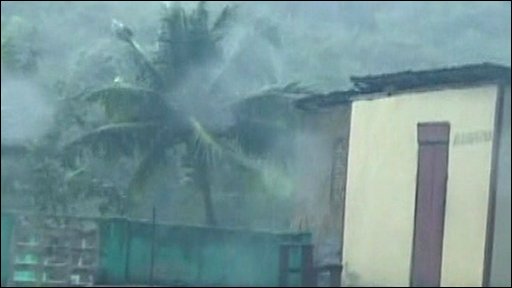
Carbon emissions from burning oil, coal and gas are increasingly thought by scientists to be implicated in greater frequency and power of hurricanes, though weather is complex and other causes are also operating.

It is certainly the case that global warming will cause flooding of low-lying coastal areas, since warm water takes up more space than cold water and melting of the ice at the poles will raise levels, as well.

Sarah Palin does not think global warming is man-made! But then she thinks we should indoctrinate our children in the theory that Jesus rode a small dinosaur into Jerusalem, as well.

And, she is in favor of drilling pristine lands in Alaska (her husband works for British Petroleum):


McCain wants to spew more carbon into the atmosphere, by "drilling, right here, right now."

McCain falsely claimed that oil rigs can withstand hurricanes.
For "cont'd" postings, click here.

Submit to RedditSubmit to SlashdotStumble Upon Toolbar
Email to a Friend:

Does Al-Maliki's New Team Imperil Security Agreement?
Al-Maliki asks Peshmerga to stay beyond Blue Line

The LAT reports doubts in Baghdad about whether the security agreement between the Bush administration and the Iraqi government will be achieved. Al-Maliki abruptly dismissed his negotiating team and replaced it with three officials close to himself. MP Mithal al-Alusi is convinced that the change was intended to derail the talks.

Diyala Province is still dangerous.

Al-Hayat reports in Arabic that Prime Minister Nuri al-Maliki has called on the Peshmerga paramilitary to honor the "blue line" that divides the Kurdistan Regional Government from Iraq proper. Peshmerga troops are in north-eastern Iraq cities such as Khanaqin, producing tension with the Iraqi army, which is going into those same cities as part of al-Maliki's security campaign.

Anwar J. Ali writes about her trip to Baghdad at the NYT blog:

'The streets in Baghdad after 9 p.m. are very dangerous and full of army, police and American checkpoints. Sometimes they can’t understand why you are out late and shoot, and sometimes they understand. . . The streets were empty, shops were closed. There was only us, the army and the blast walls. As we were driving in this dead city and empty neighborhood we saw a man who was only wearing shorts sitting half-naked in the middle of the road, at midnight. . . '


Aljazeera English reports on the Sunni Arab Awakening Councils in Iraq and Prime Minister Nuri Al-Maliki's current crackdown on them. It raises the question of whether a battle looms between the Iraqi government and these American-backed militias. Mithal al-Alusi and Nir Rosen are interviewed.

Labels:


For "cont'd" postings, click here.

Submit to RedditSubmit to Slashdot Al-Maliki asks Peshmerga to stay beyond Blue Line'>Stumble Upon Toolbar
Email to a Friend:

Saturday, August 30, 2008

Sadrists Sign Oath to fight US Troops

Shiites from the Sadr Movement in Iraq have been signing oaths in blood to struggle against the foreign military occupation of their country. This ritual affirmation comes despite the command from Sayyid Muqtada al-Sadr to lay down their arms. Sadr has also spoken of creating a special forces unit to kill US and other coalition troops, despite the cease-fire he affirmed between his Mahdi Army and the US and Iraqi forces. Al-Sadr had called for these pledges signed in blood, but appeared to see them as binding the signers to a non-violent struggle. This AFP article suggests most of the signers do not see it that way.

A Sunni Arab member of parliament said Friday that he does not expect Iraq and the US to sign a security agreement. He thinks too many insuperable obstacles stand in the way,including that of immunity for US troops in Iraqi courts.

Al-Hayat reports in Arabic that Kurdistan officials are complaining that the government of PM Nuri al-Maliki is marginalizing them.

The 11,000 Palestinian refugees in Iraq, expelled from their homeland by the Israelis, now live in fear and some are dwelling in squalor in border camps. It is hell to be stateless-- and has disenfranchising consequences in the 21st century analogous to slavery in the eighteenth.

Speaking of slavery, Nepalese workers are suing Kellogg, Brown and Root for human trafficking, claiming that a subcontractor pressed them into involuntary labor in Iraq.

Sunni Arab Awakening Council members in Diyala Province are Complaining to the US military that the Iraqi Army is harassing them.

Al-Hayat reports in Arabic that the sermonizers at Friday prayers in Iraq on Saturday were pretty unanimous across age lines that the US must set a timetable for withdrawing US troops from Iraq..


Labels:


For "cont'd" postings, click here.

Submit to RedditSubmit to SlashdotStumble Upon Toolbar
Email to a Friend:

OSC: Russia- Iran Alliance?

The USG Open Source Center translates an article from the Russian press proposing a strategic alliance between Russia and Iran.


Pundit on Possible Russia-Iran Alliance To Counter 'Unfriendly' US Moves
Article by Radzhab Safarov, General Director of the Russian Center for Iranian Studies: "Iranian Trump Card. Russia Can Take Control of Persian Gulf"
Vremya Novostey
Friday, August 29, 2008
Document Type: OSC Translated Text

The recognition of South Ossetia's and Abkhazia's independence by Russia is a timely step to protect these republics from new Georgian aggression. However, taking into account the United States' plans to expedite Georgia's and Ukraine's accession to the NATO military-political bloc, the situation near the Russian border remains alarming. At the same time Moscow has a lot of possibilities to take balanced counter measures to the United States' and entire NATO's unfriendly plans. In particular, Russia can rely on those countries that effectively oppose the United States' and their satellites' expansion. Only collective efforts can help to create a situation which would, if not eliminate then at least reduce the risk of the Cold War's transformation into local and global conflicts.

For instance, Moscow could strengthen its military-technical ties with Syria and launch negotiations on the reestablishment of its military presence in Cuba. However, the most serious step which the United States and especially Israel fear (incidentally, Israel supplied arms to Georgia) is hypothetical revision of Russia's foreign policy with regard to Iran. A strategic alliance presuming the signing of a new large-scale military political treaty with Iran could change the entire geopolitical picture of the contemporary world.

New allied relations may result in the deployment of at least two military bases in strategic regions of Iran. One military base could be deployed in the north of the country in the Iranian province of Eastern Azerbaijan and the other one in the south, on the Island of Qeshm in the Persian Gulf. Due to the base in Iran's Eastern Azerbaijan Russia would be able to monitor military activities in the Republic of Azerbaijan, Georgia and Turkey and share this information with Iran.

The deployment of a military base on the Island of Qeshm would allow Russia to monitor the United States' and NATO's activities in the Persian Gulf zone, Iraq and other Arab states. With the help of special equipment Russia could effectively monitor whois sailing toward this sea bottleneck, from where, and with what cargo on board to enter the World Ocean or to return.

For the first time ever Russia will have a possibility to stop suspicious vessels and ships and inspect their cargo, which the Americans have been cynically doing in that zone for many decades. In exchange for the deployment of its military bases Russia could help the Iranians to deploy modern air defense and missile defense systems along the perimeter of its borders. Tehran, for instance, needs Russia's modern S-400 SAMs.

The Iranian leadership paid close attention to reports stating that the Georgian Government's secret resolution gave the United States and Israel a carte blanche to use Georgian territory and local military bases for delivering missile and bomb strikes against Iranian facilities in the event of need. Another neighbor, Turkey, is not only a NATO member, but also a powerful regional opponent and economic rival of Iran. In addition to this, the Republic of Azerbaijan has become the West's key partner on the issue of transportation of Caspian energy resources to world markets. The Iranians are also concerned at Baku's plans to give Western (above all American) capital access to the so-called Azerbaijani sector of the Caspian Sea, which is fraught with new conflicts, because the legal status of the Caspian Sea has not been defined to date.

Russia and Iran can also accelerate the process of setting up a cartel of leading gas producers, which journalists have already dubbed the "gas OPEC." Russia and Iran occupy first and second place in the world respectively in terms of natural gas reserves. They jointly possess more than 60 percent of the world's gas deposits. Therefore, even small coordination in the elaboration of a single pricing policy may force one-half of the world, at least virtually entire Europe, to moderate its ambitions and treat gas exporters in a friendlier manner.

While moving toward allied relations, Russia can develop cooperation with Iran in virtually all areas, including nuclear power engineering. Russia can earn tens of billions of dollars on the construction of nuclear power plants in Iran alone. Tehran can receive not only economic, but also political support from Russia in the development of its own atomic energy sector.

In addition to this,in view of the imminent breakup of the CIS from which Georgia already pulled out, Russia could accelerate the process of accepting Iran as an equal member of the Shanghai Cooperation Organization (SCO). By accepting Iran, one of the key countries of the Islamic world, the organization could change fundamentally both in terms of its potential and in terms of its regional role. Meanwhile, as an SCO member Iran will find itself under the collective umbrella of this organization, including under the protection of such nuclear states as Russia and China. This will lay foundations for a powerful Russia-Iran-China axis,which the United States and its allies fear so much.

(Description of Source: Moscow Vremya Novostey in Russian -- Liberal, small-circulation paper that sometimes criticizes the government)
For "cont'd" postings, click here.

Submit to RedditSubmit to SlashdotStumble Upon Toolbar
Email to a Friend:

Friday, August 29, 2008

China Signs $3 Bn Deal with Iraq;
Iraq Army Takes over Camp Ashraf;
Chalabi Crony Arrested for Terrorism

The US military on Friday arrested Ali Faisal al-Lami, a Sadrist who served on the Debaathification Committee under Ahmad Chalabi. The Pentagon maintains that Al-Lami is deeply involved with Iran-backed "special group" cells and implicated in a bombing in Sadr City that killed several people including two GIs. Chalabi, a notorious liar and embezzler to whom Rumsfeld and the Neocons had intended to turn over Iraq, protested al-Lami's arrest and called for an end of the US ability to arrest Iraqis at will.

Chalabi's closeness to al-Lami raises the question of his own relationship to Iran and/or the special groups.

Al-Hayat writes in Arabic that PM Nuri al-Maliki has changed the team that is negotiating the security agreement with the United States. Foreign Minister Hoshyar Zebari has been dropped and the new team will be led by national security adviser Muwaffaq al-Rubaie.

The head of the voting commission says that it is now impossible to hold provincial elections on their original schedule. The enabling legislation has not been passed by parliament. February 2009 is the earliest the elections can now be held.

The Iraqi military has taken control of Camp Ashraf, the base of the Mojahedin-e Khalq (MEK) terrorist group,in accordance with a longstanding demand of Iraqi Shiite parties that are close to Iran. Saddam Hussein had given the MEK this base in order to harass Iran. It has been alleged that the Pentagon was deploying the MEK against Iran, as well, even though the US State Department has put the group on the terrorist watch list.

China has signed a $3 billion petroleum contract with Iraq for the development of Iraqi fields. A reader at reddit.com entitled this item "4,000 US troops die for China's access to Iraqi oil."


"U.S. Deputy Ambassador Alejandro Wolff told the [U.N.} meeting it was a violation of the U.N. charter for member states to use force against others, or threaten to use it, . . Russia's U.N. envoy, Vitaly Churkin, suggested Wolff's statement was hypocritical and referred to the U.S.-led March 2003 invasion of Iraq, which Moscow strongly opposed. "I would like to ask the distinguished representative of the United States -- weapons of mass destruction. Have you found them yet in Iraq or are you still looking for them?" Wolff accused Churkin of making false comparisons. "I'm not a psychologist and I don't know what brought on the free association we heard from Ambassador Churkin," he said. . . ."


No comment.

McClatchy reports political violence in Iraq on Thursday (please pay attention, Sen. McCain):
' Baghdad

- Early morning, gunmen assassinated the brigadier general Najam Abdullah from the 7th division of the Iraqi army and his wife in front of his house in Adel neighborhood (west Baghdad).

- Mortars hit the international zone (IZ) in central Baghdad. No casualties reported.

- Two roadside bombs targeted an American patrol near Al-Khansa police station in Mashtal(east Baghdad). No casualties reported.

- Around 11 am, a roadside bomb targeted a police patrol in Baladiyat neighborhood (east Baghdad). Five people were injured (three policemen and two civilians).

- A mortar shell hit Baladiyat neighborhood (east Baghdad. Two people were injured.

- Around 2 pm, a roadside bomb targeted a police patrol near Al-Rubayee bridge in Karrada neighborhood (downtown Baghdad). Two policemen were injured.

- Police found two dead bodies in Baghdad today: 1 was found in Shaab neighborhood(north Baghdad) and 1 was found in Jihad neighborhood(west Baghdad).

Diyala

- Around 7:30 am, a roadside bomb detonated at Abu Shanuna in balad Ruz (east Baquba). One shepherd was killed.

Kirkuk

- Around 11 am, a roadside bomb detonated near Rashid Awa restaurant in downtown Kirkuk. One person was killed and 7 others were injured. Also some buildings and cars were damaged in the incident.

- Gunmen kidnapped 4 persons in bani Izz village in Qara Taba (north east Baghdad).'

Labels:


For "cont'd" postings, click here.

Submit to RedditSubmit to SlashdotStumble Upon Toolbar
Email to a Friend:

Western Leaders of African Descent

Chris Matthews on MSNBC made the comment that if he won the presidency, Barack Obama would be the first "Western" leader of African descent. He then wondered if he was right, and whether there had been an African Roman Emperor.

The categories Matthews deployed are not very useful. We are all Africans, after all. Homo sapiens sapiens originated in southern Africa. We Africans did not even leave Africa until 70,000 years ago, and some much later. And groups keep intermarrying in history, so that even more recently African genes continually got propagated through Europe and Asia. (The whole world becomes inter-related again every fifty generations).

The construction of a "West" is of course artificial. And "African" covers a very large number of ethnic groups. And one would want to avoid the excesses of Afro-Centrism. But if we play the game in the terms Matthews set it out, the answer is: Hardly the first. Here are some "for examples" with no intention to be comprehensive. Readers are free to add more.

Piye and the other Nubian Pharaohs of the Twenty-Fifth Dynasty (8th century - 666 BC).


Then, Matthews was right to doubt himself on the issue of Roman emperors:

"Lucius Septimius Severus restored stability to the Roman empire after the tumultuous reign of the emperor Commodus . . . Severus was born 11 April 145 in the African city of Lepcis Magna, whose magnificent ruins are located in modern Libya, 130 miles east of Tripoli. . . . However, by giving greater pay and benefits to soldiers and annexing the troublesome lands of northern Mesopotamia into the Roman empire, Septimius Severus brought increasing financial and military burdens to Rome's government. His prudent administration allowed these burdens to be met during his eighteen years on the throne . . . "


"The anonymous late 4th-century Epitome de Caesaribus sets the birthplace of [the Emperor] Aemilianus . . . "on the island Meninx, which is now called Girba," modern Gerba, off the coast of western Tunisia and calls him a Moor"


The Almoravids and Almohads of Spain.

Fernando Henrique Cardoso, president of Brazil 1995-2002, who asserts African descent.

Likewise Hugo Chavez of Venezuela.

Black governors in the United States;

  • P.B.S. ("Pinckney Benton Stewart") Pinchback of Louisiana, in 1872.

  • Douglas Wilder of Virginia, in 1990

  • Deval Patrick of Massachusetts, in 2007

  • David Patterson of New York, in 2008
    For "cont'd" postings, click here.

  • Submit to RedditSubmit to SlashdotStumble Upon Toolbar
    Email to a Friend:

    McCain: Iraq is a Peaceful, Stable Country

    McCain: "Iraq is a peaceful, stable country now":


    I'm hurt. I thought everyone who is anyone in Washington read IC. McCain seems to have missed these recent headlines here:

    Wednesday, August 27, 2008: "45 Dead, 79 Wounded in Wave of Violence; Bombing in Jalawla' Raises Tensions with Baghdad"

    Monday, August 25, 2008: "54 Killed in Bombings, attacks;
    Water Crisis;Fixing the Intelligence Around the
    Policy"

    Tuesday, August 19, 2008: "Kirkuk a Powderkeg: NYT;
    Ramadi Bombing Targets
    Police"

    "Monday, August 18, 2008: "Bombing Kills 15, Including AC Leader in Baghdad; Al-Sadr Calls for Blood Pledge of Holy Struggle Against Occupation"

    Friday, August 15, 2008: "Bombing Kills 26 Pilgrims;
    Iraq Seeks Regional Security Network with Iran,
    Turkey"

    Monday, August 11, 2008: "Wave of Attacks Kills over a Dozen;US Soldier Killed, 2 Wounded at Tarmiyah; Zebari insists on Withdrawal Timeline"

    Saturday, August 09, 2008: "2000 Georgian Troops Leaving;
    Huge Blast at Tal Afar Kills 21; Arab-Kurdish Tensions in Kirkuk; Mahdi Army to Disarm if US
    Leaves"

    Labels:


    For "cont'd" postings, click here.

    Submit to RedditSubmit to SlashdotStumble Upon Toolbar
    Email to a Friend:

    Obama: 8 is Enough

    Obama DNC Speech: 'Eight is enough'


    Obama up in polls.
    For "cont'd" postings, click here.

    Submit to RedditSubmit to SlashdotStumble Upon Toolbar
    Email to a Friend:

    Thursday, August 28, 2008

    The 1960 Democratic Convention and Kennedy's Speech


    Notable quotes:

    "I hope that no American, considering the really critical issues facing this country, will waste his franchise by voting either for me or against me solely on account of my religious affiliation. It is not relevant . . ."

    "There has also been a change--a slippage--in our intellectual and moral strength. Seven lean years of drouth and famine have withered a field of ideas..."

    "It is a time, in short, for a new generation of leadership--new men to cope with new problems and new opportunities. All over the world, particularly in the newer nations, young men are coming to power--men who are not bound by the traditions of the past--men who are not blinded by the old fears and hates and rivalries-- young men who can cast off the old slogans and delusions and suspicions. . ."

    "But I tell you the New Frontier is here, whether we seek it or not. Beyond that frontier are the uncharted areas of science and space, unsolved problems of peace and war, unconquered pockets of ignorance and prejudice, unanswered questions of poverty and surplus. . ."

    "That is the question of the New Frontier. That is the choice our nation must make--a choice that lies not merely between two men or two parties, but between the public interest and private comfort--between national greatness and national decline--between the fresh air of progress and the stale, dank atmosphere of "normalcy"--between determined dedication and creeping mediocrity. . ."

    Read the whole thing:

    Address of Senator John F. Kennedy

    Accepting the Democratic Party Nomination for the Presidency of the United States

    Memorial Coliseum, Los Angeles July 15, 1960

    Governor Stevenson, Senator Johnson, Mr. Butler, Senator Symington, Senator Humphrey, Speaker Rayburn, Fellow Democrats, I want to express my thanks to Governor Stevenson for his generous and heart-warming introduction. It was my great honor to place his name in nomination at the 1956 Democratic Convention, and I am delighted to have his support and his counsel and his advice in the coming months ahead.

    With a deep sense of duty and high resolve, I accept your nomination.

    I accept it with a full and grateful heart--without reservation-- and with only one obligation--the obligation to devote every effort of body, mind and spirit to lead our Party back to victory and our Nation back to greatness.

    I am grateful, too, that you have provided me with such an eloquent statement of our Party's platform. Pledges which are made so eloquently are made to be kept. "The Rights of Man"--the civil and economic rights essential to the human dignity of all men--are indeed our goal and our first principles. This is a Platform on which I can run with enthusiasm and conviction.

    And I am grateful, finally, that I can rely in the coming months on so many others--on a distinguished running-mate who brings unity to our ticket and strength to our Platform, Lyndon Johnson--on one of the most articulate statesmen of our time, Adlai Stevenson--on a great spokesman for our needs as a Nation and a people, Stuart Symington--and on that fighting campaigner whose support I welcome, President Harry S. Truman-- on my traveling companion in Wisconsin and West Virginia, Senator Hubert Humphrey. On Paul Butler, our devoted and courageous Chairman.

    I feel a lot safer now that they are on my side again. And I am proud of the contrast with our Republican competitors. For their ranks are apparently so thin that not one challenger has come forth with both the competence and the courage to make theirs an open convention.

    I am fully aware of the fact that the Democratic Party, by nominating someone of my faith, has taken on what many regard as a new and hazardous risk--new, at least since 1928. But I look at it this way: the Democratic Party has once again placed its confidence in the American people, and in their ability to render a free, fair judgment. And you have, at the same time, placed your confidence in me, and in my ability to render a free, fair judgment--to uphold the Constitution and my oath of office--and to reject any kind of religious pressure or obligation that might directly or indirectly interfere with my conduct of the Presidency in the national interest. My record of fourteen years supporting public education--supporting complete separation of church and state--and resisting pressure from any source on any issue should be clear by now to everyone.

    I hope that no American, considering the really critical issues facing this country, will waste his franchise by voting either for me or against me solely on account of my religious affiliation. It is not relevant. I want to stress, what some other political or religious leader may have said on this subject. It is not relevant what abuses may have existed in other countries or in other times. It is not relevant what pressures, if any, might conceivably be brought to bear on me. I am telling you now what you are entitled to know: that my decisions on any public policy will be my own--as an American, a Democrat and a free man.

    Under any circumstances, however, the victory we seek in November will not be easy. We all know that in our hearts. We recognize the power of the forces that will be aligned against us. We know they will invoke the name of Abraham Lincoln on behalf of their candidate--despite the fact that the political career of their candidate has often seemed to show charity toward none and malice for all.

    We know that it will not be easy to campaign against a man who has spoken or voted on every known side of every known issue. Mr. Nixon may feel it is his turn now, after the New Deal and the Fair Deal--but before he deals, someone had better cut the cards.

    That "someone" may be the millions of Americans who voted for President Eisenhower but balk at his would be, self-appointed successor. For just as historians tell us that Richard I was not fit to fill the shoes of bold Henry II--and that Richard Cromwell was not fit to wear the mantle of his uncle--they might add in future years that Richard Nixon did not measure to the footsteps of Dwight D. Eisenhower.

    Perhaps he could carry on the party policies--the policies of Nixon, Benson, Dirksen and Goldwater. But this Nation cannot afford such a luxury. Perhaps we could better afford a Coolidge following Harding. And perhaps we could afford a Pierce following Fillmore. But after Buchanan this nation needed a Lincoln--after Taft we needed a Wilson-- after Hoover we needed Franklin Roosevelt. . . . And after eight years of drugged and fitful sleep, this nation needs strong, creative Democratic leadership in the White House.

    But we are not merely running against Mr. Nixon. Our task is not merely one of itemizing Republican failures. Nor is that wholly necessary. For the families forced from the farm will know how to vote without our telling them. The unemployed miners and textile workers will know how to vote. The old people without medical care--the families without a decent home--the parents of children without adequate food or schools--they all know that it's time for a change.

    But I think the American people expect more from us than cries of indignation and attack. The times are too grave, the challenge too urgent, and the stakes too high--to permit the customary passions of political debate. We are not here to curse the darkness, but to light the candle that can guide us through that darkness to a safe and sane future. As Winston Churchill said on taking office some twenty years ago: if we open a quarrel between the present and the past, we shall be in danger of losing the future.

    Today our concern must be with that future. For the world is changing. The old era is ending. The old ways will not do.

    Abroad, the balance of power is shifting. There are new and more terrible weapons--new and uncertain nations--new pressures of population and deprivation. One-third of the world, it has been said, may be free- -but one-third is the victim of cruel repression--and the other one- third is rocked by the pangs of poverty, hunger and envy. More energy is released by the awakening of these new nations than by the fission of the atom itself.

    Meanwhile, Communist influence has penetrated further into Asia, stood astride the Middle East and now festers some ninety miles off the coast of Florida. Friends have slipped into neutrality--and neutrals into hostility. As our keynoter reminded us, the President who began his career by going to Korea ends it by staying away from Japan.

    The world has been close to war before--but now man, who has survived all previous threats to his existence, has taken into his mortal hands the power to exterminate the entire species some seven times over.

    Here at home, the changing face of the future is equally revolutionary. The New Deal and the Fair Deal were bold measures for their generations--but this is a new generation.

    A technological revolution on the farm has led to an output explosion--but we have not yet learned to harness that explosion usefully, while protecting our farmers' right to full parity income.

    An urban population explosion has overcrowded our schools, cluttered up our suburbs, and increased the squalor of our slums.

    A peaceful revolution for human rights--demanding an end to racial discrimination in all parts of our community life--has strained at the leashes imposed by timid executive leadership.

    A medical revolution has extended the life of our elder citizens without providing the dignity and security those later years deserve. And a revolution of automation finds machines replacing men in the mines and mills of America, without replacing their incomes or their training or their needs to pay the family doctor, grocer and landlord.

    There has also been a change--a slippage--in our intellectual and moral strength. Seven lean years of drouth and famine have withered a field of ideas. Blight has descended on our regulatory agencies--and a dry rot, beginning in Washington, is seeping into every corner of America--in the payola mentality, the expense account way of life, the confusion between what is legal and what is right. Too many Americans have lost their way, their will and their sense of historic purpose.

    It is a time, in short, for a new generation of leadership--new men to cope with new problems and new opportunities.

    All over the world, particularly in the newer nations, young men are coming to power--men who are not bound by the traditions of the past--men who are not blinded by the old fears and hates and rivalries-- young men who can cast off the old slogans and delusions and suspicions.

    The Republican nominee-to-be, of course, is also a young man. But his approach is as old as McKinley. His party is the party of the past. His speeches are generalities from Poor Richard's Almanac. Their platform, made up of left-over Democratic planks, has the courage of our old convictions. Their pledge is a pledge to the status quo--and today there can be no status quo.

    For I stand tonight facing west on what was once the last frontier. From the lands that stretch three thousand miles behind me, the pioneers of old gave up their safety, their comfort and sometimes their lives to build a new world here in the West. They were not the captives of their own doubts, the prisoners of their own price tags. Their motto was not "every man for himself"--but "all for the common cause." They were determined to make that new world strong and free, to overcome its hazards and its hardships, to conquer the enemies that threatened from without and within.

    Today some would say that those struggles are all over--that all the horizons have been explored--that all the battles have been won-- that there is no longer an American frontier.

    But I trust that no one in this vast assemblage will agree with those sentiments. For the problems are not all solved and the battles are not all won--and we stand today on the edge of a New Frontier--the frontier of the 1960's--a frontier of unknown opportunities and perils-- a frontier of unfulfilled hopes and threats.

    Woodrow Wilson's New Freedom promised our nation a new political and economic framework. Franklin Roosevelt's New Deal promised security and succor to those in need. But the New Frontier of which I speak is not a set of promises--it is a set of challenges. It sums up not what I intend to offer the American people, but what I intend to ask of them. It appeals to their pride, not to their pocketbook--it holds out the promise of more sacrifice instead of more security.

    But I tell you the New Frontier is here, whether we seek it or not. Beyond that frontier are the uncharted areas of science and space, unsolved problems of peace and war, unconquered pockets of ignorance and prejudice, unanswered questions of poverty and surplus. It would be easier to shrink back from that frontier, to look to the safe mediocrity of the past, to be lulled by good intentions and high rhetoric--and those who prefer that course should not cast their votes for me, regardless of party.

    But I believe the times demand new invention, innovation, imagination, decision. I am asking each of you to be pioneers on that New Frontier. My call is to the young in heart, regardless of age--to all who respond to the Scriptural call: "Be strong and of a good courage; be not afraid, neither be thou dismayed."

    For courage--not complacency--is our need today--leadership--not salesmanship. And the only valid test of leadership is the ability to lead, and lead vigorously. A tired nation, said David Lloyd George, is a Tory nation--and the United States today cannot afford to be either tired or Tory.

    There may be those who wish to hear more--more promises to this group or that--more harsh rhetoric about the men in the Kremlin--more assurances of a golden future, where taxes are always low and subsidies ever high. But my promises are in the platform you have adopted--our ends will not be won by rhetoric and we can have faith in the future only if we have faith in ourselves.

    For the harsh facts of the matter are that we stand on this frontier at a turning-point in history. We must prove all over again whether this nation--or any nation so conceived--can long endure--whether our society--with its freedom of choice, its breadth of opportunity, its range of alternatives--can compete with the single-minded advance of the Communist system.

    Can a nation organized and governed such as ours endure? That is the real question. Have we the nerve and the will? Can we carry through in an age where we will witness not only new breakthroughs in weapons of destruction--but also a race for mastery of the sky and the rain, the ocean and the tides, the far side of space and the inside of men's minds?

    Are we up to the task--are we equal to the challenge? Are we willing to match the Russian sacrifice of the present for the future--or must we sacrifice our future in order to enjoy the present?

    That is the question of the New Frontier. That is the choice our nation must make--a choice that lies not merely between two men or two parties, but between the public interest and private comfort--between national greatness and national decline--between the fresh air of progress and the stale, dank atmosphere of "normalcy"--between determined dedication and creeping mediocrity.

    All mankind waits upon our decision. A whole world looks to see what we will do. We cannot fail their trust, we cannot fail to try.

    It has been a long road from that first snowy day in New Hampshire to this crowded convention city. Now begins another long journey, taking me into your cities and homes all over America. Give me your help, your hand, your voice, your vote. Recall with me the words of Isaiah: "They that wait upon the Lord shall renew their strength; they shall mount up with wings as eagles; they shall run and not be weary."

    As we face the coming challenge, we too, shall wait upon the Lord, and ask that he renew our strength. Then shall we be equal to the test. Then we shall not be weary. And then we shall prevail.

    Thank you.
    For "cont'd" postings, click here.

    Submit to RedditSubmit to SlashdotStumble Upon Toolbar
    Email to a Friend:

    Your Obama Tax Cut

    Calculate your Obama tax cut.

    "Barack Obama will cut taxes for over 95% of American families (even though more than half of American think he'll raise their taxes)"
    For "cont'd" postings, click here.

    Submit to RedditSubmit to SlashdotStumble Upon Toolbar
    Email to a Friend:

    Arctic Ice: Going, going . . . gone;
    Schweitzer on Energy in Denver

    BBC: Arctic ice is at a 'tipping point'.

    Watch for yourself on google earth: "This animation in Google Earth shows satellite data of Arctic sea ice concentration from May 25 to August 21, 2008. Note how the decline rate speeds up during August, with strong losses north of Siberia." -


    The more drilling and use of oil and other fossil fuels in which we engage, the faster the arctic and antarctic ice will melt, leading to rising sea levels.

    Montana Gov. Brian Schweitzer makes the point in Denver that the most important barrel of oil is the one you don't use.

    Schweitzer's little-noticed speech may be the most important address on energy given so far by an American politician.


    Now if only someone could get him off this liquefied coal kick.


    ---

    Just FYI on melting sea ice and water levels.
    For "cont'd" postings, click here.

    Submit to RedditSubmit to SlashdotStumble Upon Toolbar
    Email to a Friend:

    Pakistan Markets Roiled by End of Coalition Government


    Pakistan has had to impose trading limits to stop the slide in its stock market coming off the end of the coalition government.

    Investors have been worried about the withdrawal of the Muslim League (N) from the parliamentary coalition with the Pakistan People's Party.

    Meanwhile, Switzerland has dropped its money-laundering investigation of Asaf Ali Zardari, now a candidate for president of Pakistan.

    Violence in the Northwest is continuing, and the Pakistani legal establishment continues to protest against the failure to reinstate the supreme court justices dismissed by military dictator Pervez Musharraf.

    Aljazeera on the political developments.


    For "cont'd" postings, click here.

    Submit to RedditSubmit to SlashdotStumble Upon Toolbar
    Email to a Friend:

    Wednesday, August 27, 2008

    45 Dead, 79 Wounded in Wave of Violence;
    Bombing in Jalawla' Raises Tensions with Baghdad

    Why Iraq still matters to the presidential campaign,according to Mark Brunswick of the Minneapolis Star Tribune.

    Violence erupted throughout central, eastern and northern Iraq on Tuesday, leaving at least 45 dead and some 79 wounded. The major single attack was a suicide bombing that struck at a police recruiting center in the mostly Kurdish town of Jalaula' northeast of Baquba in troubled Diyala Province.

    The attack raised suspicions among Kurds because it comes in the wake of disputes between the Kurds of Diyala and the government of Nuri al-Maliki, who has sent Iraqi government troops into Diyala. When the troops entered Khanaqin, a potentially oil-rich city near the Iranian border that is largely Kurdish, there were tensions with the local population and with the Peshmerga Kurdish paramilitary. On Tuesday, residents of Khanaqin staged a demonstration against the presence in their city of government troops.

    Jalawla' is near Khanaqin. Al-Hayat writes in Arabic that when Iraqi troops first went into the northern, Kurdish areas of Diyala, they gave the local Peshmerga 24 hours to get out of the region. The Diyala governing council resisted this ultimatum, creating tension with the central government. The Kurdistan Regional Government also disputed the decree, eliciting charges from Baghdad that the KRG was attempting to extend its authority into provinces not in its purview (Diyala is not part of the KRG). Al-Hayat says that the Peshmerga had just returned to Khanaqin and Jalawla' after the withdrawal of federal troops.

    Shawn Brimley and Colin Kahl argue against al-Maliki's crackdown on the Sunni Arab Awakening Councils.

    Kurdish journalists are in danger in Iraqi Kurdistan. Al-Hayat reports a new poll that shows that half of KRG residents feel that they have little freedom of speech.

    Antiwar.com reviews political violence in Iraq on Tuesday.

    Labels:


    For "cont'd" postings, click here.

    Submit to RedditSubmit to SlashdotStumble Upon Toolbar
    Email to a Friend:

    Tuesday, August 26, 2008

    Al-Maliki Insists US Troops be Out by 2011;
    Iraqi Christian Refugees at Risk

    Prime Minister Nuri al-Maliki of Iraq insisted again Monday that all foreign troops must be out of Iraq by 2011 and that US troops in Iraq must come under the authority of Iraqi courts. These demands appear to have emanated in the first instance from Grand Ayatollah Ali Sistani of Najaf and from Sayyid Muqtada al-Sadr, now studying in Iran. They may also reflect a secret deal al-Maliki may have struck with Iran on his visit to Tehran last spring. Iran has been restraining the Mahdi Army, allowing al-Maliki to assert control in places such as Maysan Province (said to be oil-rich). You have to wonder what the quid pro quo is.

    Al-Maliki implied that the US had agreed to these two demands, but a White House spokesman denied it.

    My guess is that in the end Bush blinks on these two demands, or, as one wag on Reddit.com put it, "surrenders."

    A young female suicide bomber was caught by police in Baquba before she could detonate her payload. She said she was fitted for the bomb by her husband's female relatives, though her own mother appears to have played a leading role, as well.

    Anti-war.com says, "At least 16 Iraqis were killed and 14 more were wounded in the latest round of violence. One U.S. soldier was killed in a small arms attack in Baghdad." See below.

    Saving Iraqi Christian refugees. PM al-Maliki wants them to return to Iraq, but most refugee NGOs and UNHCR insist that it is not safe enough for them to do that. I was just in Amman, Jordan, looking into the refugee issue. Some 10% of the Iraqis there are Christians. There is no rush to return because they just don't trust that the militias are gone or the ethnic cleansing at an end.

    Likewise, al-Hayat reports in Arabic that a major reason for Iraqis to flee their country is lack of basic services such as potable water, electricity, fuel and reliable health care. The paper quotes Muhammad Laith, who took his family of five to Amman from the tony Hayy Zayounah in Baghdad. Laith, who works in the advertising and publicity sector, said, "Life in Iraq is still hard, despite the slight improvement in security. There is a big deficiency in services in all areas and even in the nice neighborhoods. This deficiency is the fault of the government and concerned circles, which cannot fulfill their duties because of endemic fraud."

    MP Ghufran al-Sa'edi said that there was no difference between failure of government to deliver basic services and militias' ethnic cleansing campaigns, in their effect on emigration of refugees.

    Reuters reports political violence in Iraq on Monday:

    'BAGHDAD - A U.S. soldier died after being shot during a patrol in northern Baghdad, the U.S. military said in a statement. . .

    TIKRIT - A roadside bomb exploded near a convoy carrying Major-General Hamad Namis Yasin, the police chief of Salahuddin province, wounding six of his guards in central Tikrit, 150 km (95 miles) north of Baghdad, police said.

    SHIRQAT - A roadside bomb killed two bystanders in the town of Shirqat, 300 km (190 miles) north of Baghdad, police and hospital sources said.

    MUSSAYAB - A roadside bomb was planted near the house of Basim Mohammed, a Lieutenant-Colonel of the government facilities guard force, killing his daughter and wounding two sons on Sunday in Mussayab, 60 km (40 miles) south of Baghdad, police said . . .

    MOSUL - Gunmen killed a man working as a guard for the dean of Mosul University in a drive-by shooting in eastern Mosul, 390 km (240 miles) north of Baghdad, police said.'


    McClatchy gives more detail on events in Baghdad:
    ' Baghdad

    - Mortars hit the International Zone(IZ) in downtown Baghdad. No casualties reported.

    - Around 7 am an IED detonated near an Iraqi army check point near Mr.Milk supermarket in Mansour neighborhood (west Baghdad). One officer was injured.

    - Around 8 am a bomb planted in a car detonated in Jamia’a neighborhood. Three family members were injured in that incident.

    - Around 11 am a bomb left inside a mini bus detonated in Adhemiyah neighborhood(north Baghdad). Only the driver was injured in that incident.

    - A roadside bomb detonated in Adel neighborhood(west Baghdad). One person was injured.

    - Mortars hit Ghazaliyah neighborhood. A petrol station got fire by one of the mortar shells.

    - Gunmen opened fire on an army patrol. 2 soldiers were killed and another one was wounded.

    - Police found 2 dead bodies in Baghdad. 1was in Sleikh(north Baghdad) and 1 was found in Mansour(west Baghdad)'

    Labels:


    For "cont'd" postings, click here.

    Submit to RedditSubmit to SlashdotStumble Upon Toolbar
    Email to a Friend:

    Monday, August 25, 2008

    International Reaction to Biden

    Iraqi politicians greeted the the selection of Joe Biden as the Democratic vice presidential candidate with dismay because they oppose his soft partition plan for Iraq, an affront to Iraqi conceptions of national unity.

    In contrast, the Sulaymaniya newspaper Kirkuk ran an article by Zana Galali, that, according to BBC Monitoring, "Says that the US senator, Joseph Biden, has reasonable visions toward Iraq and Kurdistan; nominating him to the vice president position of the US has its significant on Kurds; and Iraqi issues." A lot of Iraqi Kurds are separationists and so welcomed the Biden plan, whatever Kurdish leaders said in public.

    Sudan's ruling party has reason to be alarmed by the selection of Joe Biden as the Democratic vice presidential candidate, according to the Sudan Tribune. Biden has said of the Darfur conflict, "it’s time to put force on the table and use it” and seems to propose inserting 2500 US or NATO troops into the vast, politically fractious African nation.


    On the other hand, there was a sigh of relief in Iran:

    BBC World Monitoring translates an item from Etemad from Aug. 24:

    ' E'TEMAD (from hardcopy)

    1. Report by the international desk, entitled: "Joseph Biden, Obama's vice-president - Biden and Iran". The report believes that following the selection of the democrat senator, Joseph Biden, as Barack Obama's vice-president, it is anticipated that Biden's experience as the head of Senate's foreign relations committee would be of great help to Obama's victory in electoral competitions; an election in which foreign issues like Iran, Iraq, Iraq and Russia are more decisive than domestic American policies. It also adds that despite having directed numerous verbal attacks at Mahmud Ahmadinezhad, Biden is generally considered to be a moderate politician towards issues related to Iran.'


    Biden appeared on Iran's Press TV applauding the Bush administration's direct diplomacy with Tehran last month.

    Haaretz says Biden may help Obama with the American Jewish vote and reassure Israelis.

    The Turkish press says Biden has consistently voted against Turkish interests but that at least he knows Turkish affairs well and that could be an advantage.

    The Delhi papers spoke of the VP pick as "India Friend Joe Biden".

    The German press had mixed reactions, which track with those in the US press.

    The Irish Times seems happiest of all.
    For "cont'd" postings, click here.

    Submit to RedditSubmit to SlashdotStumble Upon Toolbar
    Email to a Friend:

    54 Killed in Bombings, attacks;
    Water Crisis;
    Fixing the Intelligence Around the Policy

    A suicide bomber attacked a celebration in Abu Ghraib late Sunday, killing at least 30 and wounding 42. The gathering was in honor of a former prisoner in a US prison who had just been released and was attended by police and by members of the local Awakening Council that has fought radical Muslim vigilantes on behalf of the US.

    A rash of attacks in Baghdad, Diyala and Mosul, left at least 54 people killed and 70 injured on Sunday.


    Meanwhile, Al-Zaman reports in Arabic that the six million Baghdad residents are facing a severe shortage of clean water during the hellishly hot summer. Sadiq al-Shammari, the general director of Water Utility in the capital, said that residents of the capital only have access to half the clean water they need at a time when the temperature can reach 122 degrees Fahrenheit (50 C). Al-Shammari also said that every time the electricity goes out, it knocks out water production for 3 hours. He said 2.8 million cubic meters (roughly, yards) of water is produced for Baghdad, but that the demand is 4 million.

    AFP has more on the water crisis.

    Grand Ayatollah Ali Sistani, the spiritual leader of millions of Shiites in Iraq and around the world, dispelled rumors he is in poor health by holding a small press conference. See also the LAT blog. One of Sistani's followers, resident in Qom but visiting the southern port city of Basra was assassinated on Sunday.

    More evidence that the Bush administration decided to go to war against Iraq and then fixed the intelligence around the policy. The National Security Archive electronic briefing book edited by John Prados shows that a white paper arguing for war was produced before the relevant National Intelligence Estimate. (That NIE was anyway deeply flawed, produced in a hellish rush, and then apparently doctored by the White House in the aftermath).

    Michael Collins observes:

    'The seemingly endless war in Iraq has become a total disaster on multiple levels for all involved. The awful toll in human deaths and casualties is largely ignored but real nevertheless. Over 4,000 U.S. soldiers have been lost in battle and tens of thousands injured. In excess of one million Iraqi civilians are dead due to civil strife unleashed by the invasion. The U.S. Treasury is drained and the steep decline in respect for the United States around the world is just beginning to manifest.The United States political establishment responds with collective denial on a scale that's incomprehensible. In the presidential campaign, the only sustained public commentary on the war comes from the Republican presidential candidate John McCain who makes the bizarre claim that U.S. is "surrendering" with victory in clear sight. McCain touts the surge without noting that 4.0 million Iraqis are "displaced from their homes." Nearly ten percent of Iraq's population is either dead or injured and there are 5.0 million Iraqi orphans. This pathological view of victory claims the "surge' is a success in the context of a devastated population in an obliterated nation lacking in the most essential supplies and services; a nation where death continues on a shopping spree. '


    A class by Chalmers Johnson reprinted at Tomdispatch.com reminds us of another sort of destruction of Iraq.

    Andrew Mack argues that "Security role of US surge 'modest' "

    McClatchy reports other political violence in Iraq on Sunday:
    ' Baghdad

    Four people including a policeman were killed and 15 others including two policemen were injured by successive bombing of two IEDs near Nahdha bus station in east Baghdad around 9:00 a.m.

    Three civilians were killed and five others were wounded by a roadside bomb that targeted a civilian car in al Dyna area northeast Baghdad around 12:00 p.m.

    Two civilians were injured by a roadside bomb in Doura neighborhood around 1:30 p.m.

    Around 7:00 p.m. an IED exploded near Shaab Stadium in east Baghdad. No casualties were reported.

    Police found one unidentified body in Palestine Street in east Baghdad. . .

    Diyala

    A civilian and a policeman were killed and four other people were wounded when gunmen opened fire inside a bus station in downtown Baquba city northeast of Baghdad around 11:15 a.m.

    Three civilians were killed and five others were wounded by a roadside bomb in Dayniyah village east of Baquba city around 2:00 p.m.

    Four Iraqi soldiers were killed and eight others were injured by an IED that targeted a patrol of the Iraqi army in Dayniyah village east of Baquba city around 2:30 p.m.

    Nineveh

    Three policemen and a civilian were injured when a suicide car bomb targeted a US army convoy in al Maliyah intersection in east Mosul on Sunday morning.

    Two insurgents were killed while they were trying to plant an IED in al Zohoor neighborhood in downtown Mosul city on Sunday morning. '

    Labels:


    For "cont'd" postings, click here.

    Submit to RedditSubmit to SlashdotStumble Upon Toolbar
    Email to a Friend:

    Sunday, August 24, 2008

    FBI to Open Cases via Profiling;
    MI5: Don't Bother

    Bush is trying to permanently widen FBI prerogatives in opening investigations of US citizens before leaving office. His new guidelines would allow an investigation to begin on the basis of data-mining and profiling, with no evidence of suspected wrong-doing.

    See my Salon.com article on this issue.

    This, at a time when the British MI-5 is finding that profiling is useless for identifying potential terrorists there. Those who turn to terror are not usually religious, or well-trained religiously, are not necessarily young or single, and don't belong to particular ethnic groups.

    How profiling can turn bad is illustrated by this pilot who is on a watch list, with his livelihood threatened, for no reason.

    Given how pusillanimous most telecom companies have been in the face of demands that they cooperate with illegal surveillance requests on their clients that privacy mode in browsers may become important.

    From Reddit.com:

    Dear CNN: Please stop calling evangelicals 'values voters.' I have values, too.

    Buchanan accuses 'McCain's neocon warmonger' of treason (rawstory.com)

    The view from 2016 at Tomdispatch.com.
    For "cont'd" postings, click here.

    Submit to RedditSubmit to SlashdotStumble Upon Toolbar
    Email to a Friend:

    OSC: Collective Punishment in Baghdad

    The USG Open Source Center translates an article from the Arabic online press complaining about Iraqi government collective punishment of Baghdad city quarters that witness poor security.

    US, Iraqi Forces Accused of Dividing Baghdad Neighborhoods on 'Sectarian' Basis
    Report by Kalshan al-Bayyati "Residents of Baghdad: 'The Government Imposes Collective Punishment on us"
    Al-Arab Online
    Wednesday, August 20, 2008
    Document Type: OSC Translated Text

    Baghdad Residents Gathering has condemned the collective punishment that has been imposed by the Iraqi forces on a number of neighborhoods in Baghdad that witness security turmoil. The punishments include limiting the movements of the citizens, imposing curfews for long hours, in addition to building walls and fences around neighborhoods and isolating them from each other.

    The gathering stated in a statement it released that "in a new development of the methods of the wanton occupation and its agent government, the forces called the (Iraqi) army and the police backed by the occupying troops impose collective punishments on the residents of the Baghdadi neighborhoods and on the rest of the Iraqi areas. These punishments include isolating those neighborhoods, limiting the movement of citizens after those neighborhoods turned into detention centers. This happened through constructing sectarian segregation walls that caused a lot of hardship especially, for children, elderly people, and women who stand in queues under the stifling sun heat, noting the presence of many sick people among them.
    The application of this method comes after the targeting of their beasts (troops) by the national resistance and that is exactly what happened recently in Al-Amiriyah and Al-Saydiyah neighborhoods in Baghdad, in a way that is similar to what happened before in Al-Fallujah and Samaraa."

    The statement says also that "as we in Baghdad Residents Gathering condemn the application of these inhuman methods by the occupying forces and their agents, we call on all international and popular organizations in the Arab world to raise their voices to demand a stop to those practices which are considered as a continuation of the massive killing operations that commenced against the Iraqi people by the occupation and as an outcome of it.

    The Gathering urges the residents of Baghdad and the rest of the governorates to show more patience and resistance, pointing out that these punishments are conducted against them as a response to their embrace of the national resistance and the support they extend to it.

    The US Army announced last Saturday that "it chose in coordination with the Iraqi military commands a number of areas that are experiencing an escalation of violence in order to protect them from terrorists and not to divide the city (Baghdad) on a sectarian basis" adding that "a number of areas will be subjected to the same method."

    (Description of Source: Doha Al-Arab Online in Arabic -- Website of independent newspaper, focuses on pan-Arab affairs; http://www.alarab.com.qa/)

    Labels:


    For "cont'd" postings, click here.

    Submit to RedditSubmit to SlashdotStumble Upon Toolbar
    Email to a Friend:

    Saturday, August 23, 2008

    Najaf Demonstrations against Rice:
    "Rogue" Operation in Baquba;
    Sadr in Iran for 5 Years

    Secretary of State Condi Rice's visit to Baghdad for consultations on the US-Iraqi security agreement provoked a demonstration in the Shiite holy city of Najaf, with Sadrist crowds carrying placards warning against US intentions. The Sadrists said that they rejected any security agreement that lacked a specific timetable for US troop withdrawal, and would take up arms against any such treaty. Former Iraqi PM Ibrahim Jaafari, leader of the Reform Movement, supported the criticism and said that the situation in Iraq was getting worse. The demonstration has been reported on the Iraq page in the Arab newspapers I looked at, but the demonstration appears to have been completely ignored by all English-language news services.


    Ignoring the demonstration is an error. Najaf, the seat of Grand Ayatollah Ali Sistani, is driving a lot of the negotiating positions of the al-Maliki government, including the demand for a withdrawal timetable. Some call Najaf Iraq's shadow capital.

    The raid on Diyala provincial government offices earlier this week by an Iraqi special forces unit is now being called a rogue operation by the al-Maliki government, according to McClatchy. A provincial council member and the president of the university were arrested, and the personal secretary of the governor was killed in the operation. The former two are Sunni Arabs, and the provincial council member was coordinating between the Diyala government and the US-backed Sunni Awakening Councils. The special forces unit was an emergency response unit that reports directly to Prime Minister Nuri al-Maliki, but his office is saying he did not authorize the raid on Baquba. Sunni politicians say it is not credible that the unit should have acted without al-Maliki's knowledge or command.

    Speculation: The unit is from the Badr Corps paramilitary of the Islamic Supreme Council of Iraq, trained in Iran. ISCI controls Diyala politically even though the Shiites are a minority there. They are threatened by the Awakening Councils, full of Sunni guerrillas whom they had earlier been fighting (and maybe still are fighting). So the ERU hits them, trying to cripple them through key arrests. The governor of Diyala is Badr, however, and when his secretary was killed, the operation went bad, and so al-Maliki had to disavow it.

    McClatchy quotes a source acknowledging that al-Maliki is not asserting central government control in Basra, Amara, Sadr City, Mosul and Diyala out of altruism, but is rather attempting to ensure that these areas vote for him or his allies when the provincial elections are held.

    LAT explores the al-Maliki government's building campaign against the Awakening Councils.

    Saad al-Hashemi has been convicted in absentia of ordering the hit, while a government minister on two sons of MP Mithal al-Alusi. Hashemi is a member of the Iraqi Accord Front (Sunni fundamentalist). Alusi angered Iraqi political parties by visiting Israel. Al-Hashemi is in hiding abroad. Critics of the trial say he should not have been tried and convicted in absentia.

    Aides to Muqtada al-Sadr say he will pursue his theological and legal studies in Qom for the next five years, visiting Iraq occasionally. Vali Nasr suggests that he is a virtual hostage of Iran, which is gradually assuming control of al-Sadr's Mahdi Army. It is likely that al-Sadr's truce with the US military, begun last September, was forced on him by Iran, which viewed the militia as a provocation of the US and a pretext for American troops to stay in Iraq.

    No progress on the Iraq oil bill.

    Labels:


    For "cont'd" postings, click here.

    Submit to RedditSubmit to SlashdotStumble Upon Toolbar
    Email to a Friend:

    Biden as VP Candidate

    A warm congratulations to Senator Joe Biden on his VP candidate position on the Democratic ticket!

    Sen. Biden called me to testify before the Senate Foreign Relations Committee on Iraq in April 2004, when there was heavy fighting between the Mahdi Army and the US military. He did so on the basis of a journal article I had written on the Sadr Movement in the Middle East Journal, which he had read. That knocked my socks off. People in Washington don't often read journal articles. It struck me as the sort of thing that should happen in our democracy every day-- you write something in your specialty, and your elected representative calls you to talk about it. No lobbies, think tanks, etc. involved.

    So it was a positive impression! And in the hearing he was informed and articulate.

    I want to say something about the tag line in the mainstream press about Sen. Biden's alleged tendency to commit gaffes.

    We have had a president for nearly 8 years who has committed almost nothing but gaffes, every day, all day. The corporate media typically forgive Bush for this and don't even often bring it up. Why is it that it is an issue for Biden but not for Bush? Could it be that corporate media is owned by . . . Republicans?

    When Biden ascends to these heights of malaproprism, then we can talk about it:


    'It is clear our nation is reliant upon big foreign oil. More and more of our imports come from overseas.'
    - George W. Bush; Beaverton, Oregon, September 25, 2000.

    Rarely is the question asked: Is our children learning?-
    George W. Bush; Florence, South Carolina, January 11, 2000.


    We cannot let terrorists and rogue nations hold this nation hostile or hold our allies hostile.
    -George W. Bush; Des Moines, Iowa, August 21, 2000.


    Will the highways on the internet become more few?
    -George W. Bush; Concord, New Hampshire, January 29, 2000.


    If the terriers and bariffs are torn down, this economy will grow.
    -George W. Bush; Rochester, New York, January 7, 2000.
    '

    For "cont'd" postings, click here.

    Submit to RedditSubmit to SlashdotStumble Upon Toolbar
    Email to a Friend:

    Friday, August 22, 2008

    Security Agreement Undermines McCain;
    Dulaimi Was Planting Bombs;
    Awakening Councils Targeted

    Muthanna Dulaimi was caught while planting a roadside bomb! The son of the leader of the Iraqi Accord Front, which has cabinet seats in the government of PM Nuri al-Maliki and from which one vice president derives, appears to be an active terrorist! Questions have swirled for some time about Adnan Dulaimi and his sons' connections to the Sunni Arab guerrilla movement. Of course, some of the Shiite parties in parliament, including the Badr Organization and the Sadr movement, have also been involved in political violence.

    The security agreement nearly completed between the Bush administration and the government of the Prime Minister Nuri al-Maliki may pull the rug out from under Sen. John McCain on Iraq, according to AP. It will stipulate that US troops will be out of Iraqi cities by June, 2009 and then mostly out of Iraq by 2011. In that light, it will be much harder for McCain to paint Obama as "surrendering" or wanting to "cut and run," since his withdrawal plan is very close to what Bush and the Iraqi government have agreed on.

    McCain's position on having long-term bases in Iraq a la South Korea was always pie in the sky, because it assumed that it was a decision he as president would get to make all by himself. Neither the Iraqi parliament nor Congress will likely actually put up with such a policy. Why McCain hasn't been called on this by the Dems is mysterious to me. Why not do an ad? "McCain says he wants long term bases in Iraq. But that is not what the elected government of Iraq says it wants. Is he going to invade again to get what he wants?"

    AP reviews Bush's flip-flop on the timetable issue.

    The Shiite government of al-Maliki is mounting a campaign to arrest hundreds of leaders in the Awakening Council movement among Sunni Arabs, which the US military created and paid for as a way of getting Iraqis to fight fundamentalist radicals ("al-Qaeda"). Although the McCain camp confuses the temporary troop escalation of 2007-2008 and the Awakening Council policy, in fact they were two different tracks. Other observers have argued that neither was as important as the massive ethnic cleansing of neighborhoods in Baghdad and elsewhere, in leading to a reduction of civilian deaths (no one left to kill of the other sect in a lot of neighborhoods). The big question is whether al-Maliki can keep the peace in Sunni Arab neighborhoods without the assistance of the Awakening Councils.

    General David Petraeus, who has long been at loggerheads with al-Maliki over the Awakening Councils confirms to McClacthy that the Iraqi government has been dragging its feet on absorbing fighters from the Awakening Councils into government security forces.

    Al-Hayat reports in Arabic that Shiite neighborhoods in Baghdad are afraid that militias are returning to them. Shu'la, Abu Dashir and Sadr City had seen a big reduction in Mahdi Army and other militia activity in the past few months, but there are troubling indications of a resurgence, some residents say. Sadiq, who opened a music shop in Abu Dashir on the assurance of a return of security, was dismayed to see it fire-bombed, costing him a substantial investment. A note from the perpetrators accused him of contravening Islamic law (radical fundamentalists dislike music but it is not actually banned in mainstream Islamic law). Some residents of Shiite neighborhoods have begun again receiving personal threat letters. Such individual threats have been a major reason for the refugee crisis, since people tend to move out if they know a militia is gunning for them and knows where they live. The personal threat also prolongs the refugee crisis, since it is extremely invasive and victims are hard to convince that the threat has subsided; if they think the militia is still there waiting for them and will view their return as a capital crime, they won't go back.

    All the celebrating on the American Right about the "war" being "won" and security having returned is awfully premature, as Gen. Petraeus has underlined.

    Not only did the Iraq War siphon off enormous resources from the US military effort in Afghanistan, it also provided the neo-Taliban with a model for fighting US and NATO troop presences.
    For "cont'd" postings, click here.

    Submit to RedditSubmit to SlashdotStumble Upon Toolbar
    Email to a Friend:

    Thursday, August 21, 2008

    Suicide Bomber Kills 58 outside Munitions Plant;
    Zardari Candidate for President

    The Tehrik-i Taliban responded to Pakistani military operations against it at Bajaur by sending a suicide bomber to attack workers leaving a munitions factory. Some 57 are dead and 70 wounded.

    The Pakistan People's Party, the largest party in parliament, has reportedly decided to seek to get its de facto leader, Asaf Ali Zardari, elected as the new president. Zardari, the widower of Benazir Bhutto, might be able to count on a sympathy vote in parliament.

    Although the wrangling over who will be president is being reported in the US press as a crisis, I don't see it that way. It is, rather, an ordinary political process in which eventually there will be a winner who will garner enough votes to be elected. No one is brandishing a gun over all this to my knowledge. You might as well call the current presidential campaign in the US to determine who will succeed George W. Bush a crisis. There is an interim president,and if the process takes a while, it will just give the prime minister a chance to garner more executive power, which would be all to the good. In the aftermath, I hope that the special prerogatives of the presidency, rooted in martial law amendments of the 1980s, can finally be gotten rid of.

    Aljazeera English has video on the process:


    For "cont'd" postings, click here.

    Submit to RedditSubmit to SlashdotStumble Upon Toolbar
    Email to a Friend:

    Baquba Raid Roils Sunni-Shiite Relations;
    Al-Maliki to Disband Awakening Councils

    The raid by a special forces operation on the governor's HQ in Diyala province is being denounced as a rogue operation by the US military. Sunni figures have recently been targeted, raising suspicions that the Badr Corps paramilitary of the Islamic Supreme Council of Iraq was cleaning house, and suspected someone in the provincial government of having links to the Sunni Arab guerrilla movement.

    Al-Hayat reports in Arabic that PM Nuri al-Maliki's office is denying that there is any special forces unit reporting directly to the prime minister. Sunni parties, including the Iraqi Islamic Party [Muslim Brotherhood] of Iraqi vice president Tariq al-Hashimi raised suspicions that the raid on the governor's office in Baquba was al-Maliki's direct responsibility. Al-Maliki's spokesman admitted that there was a special unit dedicated to fighting terrorism, but said its line of command was within the regular military. Meanwhile, the ministry of defense insisted that the "Good Omens" military campaign of the Iraqi army against guerrilla groups in Diyala province would continue unabated and had scored successes.

    Ibrahim Hasan Bajlan, the head of the Diyala provincial council, said that the raid on the governor's mansion, the killing of his secretary, and the arrest of a council member constituted an infringement against the legal legitimacy of the elected council.

    Sam Parker of USIP guest blogs on what he thinks is really going on in Baquba. A conflict between the Islamic Supreme Council of Iraq (dominant Shiite fundamentalist party) and the Sunni Awakening Councils is part of it, he argues.

    Qasim Ata, spokesman for the "Imposition of the Law" campaign in Baghdad, said Wednesday that Muthanna, the younger son of Adnan Dulaimi, a leader of the Sunni fundamentalist Iraqi Accord Front, had been arrested for involvement in murders and the ethnic cleansing of the al-Adl district of central Baghdad (i.e. of expelling Shiites from it).The Iraqi Accord Front said that the arrest threatened ethnic reconciliation efforts. Qasim said that the security forces making the arrest had done so on the basis of intelligence, and had not realized that the arrestee was Dulaimi's son.

    McClatchy reports that the al-Maliki government is determined to disband the Sunni Arab Awakening Councils by November, and plans to arrest those who decline to give up their arms. The al-Maliki government views the councils as seedy guerrilla elements that must not be allowed to remained armed and cannot be trusted to join Iraqi security forces. The US created and pays for these Sunni Arab militias, which it used against the Qutbist vigilantes (radical fundamentalists). Some think that Iraq has another civil war in the offing.


    The LAT looks at how female suicide bombers are recruited by the fundamentalist radicals.

    The FT argues that Iraqi political divisions are preventing the oil industry there from getting back on track.

    In contrast, Iraqi officials say that the global oil majors are greedy and are contributing to a humanitarian crisis with their unreasonable demands.

    Lebanese PM Fuad Siniora visited Baghdad and got a favorable deal on Iraqi oil.

    NYC has to pay $2 mn. for falsely arresting antiwar activists in spring of 2003, though the deal does not provide for any admission of guilt by city officials.
    For "cont'd" postings, click here.

    Submit to RedditSubmit to SlashdotStumble Upon Toolbar
    Email to a Friend:

    Wednesday, August 20, 2008

    Reuters/Zogby Poll: McCain Makes a Move, Takes 5-Point Lead Over Obama

    Zogby News Release reprinted by permission at IC:

    Released: August 20, 2008

    Reuters/Zogby Poll: McCain Makes a Move, Takes 5-Point Lead Over Obama

    Obama loses ground among Dems, women, Catholics & even younger voters

    UTICA, New York – As Russian tanks rolled into the Republic of Georgia and the presidential candidates met over the weekend in the first joint issues forum of the fall campaign, the latest polling includes drama almost as compelling - Republican John McCain has taken a five-point lead over Democrat Barack Obama in the race for President, the latest Reuters/Zogby telephone survey shows.

    McCain leads Obama by a 46% to 41% margin.

    And McCain not only enjoys a five-point edge in a two-way race against Obama, but also in a four-way contest including liberal independent candidate Ralph Nader and Libertarian Bob Barr, the poll reveals. In the four-way contest, McCain wins 44% support, Obama 39%, Barr 3% and Nader 2%.

    This latest Reuters/Zogby poll is a dramatic reversal from the identical survey taken last month – in the July 9-13 Reuters/Zogby survey, Obama led McCain, 47% to 40%. In the four-way race last month, Obama held a 10-point lead over McCain.

    The poll shows Obama losing voters to McCain in groups where Obama had bigger leads a month ago, such as Democrats, women and younger voters. Obama also lost ground among Catholics and Southerners.

    This table shows Obama’s loss of support between the July and August Reuters/Zogby polls among some significant sub-groups (the margin of error is greater for sub-groups than the sample as a whole).

    >McCain’s surge follows a month in which he has aggressively portrayed Obama as an out-of-touch elitist and celebrity not prepared to be President. McCain also continues to accuse Obama of being willing to lose in Iraq in order to win the election. While Obama was on vacation last week, McCain took the spotlight, talking tough about Russia’s military action against the Republic of Georgia.

    Pollster John Zogby: “Since Obama returned from his overseas trip, it seems like McCain has thrown all the punches. Clearly, the blows have landed. In recent days, Obama is fighting back, going after McCain on the economy, the issue voters care about most. McCain has changed the dynamic of the race heading into the two conventions. That puts more pressure on Obama to go to Denver and effectively define himself and McCain.”

    Here is how voters rated issues most important to them in choosing a President: economy 47%, War in Iraq 12%, energy prices 8%, healthcare 7%, threat of attack on the U.S. 6%, immigration 5% and the environment 4%.

    For a detailed methodological statement on this survey, please visit:

    http://www.zogby.com/methodology/readmeth.dbm?ID=1328

    (8/20/2008)


    (8/20/2008)
    For "cont'd" postings, click here.

    Submit to RedditSubmit to SlashdotStumble Upon Toolbar
    Email to a Friend:

    Afghanistan in Crisis

    All hell seems to be breaking loose in Afghanistan, at a time when most Western observers are focusing on the Georgia crisis. Ten French troops killed by 100 guerrillas. An attack on US troops in Khost, then a bombing there. It is 1982 all over again only it is NATO being targeted now.

    AP has video:


    For "cont'd" postings, click here.

    Submit to RedditSubmit to SlashdotStumble Upon Toolbar
    Email to a Friend:

    Raid on Governor's office in Diyala;
    Seniora to Baghdad;
    Dulaimi's Son Arrested

    Strange things happen in Iraq. On Tuesday, an unidentified Iraqi government security force, or at least people wearing such uniforms, attacked the Diyala provincial governor's headquarters, killed his secretary, and arrested a member of the Diyala Provincial Assembly. The local police fought back, and four were wounded. The attacking unit is said to be a special forces group that typically works closely with the US Army. One suspects that al-Maliki decided that some guerrilla activities are being run out of the governor's office.

    The US denies knowing anything about it all. And al-Maliki has ordered an investigation (doesn't he know what his own troops are up to?)

    Lebanese Prime Minister Fuad Seniora is visiting Baghdad. Seniora will seek Iraqi petroleum for Lebanon at discounted prices. Behind the scenes, look for him to seek help from PM Nuri al-Maliki in dealing with the Shiite Hizbullah in Lebanon. Al-Maliki's Da'wa Party was important in forming Hizbullah and still has political contacts with it.

    Another of Sunni Arab politician Adnan Dulaimi's sons has been arrested by US troops. Dulaimi's brand of Sunni fundamentalist politics (he is a leader of the Iraqi Accord Front) is suspected by some in Iraq of spilling over into sympathy for or activities on behalf of the 1920 Brigades, a Sunni Arab guerrilla group (some members, but not all of whom, have joined Awakening Councils).

    Jane Arraf on the looming battle over the US-funded Sunni Arab "Awakening Councils", which many officials in the al-Maliki government think were a very bad idea.

    Iraq will sign a $1.2 bn. service contract with China, for work on a small field that produces 90,000 barrels a day (Iraq produces on the order of 2.4 million barrels a day). The deal declines to offer China a share in profits, confining it to fees paid for work done. That the Iraqi oil ministry is playing this kind of hard ball has caused several Western oil majors to pull out of talks on such short term contracts, which are not very profitable and are mainly undertaking to make good relations with the host country.

    The downside for Iraq of having oil.

    McClatchy reports political violence in Iraq on Tuesday:

    ' Baghdad

    Four gunmen men in a white sedan opened fire upon a checkpoint manned by National Police on Mohammed al-Qassim highway, central Baghdad at 1 p.m. killing one policeman, injuring three. The gunmen have been captured and taken into custody.

    Nineveh

    A parked car bomb targeted a Peshmerga patrol serving as Iraqi Army in the town of Tilkeif at 3 p.m. injuring five people including two Peshmerga and three civilians.

    Kirkuk

    A father (55) and son (20) were killed by light arms fire from a police patrol near the village of Daibaka, between Kirkuk and Erbil late Monday. The police are still investigating the incident.

    Diyala

    Police found 20 decomposed bodies buried in an orchard in Abu Tuma village, al-Khalis 15 km to the north of Baquba at 3.30 p.m.'


    Don't miss Manan Ahmed on the Pakistan crisis.

    Labels:


    For "cont'd" postings, click here.

    Submit to RedditSubmit to Slashdot Seniora to Baghdad;
    Dulaimi's Son Arrested'>Stumble Upon Toolbar
    Email to a Friend:

    Davidson: Privatizing Foreign Policy: The Road to Iran

    Lawrence Davidson writes in a guest op-ed for IC:


    Americans' penchant for paying little attention to their nation's foreign policies has powerful and disastrous effects on national politics and policy-making. Here are two important implications:

    1. Popular disinterest in foreign affairs means that the vast majority of Americans abrogate their say in foreign policy formulation to a small number of citizens who do care about specific foreign policies and, constituting themselves as lobbies, are organized to make their influence felt. This can be seen clearly in the case of the invasion and occupation of Iraq. The war was planned and launched by small groups of Americans with specific, ideologically based, perceptions of the world. These ideologically motivated lobbies, whether ethnically oriented or neoconservative in nature, have little connection to the local concerns of the majority of Americans. Yet the consequences of their actions have impacted all of us.

    2. Because most Americans pay little attention to foreign affairs they lack the knowledge necessary to accurately contextualize the situation when foreign events do seem to intrude upon their lives. The assertion that Iraq was in possession of weapons of mass destruction that were to be used on American targets was an example of such a situation. Having no objective knowledge to assess this claim, Americans had to rely on the information given to them by others, most of the time government spokesmen and media “pundits.” The average citizen had no way of knowing if these alleged experts did or did not know what they were talking about, and if they had reasons to present a biased picture of events. However, the consistent supplying of what turned out to be less than objective information to millions of citizens who were otherwise ignorant, created a “thought collective” capable of moving the entire national population to war. Millions of lives have been lost or ruined as a consequence. This story is not a unique one. It has happened before and could soon happen again with the alleged threatening nation now being Iran.

    Iran is a nation that has never invaded another country in modern times. Its civilian nuclear research activities are legal under international law and the United Nations International Atomic Energy Agency has reported no evidence of nuclear weapons development. Yet, the same lobbies and politicians who led the United States into Iraq now insist that Iran is also worthy of sanctions and attack. Once again, the vast majority of Americans have no major sources of information on this issue apart from those which have already failed them in the case of Iraq. Nor are our elected officials behaving in ways that might prevent a compounding of the disaster of Iraq with another disaster in Iran. Why is this so?

    Foreign Policy Inc.: Privatizing America's National Interest by Lawrence Davidson explains in detail the dangers of localism, ignorance, special interests, and misinformation when it comes to formulating the nation's foreign policies.

    For "cont'd" postings, click here.

    Submit to RedditSubmit to SlashdotStumble Upon Toolbar
    Email to a Friend:

    Tuesday, August 19, 2008

    McCain's Mansions and the Real Elitist

    BraveNewFilms on McCain's mansions and his elitism.


    For "cont'd" postings, click here.

    Submit to RedditSubmit to SlashdotStumble Upon Toolbar
    Email to a Friend:

    Cole in Salon: The Fall of Bush's Man in Pakistan;
    Dawn: Bush was Last Holdout

    My column is out in Salon.com:

    "The fall of Bush's man in Pakistan:" (Despite Pervez Musharraf's despotism and double-dealing with U.S. enemies, George W. Bush, John McCain and the GOP embraced him to the bitter end.)

    Excerpt:

    ' It is a measure of the Bush administration's broken foreign policy that the departure of Pervez Musharraf, the corrupt, longtime military dictator of Pakistan, is provoking fears in Washington of "instability." Despite Bush's warm embrace, Musharraf gutted the rule of law in Pakistan over the previous year and a half, including sacking its Supreme Court. He attempted to do away with press freedom, failed to provide security for campaigning politicians and strove to postpone elections indefinitely.

    The Bush administration has made a regular practice of undermining democracy in places where local politics don't play out to its liking, and in that, at least, Musharraf was a true partner. But stability derives not from a tyrannical brake on popular aspirations; it derives from the free play of the political process. Musharraf's resignation from office, in fact, marks Pakistan's first chance for a decent political future since 1977. '


    Read the whole thing.

    Meanwhile, Dawn (Karachi) explains how George W. Bush was convinced to let Musharraf go. The article says:

  • Bush was the last holdout supporting Musharraf in Washington, long after Rice and Cheney had concluded he was not viable

  • PM Yousef Raza Gilani's recent trip to Washington was in large part aimed at convincing Bush and others that the dictator had to go. "The prime minister took a team of 'Musharraf experts' with him to the luncheon and they played a key role in persuading Mr Bush to stop supporting the Pakistani leader."

  • U.S. Ambassador Anne W. Patterson "argued that if Washington continued supporting Mr Musharraf it would end up stoking massive anti-American feelings in Pakistan."

  • Chairman of the Joint Chiefs of Staff Mike Mullen made three trips to Pakistan and engaged in intensive discussions with his opposite number, Gen. Ashfaq Kayani, receiving assurances that without Musharraf the Pakistani military would remain committed to the fight against the neo-Taliban and al-Qaeda.

  • Pakistani Ambassador to Washington, Husain Haqqani, expertly worked Congress and the Senate, as well as think tanks, trying to convince them that Pakistan would not be "unstable" without Musharraf.

    (People in Washington are so funny. Musharraf has been like a one man hurricane in Pakistan for the last year and a half; he was the source of most of its instability.)

  • But Bush wanted assurances that Musharraf would be granted legal immunity and be secure, either staying in Pakistan or going abroad. He enlisted the help of Britain and Saudi Arabia: "The British sent their former ambassador in Islamabad, Mark Lyall Grant, to Pakistan and the Saudis sent their intelligence chief Prince Muqrin bin Abdul Aziz to negotiate the terms for Mr Musharraf's departure." The Saudis also put pressure on former PM Nawaz Sharif, leader of the Muslim League (N), to tone down his rhetoric (Sharif was in exile in Saudi Arabia for years and is close to its elite).

  • Once Bush was convinced Musharraf had to step down, the super-majority in the Pakistani parliament began moving against him.

    I am a little surprised to discover that Bush was the last holdout, not Cheney. If the man really does have no common sense and is the ultimate decision-maker, that would clarify what has gone wrong for the last 7 years!
    For "cont'd" postings, click here.

  • Submit to RedditSubmit to Slashdot Dawn: Bush was Last Holdout'>Stumble Upon Toolbar
    Email to a Friend:

    Kirkuk a Powderkeg: NYT;
    Ramadi Bombing Targets Police

    Kurdish control of Kirkuk creates a powder keg in Iraq, the NYT explains this morning:

    ' it demonstrates that despite a recent decline in violence, Iraq’s unsettled ethnic and regional discord could still upend directives emanating from Baghdad and destabilize large swaths of the country — or even set off a civil war. . .

    Kurdish authority is visible everywhere in the city. In addition to the provincial government and command of the police, the Kurds control the Asaish, the feared undercover security service that works with the American military and, according to Asaish commanders, United States intelligence agencies. '


    A suicide bombing in Ramadi has left at least 7 policemen killed and more wounded.

    Gareth Porter is skeptical about that AP story alleging Iran-trained hit squads in south Iraq. Me, I didn't bother with it. Iran trained the Badr Corps, which is now the backbone of Prime Minister al-Maliki's security forces, and the US cheered when Badr-dominated forces asserted themselves in Basra and Amara. So Iranian training is only sometimes bad?

    McClatchy reports political violence in Iraq on Monday:

    ' Baghdad

    Five people (3 policemen and 2 civilians) were injured by a roadside bomb in al Riwad intersection in Mansour neighborhood in west Baghdad around 9:00 a.m.

    Around 10:00 a.m. Gunmen opened their machineguns fire targeting the car of Faris Jabir Thahir; a member in Shaheed al Mihrab organization (one of the organizations in ISCI ) in Zafaraniyah town in southeast Baghdad. Faris was killed at one and his wife was injured seriously.

    Around 10:30, an IED exploded targeting an American convoy in al Ordin intersection (Jordan intersection) in Yarmouk neighborhood in west Baghdad. Nine Iraqi were injured including three policemen. No American casualties were reported.

    Three people were injured (2 policemen and a civilian) by a roadside bomb near the national theater in Karrada neighborhood in downtown Baghdad around 1:00 p.m.

    Basra

    A director of an election center and his deputy were killed and a companion was inured when gunmen attacked them while they were going to work in Bahadriyah area south of Basra on Monday morning. The election commission confirmed the incident.

    Kirkuk

    Gunmen killed Raheem Thyab al Bayati; one of the leaders of Sahwa south of Tuz city north of Baghdad around 2:00 p.m.'

    Labels:


    For "cont'd" postings, click here.

    Submit to RedditSubmit to SlashdotStumble Upon Toolbar
    Email to a Friend:

    Monday, August 18, 2008

    Musharraf Resigns

    Al-Jazeera International on the career of Pakistani dictator Pervez Musharraf, who just stepped down to avoid impeachment.


    For "cont'd" postings, click here.

    Submit to RedditSubmit to SlashdotStumble Upon Toolbar
    Email to a Friend:

    Fox News: 12 Year Old Girl Tells the Truth about Georgia

    Ooops. Fox News Interviews an Ossetian-American 12-year-old girl who thanks Russian troops for saving her from Georgian aggression.

    But Fox News was obviously not happy with the way the interview went.

    Gee,that isn't that master narrative in the US military-information complex.


    Hat tip: Technorati.com.

    (Of course the Russians contravened international law, too, but Saakashvili's attack on the Ossetians was not exactly saintly).
    For "cont'd" postings, click here.

    Submit to RedditSubmit to SlashdotStumble Upon Toolbar
    Email to a Friend:

    Bombing Kills 15, Including AC Leader in Baghdad;
    Al-Sadr Calls for Blood Pledge of Holy Struggle Against Occupation;
    Seniora to Baghdad

    A suicide bomber in Baghdad killed 15 and wounded 29 in al-Adhamiya on Sunday. This neighborhood is what's left of the Sunni enclave on the eastern side of the Tigris, and the bombing appears to have targeted a local Awakening Council leader, Faruq al-Ubaidi, who was killed. The US-financed Awakening Councils and the Qutbist vigilantes are struggling over control of Sunni neighborhoods. The bombing took place near the revered Abu Hanifa mosque, and will therefore have emotional resonances for Sunnis.

    Kurdish forces killed one demonstrator and wounded 4 when the fired on protestors in Suran north of Irbil demanding water services.

    Iraq wants to put 6 Blackwater guards on trial for the Nisoor Square shootings.

    Shiite leader Muqtada al-Sadr has called upon Iraqis to sign a personal pledge in blood of struggle (jihad) against the foreign military occupation of Iraq. Although he urges them to oppose it "militarily and culturally," he currently has a ceasefire with the US, and this pledge campaign does not appear to threaten it. It seems to me that the pledges are a way for Muqtada to continue to burnish his anti-imperialist credentials even though he has actually made a deal with Washington. The campaign does, however, demonstrate that for the US to try to maintain long-term bases in Iraq would generate no end of trouble and indeed, much more trouble than it would be worth. Iraq is not South Korea, and isn't afraid of its neighbors as South Korea and Japan are afraid of China (and used to be afraid of Russia). The US only gets long term bases when it is perceived to be in the host country's benefit or when the host country is extremely weak. Neither will be true in Iraq.

    Al-Zaman gives some of the text of Al-Sadr's sermon.

    Al-Hayat reports in Arabic that Lebanese Prime Minister Fuad Seniora will visit Baghdad this week, seeking petroleum at reduced prices for his country from Iraq. This visit follows on that of King Abdullah II of Jordan, which involved a similar request. The rise in oil prices (which are still high compared to only a couple of years ago) has given Prime Minister Nuri Al-Maliki sudden clout in the region. It is clear what Jordan and Lebanon want from him. The question is, what does he want from them? So far the quid pro quos are not being reported, unless it is just greater recognition and re-integration into the Arab political system. For instance, Saudi Arabia still declines to let al-Maliki visit Riyadh, apparently because of his enmity toward the Sunni Arab Awakening Councils, which are in part a Saudi project. Seniora and his backer Saad Hariri are close to Saudi Arabia and presumably will be intermediaries for al-Maliki in back channel communications to the Kingdom.

    The oil majors are largely giving up on negotiating short-term contracts with the Iraqi oil ministry. The contracts aren't that lucrative, and were just seen as ways of establishing a relationship, but the oil ministry played hard ball and so they could not come to terms.

    Three quarters of Iraqi business people support the new investment law.

    The Middle East News Agency reports:

    ' Cairo, 17 August: A second batch of Iraqi refugees seeking to go home left Egypt for Iraq on Sunday (17 August) at the Iraqi government's expenses and on board the presidential plane of Iraqi Prime Minister Nuri al-Maliki.

    The group included 240 Iraqis, an official from Iraqi embassy in Cairo said while seeing them off at the airport.

    The first batch of Iraqi refugees in Egypt flew home to Iraq Monday (11 August). It comprised 250 Iraqis who fled after the US invasion of Iraq in 2003. This flight will be followed by other weekly flights with the aim of facilitating the process for displaced Iraqis to return home, Iraq has promised.

    The UN High Commissioner for Refugees (UNHCR) estimated the number of Iraqi refugees who fled the country after the US-led invasion in 2003 at about 4.4 million, including 2.2 million displaced inside Iraq and 2.2 million in neighbouring countries, mainly in Syria, Jordan and Egypt.'


    McClatchy reports political violence in Iraq on Sunday:

    ' Baghdad

    - Gunmen threw a grenade at a car carrying a television crew for Afaq, a local T.V station funded by the ruling Dawaa party, as they were about to enter their headquarters in Baghdad’s Alawi al Hilla neighborhood. A reporter, cameraman and driver were seriously injured and taken to a nearby hospital for treatment.

    - Around 8 pm, a suicide bomber riding a bicycle targeted one of the Sahwa leaders in Adhemiyah neighborhood(north Baghdad). Farouq Abu Omar the Sahwa leader who was the target was killed at once. Also five other people were killed and 13 others were injured including two of his sons who were guarding the father who had just finished his prayers in Abu Hanifa shrine.

    - Police found 1 dead body today in Saidiyah neighborhood(south Baghdad).

    Salahuddin

    - Around 6 pm, a roadside bomb detonated near Balad petrol station in Balad town(south of Tikrit). 6 people were injured.

    Basra

    - Gunmen killed a civilian who refused to give them his own sedan car when they stopped him in Hakimiyah neighborhood in Basra city.'

    Labels:


    For "cont'd" postings, click here.

    Submit to RedditSubmit to SlashdotStumble Upon Toolbar
    Email to a Friend:

    Aljazeera International on the Kirkuk Crisis

    The struggle over the oil city of Kirkuk has so far derailed provincial elections in Iraq.

    Aljazeera International on the Kirkuk crisis (part 1)


    Aljazeera International on the Kirkuk crisis (part 2)


    The USG Open Source Center translates an item from the Kurdish Press


    ' Iraqi Kurdish MP says USA not a real ally
    Hawlati
    Saturday, August 16, 2008
    OSC Summary

    Iraqi Kurdish MP says USA not a real ally

    Iraqi Kurdish independent MP Mahmud Uthman of the Kurdistan Alliance has said that the USA is pushing the Kurds to make a concession on the Kirkuk issue, Hawlati privately-owned fortnightly newspaper reported on 6 August.

    The paper quoted Uthman as saying: "The USA is pushing the Kurds to make a concession on the Kirkuk issue." He added: "The USA backs the other parties and pushes the Kurds when the Kurds are having a difficult time. The USA is a friend of the Kurds when it is in the US's own interest; otherwise, it has never backed the Kurdish demands."

    The paper also quoted Kurdish political expert Salar Besara as saying: "The Kurds are one of the naive nations that have been betrayed throughout history." He added: "The USA betrayed the Kurds up to the end of the Kurdish September Revolution (refers to early 1960s to 1975, when the revolution capitulated to the Algeria agreement between Iran and Iraq) while the USA was regarded as an ally."

    Besara added: "The USA is very much in need of the Kurdish peaceful areas in Iraqi Kurdistan. The Kurds are neither against the USA nor do they support terrorism. Therefore, the USA does not want to provoke them. However, the current conditions depend on the US's long and short-term strategies as well as Iraq's internal situation."

    (Description of Source: Al-Sulaymaniyah Hawlati in Sorani Kurdish -- weekly independent newspaper) '

    For "cont'd" postings, click here.

    Submit to RedditSubmit to SlashdotStumble Upon Toolbar
    Email to a Friend:

    Sunday, August 17, 2008

    Bombers hit Karbala Pilgrims for Third Straight Day

    Bombers struck at Shiite pilgrims for the third straight day on Sunday, killing as many as six new victims. This despite extensive security measures in the holy city of Karbala.

    The city was divided into eight districts, with checkpoints and body searches. Teams of female inspectors checked women for bombs. US and Iraqi aircraft did continual aerial surveillance. This according to the Arabic press.

    AFP also reports that in Baghdad's Jadid district, Iraqi forces arrested the head of an Awakening Council for involvement in terrorism and conducted a raid on guerrillas so that 250 displaced persons could return to the neighborhood.

    My guess is that this translates that at least some members of the Sunni Awakening Council had earlier been involved in ethnically cleansing Shiites, and that the al-Maliki government is now cracking down on it so that some Shiite families can safely return. The US views the Awakening Councils as valuable anti-al-Qaeda paramilitaries willing to take American money to fight the Qutbist vigilantes.

    The Justice Department is going to probe the notorious Nisur Square shooting by Blackwater security guards last September in Baghdad that left 17 civilians dead, and for which, in the aftermath, there did not seem to be any real security justification.

    There have reportedly been serious tensions between the Kurdish Peshmerga paramilitary in Diyala Province and the Iraqi army. There are conflicting reports on whether the Peshmerga will withdraw. The Kurdistan Regional Government claims the northern part of Diyala for itself because of its Kurdish population, though the province as a whole has an Arab majority.

    Mark Kukis of Time explains why Iraq is still oil poor.

    The majority of Britain's 4,000 combat troops in southern Iraq will be withdrawn by next May. Along with the loss of 2,000 Georgian troops in Wasit Province, these withdrawals will affect the drawn-down of US troops originally planned for this year.

    Abu Muqawamah on fixing the Iraqi elections: "On Dr. iRack's recent Iraq voyage, many U.S. commanders, coalition officials, and Iraqis expressed growing concerns that the "Powers That Be" (Dawa, ISCI, the IIP, PUK, and KDP) will use their monopoly on official power--including their dominance of governors, provincial councils, and the Iraqi Security forces--to tilt the provincial elections in their favor against the "Powers That Aren't" (the Sadrists, Awakening groups, independents, and secularists). This is problematic since the entire goal of the elections is to co-opt the latter into the political process, and, by giving them a stake in the system and peaceful means of sharing power, help solidify the security gains from the surge."

    Obama interview in Stars and Stripes.

    Labels:


    For "cont'd" postings, click here.

    Submit to RedditSubmit to SlashdotStumble Upon Toolbar
    Email to a Friend:

    Saturday, August 16, 2008

    Aljazeera: War Crimes in Georgia and Ossetia

    Ethnic cleansing of Georgians by Ossetians? Georgian plans to wipe out Ossetians? Aljazeera International reports on claims and counter-claims of war crimes.


    For "cont'd" postings, click here.

    Submit to RedditSubmit to SlashdotStumble Upon Toolbar
    Email to a Friend:

    McSame is Getting even More Same


    "Approval Ratings: The Public v. McCain"


    For "cont'd" postings, click here.

    Submit to RedditSubmit to SlashdotStumble Upon Toolbar
    Email to a Friend:

    Kahl: Iran Tamed Mahdi Army;
    Al-Maliki May attack Sunni Awakening Councils

    Colin Kahl, just back from Iraq, gave a briefing that Gareth Porter attended. He reports that:

    1. US officials in Baghdad are genuinely worried that Prime Minister Nuri al-Maliki has become "over-confident" about his military capabilities and has therefore become unreasonably difficult to deal with over the proposed status of forces agreement on the rules governing US troops in Iraq. (Al-Maliki appears to have won some internal battles in the Iraqi government in the past six months, so that he now firmly controls the intelligence apparatus and has military operations centers under his authority throughout the country).

    2. Al-Maliki is not only refusing to incorporate the Sunni Arab Awakening Councils or "Sons of Iraq" into the Iraqi security forces, but may actually be planning to make war on them. These are Sunni Arab militias, many former Salafi or nationalist guerrillas, who have agreed to take a salary from the US and to fight the Qutbist vigilantes ('al-Qaeda in Iraq'):

    ' Kahl said in the briefing that, of the 103,000 Sunnis belonging to those militias, the Iraqi government had promised to take into the security forces only about 16,000. But in fact, it has approved only 600 applicants thus far, according to Kahl, and most of those have turned out to be Shi’a rather than Sunni militiamen.'


    [I've also been told by knowledgeable Iraqi Shiites that the Awakening Councils are the biggest threat Baghdad faces and that when the Americans are weaker in Iraqi it will be necessary to "take care of them.")

    3. Bush is so done out with al-Maliki's obstreperous stance on restrictions on US troops and his demand for a withdrawal timetable that he sharply warned al-Maliki that without a SOFA he would have to pull out US troops by Jan. 1, 2009. (US troops operating in Iraq with no agreed legal framework would be constantly open to murder and other serious legal charges).

    4. Muqtada al-Sadr agreed to a ceasefire last September and is turning his Mahdi Army into a civilian social-work force under strong Iranian pressure. The Iranians seem to be convinced that the Mahdi Army was becoming a pretext for the US to stay in Iraq (and of course the Bushies were blaming Iran for everything Muqtada did). (Kahl did not note, but I want to, that Iran is mainly allied with Abdul Aziz al-Hakim and his Badr corps paramilitary, which has become the backbone of al-Maliki's security forces; Iran thus has multiple reasons for trying to get rid of the Mahdi Army as a military force).

    Question: Is there a third reason Iran pressured al-Sadr on this matter? Is there a secret, informal agreement between Bush and Khamenei that if the Mahdi Army quietens down, the US will talk to Iran, will refrain from bombing the nuclear facilities at Natanz, and will forestall an Israeli attack, as well? Just speculation on my part-- I'm not asserting, just wondering.

    Kahl's information is another challenge to the idea that the "Surge" "worked." Among the things that "worked" were Iran becoming even more influential in Iraq and al-Maliki getting hold of his own government.

    Shorter LAT: Georgia and other allies with relatively large, effective troop contingents in Iraq are leaving, which probably makes it difficult for the US to draw down its troops at the rate Gen. David Petraeus originally envisioned for this year. US forces will likely have to step in to replace Georgian troops in Kut and British ones in Basra.

    Shorter LAT Iraq blog #1: Al-Anbar desert is still very dangerous and full of seedy operators, whether terrorists or smugglers.

    A Marine was killed in al-Anbar on Thursday.

    Shorter LAT Iraq Blog #2 The resurgence of violence in the big, dangerous province has delayed the planned turn-over of security duties to Iraqi security forces there by the US military.

    Kirkuk dispute fuels ethnic tensions.

    Labels:


    For "cont'd" postings, click here.

    Submit to RedditSubmit to SlashdotStumble Upon Toolbar
    Email to a Friend:

    Friday, August 15, 2008

    Musharraf said on Verge of Resigning

    Pakistani President Pervez Musharraf will likely resign before Monday.

    Musharraf could only have stayed in power in one of three ways. He would have had to be able to block a 2/3s impeachment vote against him in the senate, where his Muslim League (Q) still holds a plurality of seats. Or he would have had to be able to convince the military to declare martial law. Or he would have had to get Bush to intervene somehow.

    But the Muslim League (Q) senators and MPs have deserted Musharraf in droves since it became clear that substantial documentation would come out on his corrupt and repressive actions in the course of his impeachment. The provincial assemblies have been passing resolutions against him one by one. He obviously will be impeached if the proceedings go forward beginning Monday.

    The officers are said to have refused to intervene on his behalf. A long period of military dictatorship is actually well known in history to worry professional officers, since it promotes corruption, diverts the army's energies into the civil bureaucracy, and makes it a less disciplined and effective force. (It also comes to be blamed for all the country's problems by the public). Given the challenges the military faces in the tribal areas, and with Kashmir heating up, the officer corps has enough ot its plate and seems to be willing to let the civilian politicians take back over politics. (Similar developments occurred in 1988 when Gen. Zia ul-Haq died in a mysterious airplane crash, ushering in a decade of civilian rule).

    As for Bush, well, he is said not to be taking Musharraf's calls. After making such a big deal about democratization in the Muslim world, he can hardly intervene to overturn the proceedings of an elected parliament on behalf of a military dictator.

    Musharraf seems to have therefore decided to bargain his resignation for immunity from further prosecution and for permission to reside in the country rather than being forced into exile abroad.

    Musharraf, who came to power in a military coup in 1999, had been strongly backed by US VP Richard Bruce Cheney and by George W. Bush, as a key ally in "the war on terror." This despite Musharraf having supported the Taliban in 1999, having cancelled a plan for Pakistani special ops forces to go in and get Bin Laden in Afghanistan, and having taken his country to the brink of nuclear war with India. A dictator who will say the right things and make sure key policies are implemented can be forgiven a multitude of other sins by Washington, apparently.

    Musharraf began his current troubles in spring of 2007, when he arbitrarily dismissed the chief justice of the Supreme Court. Pakistan's legal establishment and the middle classes fought back with demonstrations. He dismissed the entire supreme court last November on learning that it would likely bar him from being elected president because, contrary to the constitution, he had not resigned from the military. The Bush administration feared that Musharraf might provoke an Iran style revolution, and sent out opposition leader Benazir Bhutto to become his prime minister. Musharraf threatened her security if she became too outspoken against him. She was assassinated in late December, shaking the entire country and further undermining confidence in Musharraf. (He went from a 60% approval rating in polls to 25 percent in the course of 2007, as I remember). Nawaz Sharif, the PM he had deposed, also came back to lead his branch of the Muslim League, and was determined to see Musharraf removed.

    Musharraf lost the parliamentary elections of February, 2008, big time. The Pakistan People's Party and the Muslim League (N) were able to put together a supermajority with two thirds of the seats (along with small allies) in the lower house. Musharraf also lost all three most populous provinces.

    Musharraf had been forced to step down as military chief of staff in order to have any credibility as president at all, but that step deprived him of a key power base. His successor as chief of staff, Ashfaq Kiyani, had been military secretary to Benazir Bhutto and seems to have correct relations with the left of center, secular PPP.

    Aljazeera International reports on the immediate background of the current speculation.


    For "cont'd" postings, click here.

    Submit to RedditSubmit to SlashdotStumble Upon Toolbar
    Email to a Friend:

    Bombing Kills 26 Pilgrims;
    Iraq Seeks Regional Security Network with Iran, Turkey

    A female suicide bomber targeted Shiite pilgrims south of Baghdad on Thursday, killing at least 26 and wounding 75. Pilgrims are streaming to the holy city of Najaf in honor of the anniversary of the birth of the hidden 12th Imam, Muhammad al-Mahdi, the Shiite messiah who many Iraqi Shiites believe will soon come to restore justice to the world.

    Al-Sharq al-Awsat reports in Arabic that, as Iraqi deputy premier Barham Salih visits Tehran, the Iraqis are floating a proposal for a regional security network that would include Iraq, Iran, Turkey and some Arab countries.

    You just compare this little paragraph and the information in it to US White House briefings and much of the mass media coverage of Iraq, and it is like Alice through the Looking Glass.

    John Tirman questions the GOP's victory narrative about Iraq.

    It is a measure of the Orwellian state of the US media and politics that he should have to bother. I mean, the place is a burned out hulk where hundreds die every month in political violence, where armed militias are ubiquitous, where nearly 5 million people remain displaced from their homes, where you have unemployment rates of 50% in some major cities, and where pro-Iranian Shiite fundamentalists face off against Sunni Arab nationalists and Salafis and Kurdish separatists. If this is a success, I'd hate to see a failure. (See William R. Polk, below).


    McClatchy reports other political violence in Iraq for Thursday:

    ' Baghdad

    A roadside bomb targeted a police patrol in Zafaraniyah, southeastern Baghdad at 7.45 a.m. Thursday killing one policeman and injuring five pilgrims walking to Karbala for the Shabani pilgrimage on Sunday, August 17.

    A roadside bomb targeted a U.S. military convoy near al-Ghadeer Bridge, eastern Baghdad at 11 a.m. No casualties were reported.

    A roadside bomb targeted pilgrims near al-Taharriyat Square in Karrada, central Baghdad at 2 p.m. Thursday killing one pilgrim, injuring seven others. . .

    One unidentified body was found in Amiriya neighbourhood by Iraqi Police, Thursday.

    Salahuddin

    An abandoned car was reported near the Security Forces' recruiting centre in Tikrit. After inspection of the car, the team found that it was booby trapped and ready for use and so detonated it under control with no casualties.

    Diyala

    A roadside bomb detonated in a field near Baquba killing an eight year old girl, injuring both her mother and sister.

    A roadside bomb targeted a National Police patrol in Baquba Wednesday, killing two policemen, injuring three.

    Nineveh

    Gunmen shot a policeman dead in Mosul, Thursday. '

    Labels:


    For "cont'd" postings, click here.

    Submit to RedditSubmit to SlashdotStumble Upon Toolbar
    Email to a Friend:

    McCain: Nations don't invade other Nations

    McCain says, "In the twenty-first century, nations don't invade other nations:"


    And imagine him all sweetness and light now about wanting good relations with Moscow after his rants all the past week.

    An experienced diplomat pointed out to me that "McCain’s behavior on Georgia is a perfect example of putting personal political advantage over the national interest. Bush is trying to cope with a tricky situation and so far doing it in a responsible fashion. McCain is doing more than giving advice (legitimate). He is conducting his own foreign policy, talking to Saakashvili several times a day and now sending his two poodles, Lieberman and Graham, to Georgia to do what? Make sure Rice does the right thing (she must be furious. If Bush had the balls, he should slap McCain down, and hard."

    Back in the real world, Andrew Bacevich writes at Tomdispatch.com about the lessons of the American way of endless war.
    For "cont'd" postings, click here.

    Submit to RedditSubmit to SlashdotStumble Upon Toolbar
    Email to a Friend:

    Polk: Bases in Iraq, Provocation of Iran

    William R. Polk writes in a guest editorial for IC:

    Rushing toward War

    As the Bush Administration begins its final months in office, it has embarked upon two courses of action that will pre-empt the scope of the incoming Obama or McCain administration and will plague America for years to come.

    The first of these is to solidify, literally in concrete, our occupation of Iraq. Despite frequent denials by senior officials and multiple prohibitions exacted by the Congress, we have constructed a string of permanent bases to house our military forces and apparently intend to keep them there.

    That is wrong and against our national interests.

    We were told some seven years ago that attacking Iraq was justified because Iraq had nuclear, chemical and biological weapons and was about to attack America. Iraq had none of these weapons and could not have attacked America. But our occupation of that little country has done us almost as much damage as though it actually had attacked us:

    One and a half million of our soldiers have served in Iraq. Over 4,100 of them are dead and about 400,000 have been wounded. (The official figure of 20,000 wounded is ridiculous: for this year alone, more than 300,000 will need medical treatment.)

    Our army is exhausted. To replenish it, we are scraping the bottom of our social barrel and bribing the disadvantaged, some even with criminal records, to enlist; meanwhile, our “best and brightest” middle grade officers, including West Pointers, are quitting in droves.

    We have now been in occupation of Iraq longer than we fought in World War II. The occupation already has cost us, even adjusted for inflation, more than the Vietnam war. Every minute costs our country nearly half a million dollars.

    To pay for the war, we have borrowed so heavily from abroad (about $3 trillion) and run up our national debt so greatly (about 70%) that our standard of living has deteriorated – our cities have decayed; our transport system is ramshackled; our obsolescent factories are uncompetitive; the airlines hover on the brink of bankruptcy -- fourteen have fallen over the brink while others are cutting back the services on which we have come to depend; with gasoline at more than $4 a gallon, the automobile industry is in serious trouble -- for General Motors to go bankrupt is no longer unthinkable; even giant banks have suffered huge losses and one, Bear Stearns, collapsed.

    Everywhere businesses are “downsizing” and so ditching tens of thousands of American workers; new housing starts are down so that the construction industry lost 35,000 jobs in the one month of May this year; 8.5 million workers are unemployed; 5 million have given up looking for work; another 5 million have found only part-time employment; and as prices rise our money is worth less every day.

    Our economy is hurting. So is our society.

    As property values have declined (some as much as 30%), hundreds of thousands have defaulted on mortgages and, potentially, perhaps 2 million face foreclosure; 37 million Americans have fallen below the poverty line; health care is failing to reach 47 million Americans; and our educational standards have fallen relative even to many “Third World” countries.

    The head of our Federal Reserve Board tells us that, bad as it now is, the situation will grow worse -- unemployment will rise and payrolls will shrink.

    Why has all this happened? There are several causes but a principal cause is the war in Iraq. It cost about a quarter of our yearly income .

    Now we are being told that we must get into a new war -- that Iran is about to attack us and/or Israel with nuclear weapons. That is just what we were told about Iraq. But all our 16 intelligence agencies informed us last November that Iran not only has no nuclear weapons but has no current program to develop them.

    President Bush asked for and got a Congressional allocation, a “Presidential Finding,” of $400 million to support political and armed efforts to overthrow the Iranian government. According to reliable sources Amerian special forces are already operating inside Iran. The administration is now advocating a blockade which, in international law, is an act of war. A massive collection of warships, aircraft and missiles is already in place and more are on the way. Can war be far away?

    Iran cannot attack us, but if we attack Iran, we will replay the Iraq war -- on a far greater scale. Iran is about three times the size of Iraq and has been preparing to defend itself for years. Whatever they may feel about their government, Iranians are a proud and nationalistic people. They have bitter memories of generations of British, Russian and American espionage, invasion and dominance. If we invade their country, they will fight.

    How would war with Iran affect us?

    First, while we could probably destroy their factories, their army and even their cities with air strikes, air strikes alone would not destroy all their nuclear installations so we would almost certainly invade with ground troops. Then the real war – the guerrilla war -- would begin. Unlike Iraq in 2003, Iran is ready to resist. It has about 150,000 dedicated and well equipped national guardsmen. Predictably, the wounded and killed Americans would amount to several times what we suffered in Iraq.

    Second, an attack would almost certainly halt the 8% of the world’s energy produced by Iran. Moreover, responding to our attack, the Iranians would counterattack shipping on the Gulf with their fleet of rocket- and bomb-equipped speedboats and submarines. These attacks might be suicidal but they would almost certainly be able to stop or substantially diminish the 40% of the world’s energy that flows down the Gulf. The price of energy would soar. As a result of the Iraq war, it climbed from c. $25/bbl to c. $150/bbl; experts predict that the price would double or even triple. Some believe it would go out of sight. That would destroy the good life we have struggled for generations to achieve and plunge us into a depression from which even our grandchildren would struggle to escape.

    Third, an attack on Iran would be regarded as aggression and would severely damage what remains of the favorable image of America throughout the world and would further encourage anti-American jihadi movements throughout the Islamic world. Americans could expect counter-attacks here at home.

    Fourth, while an American or Israeli attack might temporarily slow down or even stop the development of nuclear technology in Iran and perhaps overthrow its government, it would make any future Iranian government determined to acquire nuclear weapons to protect their country from us. In repeated public statements from the President, the Vice President and their neoconservative advisers and in the official 2005 “United States National Security Doctrine,” we have told Iran that we would attack it. Can we be so blind as not to see that an attack on Iran would be self-defeating, ensuring precisely what we seek to avoid, the acquisition of nuclear weapons by Iran?

    We must not allow this catastrophe to happen.

    ---
    William R. Polk was Professor of History at the University of Chicago and a Member of the Policy Planning Council under President Kennedy. He is the author, among other books, of Understanding Iraq; Violent Politics, a History of Insurgency, Guerrilla Warfare and Terrorism; and, with former Senator George McGovern, Out of Iraq: A Practical Plan for Withdrawal Now.
    For "cont'd" postings, click here.

    Submit to RedditSubmit to SlashdotStumble Upon Toolbar
    Email to a Friend:

    Thursday, August 14, 2008

    US Deters Israel from Attacking Iran;
    Russian Cooperation seen Key to Dissuading Tehran's Nuclear Program

    The Haaretz article that made such a stir by reporting that the Pentagon had turned down Israeli requests for high-powered equipment to aid an attack on Iran's nuclear research facilities has a coda that I looked at again this morning:


    'Russia, however, is considered key to efforts to isolate Iran, and Israeli officials have therefore urged their American counterparts in recent months to tone down Washington's other disputes with Moscow to focus all its efforts on obtaining Russia's backing against Iran. For instance, they suggested that Washington offer to drop its plan to station a missile defense system in Poland and the Czech Republic - a proposal Russia views as a threat, though Washington insists the system is aimed solely at Iran - in exchange for Russia agreeing to stiffer sanctions against Iran. However, the administration rejected this idea.'


    You know, somehow, I just think that for Washington to get Russian cooperation for a push against Iran just got a lot more implausible, what with Bush being pushed by McCain to take a harder line in support of Georgia

    Russia may also be annoyed with Israel over its arms sales to Georgia.

    Then there is this item: Israel fears war could hurt Iran effort.

    The Cheney line that Russia needs to be punished, and Rice's warning that Russia will be isolated, may make them feel good. But the US is much weaker after the increase in power of the oil and gas states like Russia and Iran this year, and isn't in a position to "isolate" Russia without at the same time giving a lot of indirect aid to Iran.
    For "cont'd" postings, click here.

    Submit to RedditSubmit to SlashdotStumble Upon Toolbar
    Email to a Friend:

    Cole in Salon: The Bush/Cheney Kettle Call the Putin Pot Black

    My column, , "Putin's War Enablers: Bush and Cheney (Russia's escalating war on Georgia reveals the consequences of the Bush administration's long assault on the international rule of law.) is now out in Salon.com.

    Excerpt:

    ' The run-up to the current chaos in the Caucasus should look quite familiar: Russia acted unilaterally rather than going through the U.N. Security Council. It used massive force against a small, weak adversary. It called for regime change in a country that had defied Moscow. It championed a separatist movement as a way of asserting dominance in a region it coveted.

    Indeed, despite George W. Bush and Dick Cheney's howls of outrage at Russian aggression in Georgia and the disputed province of South Ossetia, the Bush administration set a deep precedent for Moscow's actions -- with its own systematic assault on international law over the past seven years. Now, the administration's condemnations of Russia ring hollow.'


    Read the whole thing
    For "cont'd" postings, click here.

    Submit to RedditSubmit to SlashdotStumble Upon Toolbar
    Email to a Friend:

    Iraq Refugee Crisis

    There are approximately 2 million Iraqi refugees in the Middle East, mainly in Syria but with another big population in Amman. Their money is running out. NGOs have fewer resources for them over time, and visa restrictions are increasing in severity. Many are traumatized and were personally threatened by the militias that took over (and still control) their old neighborhoods. Some are ethnically or religiously mixed families that no longer fit into ethnically cleansed and homogenized neighborhoods. Many lack patronage links to ruling parties and so have no prospect of employment on returning to Iraq. Few Western countries are taking them in. Sweden is the most exemplary, with 40,000. The US has done very little but now says it will take 12,000 asylees this year. A few tens of thousands have returned to Iraq--very, very few, though the al-Maliki government is now offering relocation grants to those who are willing to do so.

    Paul Eedle's important film, The Hard Way Home, commissioned by the Arabic service of the BBC, lays out the issues.

    Here is part 1 on Youtube.

    Labels:


    For "cont'd" postings, click here.

    Submit to RedditSubmit to SlashdotStumble Upon Toolbar
    Email to a Friend:

    Wednesday, August 13, 2008

    Barack Roll


    For "cont'd" postings, click here.

    Submit to RedditSubmit to SlashdotStumble Upon Toolbar
    Email to a Friend:

    Abdullah II in Baghdad;
    Bomber Attempts Assassination of Diyala Governor

    McClatchy reports on the visit to Iraq of King Abdullah II of Jordan, . The king is the first Arab ruler to come on a state visit. The Jordanian press underlined that the visit was made possible in some ways by PM Nuri al-Maliki's demand that the US set a timeline for the withdrawal of US troops. That is, from an Arab League point of view, Iraq is now transitioning from being under American military occupation to being more like an independent country, so the PR fall-out from diplomatic relations with it have been reduced. (Because of the brutality and rapaciousness of the Israeli occupation of Palestinian territories captured in 1967, and the whole history of colonial occupations, Arab publics have a very negative view of Iraq's situation and the King could have faced a lot of denunciations if he had gone last spring. The press in Amman, at least, thinks that danger is now reduced). Editorialists also stressed the danger of leaving Iraq as an arena for US and Iranian competition, stressing the need to bring it back into the Arab world. Not unimportant to the visit was Iraq's announcement of a further cut in the favorable price at which it sells Jordan petroleum (there is a gasoline shortage and a fuel price crisis in Jordan).

    Abdullah II's visit will likely not get a lot of press in the States, but in Jordan it is being seen as a significant diplomatic turning point. Given that the king had volunteered to Robin Wright years ago his fear of a "Shiite crescent," and given that some Jordanian Qutbist vigilantes went off to Iraq to blow up people early on, the very friendly visit of Abdullah II with Shiite PM Nuri al-Maliki is an about face of sorts. The significant role that the Jordanian security forces played in tracking down and killing Abu Musab Zarqawi in Diyala Province in May of 2006 seems to me to have been an earlier such milestone. Jordanians were tipped to the dangers of the Qutbist vigilantes by the fall, 2005, bombing of Amman hotels.

    On Tuesday, a female suicide bomber attempted to assassinate the Shiite governor of Sunni-majority Diyala province, where the government is waging a military campaign against guerrillas.

    McClatchy reports on Gen. Ali Ghaidan's campaign against guerrilla fighters in Diyala province east of Baghdad, a long time stronghold for both Sunni and Shiite militants. The report notes,

    ' The security of de facto military rule is a relief, but Baqouba is a wreck. Buildings are pockmarked with bullet holes, and rubble is everywhere. As many as half of adults are without jobs. The electrical grid is shaky and water is in short supply, a potentially disastrous development for a farming region that used to be called the breadbasket of Iraq.'


    The Bush administration will have spent $100 billion on contractors in Iraq by the end of this year a new congressional report says. In my view one of the great dangers of involving civilian firms in war so much is that you can then expect them and their employees to lobby Congress for wars, and $100 billion would pay for a lot of congressional campaigns. The army could deliver food to the soldiers, moreover, more cheaply and efficiently. In 2003, US troops suffered in Iraq because civilian contractors for services didn't want to try to operate in a war zone!

    About 20% of the cost of the Iraq War has gone to paying contractors,and there are 190,000 of their employees in Iraq. That is more than all the multinational forces combined!

    Hamza Hendawi profiles an ex-fighter of the Mahdi Army, who is now turning to theological studies in Najaf in hopes of becoming a mosque preacher. He warns that recent security gains by the al-Maliki government in Baghdad's Sadr City are fragile.

    Labels:


    For "cont'd" postings, click here.

    Submit to RedditSubmit to SlashdotStumble Upon Toolbar
    Email to a Friend:

    McCain Strategist Lobbyist for Georgia;
    Scheer: Did He Stage Provocation?

    McCain's campaign strategist Randy Scheunemann was a lobbyist for Georgia until recently, and remained part of Orion Strategies until May 15. OS had signed a $2 mn. deal to provide "strategic advice" to the Georgian government.

    Update: Bob Scheer entertains dark suspicions that Scheunemann, a leader of the Neoconservative Project for theNew American Century, put Saakashvili up to provoking Russia in hopes of providing the Republican Party with a foreign policy crisis to run on.

    Can't put anything past the PNAC folks, who are the sleaziest political operators in American history (and that's saying a mouthful). But I can't see the percentage for Saakashvili taking a chance like this, for the sake of a candidate who might well lose.

    Bad as it is to have paid lobbyists for foreign powers running presidential campaigns, it is even worse (because less transparent) to have de facto lobbyists for foreign governments (or wannabe governments) influential in presidential campaigns. Think about Ahmad Chalabi.

    At least we're talking about Scheunemann, now. McCain's connections to Chalabi in 1999 were not public.
    For "cont'd" postings, click here.

    Submit to RedditSubmit to SlashdotStumble Upon Toolbar
    Email to a Friend:

    Arato: The Decision of the Turkish Constitutional Court: the Way Ahead


    Andrew Arato writes in a guest op-ed for IC

    The Turkish Constitutional Court has made its very important decision. The Justice and Development Party (AKP) will not be closed. It is the right decision, even if fining the party for supposedly anti-secular activities was legally dubious and politically unnecessary.

    As one of the very few people who believed that the June 4 decision reversing the amendments to articles 10 and 42 of the Constitution (headscarf amendments) logically implied that there could be no party closing this time, even against the weight of history, I feel gratified, especially since such an action would have been both undemocratic and unjust.

    But I am surprised that many optimistic opponents and pessimistic supporters of the AKP now seem to act almost as if a party closing did take place. They speak of the re-establishment of a tutelary or a state dominated regime, that puts the AKP in a straight jacket where it will be incapable of doing anything, and especially of constitutional innovation. Neither the wrong (but minor) part of the Court decision nor the present political situation nor especially available options justify any such interpretation. But the answer is also not the AKP trying to simply return to the situation immediately before the Head Prosecutor of Supreme Court launched the party closing case, and the open constitutional crisis in March. While it is not in a straightjacket, both the June 4 and the last decision of the constitutional court indicate limits to the government’s actions, and the limit is that of consensus, a term unfortunately derided by some AKP intellectual supporters. The project of democratic innovation must go on, and the only road for it is that of constitutional amendments, indeed preferably a new constitution. But it can be achieved, in a divided society, where there is no political revolution, only by a highly consensual approach.

    Many supporters of the AKP seem to believe that no consensus is possible. But their exclusive concentration on the Republican People’s Party (CHP) and the rejection of proposals coming from civil associations like TÜSIAD, the business association that called for a constitutional convention with both parties and civil society participation, is self serving, in the service of majoritarianism and a narrow parliamentary understanding of the constituent process. As to the CHP, it does indeed seem to be going off the deep-end, with its recent attacks on the army, for guess what: engaging in consensual negotiations with its own government! It seems that negotiation and agreement is indeed possible with the Kemalist elite (as it used to be with the CHP) when other actors than the current parliamentary representatives are involved. Reconstructed over the last three years, the actions of the judicial elite too do not seem consistently hard line. While deciding against the AKP in the headscarf case, the Constitutional Court supported its earlier amendments in the cases involving the direct election of the president, reduction of parliamentary term and quorum requirements. And now the Court was badly divided (6 to 5) over the issue of party closing. Only six out of eleven seem to be hardliners incapable of compromise, and that proportion can and will change. The prosecutors and judges bringing the case against the secret society Ergenekon seem to be cut from a wholly different, more professional cloth.

    In any case, the assumption that consensus and compromise is possible leads to action in the present situation, while the opposite only to impotence or to desperate acts that would only plunge Turkey back into constitutional crisis. So what should the AKP party do? In NY, on March 3, at a conference before the party closing case, where I already warned about the possible consequences of a majoritarian approach in constitution making, Mr. Dengir Mehmet Firat, Vice President of the AKP and chair of the party’s committee on a new constitution, asked me to provide a formula for consensus since the CHP (and supposedly the Kemalists) were incapable of it. I will now basically renew my argument made then, only reinforced by what happened in these months. Even if a constitutional compromise among the three parties of the current parliament (after civil society and professional consultations) is not possible, the AKP should not go ahead trying to simply pass its own constitutional proposal, using a 3/5 majority, presidential signature plus a referendum (one of the roads legally possible under article 175). The work of the Ozbudun commission should be preserved, but only as the party’s proposal for a new constitution that should not be rammed through – however legal that may be. As many commentators realize, new elections should be called where the AKP could and should campaign around its constitutional proposal. If it wins, it should go ahead with the project while trying to reconstitute the old All Party Accord Commissions so successful in amending the constitution between 1995 and 2001.

    Unfortunately, there is the very real danger exists that under the existing electoral rule with its 10% threshold that a parliament then elected would reproduce the current one, or even given the CHP’s attack on the army and otherwise erratic behavior it would be a mere two party parliament, that is definitely the wrong type of body to make a constitution. Many parties, together representing possibly of 40-50% of the electorate could be excluded (more or less the picture for the 2 party parliament in 2002 and the three party one in 2007). If the AKP wishes to return to the majoritarian road that already failed, it will be happy with such a prospect. If it wishes however to refound the republic with a consensual new constitution, it must do something about the possibility of a highly disproportional electoral outcome before it is too late. One option would be to change the electoral rule, by greatly lowering the threshold, that would also require a constitutional amendment if it were to apply to the next election. Such an amendment would not only be constitutional, but also very much in the interests of secular forces who wished to be represented by other parties than the now ridiculous CHP. New center left and center right forces may be anxious and able to compete if the threshold were removed. If such an amendment is not possible before the next elections, than the AKP could declare right now that it would commit itself to using an expanded constitutional commission during the next parliamentary session that would then recommend to the formally proper parliamentary committee and would admit representatives from all parties that have passed a 3 or 4% threshold in the elections, the lower the better. Obviously, a decision rule would have to be found for this expanded commission that would give all participants real voice, and preserve the legitimate interests of the majority that is in any case guarded by the final parliamentary vote necessary to legally pass a constitution.

    And that brings me to the last very important issue. Turkey is not having a political revolution, even if the new constitution it should have should fully replace its dualistic regime by a constitutional democracy. Thus, even the new constitution would have to be passed as an amendment to the current 1982 one, using its article 175, and taking into account its unchangeable provisions (articles 1,2 and 3, entrenched by 4). This means as of the June 4 decision that Turkey’s new constitution will have to be made under Constitutional Court supervision. Such a phenomenon would not be as novel as many Turks imagine; only recently in 1996 the South African Constitutional Court has used its powers to declare the constitution made by a constitutional assembly (in part) unconstitutional. This could happen in Turkey, because given the unchangeable articles, its Grand National Assembly is not a sovereign constituent assembly. It is important, that the consensual approach may neutralize political actors with standing who may appeal to the Constitutional Court to review the constitutionality of amendments: according to article 148 only the president or 1/5 of the deputies can do so, and the Court cannot initiate review on its own. Given the unlikely case of the emergence of a consensual constitution, and the opposition of 1/5 of the deputies, it will be also important to take the views and interests of the Constitutional Court into account that would most likely concentrate on its own institutional interests.

    In short, a Court would fight above all the dimunition of its own authority. I would support this moreover not only on pragmatic but also on principled grounds. In a society where there are such a sharp divisions about some culturally explosive symbolic issues, it may be a very good idea to leave a way of taking those issues out of the political process where ultimately, if one cannot agree, they lead to violent confrontations and the suppression of the weak, minority or majority. Thus, while I would very likely give a more precise meaning to secularism and republicanism in a new constitution, I would not remove these provisions from the unchangeable parts of the constitution, as the one AKP partial draft available to me tried to do. Indeed I would add some fundamental rights to what is unchangeable, even if such feature is inevitably court strengthening.

    Of course it would be hazardous to strengthen courts that are constituted and appointed in the current way. A new constitutional synthesis has the opportunity to further emancipate the Turkish judiciary, including the Constitutional Court from the old dualistic system, by shorter terms, more professional appointment process of more professional judges, and more supervison and accountability. But so emancipated, courts could become alternative spaces of compromise, and even of innovation. That such a thing is possible is made clear by the last decision of the Turkish Constitutional Court, a sign of its own partial, not yet complete evolution from a guardian of the state to the guardian of the constitution.

    Andrew Arato
    Frankfurt
    August 9, 2008


    For "cont'd" postings, click here.

    Submit to RedditSubmit to SlashdotStumble Upon Toolbar
    Email to a Friend:

    Tuesday, August 12, 2008

    Russia & Georgia, US & Hamas, Cheney & Musharraf

    Bush's demand that Russia "reverse course" on Georgia and not try to overthrow an elected government is full of special pleading.

    Bush has no standing to ask anyone not to go around invading countries, of course.

    Russian PM Vladimir Putin has already thrown Iraq in Bush's face, saying

    '"Of course, Saddam Hussein ought to have been hanged for destroying several Shiite villages . . . And the incumbent Georgian leaders who razed 10 Ossetian villages at once, who ran over elderly people and children with tanks, who burned civilian alive in their sheds -- these leaders must be taken under protection."'


    Bush's implicit defense is that unlike Iraq's, Georgia's government is elected. Why Bush would never undermine a democratically elected government, would he?

    But that is exactly what he did when Hamas won the elections for the Palestine Authority in January of 2006. Bush slapped sanctions on the elected government and encouraged Israel as it kidnapped ministers, and then ultimately connived at a coup in the West Bank (an an attempted one in Gaza, which failed).

    And, of course, Cheney and Bush supported Pakistani dictator Pervez Musharraf against much more popular civilian officials willing to run against actual other candidates. Before she was assassinated, Benazir Bhutto said that she wished Cheney had reined Musharraf in. Bush even initially was lukewarm about the popularly-elected parliament that is now set on impeaching Musharraf. Bush only just stopped taking his 'best buddy's' phone calls.

    Bush and Cheney are shocked, shocked that a great Power would act unilaterally and with massive force to secure its interests, violating the Enlightenment principle of popular sovereignty.
    For "cont'd" postings, click here.

    Submit to RedditSubmit to SlashdotStumble Upon Toolbar
    Email to a Friend:

    Walbridge: Suskind on America's Declining Moral Authority

    John Walbridge writes in a guest op-ed for IC:

    Most of the discussion of Ron Suskind's new book, "The Way of the World," has focused on a single anecdote. Citing CIA sources, he claims that the White House ordered the production of a rather clumsy forgery of a letter from the head of the Iraqi intelligence service to Saddam purporting to prove that Muhammad Atta, the leader of the 9/11 hijackers trained in Iraq and that Iraq was attempting to buy uranium from Niger. The forgery was leaked to a sympathetic British journalist in 2003 and had little impact. The content was immediately seen to be implausible. Though the anecdote is juicy, and apparently true--the letter exists, after all--it is somewhat beside the point and tends to confirm my suspicion that those who discuss such books read only the first and last chapters (or their reviews). Having by chance had a tedious trans-Atlantic flight to endure, I read the whole book in a single sitting. There is much more than the not wholly surprising news that someone at the White House panicked and tried to cover himself politically by forging a document. It is a book of singular beauty and importance.

    First, and less important, the forgery anecdote is part of a larger story about the failure and misuse of American intelligence in the run-up to the Iraq war, especially in human intelligence. Suskind reveals that skillful British agents had managed to develop two highly placed sources within the Iraqi government prior to the start of the war--the head of intelligence who supposedly wrote the incriminating letter and the foreign minister. Both told the British that there were no weapons of mass destruction and explained why. This news was passed to the White House, which chose to ignore it. Suskind points out that the CIA had been totally unable to develop such sources. He also tells an even more alarming tale about how George Bush deliberately blew the British operation that was watching the development of the plot to blow up airliners over the Atlantic. Despite American urgings to shut the plot down immediately, the British wanted to wait until the plotters revealed their plans and contacts. They were forced to act prematurely when the US had Pakistan arrest a key intermediary between the plotters in Britain and al-Qaeda. The purpose was apparently to allow Bush to claim progress in preventing terrorism in the run-up to the 2006 congressional elections.

    Much more important is the main theme of the book, the role of moral authority in the struggle against terrorism. Suskind argues that American democratic ideals retain a powerful appeal throughout the world. He makes this point by telling the stories of a number of individuals: an American official desperate to prevent terrorists from getting enriched uranium, an Afghan teenager in America on an exchange program, a lawyer from Illinois and her client in Guantanamo, a young Pakistani man educated in the US and living and working in Washington who is arrested by the Secret Service one day when walking to work past the White House, a former US ambassador to Pakistan who wants to see something like the Peace Corps to express what is best about America, Benazir Bhutto, who despite herself finds herself at the head of genuine democratic movement but went to her death believing that America had been unwilling to protect her, and others. Their stories are often touching and beautiful; Suskind can write. The Illinois lawyer convinces her new client in Guantanamo that she is genuine by laying twenty-six annual bar association membership cards on the table between them. The young Pakistani emerges from hours in the interrogation cell beneath the White House (God help us, there apparently is such a thing) to find that his co-workers are waiting with a cake to welcome him back. Later, when Musharraf declares martial law and shuts down the Pakistani media, he and his Pakistani-American fiancée set up an impromptu news service funneling information back to the leaders of the democratic lawyers’ movement in Pakistan. The young Afghan exchange student is asked for the first time in his life what he thinks is right. A former military judge remembers seeing the key to the Bastille at Mount Vernon and writes a memo exposing the trials at Guantanamo as farces.

    Contrasted with these people and their hopes and ideals are the lies, the cruelty, the ruthlessness, and the sheer injustice that have characterized America's prosecution of the "Global War on Terror.” We have been told that these abuses have been necessary to fight a new kind of enemy. Suskind does not dwell on these abuses; they have been summarized with white anger in Jane Mayer’s “The Dark Side,” a book that can be usefully read with this one. Suskind argues that these abuses
    have actually undermined the struggle against terrorism.

    Suskind points out that Bin Laden and al-Qaeda have tapped an old folk tale theme: the prince who leaves the palace behind to live with the people and defend justice. He argues that people like Ayman al-Zawahiri have skillfully deployed this myth to make Osama Bin Laden a champion of justice and Islam. Suskind argues that the ethical corner-cutting of the War on Terror has simply confirmed the jihadist portait of a hypocritical America whose real interest is the colonization of the Islamic world. Guantanamo stands as proof that American pretensions are hollow.

    But there were not only torturers at Guantanamo; there were also American lawyers— even American military lawyers—who chose to defend the detainees out of a stubborn commitment to law and justice. Suskind argues passionately that it is not too late to redeem the situation, that there is a counter-narrative in which American democratic ideals do prevail, in which America does the right thing, not because it is good public diplomacy and will advance America's interests, but simply because it is moral and ethical and the right thing to do. The world needs and desperately wants America to lead with its moral ideals.

    Suskind is right about this. I have been living for the last year in Turkey, once a fervently pro-American country. A year ago public opinion polls showed that only 9 percent of Turks had a favorable impression of America. That has risen somewhat of late, partly due to simple relief that George Bush's term would soon be over but also out of astonishment that America might elect a Black man with a Muslim name as President. The corresponding thing here, electing a Greek or Armenian as prime minister of Turkey, is inconceivable—but people want America to be different. They are beginning--very cautiously--to let themselves believe that the old America, Lincoln's "last best hope of mankind," might return. Suskind's goal is to urge us Americans to let this happen, both through new government policies and through the actions of individual Americans. May it be so.


    John Walbridge
    Indiana University

    For "cont'd" postings, click here.

    Submit to RedditSubmit to SlashdotStumble Upon Toolbar
    Email to a Friend:

    Monday, August 11, 2008

    Mountain of Evidence Marshaled against Musharraf;
    US Refuses to Back Elected Civilian government

    Dawn says that the parliament in Pakistan has prepared a mountain of documentation in its push to impeach President Pervez Musharraf. Senate leader Raza Rabbani said that if all the documents they have on Musharraf's misconduct were dumped in the Ravi river (which runs through Lahore), it would cause it to flood. The opposition to Musharraf has firm control of the lower house and can easily impeach him there. The Pakistan Muslim League (Q), which had been supporting him, is stronger in the Senate. But Dawn reports that the PMLQ deputies are abandoning him.

    One of the only things Musharraf had going for him in Pakistani public opinion (which in polls is down to about a 25% approval rating for the president) was a reputation for personal probity. de facto PPP chairman Asaf Ali Zardari is accusing Musharraf of massive embezzlement of public funds. Zardari himself is widely viewed as extremely corrupt, so it is an index of how far Musharraf has fallen that he is on the receiving end of such charges now.

    The Bush administration is refusing firmly to support the elected civilian government against Musharraf who came to power as a military dictator in 1999 and has never contested a free and fair election in which he had an opponent.
    For "cont'd" postings, click here.

    Submit to RedditSubmit to SlashdotStumble Upon Toolbar
    Email to a Friend:

    Wave of Attacks Kills over a Dozen;
    US Soldier Killed, 2 Wounded at Tarmiyah;
    Zebari insists on Withdrawal Timeline

    A new wave of bombings and attacks in Iraq, especially one at Tarmiya targetting Awakening Council members that may have left nearly a dozen people dead and scores wounded (one US soldier was killed and 2 were wounded)

    Georgia is pulling its 2000 troops out of Iraq. They had been interdicting arms shipments from Iran to the Shiite militias in Eastern Iraq, so this puts new pressure on US troops.

    AP reports that Iraqi foreign minister Hoshyar Zebari is confirming that any status of forces agreement between Iraq and the US must include a timeline for US troop withdrawal. It is interesting that Zebari, a Kurd, is on board now with this demand, which the Arab members of PM Nuri al-Maliki's government have been voicing for the past few months. Kurds had earlier typically been eager for the US to stay in Iraq, but it may be that the complicated conflict between them and Turkey, and general US support for Turkey against the PKK guerrillas in Northern Iraq, has soured them on the US.

    WaPo says that US officials are less optimistic than Iraqi ones that any final deal is near to being accomplished.

    Grand Ayatollah Kazim al-Haeri, the fifth of the top Shiite leaders respected by Iraqis, condemned any status of forces agreement as a surrender of Iraqi sovereignty. Al-Haeri lives in exile in Qom, Iran, refusing to dwell under foreign military occupation. He is generally followed by members of the Sadr Movement.

    CSM says that one reason Muqtada al-Sadr is pulling back his Mahdi Army is a shortage of volunteers and of arms, and that the public has been identifying Sadrist guerrillas to the US and the Iraqi Army. I wonder. Has al-Maliki managed to interfere with oil smuggling down at Basra enough to affect Sadr's finances? Would explain the shortage of volunteers bit. You also have to wonder if Iran has pulled back funding for the special group cells inside the Mahdi Army, as a quid pro quo for Bush to negotiate seriously with them . . .

    So much for the Neocons' plans to privatize the Iraqi economy. 35% of the labor force is now employed by the government and it is heading toward 40% this year. The latter was typical of economies in the old Soviet bloc. Oil states in the Middle East tend to have huge public sectors this way, including Saudi Arabia. If kick-starting a capitalist revolution in the Middle East really was one of the reasons Bush & the Neocons wanted to overthrow the Baath Government, well that was another pipe dream that has now evaporated in the face of reality.


    Reuters reports that "Iraq's oil minister will visit China before the end of August to try and finalize a deal to develop the Ahdab oilfield south of Baghdad and build a power station nearby ..." The deal, while it will be renegotiated, had been concluded in 1997 by the old Baath government.


    McClatchy reports political violence on Sunday in Iraq:

    ' Baghdad

    Two Iraqis (two soldiers and two civilians) were injured by a roadside bomb that targeted a patrol of the Iraqi army in Zayuna neighborhood in east Baghdad around 7:30 a.m.

    Two civilians were killed and ten others were injured by a roadside bomb near al Kamaliya mosque in Kamaliyah neighborhood in east Baghdad around 8:00 a.m.

    Three Iraqi soldiers were injured by a roadside bomb that targeted a joint convoy of Iraqi army and US army near Salahuddin intersection in Kadhemiyah neighborhood in north Baghdad around 9:00 a.m.

    Two security members working for an Iraqi private security company and two other civilians were injured by a roadside bomb that targeted one of the cars of the security company in Amil neighborhood in west Baghdad around 10:00 a.m.

    An Iraqi soldier was killed and five others were injured by a parked car bomb in Mada’in town in south Baghdad around 11:00 a.m.

    Three people (1 Iraqi soldier and 2 civilians) were killed and ten other people (4 Iraqi soldiers and 6 civilians) were injured by a roadside bomb that targeted a patrol of the Iraqi army near al Tahreer intersection in downtown Baghdad around 11:00 a.m.

    Ten people (6 civilians, 3 Sahwa members and an American soldier) were killed and twenty other people (13 civilians, 4 Sahwa members and 3 US soldiers)were wounded a suicide bomber wearing an explosive vest detonated himself in Tarmiyah north of Baghdad around 2:00 p.m. US military confirmed the incident saying that one US soldier was killed and two others wounded.

    Police found three unidentified bodies in Baghdad including a female body. The bodies were found in Ni’ariyah (the female body), Palestine Street and Shoala.

    Diyala

    Three civilians were killed and twenty other people including members from the Kurdish security forces known as Asayish were injured in a suicide car bomb near the office of the district commissioner of Khanaqeen city northeast of Baquba around 11:00 a.m.'

    Labels:


    For "cont'd" postings, click here.

    Submit to RedditSubmit to SlashdotStumble Upon Toolbar
    Email to a Friend:

    Sunday, August 10, 2008

    Outbreak of Armed Conflict in Kirkuk Feared

    Outbreak of armed conflict in Kirkuk feared.

    Fighting between Russia, Georgia risks wider war.

    Iraq will try to ensure that its army is "self-sufficient" by summer of 2009, when the Iraqi government wants US troops out of its cities and stationed on bases.

    The CIA official who told Ron Suskind that the White House had ordered his agency to forge a document tying Saddam Hussein to al-Qaeda and suggesting recent uranium purchases on his part in fall of 2003 said that this sort of request typically came from Vice President Dick Cheney's shop, and his chief of staff Scooter Libby. This according to a transcript of a taperecording of the interview done by Suskind with the official 'on the record.'

    Surprise!

    Why does Pakistan get all the good impeachments?

    Muqtada al-Sadr's peace is a bid for power, according to this Abu Dhabi newspaper. That makes more sense than the WSJ's odd conviction that the Sadr Movement is declining (on the basis of what evidence?)

    On the American way of propaganda.

    Labels:


    For "cont'd" postings, click here.

    Submit to RedditSubmit to SlashdotStumble Upon Toolbar
    Email to a Friend:

    Ali-Karamali: Of Documentaries and Dehumanization

    Sumbul Ali-Karamali writes in a guest op-ed for IC:

    A lazy way to dismiss conflicts as hopeless is to characterize (usually erroneously) the disputing parties as having been “at each other’s throats for centuries.” It happened in Bosnia when the Christian Serbs started expunging Bosnian Muslims from the area; it happened in Rwanda when the fighting between Hutus and Tutsis erupted; and it’s happening now with respect to the Israel-Palestine conflict. It’s also happening in Iraq. It is nearly impossible to listen to news about Iraq without hearing of “sectarian violence” and receiving the impression that the U.S. (the invader, remember?) is simply there as the intermediary between the Sunni and Shi’a, who have – of course – always been at each other’s throats.

    And now National Geographic has aired a documentary, Inside the Koran,) which features depictions of the Shi’a as “sinners,” and promotes a fractured view of Islam. (It also contains all sorts of other problems, as it confuses culture with Islamic doctrine, doesn’t explain the context of the verses it quotes, characterizes the Qur’an as inconsistent and contradictory – as if the Qur’an is the only religious text that’s ever been interpreted differently by different people – and features no Qur’anic experts discussing the historical, intertextual, and linguistic features of the Qur’an that actually do render it consistent.) And it contains lots and lots of violence, because so many people erroneously think it is impossible to discuss Islam without explaining it in a violent context.

    I find this constant conditioning, and in this particular case, the constant portrayal of Sunni and Shi’a Islam as adversarial, extremely damaging. It’s self-fulfilling, dehumanizing, and inaccurate.

    When Muhammad, the Prophet of Islam, died in 632, his community did not agree at once on who should succeed him, not as prophet – no one could succeed him as such – but as leader of the Muslim community. One group of Muslims asserted that the new leader should be determined by consensus of the community; another group opined that leadership should remain in the family of the Prophet, specifically the Prophet’s cousin, Ali. The former group prevailed and Abu Bakr, the Prophet’s best friend, became Caliph or Khalifat Rasul Allah, i.e. “successor to the Prophet of Allah.” Note that he was not considered a Prophet himself.

    Eventually, the former group, who had advocated consensus, became called Sunni Muslims, derived from Sunnah, which means the custom and tradition of the Prophet. The latter group developed into the Shi’at Ali, or “party of Ali.” This was shortened over time to Shi’a. “Sunnite” and “Shiite” are Anglicized versions of these terms.

    It is important to note that neither group can be considered “orthodox.” They developed together; neither was central or “original” Islam, and neither broke off from the other. Moreover, they didn’t separate because of any theological dispute, as in Christianity, but rather one of authority.

    Eventually, religious authority for Sunni Muslims was invested in the religious scholars. Political authority was not. Historically, the Caliph was a political figure, not a religious one, and – contrary to popular wisdom – religious institutions and government institutions have always been separate in Islam. The Iranian model of wilayat al-faqih, or “governance by the religious scholar,” is a twentieth-century innovation and the first of its kind in Islamic history.

    For the Shi’a, religious authority is a bit more complex. Given that religious authority, the Shi’a felt, had to remain in the family of the Prophet, the Shi’a designated a line of the Prophet’s male descendants as divinely inspired Imams. (Most Shi’a believe that the line died out after the twelfth Imam, so do not confuse this type of Imam with the person who memorizes enough verses of the Qur’an to lead the prayer – he or she is an imam with a lowercase “i.”) The majority of the Shi’a believe that the twelfth Imam, the Mahdi, disappeared and will return one day. These Shi’a are called Ithna Ashari, or Twelver, Shi’a. Note that divinely inspired does not mean divine, and they do not have the status of the Prophet Muhammad. In the absence of the Imams, the religious scholars hold religious authority on their behalf.

    Therefore, practically speaking, Sunni and Shi’i Islam look very similar. Authority rests in the religious scholars. Sunni and Shi’a celebrate the same holidays, with a few exceptions, follow largely the same religious doctrine, and – here’s the important bit – recognize each other as valid.

    The consensus of the great religious scholars today, as reflected in the Amman Message, is that both Sunnism and Shiism are valid branches of Islam, as are their schools of law (madhabs). The Sunni Sheikh al-Azhar signed off on this document, as did the Shiite Grand Ayatollah Ali Sistani. Even the Wahhabi monarch, King Abdullah of Saudi Arabia, endorsed it. Although some theological extremists engage in the practice of "excommunicating" (takfir) other Muslims, they are now out of the mainstream of Islam.

    Historically, though there was some tension and even persecution at times between the Sunni and Shi’a, it was seldom on the scale of the Catholic-Protestant conflict, either in duration or scope or brutality. Sunni and Shi’a attend the same mosques, intermarry, and identify themselves primarily as “Muslims.”

    In fact, my own extended family contains Sunni, Shi’a, and Ismaili (a branch of Shi’ism whose head is the Aga Khan) members. We don’t even think about the differences. We have many friends whose families also have both Sunni and Shi’a relatives. In fact, Sunni and Shi’a have been intermarrying for years in Iraq, and it is only in the post-U.S.-invasion years that the violence has caused hardships for those families.

    Therefore, the characterization of Sunni and Shi’i Muslims as just waiting for opportunities to fling themselves at each other’s throats and even as requiring the U.S. to stand between them holding each of them at arm’s length while they paw the ground, is just not accurate. But more than that, it is self-fulfilling.

    It reminds me of India: when the British went to India, they saw a divided country. They ignored the fact that Hindus and Muslims had been living for centuries in a multicultural state in, if not perfect harmony (and when has anyone had that?), a pluralistic equilibrium very different from the homogeneity of Victorian England. The British began to divide and conquer, pitting Muslims against Hindus and Hindus against Muslims. Soon, Muslims and Hindus began themselves to see India as a divided country. And in 1947, they became a divided country in a Partition fueled by fear. India and Pakistan have not yet recovered.

    We are doing the same thing in Iraq as the British did in India. From the very beginning of the attack, we focused on the so-called animosity between Sunni and Shi’a. We have continued to reiterate this divisiveness in the news. We carelessly promulge prejudice in documentaries such as National Geographic’s, which not only give a general impression of divisiveness and violence, but which contain specific inaccuracies.

    Moreover, whenever a documentary exaggeratedly portrays the Shi’a as somehow unorthodox or unacceptable, it plays into the hands of the small minority of Muslim extremists, such as the Salafi Jihadis or many of the Taliban. It helps these extremists in their agenda of discrimination and hatred toward anyone unlike themselves. It legitimizes discrimination, spreads it via television, and consequently other Muslims receive the same conditioning: Shi’a are outside tradition, they are different, they are not like us.

    I don’t quarrel with the effectiveness of the Divide and Conquer Stratagem, but with the ethics and long-term repercussions of it, not only for Islam, but the world. Iraq is not like India in that we can divide it and conquer it and forget about it. Sunni and Shi’a are worldwide. And their status affects the world economy because it is dependent upon the stability of the oil-producing countries.

    Muslims in the United States are working for pluralism and tolerance and interfaith dialogue. But it is hard to do when we are continually required to defend our religion against those who attack it. It is hard to find time for dialogue when we spend much time trying to rebut and stem, drop by drop, the tide of misconception that is continually promulgating a violent, fractured Islam.

    It is time, then, to start making documentaries that feature recognized scholars of Islam and that understand the difference between Islamic doctrine and the Muslim culture of developing countries (which are hounded by the same problems as the rest of the developing world). And isn’t there always a difference between religious doctrine and what people do? Even the PBS documentary Islam: Empire of Faith, although well done, was inaccurately titled, because it portrayed Islamic civilization of the first thousand years, not Islam the religion. It was the equivalent of making a documentary about The Holy Roman Empire and calling it “Christianity.”

    Moreover, it is time to stop thinking of “The Islamic World” as one monolithic thing. Promulgating the concept of a Sunni-Shi’a hatred also stymies the perception of Muslims as human beings who follow – just like Americans do – their own individual spiritual, political, and social paths, depending upon their culture, geography, education, and hundreds of other factors.

    And finally, it is time to stop focusing only on divisiveness and violence that’s committed in the name of religion (and which religion hasn’t had violent followers at some time?) to the exclusion of the majority moderate views. It is not a clash of civilizations that is inevitable; it is the misunderstanding of civilizations that causes clashes. That’s what we have, on both sides. And as long as the media persists in publicizing the misunderstandings and showing us the worst of each other, we may indeed find that we’ve turned that clash of misunderstandings into something far worse.

    _____________________

    Sumbul Ali-Karamali grew up in Southern California. She earned her undergraduate degree in English, with Distinction, from Stanford University. After working as an editor in a small publishing company, she attended law school and graduated with her J.D. from the University of California at Davis. She practiced corporate law in San Francisco for several years.?? Although always a practicing Muslim, Sumbul began the formal study of Islam when she attended the University of London's School of Oriental and African Studies (SOAS). She graduated from SOAS with her L.L.M. in Islamic Law, with Distinction. She taught Islamic Law as a teaching assistant at the University of London, worked as a research associate at the Centre of Islamic and Middle Eastern Law in London, and has lectured occasionally on Islam and Islamic law. She is the author of The Muslim Next Door: the Qur'an, the Media, and that Veil Thing (White Cloud Press).

    Also at Amazon.com:

    For "cont'd" postings, click here.

    Submit to RedditSubmit to SlashdotStumble Upon Toolbar
    Email to a Friend:

    Al-Iraqiyah: Arab-Kurdish Polemics over the Oil City of Kirkuk

    BBC Monitoring carries a translation of a discussion of the Kirkuk crisis on al-Iraqiyah televisions between a Kurdish and an Arab member of parliament.:

    August 8, 2008 Friday

    Iraqi MPs discuss problem of Kirkuk on Al-Iraqiyah TV discussion programme

    LENGTH: 1704 words

    ["Al-Iraqiyah and the Event" political talk show moderated by Abd-al-Karim Hamadi, interviews Iraqi House of Representatives members Muhammad Mahdi al-Bayati, rapporteur of the House; Khalid Shawani, for the Kurdistan Alliance; and Umar al-Juburi, for the Arab Bloc for National Dialogue - date not given; recorded]

    Iraqi government-controlled Al-Iraqiyah TV on 2 August carries a new episode of its "Al-Iraqiyah and the Event" political talk show, moderated by anchorman Abd-al-Karim Hamadi. The topic of discussion is the Kirkuk issue, and means to resolve it. Guests on the programme are: Muhammad Mahdi al-Bayati, member of the Iraqi House of Representatives and House rapporteur, in the studio; Khalid Shawani, member of the Iraqi House of Representatives for the Kurdistan Alliance, in the studio; and Umar al-Juburi, member of the Iraqi House of Representatives for the Arab Bloc for National Dialogue, via telephone from an unidentified location.

    In his introduction, moderator Hamadi poses the following questions: "Where has the Kirkuk crisis reached now? What solutions are there? What is the status of deliberations? Are we rotating in a vicious circle?"

    Asked to talk about the status of the Kirkuk problem in light of De Mistura's proposal, Al-Bayati says that the Kirkuk problem was not supposed to reach this tense point "where statements are made here and there leading to entrenchment behind political parties and trends in the arena." He explains that the city of Kirkuk has witnessed problems since the establishment of the Iraqi Republic, adding that "the Kirkuk issue has reached the point where the components of the city lack trust in each other, and that this was reflected in the Iraqi Parliament. This lack of trust resulted in changing drafts 10 or 11 times concerning Article 24 of the Provincial Council Election Law. The changes involved certain phrases due to their sensitivity, also resulting from the lack of trust among these components."

    Asked to verify whether the committee that is discussing the Kirkuk issue comprises representatives of all components, Al-Bayati explains that the committee, comprising Parliament's speakership, meets representatives of one component first, then meets all components together, adding: "The current discussions and deliberations rotate around the UN proposal, and we believe that this proposal is good, except for some points that were raised by the two sides. I believe that all sides have faith in the De Mistura proposal, but that lack of trust is the cause of the obstruction or delay that takes place every now and then." He notes that the points of difference in this proposal are related to violations committed against public and private properties, election centres, power sharing, and the mechanism of the elections.

    Asked what makes the Kurdistan Alliance change some phrases in the draft law and whether it relates to the lack of trust in the other side, Shawani says that although the Kurdistan Alliance wanted the Kirkuk elections to be held on schedule like other governorates, the alliance agreed to postpone them "until the concerns of brother Arabs and Turkomans are eased." He adds that the Arabs and Turkomans have reached the same conviction reached by the Kurdistan Alliance, that "we support the holding of elections together with the distribution of administrative posts." He says that the request for a committee to investigate and audit the demographic change in the city does not contradict the alliance's stand, "because we were the side that requested such a committee to be formed from the beginning." He explains that the committee's investigations will refute the allegations about the Kurds planning to make Kirkuk a Kurdish city. He criticizes the request of Arabs and Turkomans in Kirkuk for a special law and mechanism for holding elections there, wondering whether Kirkuk is not an Iraqi governorate where the same law should be applied as in other governorates. Shawani notes that at a time other Iraqi governorates witnessed some type of civil or sectarian war, Kirkuk maintained its cohesion and its components continued to coexist peacefully.

    Asked to confirm whether the authority of the Iraqi Central Government in Kirkuk is weaker than that of the Iraqi Kurdistan Province, Shawani denies that this is the case, and emphasizes that the federal government is present there, giving the example of the Army units, which receive their orders from the Iraqi Defence Ministry. He says public services in Kirkuk are bad, because they are the responsibility of the central government and Baghdad fails to render them, adding that all appointments and official decisions come from Baghdad without any objection from the Iraqi Kurdistan Province.

    Hamadi notes that the situation in Kirkuk is normal, according to Shawani, and he asks Al-Bayati to explain the causes of tension and why this violation of the Constitution by voting on Article 24 of the Provincial Council Election Law. Al-Bayati stresses that the situation in Kirkuk is abnormal due to the Kurdish efforts to alter its demography and propaganda that the city is the heart of Kurdistan, noting that all governmental posts in the city were occupied by Kurdish party members after April 2003. He adds: "This issue raises the concern of Arabs and Turkomans in Kirkuk. We began to establish the city's administration in the wake of the downfall of the former regime, but the course of political action in Kirkuk took a different trend, as there was monopolization of power and occupation of government buildings and military camps."

    Asked why the Arabs and Turkomans are apprehensive about the situation in Kirkuk, although Shawani has confirmed that matters are normal there, and also why problems are being created and exaggerated about the future of the city, Al-Juburi says: "To begin with, I object to the use of the term Sunni Arabs, because the Arabs in Kirkuk, Sunnis and Shi'is, are one component of the city. The use of this term aims to fragment Arab ranks in Kirkuk." He adds that "the concerns of brother Arabs and Turkomans are serious, because since 9 April 2003, a drastic change has been taking place on the ground, not mere allegations by brother Arabs and Turkomans, and this was proved by the statistics used for allocating the 2008 budget funds." He explains that these demographic changes were more than 100 per cent and affected one component only, which is the Kurdish component, coinciding with a decrease in the population of Arabs and Turkomans.

    Asked where did the Arabs and Turkomans go, Al-Juburi says they left the city because of harassment, and many Arabs migrated for their own safety, because they were hunted down as supporters of the former regime or because they were forced to sign papers against their will. Asked why the Arabs and Turkomans remained silent about these concerns for almost five years and did not raise them except when matters reached that point, Al-Juburi says that the Arabs and Turkomans protested many times to the Kirkuk Provincial Council and boycotted this council in late 2007, as a result of which the Iraqi president interfered and promised to tackle the issue of power sharing, and he was the person who proposed the 32 per cent principle. He adds: "Nevertheless, the [Kurdish] brothers did not adhere to implementing what was agreed and, accordingly, our concerns are serious. This is why we insist on introducing guarantees to the Provincial Council Election Law."

    Commenting on what Al-Juburi has said, Al-Bayati says that he concurs with Al-Juburi's viewpoint, emphasizing that Kirkuk's Arab and Turkoman components have been calling for a consensus on the status of the city, but "regrettably until this moment no consensus has been reached on the city and its administration," explaining that the city's key officials are all Kurds. He adds that he keeps evidence of Kurdish expropriation of government and private lands and buildings in Kirkuk, demonstrating some of this evidence. He says that complaints were filed with former Iraqi governments, the US Consulate in the city, and the UN Mission, adding that the central government formed committees to investigate these claims, but no solutions were reached.

    Responding to the above, Shawani says that the Kurdistan Alliance leased buildings against documented contracts, emphasizing that Al-Bayati wanted to minimize the Kirkuk problem and show it as an issue of expropriation of property. As for whether Kirkuk is the heart of Kurdistan, Shawani says: "Kirkuk is Kurdish and I believe that it is so, and I have Ottoman documents of Kurdish individuals who are not involved in this case, to support my belief," adding that there are other foreign and Arab documents to prove the nationality of the city. Al-Bayati interrupts to say that the British documents are void. Shawani challenges Al-Bayati to give him a name of an Arab family in Kirkuk that was forced to leave the city.

    Asked why the Arabs and Turkomans remained silent all these years and raised the issue only at the time of elections, Shawani says: "This is because they know quite well that they will not win the seats that they already had." He emphasizes that the Kurdish demands are constitutional.

    Asked if he has a solution to the problem, Al-Bayati says: "Solutions are unknown at present," emphasizing that "there is a moderate solution presented by the UN secretary general, which is being studied and there are continuous sessions about it. Despite the problems that were raised, I believe that this proposal will be a decisive solution to the ambitions of the brothers in the Kurdistan Alliance and the legitimate rights of the brother Arabs and Turkomans in Kirkuk. Otherwise, we will be heading to hell and to further complications in Kirkuk and the entire Iraq."

    Responding to the same question, Shawani says that "the citizens of Kirkuk should determine the future of their city," emphasizing that "the Kurdistan Alliance views the solution as one that is based on Article 140 of the Constitution." Al-Bayati interrupts to say that this solution is not a real solution and that it is the cause of the problem.

    Source: Al-Iraqiyah TV, Baghdad, in Arabic 1905 gmt 2 Aug 08

    Labels:


    For "cont'd" postings, click here.

    Submit to RedditSubmit to SlashdotStumble Upon Toolbar
    Email to a Friend:

    Saturday, August 09, 2008

    2000 Georgian Troops Leaving;
    Huge Blast at Tal Afar Kills 21;
    Arab-Kurdish Tensions in Kirkuk;
    Mahdi Army to Disarm if US Leaves

    A huge bomb blast in the northern Turkmen city of Tal Afar killed 21 and wounded 70 on Friday. Tal Afar has been taken over by Shiite Turkmen, after having been dominated in the Saddam period by Sunnis, so there are a lot of Sunnis who want revenge. It also has Turkmen-Kurdish tensions, which are raging in northern Iraq these days because of the Kirkuk crisis (see below).

    In the wake of the outbreak of the Russian-Georgian War over Ossetia, Georgia wants to withdraw the 2,000 troops it has in Iraq. These troops appear to have been based in Diyala or Wasit provinces, where they have been preventing Shiite militiamen from smuggling arms in from Iran. Although the US military is playing down the impact of their withdrawal, it seems to me significant. The Iraqi army certainly could not be counted on to take up their work, since so much of it was recruited from Shiite militias. The US would have to divert 2,000 men to this dangerous task (and it is intrinsically dangerous to have US troops directly on the Iranian border). The Georgians beefed up their presence because they are trying to join NATO; from a Russian point of view this development is highly undesirable, which is part of the point of the fighting over Ossetia.

    All this is not to mention that a US airlift of 2000 Georgian troops to fight Russian ones at this juncture does not look friendly to Moscow.

    McClatchy reports that Sayyid Muqtada al-Sadr pledged Friday to disband his Mahdi Army militia if the government of Nuri al-Maliki succeeded in obtaining a timetable for US troop withdrawal from Iraq.

    Al-Hayat reports in Arabic that Salah al-Ubaidi, a spokesman for the Sadr Movement, said Friday that the Sadrists will dissolve the Mahdi Army if US troops begin withdrawing in accordance with a timetable. But al-Ubaidi, who read a statement before Friday prayers at the Kufa Mosque, affirmed that the Movement would reverse its decision if the US forces reneged on their intention to withdraw. He also pledged that the "resistance" would not stop until the American forces had left Iraq (though apparently it would not be a violent resistance as long as American forces were in the process of drawing down).

    On another front, al-Hayat says, Iraqi members of parliament were open about their apprehensions over the tense situation in Kirkuk after the visit to that city of Kurdistan President Massoud Barzani and his renewed threat to annex it to the Kurdistan Regional Authority in accordance with the resolution passed by the Kurdish majority on city's governing council a few weeks ago at a time when Arab and Turkman representatives were boycotting the sessions. (The resolution was not viewed as binding by Iraqi legal experts). During Barzani's visit on Friday, he met with local officials and called for an open dialogue to end the dispute over Kirkuk's identity. He warned that "Those who maintain that article 140 of the Iraqi constitution is dead are instigating public unrest." Article 140 called for a referendum to be held in Kirkuk Province by the end of 2006 on whether the province would join the Kurdistan confederacy. Since it is widely recognized that in the meantime the Kurdish forces have brought very large numbers of Kurds into the province, such that they are probably a majority, however, all the referendum would establish in the eyes of Arabs and Turkmen would be that the Kurds had stolen the vote.


    NPR reports on the opening of the airport near the Shiite holy city of Najaf and that city's aspirations to become the capital of southern Iraq. This report is searching and intelligent, and reminds us how much we need NPR.

    Antiwar.com summarizes Iraqi political violence on Friday.


    Labels:


    For "cont'd" postings, click here.

    Submit to RedditSubmit to SlashdotStumble Upon Toolbar
    Email to a Friend:

    Friday, August 08, 2008

    Kwame Trumps Georgian War

    These are the top three stories at google.news at 3:00 pm on Friday, generated by reader interest.

    Wouldn't, like, war in the Caucasus be more important than the other two? Or the attempt to impeach Musharraf? Or the news from Iraq?

    ----


    BBC News
    Opening ceremonies wow crowd
    Denver Post - 30 minutes ago
    By John Henderson Fireworks displays went off throughout the Olympics Opening Ceremonies in Beijing on August 8, 2008. (THE DENVER POST | HELEN H. RICHARDSON) Chinese officers stand at attention outside of the stadium as the fireworks display ended the ...
    AssociatedPress
    Playing China’s numbers game Detroit Free Press
    Boston Globe - Washington Post - Christian Science Monitor - Financial Times
    all 996 news articles »


    BBC News
    Detroit mayor leaves jail, then is charged with fresh felony counts
    Los Angeles Times - 1 hour ago
    We interrupt the presidential campaign for this breaking news item from Detroit -- and the only reason we do so is because it is such a persistently bizarre story.
    AssociatedPress
    Detroit Mayor Charged With Assaulting Officer New York Times
    CNN - DetNews.com - Detroit Free Press - The Associated Press
    all 2,314 news articles »


    WELT ONLINE
    ANALYSIS-Georgia takes gamble with move on rebels
    Reuters - 1 hour ago
    By William Schomberg LONDON, Aug 8 (Reuters) - Georgia's bid to re-take a rebel region by force is a gamble by its leader that he can still count on Western support as he tries to thwart Russian efforts to regain influence over the ex-Soviet republic.
    AssociatedPress
    Georgia makes a power play _ and a big gamble The Associated Press
    Aljazeera.net - Xinhua - AFP - Monsters and Critics.com
    all 3,767 news articles »


    For "cont'd" postings, click here.

    Submit to RedditSubmit to SlashdotStumble Upon Toolbar
    Email to a Friend:

    InformationClearingHouse Web Owner Threatened

    Are armed thugs threatening owners of progressive anti-war web sites in the United States? Tom Feeley who runs InformationClearingHouse.info says he and his family are being harassed by men with guns.

    If the local police aren't taking this harassment seriously, something is rotten in Denmark.
    For "cont'd" postings, click here.

    Submit to RedditSubmit to SlashdotStumble Upon Toolbar
    Email to a Friend:

    Plight of Iraqi Refugees

    The US has virtually ignored the 4.7 million Iraqis displaced by its illegal war in Iraq and its after-effects.

    In an honest republic, this issue would be on American television screens every day. We didn't directly cause all of it. We kicked it off.

    Some links on the worsening situation for these millions of homeless, kicked out of their homes as at least in indirect result of American actions:

    Displaced Iraqis should not be made to return by Preti Taneja.

    Way Past Bedtime

    Doonesbury on Iraqi Christian refugees

    Labels:


    For "cont'd" postings, click here.

    Submit to RedditSubmit to SlashdotStumble Upon Toolbar
    Email to a Friend:

    Crisis in Pakistan:
    Articles of Impeachment against Musharraf

    President Pervez Musharraf of Pakistan has decided to fight the articles of impeachment introduced against him in the parliament by the ruling coalition of the Pakistan People's Party and the Muslim League. Thus the stage is set for a major political crisis in the second most populous Muslim country in the world, the sixth largest country in the world, and the only Muslim nuclear power. Musharraf came to power in a military coup in 1999, and there are fears that the military could intervene again.

    Aljazeera International has video:


    For "cont'd" postings, click here.

    Submit to RedditSubmit to SlashdotStumble Upon Toolbar
    Email to a Friend:

    SOFA Near to Agreement?;
    US Combat Troops out by end of 2010?
    Kurds Unify Peshmerga, Surround Kirkuk

    US out of Iraq at end of 2010?

    McClatchy reports that two high Iraqi officials are leaking details of an "almost completed" security agreement between Washington and Baghdad.

    AP also has some details.

    It would be unwise to consider it a done deal, but these are the main points:

  • US troops out of Iraqi cities by June, 2009, on bases

  • US combat troops out of Iraq "by 2011," i.e. about October 2010.

  • The rest of American soldiers out of Iraq by the end of 2013 [why do they need non-combat troops for three years?]

  • Private American contractors will be subject to Iraqi law and can be tried for crimes in Iraqi courts.

  • US troops need Iraqi permission to arrest Iraqi citizens

  • US troops are not immune from Iraqi law except while on American bases

    Another American official told AP that he thought a withdrawal by 2010 was very "ambitious."

    Another AP report adds,"One of the U.S. officials said Secretary of State Condoleezza Rice and Prime Minister Nouri al-Maliki had a long and "very difficult" telephone conversation Wednesday in which she pressed the Iraqi leader for more flexibility, particularly on immunity."

    Al-Hayat reporting in Arabic that on another front, the two major Kurdish parties (the Patriotic Union of Kurdistan and the Kurdistan Democratic Party) have decided to beef up their security and military forces and to further integrate them in order to confront the challenges that face the Kurds, especially from Iraqi forces that reject the attempt to annex Kirkuk city to the Kurdistan Regional Government.

    The Kurdish step was taken after Arab tribes in Kirkuk Province threatened to use force to defend the Arab character of the city, in the wake of parliament's failure to find a formula for holding provincial elections in the ethnically diverse province. The Kurdish leaders felt that they had bent over backward to cooperate in these negotiations, even to the point of accepting a United Nations proposal to postpone elections in that province even as they were held elsewhere in Iraq.

    The parties of Jalal Talabani and Massoud Barzani each maintains a paramilitary, the peshmerga, but despite the unification of Kurdistan's administration in other regards, integration of these party militias had been incomplete. Talabani and Barzani decided Wednesday to create a more centralized command and financial structure for the peshmerga.


    BBC Monitoring translates from al-Hayat on Aug. 6:
    ' "Hours after Mas'ud Barzani, president of the Kurdistan region, threatened to annex Kirkuk in the event of the failure to reach agreement on the governorates elections law and saying the Iraqi parliament's approval of the law "is a conspiracy against the Kurds", two brigades from the region's protection forces (Peshmerga) were deployed in the areas adjacent to the region's borders with the Kirkuk Governorate in a way that encircled it and closed the roads to the Arab areas in Piji or the Turkomen areas in Daquq and Tazah so as to move into the city. Eyewitnesses told "Al-Hayat" that "these forces set up roadblocks raising the Kurdish flag in a way that aroused discontent among the citizens."'


    Not good.

    The Sadr movement's announcement that the Mahdi Army will be turned into a social works organization is not new. They've said this before. Apparently the announcement is because the Iraqi cabinet threatened to exclude Sadrists from elections if they maintained an armed militia. They've decided they want to run as independents, and don't want to be disenfranchised. Whenever they are held the next provincial and parliamentary elections could give the Sadrists a lot of power. In a society where so many men have a gun, the difference between a militia and such an organization anyway isn't clear, except they're saying they won't usually carry around the guns in public. They could get them out at any time, though. The Badr Corps paramilitary of the Islamic Supreme Council of Iraq, until 2003 part of the Iranian Revolutionary Guards Corps, also says that it is now just the Badr Organization. I guess they are planting trees and giving out free band aids. Why the Wall Street Journal and the National Review are determined to be so naive about such pronouncements by Muslim fundamentalist leaders in Iraq, when they are completely cynical about everything else said by any Muslim elsewhere, beats me.

    A senior leader of the Iraqi Islamic Party a Sunni fundamentalist party that recently rejoined the al-Maliki government, was assassinated in Mosul (the party's base) on Thursday.

    McClatchy reports political violence on Thursday:
    ' Sulaimaniyah

    The body of taxi driver Kereem al-Haj Shereef was found in Shahrazoor plain, 40 km to the east of Sulaimaniyah city, Thursday morning. Al-Haj Sereef was kidnapped yesterday from Sahaba Market.

    Nineveh

    An Islamic Party leader, Mahmoodd Younis Fathi was assassinated by gunmen in the city of Mosul, Thursday morning as Fathi was headed to his office. One of his security personnel was also killed.

    Local police in Mosul got a call reporting a body. Suspecting foul play the police pushed a cart at it and it exploded killing three policemen.

    A car belonging to a kidnapped person was found abandoned and the police towed it into the police station in Baaj, 120 km to the west of Mosul Thursday. Detonated under control the explosion still injured three policemen.

    A suicide car bomb targeted an Iraqi Army headquarters in al-Wahda neighbourhood, Mosul. The guards suspected the car and opened fire when it blew injuring eight policemen.

    A car carrying two men and two women did not halt as joint, Iraqi Army and Police forces deployed for raid and search operations in Shirqat 120 km to the south of Mosul, motioned them to do so late Wednesday. The soldiers opened fire killing both men and one woman, injuring the other, who said they were too afraid to stop at the behest of unknown men on the street so late.'

    Labels:


    For "cont'd" postings, click here.

  • Submit to RedditSubmit to SlashdotStumble Upon Toolbar
    Email to a Friend:

    CTC West Point: Al-Qa'idah's Road in and Out of Iraq

    [pdf]: The Combating Terrorism Center at West Point has an important new publication: Bombers, Bank Accounts and Bleedouts: Al-Qa'idah's Road in and Out of Iraq.

    If the US were actually serious about the War on Terror, the CTC at West Point would be very well funded instead of struggling year to year with few assurances of support for its absolutely essential work. I have become cynical. I don't think most politicians in Washington are even paying much attention any more, much less willing to fund studies and translations at the appropriate level.

    Here is the Table of Contents of this important new publication:


    Chapter 1. Foreign Fighters in Historical Perspective: The Case of Afghanistan
    By Vahid Brown

    Chapter 1 explains the role foreign fighters played during the anti?Soviet Jihad in Afghanistan during the 1980s, providing context that is critical to understanding the role that foreign fighters currently play in Iraq. Brown’s discussion of Afghan Arabs alienating local Afghani mujahidin is particularly relevant considering the formation of anti?al?Qa`ida movements in Iraq. The chapter also helps us measure the prospect of foreign fighters in Iraq contributing to violent movements outside of Iraq, whether in the Arab world, Europe, or the United States.


    Chapter 2. The Demographics of Recruitment, Finances, and Suicide
    By Joseph Felter and Brian Fishman

    In Chapter 2, Felter and Fishman expand on their preliminary analysis of the Sinjar Records released in December 2007. Incorporating even more data on foreign fighters in Iraq and using new analytical techniques, Felter and Fishman assess the factors that may have contributed to foreign fighters traveling to Iraq and explore the networks that funnel those fighters to Iraq. They provide the first hard evidence that foreign fighters of Saudi origin contribute more money to al?Qa`ida in Iraq (AQI) than individuals from other countries, explore the dynamics of AQI’s logistics networks in Syria, and offer an open?source assessment of the percentage of suicide attacks in Iraq committed by foreign fighters. 3


    Chapter 3. Bureaucratic Terrorists: Al?Qa`ida in Iraq’s Management and Finances
    By Jacob Shapiro

    In Chapter 3, Shapiro explores al?Qa`ida in Iraq’s finances and bureaucracy. Analyzing AQI’s spending patterns and accounting structures, Shapiro provides new insights into what the organization prioritizes and how it controls its agents. Among other insights, Shapiro reveals that AQI receives a large percentage of its funding from foreign fighters and likely has become more bureaucratic to rein in operators who use violence wantonly and thereby degrade fundraising opportunities. Shapiro also offers creative recommendations on how to use these insights to undermine AQI.


    Chapter 4. Smuggling, Syria, and Spending
    By Anonymous

    Chapter 4 describes AQI’s smuggling efforts between Syria and Iraq’s Nineveh Province. Drawing on his extensive experience on the ground, the author describes smuggling networks and tribal relations, two elements critical for AQI’s human smuggling and the movement of goods and money. Importantly, Jihadis looking to leave Iraq may use these same networks to exit the country. The author also assesses AQI’s spending patterns in the border region.


    Chapter 5. Beyond Iraq: The Future of AQI
    By Peter Bergen

    Chapter 5 looks to the future. Where will Jihadis in Iraq go if they leave? Using historical analogies and an assessment of current political dynamics around the Middle East, Bergen analyzes AQI’s interests and opportunities to bring Iraq?style violence to other locations, in the Mideast and beyond. He concludes that the number of fighters leaving Iraq will be relatively small, but they will be highly?skilled, and reminds us that a US withdrawal from Iraq will not necessarily end the flow of foreign fighters.

    Labels:


    For "cont'd" postings, click here.

    Submit to RedditSubmit to SlashdotStumble Upon Toolbar
    Email to a Friend:

    Thursday, August 07, 2008

    Asbahi Resignation and Islamophobia

    Kudos to Jake Tapper for pointing out that Mazen Asbahi, the coordinator for Muslim affairs of the Obama campaign until he stepped down after 10 days, did nothing that Karen Hughes did not do.

    This resignation is in some ways a fallout of the witch hunt against American Muslims conducted by the Department of Justice under Ashcroft and Gonzales (those paragons of probity). Especially egregious was the naming of the Islamic Society of North America and the Muslim Brotherhood, among other perfectly peaceful organizations as 'unindicted co-conspirators' in the case against the charity, Holy Land Foundation-- a case the government did not win and which was always a waste of time.

    So a trumped up and failed case against Muslims generates unsubstantiated allegations that in turn can be cited by Rupert Murdoch's Wall Street Journal to smear Muslims. You wonder if in Rupert's mind, Muslim = a kind of Aborigine.

    Basically the Right has it set up so that Muslims who have connections to *gasp* Muslim organizations can be smeared at will.

    In the meantime, rightwing Jewish-Americans with connections to settler extremists on the West Bank are supported by the GOP.

    Steve Clemons said it best.

    Truth in advertising: Mazen studied with me.
    For "cont'd" postings, click here.

    Submit to RedditSubmit to SlashdotStumble Upon Toolbar
    Email to a Friend:

    Parliament Adjourns with No Provincial Election Law;
    Arab Tribes Threaten Violence

    The Iraqi parliament proved unable to pass a provincial elections law on Wednesday despite a marathon 4-hour extraordinary session. They adjourned for the rest of the month. The sticking point was finding an acceptable formula for holding the elections in the mixed province of Kirkuk, which is being fought over by Kurds, Turkmen and Arabs. The failure to pass the law makes it virtually impossible to hold provincial elections in 2008.

    Al-Hayat reports in Arabic that Speaker of the House Mahmud al-Mashhadani postponed the debate until September 9. A multi-party working group will continue to work on the problem in the meantime.

    Al-Hayat says that the Arab tribal leaders of Kirkuk Province have threatened violence to "defend the Arab character of the city," which the Kurdistan Regional Government wants to annex. Shaykh Husayn Ali al-Juburi, the head of the governing council in Hawija District and leader of the United Arab Bloc, told the paper, "Arabs have limited patience," adding, "the Arab tribes in Kirkuk are prepared, and have the ability, and the reach, in all Iraqi cities." (He means "to commit violence.")

    Al-Hayat also reports that the worsening of the crisis in Kirkuk was a topic of discussion between President Bashar al-Asad of Syria and Turkish Prime Minsiter Rejep Tayyip Erdogan as they met at the presidential palace in Damascus. In a joint communique they urged the unity of Iraq and the need for security and stability in Iraq." There were reportedly fears that a failure to resolve the Kirkuk crisis could lead Iraq to implode.

    Al-Zaman gives as one reason for the postponement of the debate to September was a fear that the Kirkuk issue could lead to an "explosion" at any moment, with severe security implications for other Iraqi cities, such as Mosul and those in Diyala province. Al-Zaman also says that Turkmen and some Arab members of parliament are demanding the removal of UN negotiator Steffan de Mistura, whon they accuse of bias (i.e. toward the Kurds) had suggested that elections in Kirkuk be postponed while they were held in the rest of the country. The Turkmen want the elections to be held in Kirkuk at the same time as in the rest of Iraq.

    The elections are important to social peace in Iraq. The January, 2005, provincial elections were deeply flawed. The Sunni Arabs largely boycotted them. Only a few party lists had the organization and experience to contest them effectively-- especially the Islamic Supreme Council of Iraq, many of whose members had lived in Iran and witnessed the elections there, which involve a lot of canvassing and sometimes produce surprise upsets.

    Diyala Province, which has a Sunni majority, is ruled by the pro-Tehran Islamic Supreme Council of Iraq-- a recipe for disaster. Kurds play a disproportionate role in governing Ninevah, a largely Sunni Arab province. Al-Anbar Province is dominated by the Sunni fundamentalist Iraqi Islamic Party, the only one to run in 2005, but only 2% of the electorate voted. The Dulaim tribal elite and the Awakening Councils are largely disenfranchised in al-Anbar, which is not a stable situation. Even the provinces of the Shiite south, which saw good turnout in 2005, are dominated by the Islamic Supreme Council of Iraq, which ran a good campaign but may no longer be very popular.

    Indeed, the lack of enthusiasm for new provincial elections among the high politicians elected in 2005 can probably be explained in part by their fear of not running very well and of the rise of challengers, from the Awakening Councils to the Sadr Movement.

    McClatchy quotes a UN official cautioning that if provincial elections are not held by the end of 2008, they could get postponed until June, 2009.

    I am unhappy about the delay in the holding of provincial elections. It is a step I have been championing for some time, as in my article at The Nation on "How to Get Out of Iraq" as a preparation for US military withdrawal. The independent, Durayd Kashmula, cannot rule largely Sunni Arab Ninevah Province if the US departs it. The Shiite government of Badr Corps member Ra’ad Hameed Al-Mula Jowad Al-Tamimi, the governor of Diyala wouldn't last a month if US troops were not around. (The deputy governor, Awf Rahim, was arrested by US troops last week; that is never a good sign.)

    Even more alarming than the Iraqi parliament's inability to arrange for provincial elections to be held over 2 years after they were first scheduled is the reason for the failure. The debate on provincial elections has revealed that the Kirkuk dispute is a volcano about to blow, and that ordinary liberal institutions of debate and compromise seem helpless before the ethno-nationalist passions boiling there. Resolving Kirkuk is not only key to social peace in northern Iraq but also in the entire eastern Mediterranean.

    One big mystery is why so few displaced Iraqis have gone home, given the lessened rates of violence. Apparently it is in some part because other people are now living in their house. The Iraqi government is using carrots and sticks to try to remove the squatters.

    McClatchy reports political violence in Iraq on Wednesday:

    ' Baghdad

    Two policemen were injured in a roadside bomb that targeted their vehicle in Karrada neighborhood in downtown Baghdad around 7:30 a.m.

    Around 10 a.m. An IED exploded targeting a Sport Utility Vehicle of one of the Iraqi security companies near Olwiyah operator in Karrada neighborhood. Two employees of the company were injured in addition to another two civilians.

    Gunmen attacked a checkpoint manned by awakening members, a U.S. backed militia, in Sleikh neighborhood killing three militia members and injuring two others.

    Police found one dead body throughout Baghdad in Karrada neighborhood.

    Nineveh

    A civilian was killed and nine civilians and one Iraqi soldier were injured in a suicide car bomb targeted a check point of the Iraqi army in Dawasa area in downtown Mosul city.

    Basra

    A roadside bomb exploded in Al Muwafaqiya area in west Basra, in[j]ured one citizen.'

    Labels:


    For "cont'd" postings, click here.

    Submit to RedditSubmit to SlashdotStumble Upon Toolbar
    Email to a Friend:

    The Scam of Energy Independence

    John McCain keeps talking about making the US "energy independent."

    Robert Bryce points out that it is impossible for the United States to be energy independent with current technology.

    McCain says nuclear energy can make the US independent of "foreign oil." But the US imports 83% of the uranium it uses!

    By the way, if you built a lot of new nuclear reactors, it would cause the price of uranium to go up. There is only so much uranium in the world, so we will have "Peak uranium" after a few years if we go that route.

    McCain keeps saying that the US navy has run subs on nuclear power for years and there have been no leaks.

    Ahem.

    McCain says drilling in the United States can make the US energy independent. Hogwash! HOGWASH. All the offshore fields now known off the lower 48 states, if drilled, might produce 400,000 barrels a day ten to fifteen years from now.

    The US imports on the order of 13 million barrels a day of petroleum. The world produces 86 million barrels a day and apparently wants 87. Offshore drilling in the US would yield a drop in the bucket.

    In the meantime, China's oil imports were up 12% last year over the year before. The extra oil from offshore drilling would just get used up lickety split.

    McCain calls "foreign oil" expensive!

    It is all one global market,folks. Once oil is pumped and goes on the market, it sells for the same price everywhere (except if there are government subsidies, which are a huge waste of money and very bad economics). It doesn't matter if it is pumped in Oklahoma or Ahvaz, it is priced the same.

    Muhammad Sahimi makes this point at some length.

    Moreover, getting more fossil fuels out of the ground will produce more global warming, ravaging the world's coastlines and their inhabitants. Again, it doesn't matter whether American carbon is put into the atmosphere or Chinese. It is all one atmosphere.

    The only prospect for US energy independence is cheap and effective power generation from wind and solar energy, which needs new, cheaper and better methods of battery or other storage to be practical.

    Obama's pledge to invest $150 billion in alternative energy is a promising first step. That is a little more than what the Apollo project cost the US in today's dollars. And putting a man on the moon was rather less important than, like, saving the planet.
    For "cont'd" postings, click here.

    Submit to RedditSubmit to SlashdotStumble Upon Toolbar
    Email to a Friend:

    Wednesday, August 06, 2008

    Abdul-Ahad on Iraq's Killing Fields

    Ghaith Abdul-Ahad of the Guardian on Iraq's killing fields:

    Labels:


    For "cont'd" postings, click here.

    Submit to RedditSubmit to SlashdotStumble Upon Toolbar
    Email to a Friend:

    Iraq Withdrawal Time Horizon= 2011?

    Worldmeets.us translated an article today from the Iraqi newspaper al-Sabah saying that there has been a breakthrough in the negotiations between the al-Maliki government and the Bush administration on a status of forces agreement. The US would commit to withdraw most troops by 2010-2011 assuming ground conditions permitted. The US military would no longer be able to arrest Iraqis at will.

    The wire services don't have this, so it is hard to know if there is really an agreement yet.
    For "cont'd" postings, click here.

    Submit to RedditSubmit to SlashdotStumble Upon Toolbar
    Email to a Friend:

    Was Abu Nidal Forgery Aimed at Refuting Joe Wilson?

    The LA Times summarizes the case made by journalist Ron Suskind that the Bush administration orchestrated the forging of a document by Iraqi defector and former intelligence chief Tahir Jalil Habbush. Habbush was allegedly paid $5 million and settled in Jordan because of his cooperation.

    The document, which alleged that 9/11 hijacker Muhammad Atta received training at a camp run by Abu Nidal in Baghdad, was leaked to British hack Con Coughlin in December, 2003.

    The allegations in the document are completely implausible. Sabri Khalil al-Banna, known as Abu Nidal, was a psychopathic and paranoid leftist who had had ties to East Germany and split with the PLO because it was too far right for him. Neither would al-Qaeda, a far rightwing Muslim fundamentalist cult, have been willing to have anything to do with him, nor he with it.

    The regime of Saddam Hussein would never, ever have allowed a loose canon like Abu Nidal to run a terrorist training camp in Iraq. I mean, really. First you accuse the Baath of being totalitarian, then you say they let notoriously unstable people run around with explosives? Moreover, Jordanian intelligence would never have countenanced such a thing, and Saddam needed Jordan's smuggling trade to get around the UN/ US boycott, so he could not have afforded to disregard their sensibilities completely. He could not have hidden a whole training camp from Amman!

    Ironically, Habbush, who created the forgery, had probably been the one who whacked Abu Nidal, as head of Iraqi intelligence, in 2002. So, having killed the man, Habbush then used him for tradecraft purposes.

    The letter also mentions, according to Coughlin, the purchase of uranium from Niger by Iraq and its transshipment across Libya and Syria.

    Ayad Allawi, a long-time CIA asset, vouched for the forged document to Coughlin. That item is circumstantial evidence for Suskind's narrative about Bush coercing the Company into manufacturing this thing. Allawi, based in London, had a special charge from the CIA to cultivate ex-officers who defected from Iraq, so he may have been Habbush's handler.

    Now for the big mystery: Why bother to cook up this document in September, 2003, after the US had already conquered Iraq?

    It seems to me likely that the forgery was ordered by the White House as a direct response to Ambassador Joe Wilson's New York Times op-ed that revealed that he had proven false the allegation that Saddam had recently bought yellowcake uranium from the African country of Niger.

    By September of 2003, a guerrilla war was raging in Iraq and it had become clear that there were no WMD. Shiite cleric Muhammad Baqir al-Hakim was blown up in Najaf on August 31. GIs were being killed in al-Anbar.

    Bush and Cheney needed to refute Wilson's allegation that they ignored his report on Niger uranium. They also needed a smoking gun to tie Iraq to al-Qaeda, without which their continued occupation of the country was on thin legal grounds.

    Tying Atta to Abu Nidal would form an ex post facto justification for the war, something Bush desperately needed.

    Tying Syria and Libya to the alleged Iraqi nuclear program was also a way to set them up as the next targets.

    Labels:


    For "cont'd" postings, click here.

    Submit to RedditSubmit to SlashdotStumble Upon Toolbar
    Email to a Friend:

    Abdul-Ahad: Baghdad is "Calmer" Because they Made it into Prison Cells

    The Guardian's Ghaith Abdul-Ahad went back to Baghdad to see the effects of last year's troop escalation ("surge"). He argues that the US military's blast walls and forcible division of the city into isolated micro-neighborhoods are the cause of the reduction in deaths, not extra troops.


    The Real News provides a transcript.

    Labels:


    For "cont'd" postings, click here.

    Submit to RedditSubmit to SlashdotStumble Upon Toolbar
    Email to a Friend:

    Bush Suppressed Evidence Iraq Had no WMD

    For critics of Ron Suskind's revelations that Bush and Cheney suppressed evidence that Iraq had no WMD, check out the below:

    Tyler Drumheller from a 2006 "60 Minutes" interview.

    Or how about the column of Imad Khadduri, an actual, living breathing Iraqi nuclear scientist, who before the war condemned Bush administration charges on WMD as a "nuclear mirage"?

    Labels:


    For "cont'd" postings, click here.

    Submit to RedditSubmit to SlashdotStumble Upon Toolbar
    Email to a Friend:

    John H. Brown on Bushian Propaganda

    John H. Brown, who resigned in protest from the State Department in March of 2003, on the difference between public diplomacy and propaganda with regard to the Iraq War:


    For "cont'd" postings, click here.

    Submit to RedditSubmit to SlashdotStumble Upon Toolbar
    Email to a Friend:

    Tuesday, August 05, 2008

    Swat Violence termed 'Near Civil War';
    Obama Slammed in Pakistan

    The Pakistani Army, in fierce fighting with tribal forces organized by the Tehrik-i Taliban, claims to have killed some 90 of the enemy in the past week, as the Swat Valley was engulfed in something close to a civil war.

    Meanwhile, the Tehrik-i Taliban seems to be behind the burning of girls' schools in Swat.

    Aljazeera International reports:


    Many Pakistanis blame the fighting in Swat on US pressure, and to the extent that Barack Obama has taken up that pressuring, he is getting heat in Pakistani editorials.
    For "cont'd" postings, click here.

    Submit to RedditSubmit to Slashdot Obama Slammed in Pakistan'>Stumble Upon Toolbar
    Email to a Friend: