
( Middle East Monitor ) – A ceasefire can be a strange thing. The assumption, generally speaking, is that the parties to it restrain themselves for a period of time, ordering their forces and disciplining their charges from straying. But straying happens, transgressions inevitable. Some are genuine enough: silly misunderstandings, hot headed confusion, a fear that the other side has broken it. Room for error, and a degree of death and injury, is crudely permitted.
In the case of the Israel-Hamas ceasefire, transgressions have become the lingua franca of the parties, though Israel remains, by far, the perpetrator par excellence. The latter’s departures from the agreement have been so vicious as to prompt the observation that they are pursuing a mutilated reading of the agreement, essentially a “reducefire”. The deaths of 347 Palestinians in Gaza since October 10, including 136 children, do not point to cooling restraint.
On October 28, at least 104 Palestinians were slaughtered in a single day. This might have suggested a breach so serious as to suggest a repudiation. Not so, claimed Qatari Prime Minister, Sheikh Mohammed bin Abdul Rahman Al Thani. “Fortunately,” he told a US audience, “I think the main parties – both of them [Israel and Hamas] – are acknowledging that the ceasefire should hold and they should stick to the agreement.”
What is becoming apparent is that the ceasefire has led to a state of affairs where Israeli forces have been permitted enormous latitude in the way it inflicts violence on local Gazans. The UN Women’s Chief of Humanitarian Action, Sofia Calltorp, reveals how Gazan women told her “again and again: there may be a ceasefire, but the war is not over. The attacks are fewer, but the killings continue.” Agnès Callmard, Secretary General of Amnesty International, goes so far as to declare that the ceasefire has created “a dangerous illusion that life in Gaza is returning to normal.” What has in fact happened is a mere reduction of “the scale of [Israel’s] attacks” and the meagre allowance of humanitarian aid into the Strip.
In a briefing note released on November 27, the organisation is adamant that “Israeli authorities are still committing genocide against Palestinians in the occupied Gaza Strip, by continuing to deliberately inflict conditions of life calculated to bring about their physical destruction.” Expulsions continue, prosecutions of alleged atrocities and war crimes by Israeli forces non-existent. The means to build the crucial infrastructure required to sustain life is being hampered, while unexploded ordnance, contaminated rubble and sewage, remain unaddressed.
Structural realities have also intruded. The Israeli Defense Forces remain in control of over 58% of Gaza. According to a clutch of special rapporteurs and experts in the employ of the United Nations, including Francesca Albanese, Ben Saul and Irene Khan, 40 active Israeli sites continue to operate “beyond the agreed withdrawal line, in clear breach of the ceasefire terms.” They also warn that the UN Security Council resolution authorising the deployment of an International Stabilisation Force (ISF), with Egypt and Israel coordinating border matters alongside a spanking new Palestinian trained police force “risks replicating – if not aggravating – the model of security coordination that has entrenched Israel’s settler-colonial apartheid regime in the West Bank”.
Humanitarian assistance remains at a painful trickle, an obscene state of affairs given the levelling devastation wrought by the war (85% of water and sanitation facilities were damaged or destroyed; likewise 92% of homes). The charity Oxfam does not spare any details in what is needed: “The most pressing needs include food and healthcare and shelter, as well as water, sanitation and hygiene services (WASH) including menstrual products and waste management services.” While some food and goods have become more available in local markets, they remain prohibitively expensive for Gaza’s residents.
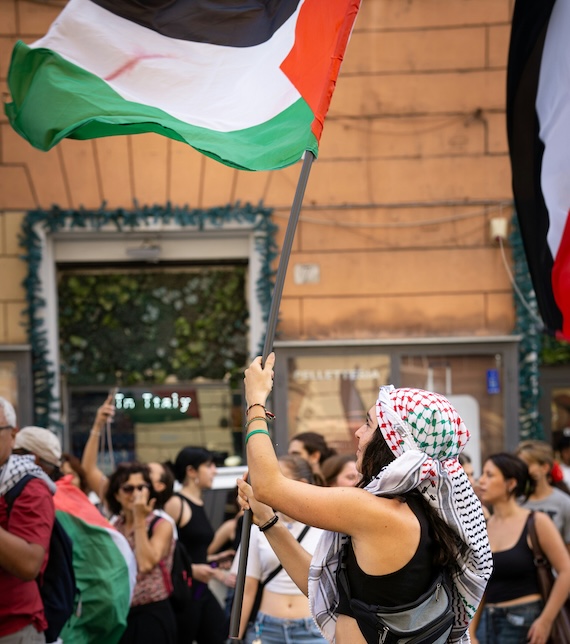
Photo of protest against Gaza War, Rome, 2025, by Leonardo Basso on Unsplash
Between October 10 and 21, seventeen international non-government organisations had essential aid shipments for Gaza, including water, food, tents, and medical supplies, blocked, with Israeli authorities claiming they were not authorised to do so. Some 99 requests by international NGOs to deliver aid were rejected, along with six requests from UN agencies. “This includes,” stated Oxfam last month, “agencies that continue to have long-standing INGO registration with Palestinian and Israeli authorities and are legally permitted to operate by the latter while new registration processes are ongoing.”
A system of brutality, practised, insistent, even casual, has been entrenched against those in Gaza and, increasingly, the West Bank. The summary execution of two men in Jenin by Israeli soldiers after their surrender was lauded by Israel’s National Security Minister, Itamar Ben-Gvir, who thought the killings the very thing “expected of them”. Implicit is the suggestion that Palestinians are required to behave in specific, tolerated ways: humbly submit to their apparently generous oppressors, suffer ceaseless purgatorial deprivation and accept a ceasefire in name only.
The views expressed in this article belong to the author and do not necessarily reflect the editorial policy of Middle East Monitor or Informed Comment.
 Unless otherwise stated in the article above, this work by Middle East Monitor is licensed under a Creative Commons Attribution-NonCommercial-ShareAlike 4.0 International License.
 © 2026 All Rights Reserved