
Stanza no. 39 in the first edition of Edward FitzGerald’s Rubáiyát of Omar Khayyám recommends having a good time drinking wine rather than devoting yourself to some dreary work or some struggle against someone else.
ΧΧΧΙΧ.
How long, how long, in infinite Pursuit
Of This and That endeavour and dispute?
Better be merry with the fruitful Grape
Than sadden after none, or bitter, Fruit.
A. J. Arberry identified the original as no. 50 in the Bodleian Manuscript, which is now on the web here.
آنانکه اسیر عقل و تمییز شدند
در حسرتِ هست ونیست ناچیز شدند
رو بیخبری، تو آب انگور گُزین
کآن بیخبران به غوره مِیْویز شدند
In the original, the abstract philosophers are castigated for being prisoners of dry reason and discernment. Their longing to understand being and nothingness makes them as nothing themselves.
The third verse says “Go, you ignoramus, and choose the juice of the grape!” Ironically, the reasoning philosophers are here called ignorant, inasmuch as they do not know the delight and release of wine.
The last line laments that those uninformed persons have gone from being unripe grapes to being dried out raisins.
That is, the devotees of dry rationality are spiritually immature and if they don’t wake up to reality they will skip the stage of the ripe, plump grapes from which wine is made and end up dessicated raisins.
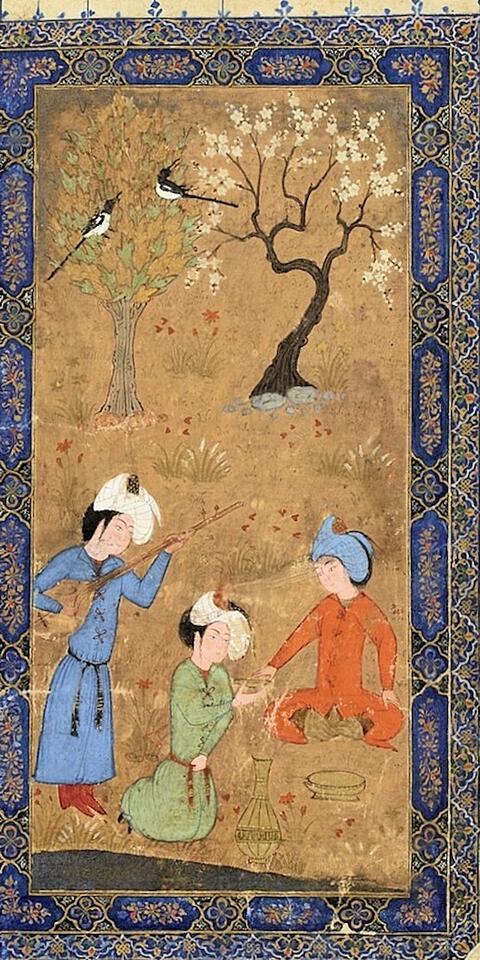
Muzaffarid Prince with wine server and musician, circa 1390. Public Domain. Via Wikimedia Commons
—-
Order Juan Cole’s contemporary poetic translation of the Rubáiyát from
or Barnes and Noble.
or for $16 at Amazon Kindle
——-
Some of these themes appear in the opening lines of this ghazal or ode by Hafez of Shiraz (d. 1390).
زاهدِ خلوتنشین، دوش به مِیخانه شد
از سرِ پیمان بِرَفت، با سرِ پیمانه شد
صوفیِ مجلس که دی، جام و قدح میشکست
باز به یک جرعه می، عاقل و فرزانه شد
I translate it as a fourteener this way:
The sheltered puritan went yesterday to the tavern;
He disobeyed his vows for the sake of a wine glass’ rim
The popular Sufi was breaking goblets yesterday;
Now with a sip of wine he has turned rational and wise.
Whereas the quatrain above attributed to Khayyam castigated philosophers for going too far in the direction of reason, leaving behind intuition and the joy of life, the ghazal of Hafez rebukes Sufi ascetics for giving up the good things in this life. Wine, symbolizing those good things, restores the Sufi to reason, just as it restored joie de vivre to the overly rational philosopher in the Rubáiyát.
For more commentaries on FitzGerald’s translations of the Rubáiyát, see
FitzGerald’s Rubáiyát of Omar Khayyám: Commentary by Juan Cole with Original Persian

 © 2026 All Rights Reserved