
Only the misfortune of exile can provide the in-depth understanding and the overview into the realities of the world. — Stefan Zweig
Newark, Delaware (Special to Informed Comment; Feature) – In the last few decades, Iranian cinema has gained a prominent status in the world of cinema, winning many prizes including the Oscars, the Cannes film festival, the Venice film festival and other European awards.
When one looks at the history of cinema in Iran, a few names are on top of the list: Dariyoush Mehrjoui, Abbas Kiarostami and Bahram Beyzai. Dariyoush Mehrjoui and his wife were murdered at their home outside of Tehran. To this day, no one knows who the real culprit was. Kiarostami stayed in Iran but was constantly under pressure and censorship. He died in a hospital in Paris.
Bahram Beyzai (1938-2025), who had the title of ustad, master, left Iran as his films were being targeted by the Islamic Republic which has censored and imprisoned many artists, including filmmakers.
Bahram Beyzai became famous with his heart-wrenching film, “Bashu, the little Stranger” (1986), which depicts life in rural Iran, in Gilan, a province in northern Iran.
He was a pioneer and a leader of the new age cinema of Iran.
Born into a family of poets who were Bahais, his father had composed several poems. Always interested in movies, at a very young age, he started to write screen plays and was one of the founders of the Iranian Writers’ Guild.
Beyzai became a mentor to many upcoming artists teaching at Tehran University until 1979.
He was ousted from the University in 1981 during the infamous cultural revolution.
Beyzai left Iran in 1995 for a film debut in Strasbourg, France but returned to write more screenplays.
After much struggle with censorship and pressure, he finally left Iran in 2010 and settled in Northern California where he continued his work, even though his heart was always in Iran. Since then, he taught at Stanford University’s Iranian Studies center. He was not just a director but a filmmaker and a playwright.
Bahram Beyzai, “Bashu, the Little Stranger”
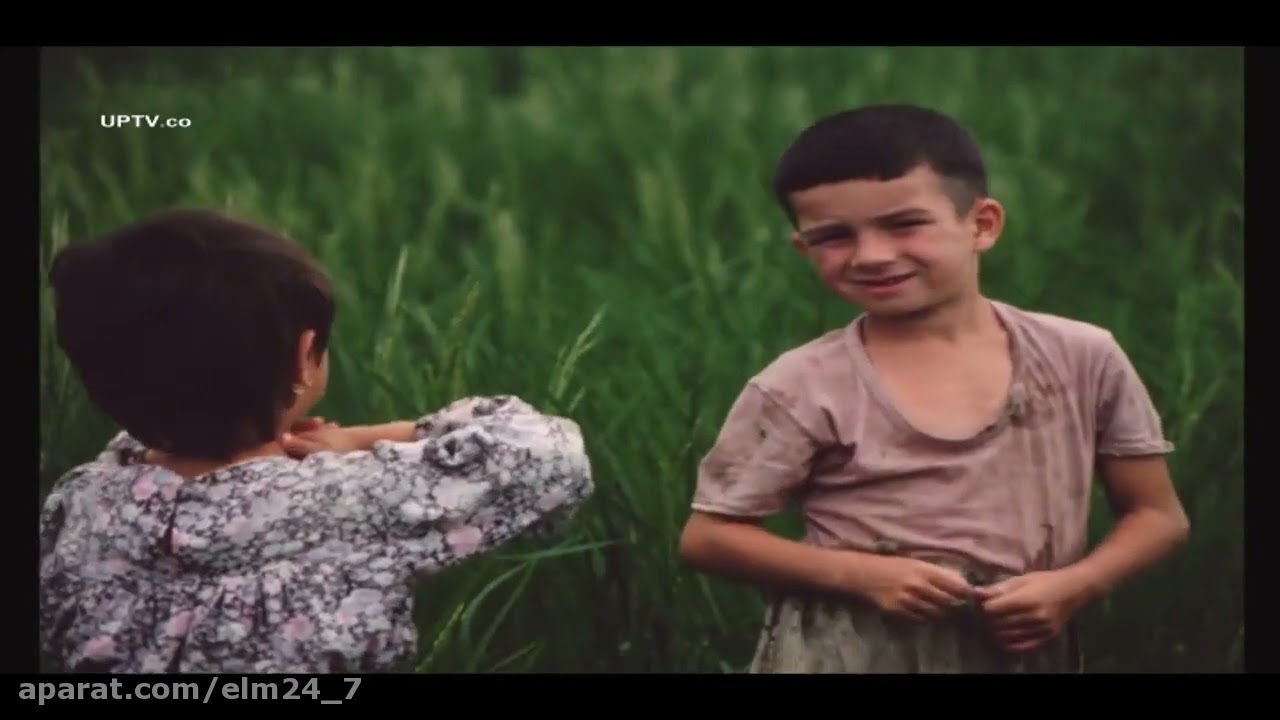
Bashu, the Little Stranger
Far away from home, he worked hard to renew his once thriving profession. He taught various film classes at Stanford.
He also gave lectures and sought to regain his identity as a famous filmmaker. But he remained chagrined, not to have been able to go back to the country he dearly loved and identified with.
Following his death, the torrent of messages of sadness and comments on social media from all over the world showed that he had never lost his allure.
The late Professor Ehsan Yarshater, founder of Encyclopedia Iranica, wrote about Bahram Beyzai: “His poetic vein is unmistakable. He writes as though he had a sad look in his eyes, a detached and philosophical understanding in his tone. A vague sense of destiny haunts his plays.”
The film Bashu is about the devastating effects of the Iran-Iraq war. The film is about a young Afro-Iranian boy from Khuzistan in southern Iran who moves to Gilan in the north after his parents died in a bombing in their village. He comes to live with a Gilaki family, but he only speaks Arabic which makes it hard for him to interact with other boys. The plot continues with other events that makes the film even more gripping.
Beyzai’s famous play, which turned into a film, Death of Yazdegard, is based upon the murder of the last Sassanian emperor, Yazdegard III who, escaping the Arab invasion, flees to Marv where he is killed by a miller in his mill while taking refuge. The play was shown in many European cities.
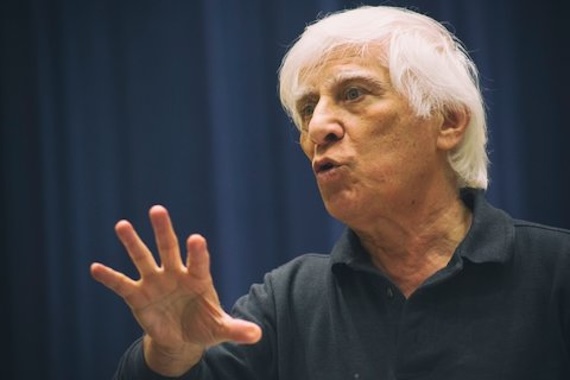
Bahram Beyzai via Stanford University.
In 2021, Professor Abbas Milani presented a paper called “Beyzaie’s Singularity in the Labyrinth of Iranian Modernities” as a part of a conference celebrating Bahram Beyzaie’s 10-year anniversary at Stanford University.
“In this labyrinth and at every turn, Bahram Beyzai has taken the road less traveled. He has created an impressive collection of works that are singular in their daring and defiance, erudition, creativity and innovation. At the same time, he has lived a life dedicated to the dignity and responsibility of the artist and the scholar, one where he has avoided the crude temptation of the market and suffered the cruel punishment of the peddlers of power and ideology.”
Bahram Beyzai will be remembered as a profound artist, a man who dared speak the truth through his films.
As in the Russian Revolution, when artists were banned and censored, left their homeland hoping to return one day, yet never did, many Iranians, famous ones and ordinary ones, have died in exile.
Beyzai hoped to return one day but alas, life ends at some point. He never got to see his beloved homeland again. He never got to make movies there.
He will be missed……..

 © 2026 All Rights Reserved