
Ann Arbor (Informed Comment) – The Israeli authorities are still not permitting journalists into Gaza, even months after a supposed ceasefire. The big Western news corporations are taking this prohibition as an excuse not to report on Gaza, since they don’t trust brown Arab stringers inside the Strip. In contrast, Al Jazeera English reports daily on the situation, and it can be watched on YouTube, or its own smartphone or Firestick app. The UN also issues reports based on communications from their staff on the ground.
The UN Office for the Coordination of Humanitarian Affairs reports that “UNICEF noted that children continue to be affected by airstrikes and the disruption of essential services, with 37 children reported killed since the beginning of the year . . . between 28 January and 11 February 2026, 109 Palestinians were killed, 252 were injured, and 10 bodies were recovered from under the rubble . . .”
The Israelis are still bombing the bejesus out of Gaza on a daily basis. People in the Middle East joke darkly that their definition of a cease fire is, you cease, we fire.
The health care situation is dire.
Here is an interview with a British physician who has gone to Gaza as a volunteer 40 times and is in close contact with current volunteers there. He reports that because of a lack of medicine, gruesome situations are unfolding, such as fungus eating people’s faces.
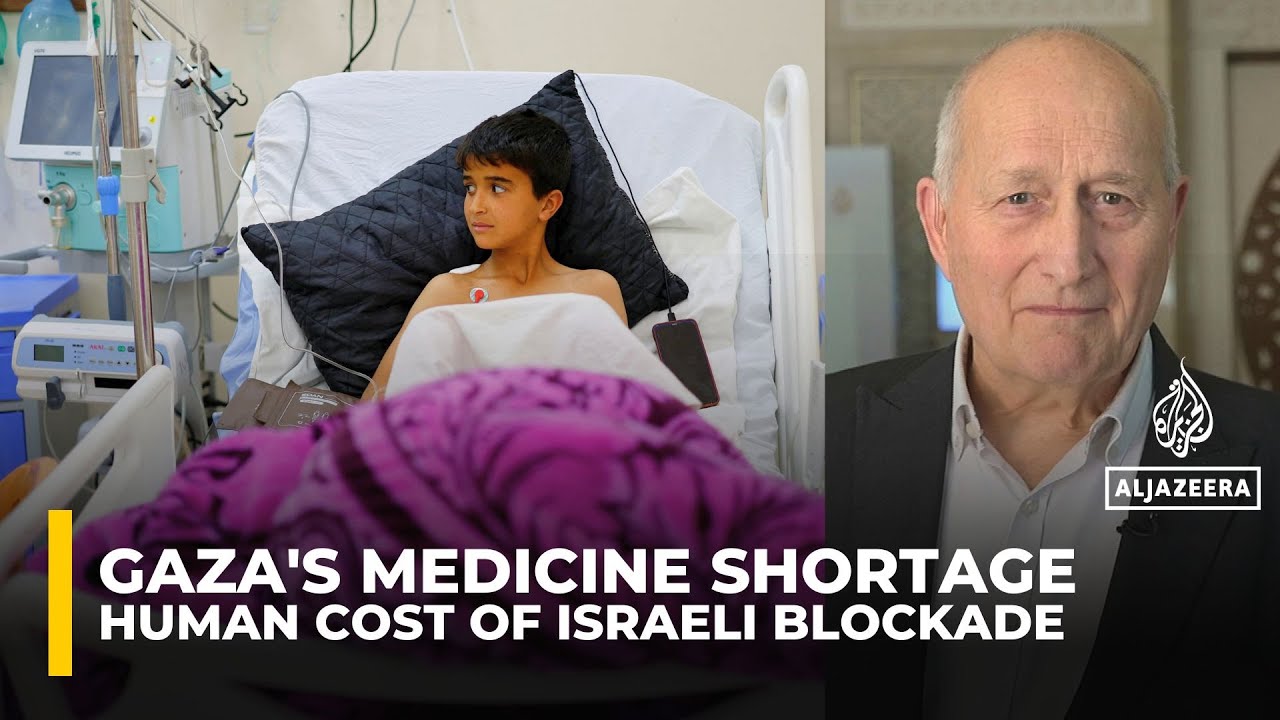
British doctor exposes how Israel’s Gaza blockade is turning medicine shortages deadly
Here is the computer-generated transcript of the interview, which I had ChatGPT clean up for readability:
- Al-Jazeera
Dr. Graeme Groom is an orthopedic surgeon. He has volunteered in hospitals across Gaza over forty times . . . Can you talk to us about your experiences when you were in Gaza?
Dr. Groom:
Most recently in May, I was based at the Nasser hospital with my colleagues, and during our visit, the hospital pharmacy was bombed. We are very very familiar with the shortages, and as the pharmacy store was bombed, they became more acute. The problem with shortages of medicine is it sounds almost benign, but we have colleagues who are in Gaza every month. And last night a colleague sent an urgent request for an antifungal drug called amphoterasin.
Now she wanted this for an 18-year-old girl who had a very rare fungal infection, a mucosis, as a consequence of diabetes, multiple comorbidities, poorly treated because of the shortages. And her very last message was this is an emergency, the fungus is eating her face. So that is when we talk about shortages of medicines and we talk about lists that are at zero stock, both medicine and surgical equipment, it doesn’t sound quite as dramatic, but the individual impact is absolutely huge.
Al-Jazeera:
Now Israel is supposed to be allowing in aid and medicines because of the ceasefire. Are you able to compare to us the situation as you understand it now in Gaza compared to what it was like before the start of the ceasefire?
Dr. Groom:
… I can’t speak for this supply of medicines because we’re more concerned with the supply of surgical equipment. What has happened before the ceasefire and has continued since it is there has been a tighter and tighter squeeze so that when we travel from Amman through Allenby Bridge and Kerem Shalom, we were earlier before the ceasefire allowed to take a certain amount of equipment with us. We are now allowed to take nothing. And when I say nothing, I mean an anotist had his stethoscope confiscated on the basis that he wasn’t going to listen to his own heart, was he?
There is, as with everything in Gaza, there’s a tightening and relaxing of the rules. So that that was at its tightest. We’re now told that with sufficient advanced warning, we can take two small boxes of equipment in at each visit. That is very unclear. The definition of what that means is unclear. And of course, there’s this immense problem of dual use items. Anything that is defined as dual use is prohibited.
And you may know or you may not know that tents are defined as dual use because they have poles.
Al-Jazeera
Just very briefly sir, it was reported that around 20,000 people were in need of urgent medical care in Gaza. The Rafa crossing has now of course opened with the purpose of allowing people out to get that treatment. What is your assessment of how effective that is going to be? Just briefly sir if you don’t mind.
Dr. Groom:
Yeah at the moment the number who are evacuated is a trickle. There is a much larger number of between 20 to 25,000 who need long-term treatment and that is our specialty. What is required is first those who cannot be treated within Gaza are allowed out, but more importantly that we are allowed in with our equipment.”
The partial reopening of the Rafah crossing in the far south of the Gaza Strip, bordering on Egypt, has resulted in a tiny number of medical evacuees being allowed to leave. The UN Office for the Coordination of Humanitarian Affairs reports, “Between 2 and 10 February, the UN and partners supported the medical evacuation of 142 patients, alongside companions, including 91 patients (64 per cent) via Rafah Crossing and 51 patients (36 per cent) via Kerem Shalom Crossing. During the same period, UN teams in Gaza received 223 Palestinian returnees.”
OCHA continues, “At the current pace, Save the Children estimates that evacuating those in need could take over a year. Thousands of patients remain without access to specialized treatment unavailable in Gaza, and more than 18,500 people, including 4,000 children, remain in urgent need of medical evacuation.”
The UN points out that staff shortages and damage to infrastructure continue to leave the Gaza health system in ruins.
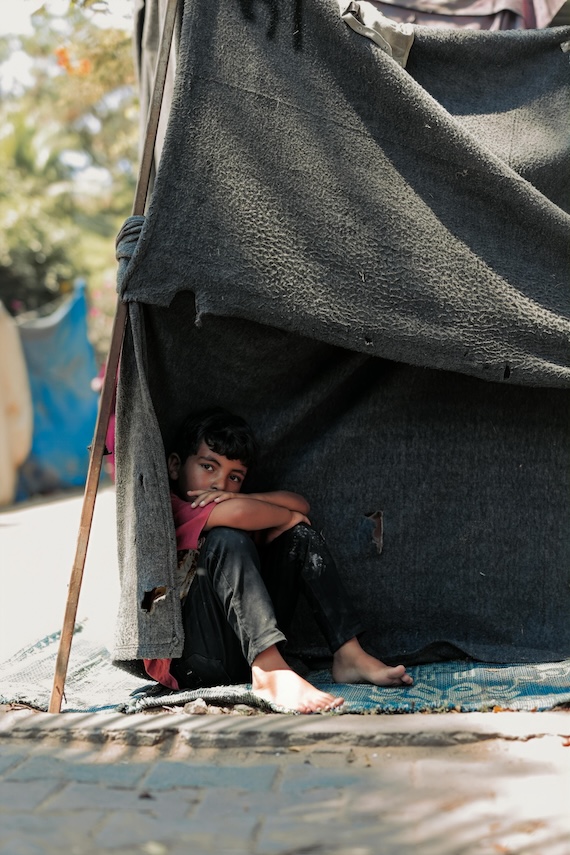
File photo of makeshift shelter in Gaza by Hosny salah: https://www.pexels.com/photo/young-boy-sitting-in-makeshift-shelter-in-gaza-36038665/
The Israeli authorities deliberately destroyed all the universities and medical schools in the Gaza Strip, even though these were not military targets. It also destroyed or degraded most medical facilities. The medical students who had been about to get their MDs haven’t been graduated because their universities lie in rubble. The UNDP and the remnants of the local universities (the people are still there even if the buildings are not) are supporting 470 nearly-finished medical students to complete their training and get certified.
The conditions in the strip remain unsanitary. People are living in tents with no sewage. 77% of water samples come back contaminated, including with fecal matter. Hepatitis A outbreaks are widespread, with nearly 6,000 cases reported in 2025, and the situation actually worsened after the so-called ceasefire. OCHA says, “In addition, over 496,000 cases of acute watery diarrhoea were reported, of which about 47 per cent were among children under five.” The rate doubled in 2025 over 2024. Diarrhea doesn’t sound dangerous, but it is a killer of infants. Those nearly 250,000 children under 5 who contracted it almost certainly experienced a big spike in deaths.
It should be remembered that this humanitarian disaster is not “war.” There is no war. It is Israeli policy to impose unlivable conditions on the people of Gaza, in hopes of thinning their ranks. It is deliberate genocide.

 © 2026 All Rights Reserved