
The US/Israel strike against Iran aims at regime change in Tehran, control its energy resources and restructure the Middle East. But it will amplify risks, disrupt energy markets and could severely penalize global prospects.
Shanghai (Special to Informed Comment; Feature) – On February 28, 2026, President Trump announced the start of Operation Epic Fury. In a surreal twist, he described the mission’s primary objective as defending the American people by eliminating “imminent threats” from the Iranian regime.
Trump specifically cited the need to eliminate Iran’s alleged nuclear ambitions, destroy its military infrastructure and undermine Iranian-backed groups in the region. He delegated regime risk to the Iranian people urging them to “take over your government.” Iran has never been assessed to have a military nuclear weapons program, and its civilian enrichment program was destroyed last summer by Israeli and US bombardment.
With Israel, the US hoped to “decapitate Iran’s leadership”, particularly Ali Khamenei, Iran’s Supreme Leader, and President Masoud Pezeshkian. This has been the US/Israeli dream since the Islamic Revolution almost half a century ago: to rule and divide the polity and fragment the economy, to dominate the energy resources.
The attacks did kill Iran’s clerical leader, but missed President Pezeshkian, who is now running the country with two other regime figures. In the absence of the US/Israel escalation in the region since early 2025, the 86-year-old Khamenei would anyway not have been in power much longer. But that was no option for either the US or Israel. His death was deemed vital to serve as a demonstration effect.
President Masoud Pezeshkian was elected as a reformist in the July 2024 Iranian presidential election. The first reformist to hold the presidency in Iran in some two decades, he campaigned on a platform of moderation, pledging to relax the strict enforcement of hijab laws, improve relations with the West, restart nuclear negotiations to ease economic sanctions, and to end Iran’s international isolation.
In the US and Israel, Iranian reformism is seen as a threat. Development, women’s rights, Western ties, eased sanctions, international cooperation – it all worked against the goal to control Iran’s energy resources and restructure the Middle East. Hence, their preference for a pro-US Iranian proxy, including Reza Pahlavi, the son of the deposed former Shah of Iran.
The strategic objective of Epic Fury is full counter-revolution, not peaceful reform and development.
Undermining diplomacy for (another) illegal war
Following joint military strikes by the United States and Israel on military facilities and on political and military leaders on February 28, 2026, several countries officially urged the UN Security Council (UNSC) to convene for an emergency session.
France was the first council member to request a Security Council meeting. President Emmanuel Macron warned of “grave consequences for international peace and security”. Jointly Russia and China requested a briefing, characterizing the strikes as an “unprovoked and reckless act of military aggression.”
During the session, UN Secretary-General António Guterres condemned the escalation and called for an immediate ceasefire.
In the Global South, many leaders were shocked by the Trump administration’s disregard of Iranian life, severe violation of international law and Iran’s sovereignty, especially after US participation in Israel’s genocide in Gaza and its ongoing ethnic cleansing in the West Bank.
In historical view, none of this is new. Since the 1970s, US administrations have progressively opted for illegal wars and unilateralism at the expense of international law and multilateralism. What is new is that today all gloves are off. The deployment of brutal force is open, blatant and unapologetic. Since might is right, any criticism must be regarded as potential subversion.
Moreover, these strikes against Iran are not just about the Middle East. They are a prelude – a demonstration effect toward China/Taiwan and Russia/Ukraine theaters.
Overnight, the Trump administration, once again without an exit strategy, managed to drag the international community ever closer to a Cold War escalation.
It’s the oil (and gas), stupid
Iran was the fourth-largest crude oil producer in OPEC in 2023 and the third-largest dry natural gas producer in the world in 2022. What makes Tehran so attractive to the US is that Iran is the world’s third-largest oil and second-largest natural gas reserve holder.
In mid-January, when the American Petroleum Institute (API) gathered oil industry leaders and lobbyists for a summit, Bob McNally of the Rapidan Energy Group, a veteran industry insider, pushed hard for the overthrow of Iran’s leadership. “Iran holds the biggest promise,” McNally proclaimed. “If you can imagine our industry going back there, we would get a lot more oil, a lot sooner than we will out of Venezuela.”
During the first term of President George W. Bush, McNally served in the White House as Bush’s Special Assistant. In 2008, he served as Mitt Romney’s energy advisor; and in 2010, he advised Senator Marco Rubio. As Trump’s Secretary of State, Rubio has played a critical role in the ongoing regime change efforts in both Venezuela (world’s largest proven oil reserves) and Iran.
Despite its abundant reserves, Iran’s total liquids production is limited because the oil sector has been subject to underinvestment and international sanctions for several years.
Efforts at external destabilization soared prior to US/Israeli strikes. On February 24, Damon Wilson, the head of the National Endowment for Democracy (NED), revealed during a House oversight hearing that NED “began supporting the deployment and operation of about 200 Starlinks early on” amid the violence which swept through Iran last month. But he was abruptly interrupted by the ranking member of the House Subcommittee on State, Foreign Operations, Rep. Lois Frankel, who told Wilson: “You know what, I’m going to interrupt you – we’d better not talk about it.”
In the US, mainstream media did not disclose the story. Only a few progressive outlets did. For its part, NED didn’t.
The war scenario
Here are the operational facts. The conflict started with the US/Israel-coordinated strikes, which hit missile, drone and leadership targets across Iran. As expected, Iran retaliated with missiles and regional proxy attacks against Israel and US bases, including the Gulf states hosting U.S. military bases, such as Al Udeid Air Base in Qatar, Ali Al Salem in Kuwait, Al Dhafra in the UAE, and the U.S. Navy’s Fifth Fleet in Bahrain.
Reportedly, the US/Israeli campaign had planned for weeks-long sustained operations. According to Israeli Defense Force, the joint attack consisted of over 200 fighter jets attacking 500 targets in the largest attack in Israeli Air Force history.
In Friday, early casualties (initial phase) featured 200+ killed in Iran, hundreds injured (initial estimates). Against US and Israeli assurances, civilian incidents have already been reported (e.g., school strike casualties).
These strikes will penalize global economic prospects, which are already constrained by geoeconomic fragmentation (sanctions blocs, supply-chain bifurcation), coupled with extremely high oil market sensitivity (Hormuz risk premium).
From the standpoint of the global economy, the US/Israel attack against Iran occurs amid elevated geoeconomic fragmentation. Second, the US military doctrine builds on a phased escalation ladder from coercion to paralysis to political outcome.
- Phase 1: Shock. Leadership targeting, ballistic missile suppression and psychological dominance.
- Phase 2: System Paralysis. Aiming at air defense destruction, IRGC command disruption and economic isolation escalation.
- Phase 3: Political Outcome. With the strategic objective of internal collapse or negotiated capitulation.
The problem is that these military phases ensure no political resolution.
Trump’s four-week scenario
In the United States, President Trump has ducked reporters because the rationale for the US/Israeli Iran attacks – Iran’s planning for a preemptive attack against American interests – has proved untrue, as the US intelligence community has acknowledged.
In the Sunday interview with the British Daily Mail, President Trump disclosed a possible timeline for the war with Iran, suggesting fighting could go on for a month: “It’s always been a four-week process. We figured it will be four weeks or so. It’s always been about a four-week process so – as strong as it is, it’s a big country, it’ll take four weeks – or less.”
It is highly unlikely that the U.S. can sustain a month-long campaign, since it will run out of THAAD missile interceptors fairly quickly. It could prolong the campaign by bringing in such munitions from East Asia stockpiles, but that would leave US troops and allies exposed to, e.g., North Korea. Assuming that Trump is willing to transfer these arms to the Middle East, let’s model the 1-month scenario occurring against the backdrop of elevated geoeconomic fragmentation (not Cold War II). In this case, the US strategy of phased escalation ladder is working imperfectly. As a result, the most realistic path is controlled escalation without regime collapse in Iran.
The scenario comes with new risks because in this scenario US and Israel seek to degrade Iranian strategic capacity enough to force a deterrence reset, while avoiding ground war. Iran responds asymmetrically but avoids actions that trigger a US invasion. The likely outcome is military success with regard to degrading Iran’s military capabilities, but political stalemate and economic shock in a very challenging historical moment.
Political turmoil, economic uncertainty, market volatility
In terms of duration, the US/Israeli attacks will use the first week to shock and demonstration, with precision strikes on IRGC bases and air defenses. Iran launches missile salvos toward Israel and US regional bases in the Gulf Arab states. Meanwhile, cyber operations expand both directions.
In political terms, there is an Iranian domestic rally-around-flag effect. Gulf states quietly support US, but call for de-escalation and hedge bets; though if they are hit especially hard by Iran they could fly sorties against it. In economic terms, oil jumps abruptly, with 20-30% risk premium and shipping insurance spikes in Gulf and Red Sea. With Iran’s Revolutionary Guards threatening to close the Strait of Hormuz, we have already seen insurance firms cancel insurance contracts for vessels planning to navigate it.
During the next 2-3 weeks, US/Israeli attacks seek to achieve system paralysis in Iran. If by then there is no tangible elite fracture inside Iran, the neutrality of the Global South increases and Western alliance cohesion begins to show trains, escalation risks compel the US and Israel on a diplomatic defensive. So, the fourth week will see negotiated stabilization pressure on both sides. The result could be an effective ceasefire without agreement.
But in economic terms, the unwarranted 1-month war would result in an energy shock, with oil price soaring to $115-140, gas prices rising via shipping risk and strategic reserves partially released. In shipping and trade, Red Sea and Gulf insurance premiums could double or triple, while delivery times lengthen due to inventory shocks.
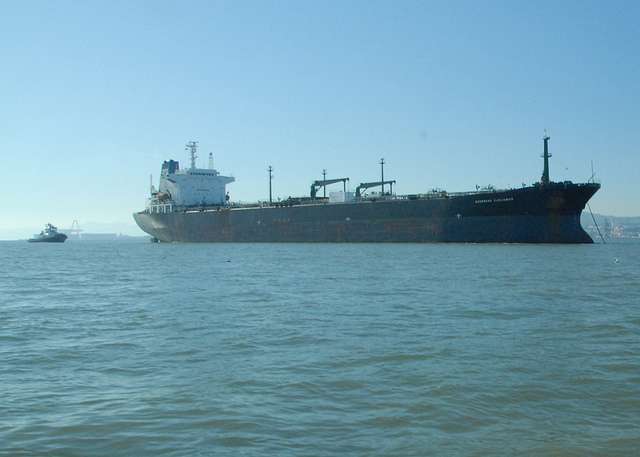
Oil Tanker. U.S. Coast Guard photo/Petty Officer 3rd Class Pamela J. Manns. Public Domain. Via Picryl.
The macro effect is elevated inflation as energy prices are coupled with rising costs in transport, food and manufacturing, central banks delaying the anticipated rate cuts and global growth decelerating. In financial markets, emerging markets would suffer from capital outflows. Civilian economies underperform as defense and energy sectors outperform. Risk assets may not crash but will exhibit extraordinary volatility.
Escalation multiplies risks in the region and the world
Total deaths could soar, with heavy civilian casualties. The number of injured would surge, as well (typically three times as many are wounded in war as are killed). Whereas the number of displaced persons could amount to 2-4 million.
Global inflation add-on could amount to 1-1.5 percentage points. Middle East GDP could suffer a -5-8% penalty and global growth prospects would be downgraded by -0.7%.
Like the Trump trade wars, it would produce no economic winners. But it could push the global economy closer toward an edge. It would be as unwarranted as the proxy wars in Gaza, Libya and elsewhere in the Middle East. And ultimately, civilians would pay the bill and defense contractors’ insiders would reap the profits.

 © 2026 All Rights Reserved