Tomgram: Michael Klare, Welcome to the New Third World of Energy, the U.S.

Posted on 04/02/2012 by Juan

Michael Klare writes at Tomdispatch.com:

A New Energy Third World in North America?
How the Big Energy Companies Plan to Turn the United States into a Third-World Petro-State
By Michael T. Klare

The “curse” of oil wealth is a well-known phenomenon in Third World petro-states where millions of lives are wasted in poverty and the environment is ravaged, while tiny elites rake in the energy dollars and corruption rules the land. Recently, North America has been repeatedly hailed as the planet’s twenty-first-century “new Saudi Arabia” for “tough energy” — deep-sea oil, Canadian tar sands, and fracked oil and natural gas. But here’s a question no one considers: Will the oil curse become as familiar on this continent in the wake of a new American energy rush as it is in Africa and elsewhere? Will North America, that is, become not just the next boom continent for energy bonanzas, but a new energy Third World?

Once upon a time, the giant U.S. oil companies — Chevron, Exxon, Mobil, and Texaco — got their start in North America, launching an oil boom that lasted a century and made the U.S. the planet’s dominant energy producer. But most of those companies have long since turned elsewhere for new sources of oil.

Eager to escape ever-stronger environmental restrictions and dying oil fields at home, the energy giants were naturally drawn to the economically and environmentally wide-open producing areas of the Middle East, Africa, and Latin America — the Third World — where oil deposits were plentiful, governments compliant, and environmental regulations few or nonexistent.

Here, then, is the energy surprise of the twenty-first century: with operating conditions growing increasingly difficult in the global South, the major firms are now flocking back to North America. To exploit previously neglected reserves on this continent, however, Big Oil will have to overcome a host of regulatory and environmental obstacles. It will, in other words, have to use its version of deep-pocket persuasion to convert the United States into the functional equivalent of a Third World petro-state.

Knowledgeable observers are already noting the first telltale signs of the oil industry’s “Third-Worldification” of the United States. Wilderness areas from which the oil companies were once barred are being opened to energy exploitation and other restraints on invasive drilling operations are being dismantled. Expectations are that, in the wake of the 2012 election season, environmental regulations will be rolled back even further and other protected areas made available for development. In the process, as has so often been the case with Third World petro-states, the rights and wellbeing of local citizens will be trampled underfoot.

Welcome to the Third World of Energy

Up until 1950, the United States was the world’s leading oil producer, the Saudi Arabia of its day. In that year, the U.S. produced approximately 270 million metric tons of oil, or about 55% of the world’s entire output. But with a postwar recovery then in full swing, the world needed a lot more energy while America’s most accessible oil fields — though still capable of growth — were approaching their maximum sustainable production levels. Net U.S. crude oil output reached a peak of about 9.2 million barrels per day in 1970 and then went into decline (until very recently).

This prompted the giant oil firms, which had already developed significant footholds in Indonesia, Iran, Saudi Arabia, and Venezuela, to scour the global South in search of new reserves to exploit — a saga told with great gusto in Daniel Yergin’s epic history of the oil industry, The Prize. Particular attention was devoted to the Persian Gulf region, where in 1948 a consortium of American companies — Chevron, Exxon, Mobil, and Texaco — discovered the world’s largest oil field, Ghawar, in Saudi Arabia. By 1975, Third World countries were producing 58% of the world’s oil supply, while the U.S. share had dropped to 18%.

Environmental concerns also drove this search for new reserves in the global South. On January 28, 1969, a blowout at Platform A of a Union Oil Company offshore field in California’s Santa Barbara Channel produced a massive oil leak that covered much of the area and laid waste to local wildlife. Coming at a time of growing environmental consciousness, the spill provoked an outpouring of public outrage, helping to inspire the establishment of Earth Day, first observed one year later. Equally important, it helped spur passage of various legislative restraints on drilling activities, including the National Environmental Policy Act of 1970, the Clean Water Act of 1972, and the Safe Drinking Water Act of 1974. In addition, Congress banned new drilling in waters off the Atlantic and Pacific coasts and in the eastern Gulf of Mexico near Florida.

During these years, Washington also expanded areas designated as wilderness or wildlife preserves, protecting them from resource extraction. In 1952, for example, President Eisenhower established the Arctic National Wildlife Range and, in 1980, this remote area of northeastern Alaska was redesignated by Congress as the Arctic National Wildlife Refuge (ANWR). Ever since the discovery of oil in the adjacent Prudhoe Bay area, energy firms have been clamoring for the right to drill in ANWR, only to be blocked by one or another president or house of Congress.

For the most part, production in Third World countries posed no such complications. The Nigerian government, for example, has long welcomed foreign investment in its onshore and offshore oil fields, while showing little concern over the despoliation of its southern coastline, where oil company operations have produced a massive environmental disaster. As Adam Nossiter of the New York Times described the resulting situation, “The Niger Delta, where the [petroleum] wealth underground is out of all proportion with the poverty on the surface, has endured the equivalent of the Exxon Valdez spill every year for 50 years by some estimates.”

As vividly laid out by Peter Maass in Crude World, a similar pattern is evident in many other Third World petro-states where anything goes as compliant government officials — often the recipients of hefty bribes or other oil-company favors — regularly look the other way. The companies, in turn, don’t trouble themselves over the human rights abuses perpetrated by their foreign government “partners” — many of them dictators, warlords, or feudal potentates.

But times change. The Third World increasingly isn’t what it used to be. Many countries in the global South are becoming more protective of their environments, ever more inclined to take ever larger cuts of the oil wealth of their own countries, and ever more inclined to punish foreign companies that abuse their laws. In February 2011, for example, a judge in the Ecuadorean Amazon town of Lago Agrio ordered Chevron to pay $9 billion in damages for environmental harm caused to the region in the 1970s by Texaco (which the company later acquired). Although the Ecuadorians are unlikely to collect a single dollar from Chevron, the case is indicative of the tougher regulatory climate now facing these companies in the developing world. More recently, in a case resulting from an oil spill at an offshore field, a judge in Brazil has seized the passports of 17 employees of Chevron and U.S. drilling-rig operator Transocean, preventing them from leaving the country.

In addition, production is on the decline in some developing countries like Indonesia and Gabon, while others have nationalized their oil fields or narrowed the space in which private international firms can operate. During Hugo Chávez’s presidency, for example, Venezuela has forced all foreign firms to award a majority stake in their operations to the state oil company, Petróleos de Venezuela S.A. Similarly, the Brazilian government, under former President Luiz Inácio Lula da Silva, instituted a rule that all drilling operations in the new “pre-salt” fields in the Atlantic Ocean — widely believed to be the biggest oil discovery of the twenty-first century — be managed by the state-controlled firm, Petróleo de Brasil (Petrobras).

Fracking Our Way to a Toxic Planet

0 Retweet 8 Share 22 StumbleUpon 1 Printer Friendly Send via email

Posted in Energy, Environment, Uncategorized | 5 Comments

Despite Negative Hype, Green Energy Revenues Rapidly Expanding

Posted on 03/16/2012 by Juan

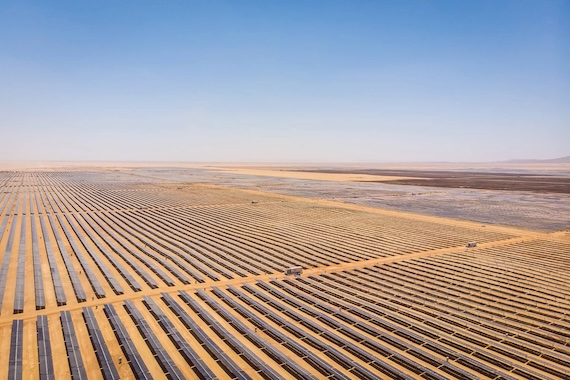
Solar, wind and biofuels saw global revenue expand by 31% in 2011. With all the negative hype put out by Big Oil and its acolytes, you’d have thought the green energy market had crashed rather than growing by a third.

But investment in green energy rose only 5% over the year, which tells me that somebody is making a lot of money and others are losing out. Green Tech Media reports,

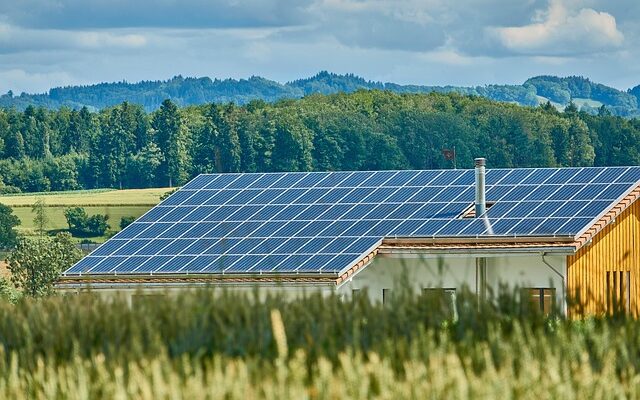
“…costs of solar panels fell by more than 40 percent last year, while installations grew by 69 percent, yielding a 29-percent increase in solar market revenues last year, Clean Edge reported.”

In the US, solar installations more than doubled, with 1.8 gigawatts in capacity added. That is roughly like two small nuclear plants.

There are indications that solar photovoltaic cells will will fall rapidly in price because of technological breakthroughs. Even with relatively low natural gas prices, the likelihood is that over the next decade the renewables will be decisively less expensive than hydrocarbons and the main obstacles will be an old 20th century energy infrastructure built for coal, gas and oil.

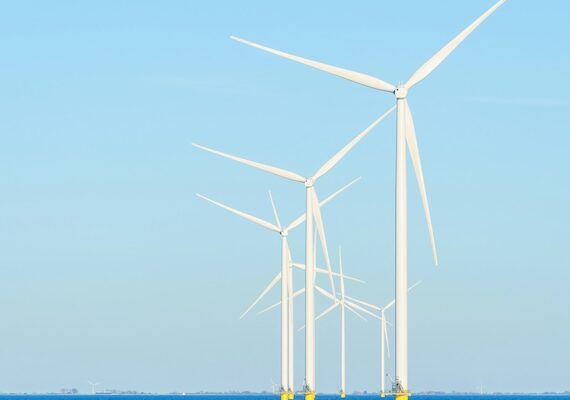
Wind power turbines were also put in at record rates throughout the world in 2011, with China leading the way. By 2020, China will have large numbers of mega-wind installations, generating 148 gigawatts of power.

The US is falling behind on wind installations. It only installed 6,800 megawatts worth in 2011. Altogether, wind now generates enough power to meet electricity demand in 10 million US homes. If there are roughly 60 million US households, that would mean we only have 50 million to go!

There are lots of growing pains in this industry. Many startups will fail or be absorbed. An old electricity grid is often an obstacle. Battery power and life is still too limited. But we should be suspicious of the negative tone of a lot of press and political comment on renewable energy, since any business that expands revenue by a third in one year is anything but a basket case.

0 Retweet 21 Share 41 StumbleUpon 0 Printer Friendly Send via email

Posted in Energy, Environment | 11 Comments

Big Coal and Big Oil Wipe Kiribati off the Face of the Map

Posted on 03/08/2012 by Juan

The first country to face being wiped off the map by climate change is Kiribati in the South Pacific. Its 100,000 residents live on flat atolls only a few feet above sea level, and they are already beginning to be inundated.

The government is making plans for everyone to emigrate to Fiji. I guess it won’t be necessary for the last one to leave to turn off the lights, since all the electricity will short out as the islands disappear under the waves.

(courtesy Taringa

Fiji is a good choice, since its two main islands, Viti Levu and Vanua Levu, are mostly at least 150 meters above sea level.

It is only America’s oil billionaires, who have multiple mansions atop hills, who can afford to deny the effects of climate change. They are the ones responsible for the Kiribati migration, and if there were any justice, the residents would be allowed to sue the major petroleum, coal and gas corporations for compensation.

The most conservative estimates are that by the end of this century, sea level will rise about 3 feet or a meter, as a result of surface ice melting under the impact of rising temperatures. The temperature increase is a direct result of humans spewing massive amounts of carbon dioxide into the atmosphere by burning gasoline, coal and natural gas, and by putting other green house gases such as methane into the atmosphere.

(From NOAA)

The oceans warm up very, very slowly, because of all the deep, cold water that only rarely circulates in great amounts to the surface. So although automobile-driving and coal-heating humans could provoke an average surface temperature rise of 2 to 5 degrees Centrigrade (more than 7 degrees Fahrenheit), and although historically each increase of 1 degree C has resulted in a sea level rise of 10 to 20 meters/ yards, the full catastrophe won’t strike for centuries.

If humans run through all the currently known hydrocarbons, that would provoke the 5 degree C increase, and would over time cause all surface ice to melt, all regions of the earth to become tropical (including Antarctica), and so much increase in sea level that about a third of the world’s land would be inundated. This scenario last played out beginning about 55 million years ago, in the Eocene. It is not clear that the human species, which evolved under much colder conditions, could survive under these circumstances. Certainly climate catastrophes would kill millions.

How unseriously Americans are taking this looming crisis is obvious in that they still keep enormous numbers of neon lights over commercial establishments burning at night. Surely at least that should be illegal, or legal only if they are powered by renewable energy.

0 Retweet 17 Share 43 StumbleUpon 1 Printer Friendly Send via email

Posted in Energy, Environment | 13 Comments

Tomgram: Bill McKibben, Why the Energy-Industrial Elite Has It In for the Planet

Posted on 02/07/2012 by Bill McKibben

Bill McKibben writes at Tomdispatch.com:

The Great Carbon Bubble
Why the Fossil Fuel Industry Fights So Hard
By Bill McKibben

If we could see the world with a particularly illuminating set of spectacles, one of its most prominent features at the moment would be a giant carbon bubble, whose bursting someday will make the housing bubble of 2007 look like a lark. As yet — as we shall see — it’s unfortunately largely invisible to us.

In compensation, though, we have some truly beautiful images made possible by new technology. Last month, for instance, NASA updated the most iconic photograph in our civilization’s gallery: “Blue Marble,” originally taken from Apollo 17 in 1972. The spectacular new high-def image shows a picture of the Americas on January 4th, a good day for snapping photos because there weren’t many clouds.

It was also a good day because of the striking way it could demonstrate to us just how much the planet has changed in 40 years. As Jeff Masters, the web’s most widely read meteorologist, explains, “The U.S. and Canada are virtually snow-free and cloud-free, which is extremely rare for a January day. The lack of snow in the mountains of the Western U.S. is particularly unusual. I doubt one could find a January day this cloud-free with so little snow on the ground throughout the entire satellite record, going back to the early 1960s.”

In fact, it’s likely that the week that photo was taken will prove “the driest first week in recorded U.S. history.” Indeed, it followed on 2011, which showed the greatest weather extremes in our history — 56% of the country was either in drought or flood, which was no surprise since “climate change science predicts wet areas will tend to get wetter and dry areas will tend to get drier.” Indeed, the nation suffered 14 weather disasters each causing $1 billion or more in damage last year. (The old record was nine.) Masters again: “Watching the weather over the past two years has been like watching a famous baseball hitter on steroids.”

In the face of such data — statistics that you can duplicate for almost every region of the planet — you’d think we’d already be in an all-out effort to do something about climate change. Instead, we’re witnessing an all-out effort to… deny there’s a problem.

Our GOP presidential candidates are working hard to make sure no one thinks they’d appease chemistry and physics. At the last Republican debate in Florida, Rick Santorum insisted that he should be the nominee because he’d caught on earlier than Newt or Mitt to the global warming “hoax.”

Most of the media pays remarkably little attention to what’s happening. Coverage of global warming has dipped 40% over the last two years. When, say, there’s a rare outbreak of January tornadoes, TV anchors politely discuss “extreme weather,” but climate change is the disaster that dare not speak its name.

And when they do break their silence, some of our elite organs are happy to indulge in outright denial. Last month, for instance, the Wall Street Journal published an op-ed by “16 scientists and engineers” headlined “No Need to Panic About Global Warming.” The article was easily debunked. It was nothing but a mash-up of long-since-disproved arguments by people who turned out mostly not to be climate scientists at all, quoting other scientists who immediately said their actual work showed just the opposite.

It’s no secret where this denialism comes from: the fossil fuel industry pays for it. (Of the 16 authors of the Journal article, for instance, five had had ties to Exxon.) Writers from Ross Gelbspan to Naomi Oreskes have made this case with such overwhelming power that no one even really tries denying it any more. The open question is why the industry persists in denial in the face of an endless body of fact showing climate change is the greatest danger we’ve ever faced.

0 Retweet 0 Share 0 StumbleUpon 0 Printer Friendly Send via email

Posted in Energy, Environment, Uncategorized | Comments Off

Tomgram: Ellen Cantarow, An Environmental Occupy Fracks Corporate America

Posted on 01/23/2012 by Ellen Cantarow

Ellen Cantarow writes at Tomdispatch.com

Shale-Shocked
Fracking Gets Its Own Occupy Movement
By Ellen Cantarow

This is a story about water, the land surrounding it, and the lives it sustains. Clean water should be a right: there is no life without it. New York is what you might call a “water state.” Its rivers and their tributaries only start with the St. Lawrence, the Hudson, the Delaware, and the Susquehanna. The best known of its lakes are Great Lakes Erie and Ontario, Lake George, and the Finger Lakes. Its brooks, creeks, and trout streams are fishermen’s lore.

Far below this rippling wealth there’s a vast, rocky netherworld called the Marcellus Shale. Stretching through southern New York, Pennsylvania, Ohio, and West Virginia, the shale contains bubbles of methane, the remains of life that died 400 million years ago. Gas corporations have lusted for the methane in the Marcellus since at least 1967 when one of them plotted with the Atomic Energy Agency to explode a nuclear bomb to unleash it. That idea died, but it’s been reborn in the form of a technology invented by Halliburton Corporation: high-volume horizontal hydraulic fracturing — “fracking” for short.

Fracking uses prodigious amounts of water laced with sand and a startling menu of poisonous chemicals to blast the methane out of the shale. At hyperbaric bomb-like pressures, this technology propels five to seven million gallons of sand-and-chemical-laced water a mile or so down a well bore into the shale.

Up comes the methane — along with about a million gallons of wastewater containing the original fracking chemicals and other substances that were also in the shale, among them radioactive elements and carcinogens. There are 400,000 such wells in the United States. Surrounded by rumbling machinery, serviced by tens of thousands of diesel trucks, this nightmare technology for energy release has turned rural areas in 34 U.S. states into toxic industrial zones.

Shale gas isn’t the conventional kind that lit your grandmother’s stove. It’s one of those “extreme energy” forms so difficult to produce that merely accessing them poses unprecedented dangers to the planet. In every fracking state but New York, where a moratorium against the process has been in effect since 2010, the gas industry has contaminated ground water, sickened people, poisoned livestock, and killed wildlife.

0 Retweet 0 Share 0 StumbleUpon 0 Printer Friendly Send via email

Posted in Energy, Environment, Uncategorized | Comments Off

Only Green Energy Can Save Yemen

Posted on 11/15/2011 by Juan

No one gives any credence to Yemeni President Ali Abdullah Saleh’s pledge on Monday to step down in 90 days, since he’s made such commitments before and reneged on them.

The Yemeni revolution shows no sign of subsiding, but it so far has not been strong enough to displace the president, who has ruled as dictator for decades.

Aljazeera English reports in Saleh’s crackdown at the city of Ta’iz, the country’s third-largest, on Friday.

Many of Yemen’s problems come from being badly governed. For instance, the government has not been good about providing universal K-12 education. The literacy rate is only 54 percent over-all, and 25 percent of school-age children are not in school. Only 37% of high-school-aged youngsters were actually in high school in one recent year. Only 25 percent of high-school-aged girls were in high school.

Not only is there a problem with the formation of human capital, but there is a severe resource problem. Some 60% of Yemen’s income is from its small petroleum production. In ordinary times, it only produces 280,000 barrels and day, and exports 105,000 of them. Since the revolution began, Yemen’s oil exports have fallen because of poor security (one pipeline was attacked by rebellious tribesmen, costing the country hundreds of million dollars a year).

Aside from petroleum, which is difficult to export during a war, the Yemeni economy is taking a shellacking because of the uprising and its negative economic effects.

Some parts of Yemen are as badly off as drought-struck Somalia. Economists fear large numbers of displaced persons in Yemen.

Even if Saleh is overthrown, the question of how the new state can survive looms large. Seven million out of Yemen’s 24 million are living on less than one full meal a day.

The country faces a severe water shortage. Aquifers are falling and Sanaa may be out of water in only ten years. The problem might be confronted by systematic collection of rainwater and by switching to crops that are less water-intensive, but you would need an efficient government with popular legitimacy for such a program.

Yemen has many coastal areas with strong wind potential, not to mention highlands. A small wind project at Mocha was planned for 2012, but the political turmoil has probably impeded progress on it. Someone needs to buy Yemen lots of those new enormous 7-megawatt wind turbines, along with an electrical grid that can deliver the power around the country.

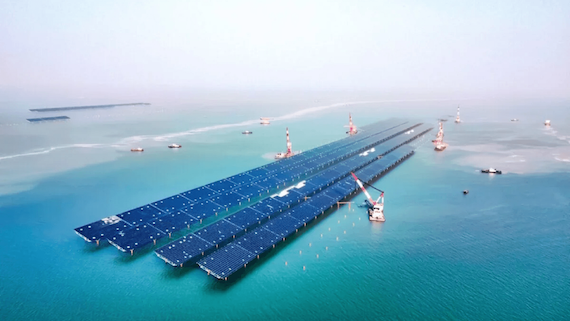
An Australian firm, Acquasol, was already committed to a big solar-powered water desalinization project for Sanaa. More, please.

Saleh is clearly incapable of running Yemen in a forward-looking way. The country needs a new government desperately. But it also needs new sources of energy and jobs, which renewables could accomplish. All the violence we hear about in Yemen, including that of sectarian groups such as the Huthis and that of radicals such as al-Qaeda in the Arabian Peninsula, is driven in part by struggles over scarce resources, especially water rights.

For the world community to let Yemen sink would be for it to risk violence, terrorism, and displacement on a vast scale (millions of Yemenis could be forced to emigrate, potentially causing more disruption to their host country– likely Saudi Arabia). The world community not only needs to find ways of easing Saleh out, it needs to find ways of funding green energy projects in Yemen, which among all the countries in the world probably most urgently needs them. Yemen is facing the water and electricity shortages now that the whole world will likely confront in the not so distant future.

The costly US obsession with drone strikes on Yemen probably does more harm than good, Patrick Seale argues. The money would be better spent on solar energy and desalinization plants.

0 Retweet 11 Share 10 StumbleUpon 0 Printer Friendly Send via email

Posted in Energy, Environment, Uncategorized, Yemen | 2 Comments

Godzilla Carbon Emissions in 2010 Unprecedented

Posted on 11/06/2011 by Juan

The spike in carbon emissions in 2010, a 6% increase over 2009, was so humongous that the scientists measuring it initially thought that there must have been a mistake somewhere in the measurements.

Tom Boden, head of the Department of Energy’s Carbon Dioxide Information Analysis Center in Oak Ridge National Laboratory, Tennessee, is quoted by AFP: “It’s big… Our data go back to 1751, even before the Industrial Revolution. Never before have we seen a 500-million-metric-ton carbon increase in a single year.” 512 million metric tons, to be precise.

Well, if it hasn’t been done since 1751, it has never been done by human beings. The last time this happened was 55 to 40 million years ago, in the Eocene. When India went plowing into Asia and threw up the Himalayas, the impact heated up the crust and released massive amounts of carbon dioxide. That happened, likely, over a long period of time, but the effect was an increase in the average surface temperature of the earth of 4-5 degrees Celsius. Antarctica became a tropical jungle.

While the increase is disheartening, it isn’t surprising. It was clear that the amazing Chinese economic engine was chugging along at its usual brisk pace last year. The US recovered somewhat from 2008–2009. And India had good growth last year, in common with Asian countries that are recovering from 2008 more quickly than the US and Europe because they were not so stupid as to deregulate their banks or mortgage markets.

But what struck me in the figures was that India came in just behind the United States in extra emissions over the previous year at 48 million metric tons of carbon. The US produced 59 million MT more, and China a dragon-sized 212 million. Of the 512 million MT increase over the previous year, those three countries were responsible for about 3/5s of it!

India is an enormous country with over a billion people, but its relatively high carbon footprint comes from getting much of its electricity from coal. It is the fourth largest producer of carbon emissions in the world, but working toward third.

Coal India is the largest producer of coal in the world, and has mined out the subcontinent to the point where it is looking abroad for further fields.

They should be made to look into wind turbines and solar panels instead. India has 15 gigawatts of installed wind turbine capacity already, making it the fifth country in the world for wind power. But it is estimated that its on-shore wind generation capacity at current technology is 65 gigawatts. Obviously, India would have a lot of potential for offshore wind and of wave generation of electricity, being surrounded by water on three sides.

India has also committed to building up its solar power generation capabilities rapidly, hoping to produce 20 gigawatts from solar by 2020 (from almost zero today). If it follows through on this plan, India would be producing 1/8 of its electricity from solar by that year.

At this point, the trillion-dollar question is how bad the tropical climate of five hundred years from now will be (the oceans warm up very slowly so massive climate change won’t be immediate), and whether we’ll lose 1/6 or 1/3 of the current dry land.

I already find India hard to take in the summers, and I don’t think it will be good for Indian agriculture if the average temperature increases dramatically. Models suggest that climate change will cause the interior of continents to become arid, something that could happen to India. Some think India’s wheat crop in the Punjab will be devastated.

The rude burp of carbon that the industrial nations spewed forth last year should galvanize everyone on emissions. It is a clear signal that business as usual is unacceptable if we are to avoid ending up poached. The US and China built their grids and facilities for hydrocarbons, and the US business elites are detached from reality and so are mostly useless on this issue. India has a chance to do things right. The government still has a lot of power there over economic developments, and pushing Coal India to become Wind and Solar India in short order is absolutely essential.

0 Retweet 11 Share 40 StumbleUpon 0 Printer Friendly Send via email

Posted in Energy, Environment, India, US Politics | 17 Comments